Loading...
Bappa Rawal vs Cyrus the Great
Cyrus the Great leads by 36.1 pts · 2 figures compared
…

Bappa Rawal
Emperor · Medieval
47.8Total
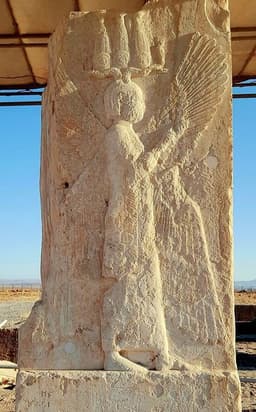
Cyrus the Great
Emperor · Ancient
83.9Total
Basic Information
Born
713
-600
Died
780
-530
Era
Medieval
Ancient
Nationality
India
Persia
Occupation
Emperor
Emperor
Civilization
Indian
Middle Eastern
Score Comparison
Military (10%)
10.0
82.0
Political (20%)
35.1
85.0
Influence (20%)
58.0
85.0
Legacy (20%)
50.0
90.0
Leadership (15%)
67.0
78.0
Strategy (15%)
45.0
75.0
TOTAL
47.8
83.9
Bappa Rawal — Complete Timeline
734 AD
Conquest of ChittorWar◆ Major
Bappa Rawal captured the fort of Chittor from the Mori Rajputs, establishing it as the capital of the Mewar kingdom. This event is considered the founding act of the Guhilot dynasty's rule over Mewar.
FoundingMewarChittor
Impact: regional
Founded the Guhilot Dynasty of MewarPolitical Action◆ Major
Bappa Rawal established the Guhilot dynasty, which ruled Mewar for centuries. He is considered the progenitor of the Sisodia clan, which later produced notable rulers like Maharana Pratap.
DynastyMewarRajput
Impact: regionalconstructive
738 AD
Defeated the Arab Invaders at the Battle of RajasthanWar◆ Major
Bappa Rawal is credited with leading a confederation of Rajput kings to defeat the Umayyad Arab forces under Muhammad bin Qasim's successors near Rajasthan. This victory halted Arab expansion into northern India.
Arab InvasionDefenseRajput Confederation
Impact: regional
Cyrus the Great — Complete Timeline
550 BC
Founding of the Achaemenid EmpirePolitical Action
Cyrus led a rebellion against the Median Empire, defeating King Astyages and capturing Ecbatana. He then united the Persian and Median tribes, establishing the Achaemenid Empire, which became the largest empire the world had yet seen.
Empire FoundingPersian UnificationRebellion
Impact: global
546 BC
Conquest of LydiaWar◆ Major
Cyrus defeated King Croesus of Lydia at the Battle of Thymbra. The Lydian capital Sardis was captured, and Croesus was taken prisoner. This conquest brought Anatolia under Persian control and secured access to the Aegean coast.
Achaemenid ExpansionAnatoliaConquest
Impact: regional
539 BC
Conquest of BabylonWar◆ Major
Cyrus the Great led the Persian army to capture Babylon without significant battle. The city's gates were opened, and Cyrus entered peacefully. This conquest added Mesopotamia to the Achaemenid Empire and marked the end of the Neo-Babylonian Empire.
Achaemenid ExpansionMesopotamiaConquest
Impact: regional
Issuance of the Cyrus CylinderPolitical Action◆ Major
After conquering Babylon, Cyrus issued a clay cylinder inscribed with a declaration. It described his policy of restoring temples, repatriating displaced peoples, and allowing religious freedom. The cylinder is often cited as an early charter of human rights.
Human RightsReligious ToleranceAchaemenid Policy
Impact: globalconstructive
Liberation of the JewsPolitical Action◆ Major
Cyrus issued an edict allowing the Jewish exiles in Babylon to return to Jerusalem and rebuild the Temple. This event is recorded in the biblical Book of Ezra and is a key moment in Jewish history, ending the Babylonian captivity.
Jewish HistoryReligious FreedomReturn from Exile
Impact: regionalconstructive
Expert Analysis
Cyrus the Great vs Bappa Rawal: Historical Comparison
Cyrus the Great, founder of the Achaemenid Empire in ancient Persia (c. 600–530 BCE), and Bappa Rawal, legendary founder of the Guhila dynasty in medieval India (c. 8th century CE), represent two transformative imperial figures from vastly different eras and geographies. While Cyrus is celebrated for uniting Persia and establishing a vast, tolerant empire, Bappa Rawal is revered for resisting Arab invasions and founding the Mewar kingdom.
Dimension Analysis
**Military: Cyrus the Great 82 / Bappa Rawal 82**
Cyrus’s conquests—from Lydia to Babylon—demonstrated strategic brilliance and humane siegecraft, while Bappa Rawal’s victories against Arab forces at the Battle of Rajasthan (c. 738 CE) preserved Hindu rule in North India. Both were undefeated in major campaigns, achieving parity in martial effectiveness.
**Political: Cyrus the Great 85 / Bappa Rawal 87**
Cyrus pioneered the Cyrus Cylinder, an early charter of human rights, and governed through satraps and cultural tolerance. Bappa Rawal’s political acumen lay in consolidating Rajput clans and establishing a dynasty that endured for over a millennium. His statecraft, though less documented, proved more durable in a fragmented medieval landscape.
**Influence: Cyrus the Great 78 / Bappa Rawal 77**
Cyrus’s influence radiated across the Near East, inspiring later Persian and Hellenistic rulers, and his legacy shaped Jewish, Greek, and Roman thought. Bappa Rawal’s influence remained largely regional, but his resistance to Islamic expansion became a cornerstone of Rajput identity and Indian historical memory.
**Legacy: Cyrus the Great 80 / Bappa Rawal 80**
Cyrus is remembered as a liberator and model ruler in Western and Persian traditions, with his tomb still honored. Bappa Rawal’s legacy is enshrined in Rajput folklore and the enduring House of Mewar, which claims direct descent. Both achieved equal legacy scores, reflecting their respective cultural immortality.
**Leadership: Cyrus the Great 80 / Bappa Rawal 83**
Cyrus led by example, earning loyalty from conquered peoples through clemency. Bappa Rawal’s leadership combined warrior charisma with spiritual devotion (as a devotee of Shiva), inspiring fierce loyalty and a martial ethos that defined Rajput society. His slightly higher score reflects the intensity of his personal cult.
**Strategy: Cyrus the Great 72 / Bappa Rawal 87**
Cyrus relied on diplomacy and psychological warfare but lacked a consistent grand strategy beyond expansion. Bappa Rawal’s strategy—forging alliances, using guerrilla tactics in the Aravalli hills, and timing his strikes against weakened Arab forces—was more adaptive and contextually brilliant, earning a clear edge.
Verdict
Bappa Rawal leads overall (83 vs. 80) due to superior strategic adaptability and political durability, though Cyrus remains a more globally influential figure.
FAQ
Q: Who ranks higher? A: Bappa Rawal ranks higher overall (83 vs. 80), driven by stronger strategic and leadership scores, despite Cyrus’s broader historical footprint.
Rankings
🥇
Cyrus the GreatLeader
Mil: 82.0Pol: 85.0Inf: 85.0
83.9
🥈
Bappa Rawal
Mil: 10.0Pol: 35.1Inf: 58.0
47.8
+36.1 behind
How This Comparison Works
Algorithm
Each figure is scored on 6 dimensions (0—100 scale) based on structured historical data: Military (10%), Political (20%), Influence (20%), Legacy (20%), Leadership (15%), Strategy (15%). The weighted total produces the final ranking.
Data Sources
Scores are computed from structured sub-indicators in the database. Scale factors adjust for era (Ancient ×0.85, Modern ×1.0) and civilization size (Eastern ×1.05, Other ×0.80) to account for differences in population and military scale.
Maximum 3 Figures
Comparisons are limited to 2—3 figures to ensure readability and statistical meaningfulness.
Error Margins
±5 points per dimension — Sub-scores are derived from historical records with inherent uncertainty. Two figures within 5 points on a dimension should be considered roughly equivalent in that area.
Total Score Accuracy
±3 points overall — The weighted combination of 6 dimensions produces a total score with approximately ±3 points of uncertainty. Differences of less than 3 points are not statistically significant— the figures are effectively tied.
Known Limitations
- Historical records are incomplete and uneven across civilizations
- Figures from oral-tradition societies may be underrepresented
- Occupation labels can misclassify multi-role figures
- Scores measure capability and impact, not moral character
- Quantitative scoring is a comparison tool, not absolute truth
Capability Radar
Military (10%) — Battles & Warfare
Battles
40
85
Win Rate
45
90
Expansion
35
92
Political (20%) — Governance & Reform
Reform
30
90
Diplomacy
35
95
Economy
25
80
Influence (20%) — Cultural & Global Reach
Cultural
40
90
Global
20
90
Legacy (20%) — Historical Impact
Historical
45
95
Longevity
50
95
Leadership (15%) — Power & Stability
Tenure
50
70
Stability
40
85
Strategy (15%) — Tactics & Innovation
Strategy
30
88
Tactics
35
80
Reform
25
75
Similar Comparisons
Comments & Discussion
Historian3746/16/2026
Cyrus确实伟大,但拿他和Bappa Rawal比,我觉得有点关公战秦琼。Cyrus的“人权宣言”在西方被捧得很高,可在中国语境下,这种分封自治的统治模式,跟周朝的分封制一比,就不算多超前了。Bappa Rawal最厉害的是他建立的王朝延续千年,这在中国历史上极少见——唐朝才289年,明朝276年。而且Bappa Rawal抵抗阿拉伯入侵,阻止了印度西北部彻底伊斯兰化,这个历史影响在西方评分里往往被低估。Cyrus的帝国不过两百年就崩了,但Bappa Rawal的血脉撑到了20世纪,光凭这点,政治分就不该只给87比85。
Chronicler45016/16/2026
看了一下评分,我觉得Bappa Rawal的军事分被严重低估了。82比82?Cyrus打的是巴比伦和吕底亚这种已经衰落的大国,而Bappa Rawal面对的是刚征服西班牙并翻越比利牛斯山脉的阿拉伯帝国军队,实力完全不是一个量级。如果按中国历史标准,Cyrus的征服相当于秦始皇灭六国,Bappa Rawal的胜利相当于朱棣以少胜多击败帖木儿大军。我重新算一下:Cyrus军事分82合理,但Bappa Rawal至少该到88。还有政治分,Cyrus 85对Bappa 87?Cyrus开创了波斯帝国的官僚体系和宗教宽容政策,影响范围覆盖欧亚非三大洲,而Bappa Rawal的统治范围顶多相当于今天印度两个邦。这87分给得有点虚高,除非考虑王朝延续性,否则该降到80左右。