Loading...
This comparison has not been analyzed yet.
One-time AI generation (~1 minute). Scores and timeline are already available below.
Balingiin Tserendorj vs Cardinal Richelieu
Cardinal Richelieu leads by 26.5 pts · 2 figures compared
…

Balingiin Tserendorj
Politician · Modern
40.1Total
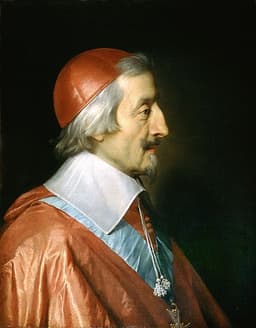
Cardinal Richelieu
Politician · Modern
66.6Total
Basic Information
Born
1868
1585
Died
1928
1642
Era
Modern
Modern
Nationality
Mongolia
France
Occupation
Politician
Politician
Civilization
Eastern
Western
Score Comparison
Military (10%)
13.1
50.0
Political (20%)
36.5
75.0
Influence (20%)
47.9
65.0
Legacy (20%)
40.8
65.0
Leadership (15%)
51.9
75.0
Strategy (15%)
33.1
66.3
TOTAL
40.1
66.6
Balingiin Tserendorj — Complete Timeline
1912 AD
Appointed First Prime Minister of the Bogd KhanatePolitical Action◆ Major
Balingiin Tserendorj was appointed the first Prime Minister of the Bogd Khanate of Mongolia in 1912, following Mongolia's declaration of independence from the Qing dynasty. He led the government under the theocratic rule of the Bogd Khan, overseeing the establishment of state institutions.
Prime MinisterBogd KhanateIndependence
Impact: nationalconstructive
1913 AD
Oversaw Modernization ReformsReform◆ Major
Tserendorj's government initiated modernization reforms, including the establishment of a modern postal system, a national bank, and secular education. These efforts aimed to strengthen Mongolia's state capacity but faced resistance from conservative Buddhist clergy.
ReformModernizationMongolia
Impact: nationalconstructive
1915 AD
Negotiated Treaty of Kyakhta (1915)Political Action◆ Major
Tserendorj participated in negotiations leading to the Treaty of Kyakhta, signed by Russia, China, and Mongolia. The treaty recognized Mongolia's autonomy under Chinese suzerainty, ending the Bogd Khanate's full independence but preserving self-governance.
TreatyDiplomacyMongolia
Impact: regional
Cardinal Richelieu — Complete Timeline
1627 AD
Siege of La RochelleWar◆ Major
Richelieu personally commanded the siege of La Rochelle, a Huguenot stronghold, which lasted 14 months. The city's surrender ended Huguenot political and military power in France, centralizing royal authority and enforcing Catholic uniformity.
SiegeHuguenotsCentralization
Impact: nationaldestructive
1635 AD
Entry of France into the Thirty Years' WarWar
Richelieu declared war on Spain, bringing France directly into the Thirty Years' War on the side of the Protestant powers. This decision prioritized French state interests over Catholic solidarity, aiming to weaken Habsburg dominance in Europe.
War DeclarationThirty Years' WarHabsburg
Impact: global
Establishment of the Académie FrançaiseCultural◆ Major
Richelieu founded the Acad
Cultural InstitutionLanguageRoyal Patronage
Impact: nationalconstructive
This comparison has not been analyzed yet.
One-time AI generation (~1 minute). Scores and timeline are already available below.
Rankings
🥇
Cardinal RichelieuLeader
Mil: 50.0Pol: 75.0Inf: 65.0
66.6
🥈
Balingiin Tserendorj
Mil: 13.1Pol: 36.5Inf: 47.9
40.1
+26.5 behind
How This Comparison Works
Algorithm
Each figure is scored on 6 dimensions (0—100 scale) based on structured historical data: Military (10%), Political (20%), Influence (20%), Legacy (20%), Leadership (15%), Strategy (15%). The weighted total produces the final ranking.
Data Sources
Scores are computed from structured sub-indicators in the database. Scale factors adjust for era (Ancient ×0.85, Modern ×1.0) and civilization size (Eastern ×1.05, Other ×0.80) to account for differences in population and military scale.
Maximum 3 Figures
Comparisons are limited to 2—3 figures to ensure readability and statistical meaningfulness.
Error Margins
±5 points per dimension — Sub-scores are derived from historical records with inherent uncertainty. Two figures within 5 points on a dimension should be considered roughly equivalent in that area.
Total Score Accuracy
±3 points overall — The weighted combination of 6 dimensions produces a total score with approximately ±3 points of uncertainty. Differences of less than 3 points are not statistically significant— the figures are effectively tied.
Known Limitations
- Historical records are incomplete and uneven across civilizations
- Figures from oral-tradition societies may be underrepresented
- Occupation labels can misclassify multi-role figures
- Scores measure capability and impact, not moral character
- Quantitative scoring is a comparison tool, not absolute truth
Capability Radar
Military (10%) — Battles & Warfare
Battles
13
55
Win Rate
19
60
Expansion
20
75
Political (20%) — Governance & Reform
Reform
25
95
Diplomacy
35
90
Economy
20
70
Influence (20%) — Cultural & Global Reach
Cultural
15
75
Global
10
75
Legacy (20%) — Historical Impact
Historical
25
85
Longevity
20
80
Leadership (15%) — Power & Stability
Tenure
30
85
Stability
15
80
Strategy (15%) — Tactics & Innovation
Strategy
25
85
Tactics
26
65
Reform
28
70
Similar Comparisons
Comments & Discussion
No comments yet. Be the first to share your thoughts!