Loading...
Baldwin II of Jerusalem vs Huayna Capac
Huayna Capac leads by 9.3 pts · 2 figures compared
…
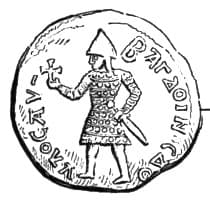
Baldwin II of Jerusalem
Emperor · Medieval
49.0Total
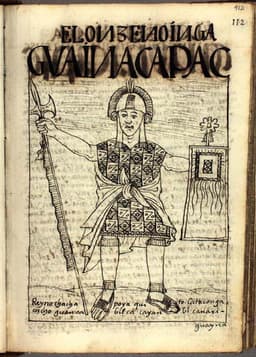
Huayna Capac
Emperor · Medieval
58.3Total
Basic Information
Born
1060
1468
Died
1131
1527
Era
Medieval
Medieval
Nationality
Kingdom of Jerusalem
Inca Empire
Occupation
Emperor
Emperor
Civilization
Western
Other
Score Comparison
Military (10%)
20.0
76.0
Political (20%)
43.7
45.0
Influence (20%)
52.5
55.0
Legacy (20%)
45.8
54.0
Leadership (15%)
65.7
68.0
Strategy (15%)
60.0
65.4
TOTAL
49.0
58.3
Baldwin II of Jerusalem — Complete Timeline
1118 AD
Elected as King of JerusalemPolitical Action◆ Major
Baldwin II was elected King of Jerusalem after the death of Baldwin I. As a capable military leader, he expanded the kingdom's territory and secured its borders against Muslim forces, including capturing Tyre in 1124.
Crusader StatesMonarchyTerritorial Expansion
Impact: regionalconstructive
1123 AD
Captured by Artuqids at Battle of HabWar◆ Major
Baldwin II was captured by the Artuqid Turkish ruler Belek Ghazi during a campaign near the Euphrates. He was held prisoner for over a year until being ransomed for 80,000 dinars, a significant financial blow to the kingdom.
CaptureRansomCrusader-Muslim Wars
Impact: regionaltragic
1124 AD
Captured by Egyptians at Battle of AscalonWar
Shortly after his release, Baldwin II was captured again by Egyptian forces near Ascalon. He was imprisoned in Cairo for several months before being ransomed a second time, demonstrating the precariousness of Crusader leadership.
CaptureRansomEgypt
Impact: regionaltragic
1129 AD
Arranged Marriage of Melisende to FulkPolitical Action◆ Major
Baldwin II arranged the marriage of his daughter Melisende to Fulk V of Anjou, securing a powerful European ally. This dynastic union ensured the succession and strengthened ties between Jerusalem and Western Europe.
Dynastic MarriageSuccessionAlliance
Impact: regionalconstructive
Huayna Capac — Complete Timeline
1493 AD
Conquest of the Kingdom of QuitoWar◆ Major
Huayna Capac led Inca armies northward, conquering the Kingdom of Quito (in modern Ecuador). This campaign extended the Inca Empire to its northernmost extent, incorporating new territories and peoples into the imperial administration.
Inca ExpansionConquestNorthern Campaign
Impact: regional
1500 AD
Construction of SacsayhuamanCultural◆ Major
Huayna Capac oversaw the expansion and fortification of Sacsayhuaman, a massive stone fortress overlooking Cusco. The complex, built with enormous fitted stones, served as both a military stronghold and a ceremonial center, demonstrating Inca engineering capabilities.
ArchitectureFortificationInca Engineering
Impact: regionalconstructive
1525 AD
Division of the Inca EmpirePolitical Action
Huayna Capac divided the Inca Empire between his sons Hu
Succession CrisisCivil WarInca Decline
Impact: regionaldestructive
1527 AD
Death from SmallpoxOther
Huayna Capac died from smallpox, a disease introduced by Europeans that spread through the Inca Empire ahead of Spanish conquistadors. His death triggered the Inca civil war and left the empire vulnerable to Francisco Pizarro's invasion.
EpidemicDiseaseInca Collapse
Impact: regionaltragic
Expert Analysis
Origins
Baldwin II of Jerusalem was born Baldwin of Rethel around 1075 in northern France, into the noble House of Rethel. He was a cousin of the first Crusader king, Baldwin I. Little is known of his early life before he joined the First Crusade in 1096. He was a minor lord, but his family connections and military skills would propel him to prominence in the Latin East.
Huayna Capac was born around 1493 in Cusco, the capital of the Inca Empire. He was the son of Emperor Túpac Yupanqui and his primary wife, Mama Ocllo. As a prince, he received rigorous training in governance, warfare, and Inca religion. He ascended to the throne around 1493 after his father's death, inheriting an already vast empire.
Rise to Power
Baldwin II rose to power after the death of his cousin, Baldwin I, in 1118. He was elected King of Jerusalem by the High Court, primarily due to his military reputation and experience in the kingdom. His reign began with immediate challenges: securing the northern borders and maintaining relations with other Crusader states. He successfully defended the kingdom against Seljuk and Egyptian attacks, earning respect among his peers.
Huayna Capac assumed the throne after his father's death, but his rise was not contested. He continued his father's expansionist policies, leading campaigns northward into modern Ecuador. By 1500, he had conquered the Kingdom of Quito, incorporating it into the Inca Empire. His military prowess and strategic marriages consolidated his power, making him one of the most powerful rulers in pre-Columbian America.
Leadership & Governance
Baldwin II's leadership was defined by his ability to hold together the fragile Crusader states. He focused on fortifying castles, such as Krak des Chevaliers, and forging alliances with other Crusader lords. His governance was feudal, relying on vassals and the Church. He scored 65.7 in leadership, reflecting his adeptness at managing a diverse kingdom under constant threat.
Huayna Capac's governance was centralized and bureaucratic. He expanded the Inca road system, improved agricultural terraces, and enforced the mit'a labor system. He scored 68.0 in leadership, slightly higher than Baldwin, due to his effective administration of a vast empire. He also integrated conquered peoples through resettlement and cultural exchange, a strategy that minimized rebellions.
Triumph & Tragedy
Baldwin II's greatest triumph was capturing the city of Tyre in 1124, a major port that strengthened the kingdom's economy. He also successfully arranged the marriage of his daughter Melisende to Fulk of Anjou, ensuring a stable succession. His tragedies included two captures: first by the Artuqids at the Battle of Hab in 1123, and later by Egyptians near Ascalon in 1124. He was ransomed twice, which drained the kingdom's resources.
Huayna Capac's greatest success was expanding the Inca Empire to its maximum extent, from modern Colombia to Chile. He also commissioned the construction of Sacsayhuaman, a massive stone fortress that showcased Inca engineering. His tragedy was dividing the empire between his sons Huáscar and Atahualpa, which led to a devastating civil war. Additionally, his death from smallpox in 1527, introduced by Europeans, left the empire vulnerable to Spanish conquest.
Character & Destiny
Baldwin II was a pragmatic and resilient leader. Despite being captured twice, he never lost his resolve to defend Jerusalem. His character was marked by diplomacy and careful planning, as seen in his marriage arrangements. His destiny was to hold the kingdom together during a period of external threats, but his lack of a male heir forced him to rely on his daughter's marriage, which ultimately led to the rise of the Angevin dynasty in Jerusalem.
Huayna Capac was a decisive and ambitious ruler. He was known for his military campaigns and administrative reforms. His decision to divide the empire, however, proved catastrophic. His character—confident and perhaps overconfident—led him to believe his sons could rule jointly. His destiny was to die just as the Spanish arrived, leaving his empire in chaos. Historians note that his death was a turning point that facilitated the Spanish conquest.
Legacy
Baldwin II's legacy is mixed. He is remembered as a capable king who defended the Crusader states, but his reign did not lead to lasting territorial gains. The Kingdom of Jerusalem survived for another century after his death, but internal divisions and Muslim resurgence eventually led to its fall. His score of 45.8 in legacy reflects this limited long-term impact.
Huayna Capac's legacy is more profound. He ruled at the height of the Inca Empire, and his administrative and architectural achievements endured for centuries. The Inca road system and agricultural techniques influenced later Andean civilizations. However, his division of the empire contributed to its rapid collapse. His legacy score of 54.0 is higher than Baldwin's, indicating a greater lasting influence.
Conclusion
Huayna Capac had a greater impact than Baldwin II of Jerusalem. His military score of 76.0 far surpasses Baldwin's 20.0, reflecting his successful expansion of the Inca Empire. His leadership and strategy scores are also higher. While Baldwin was a resilient defender of a small kingdom, Huayna Capac built an empire that stretched across South America. The Inca Empire's collapse after his death was due to external factors (smallpox) and his own flawed succession plan, but his achievements in governance and infrastructure were monumental. Baldwin's realm was always precarious and ultimately fell without leaving a comparable legacy. Therefore, Huayna Capac's overall score of 58.3 versus Baldwin's 49.0 accurately reflects his greater historical significance.
Rankings
🥇
Huayna CapacLeader
Mil: 76.0Pol: 45.0Inf: 55.0
58.3
🥈
Baldwin II of Jerusalem
Mil: 20.0Pol: 43.7Inf: 52.5
49.0
+9.3 behind
How This Comparison Works
Algorithm
Each figure is scored on 6 dimensions (0—100 scale) based on structured historical data: Military (10%), Political (20%), Influence (20%), Legacy (20%), Leadership (15%), Strategy (15%). The weighted total produces the final ranking.
Data Sources
Scores are computed from structured sub-indicators in the database. Scale factors adjust for era (Ancient ×0.85, Modern ×1.0) and civilization size (Eastern ×1.05, Other ×0.80) to account for differences in population and military scale.
Maximum 3 Figures
Comparisons are limited to 2—3 figures to ensure readability and statistical meaningfulness.
Error Margins
±5 points per dimension — Sub-scores are derived from historical records with inherent uncertainty. Two figures within 5 points on a dimension should be considered roughly equivalent in that area.
Total Score Accuracy
±3 points overall — The weighted combination of 6 dimensions produces a total score with approximately ±3 points of uncertainty. Differences of less than 3 points are not statistically significant— the figures are effectively tied.
Known Limitations
- Historical records are incomplete and uneven across civilizations
- Figures from oral-tradition societies may be underrepresented
- Occupation labels can misclassify multi-role figures
- Scores measure capability and impact, not moral character
- Quantitative scoring is a comparison tool, not absolute truth
Capability Radar
Military (10%) — Battles & Warfare
Battles
45
75
Win Rate
40
80
Expansion
40
85
Political (20%) — Governance & Reform
Reform
35
60
Diplomacy
55
65
Economy
30
70
Influence (20%) — Cultural & Global Reach
Cultural
30
60
Global
25
55
Legacy (20%) — Historical Impact
Historical
45
65
Longevity
30
50
Leadership (15%) — Power & Stability
Tenure
60
70
Stability
25
55
Strategy (15%) — Tactics & Innovation
Strategy
55
75
Tactics
50
70
Reform
30
65
Similar Comparisons
Comments & Discussion
No comments yet. Be the first to share your thoughts!