Loading...
Baldwin II of Jerusalem vs Julius Caesar
Julius Caesar leads by 33.8 pts · 2 figures compared
…
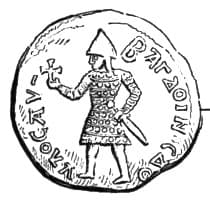
Baldwin II of Jerusalem
Emperor · Medieval
49.0Total

Julius Caesar
General · Ancient
82.8Total
Basic Information
Born
1060
-100
Died
1131
-44
Era
Medieval
Ancient
Nationality
Kingdom of Jerusalem
Roman Republic
Occupation
Emperor
General
Civilization
Western
Western
Score Comparison
Military (10%)
20.0
88.0
Political (20%)
43.7
78.0
Influence (20%)
52.5
85.0
Legacy (20%)
45.8
82.0
Leadership (15%)
65.7
80.0
Strategy (15%)
60.0
85.0
TOTAL
49.0
82.8
Baldwin II of Jerusalem — Complete Timeline
1118 AD
Elected as King of JerusalemPolitical Action◆ Major
Baldwin II was elected King of Jerusalem after the death of Baldwin I. As a capable military leader, he expanded the kingdom's territory and secured its borders against Muslim forces, including capturing Tyre in 1124.
Crusader StatesMonarchyTerritorial Expansion
Impact: regionalconstructive
1123 AD
Captured by Artuqids at Battle of HabWar◆ Major
Baldwin II was captured by the Artuqid Turkish ruler Belek Ghazi during a campaign near the Euphrates. He was held prisoner for over a year until being ransomed for 80,000 dinars, a significant financial blow to the kingdom.
CaptureRansomCrusader-Muslim Wars
Impact: regionaltragic
1124 AD
Captured by Egyptians at Battle of AscalonWar
Shortly after his release, Baldwin II was captured again by Egyptian forces near Ascalon. He was imprisoned in Cairo for several months before being ransomed a second time, demonstrating the precariousness of Crusader leadership.
CaptureRansomEgypt
Impact: regionaltragic
1129 AD
Arranged Marriage of Melisende to FulkPolitical Action◆ Major
Baldwin II arranged the marriage of his daughter Melisende to Fulk V of Anjou, securing a powerful European ally. This dynastic union ensured the succession and strengthened ties between Jerusalem and Western Europe.
Dynastic MarriageSuccessionAlliance
Impact: regionalconstructive
Julius Caesar — Complete Timeline
58 BC
Gallic WarsWar◆ Major
Caesar, as proconsul of Gaul, launched a series of campaigns that conquered all of Gaul (modern France, Belgium, and parts of Switzerland). He fought numerous battles, including against the Helvetii, the Belgae, and the Gallic chieftain Vercingetorix. The wars brought immense wealth and a loyal army to Caesar.
Gallic WarsConquestRoman Expansion
Impact: regional
49 BC
Crossing the RubiconPolitical Action◆ Major
Caesar led Legio XIII across the Rubicon River into Italy, defying the Roman Senate's order to disband his army. This act triggered a civil war against Pompey and the Optimates, ultimately leading to Caesar's dictatorship and the end of the Roman Republic.
Roman Civil WarEnd of RepublicPower Struggle
Impact: global
48 BC
Battle of PharsalusWar◆ Major
Caesar's outnumbered army defeated the larger forces of Pompey the Great at Pharsalus in Greece. Caesar's tactical use of a reserve line to counter Pompey's cavalry charge proved decisive. Pompey fled to Egypt, where he was assassinated, leaving Caesar as the undisputed master of the Roman world.
Roman Civil WarBattleDecisive Victory
Impact: regional
44 BC
Appointment as Dictator for LifePolitical Action◆ Major
The Roman Senate appointed Caesar dictator perpetuo (dictator for life), granting him unprecedented personal power. This move concentrated military, legislative, and judicial authority in one person, effectively ending the Roman Republic's traditional system of checks and balances and alarming many senators.
DictatorshipEnd of RepublicPower Consolidation
Impact: regionaldestructive
Assassination on the Ides of MarchPolitical Action◆ Major
A group of Roman senators, led by Marcus Junius Brutus and Gaius Cassius Longinus, stabbed Caesar to death at a meeting of the Senate in the Theatre of Pompey. The assassination was intended to restore the Republic, but instead triggered another civil war that led to the rise of the Roman Empire.
AssassinationRoman PoliticsEnd of Republic
Impact: globaldestructive
Expert Analysis
baldwin-ii-of-jerusalem-vs-julius-caesar
# The King Who Was Captured Twice: Julius Caesar and Baldwin II of Jerusalem
The Ides of March, 44 BCE. Julius Caesar, the most powerful man in the Mediterranean, falls beneath twenty-three dagger blows in the Senate chamber. His blood pools on the marble floor of Pompey's Theatre, a death that would echo through two millennia. Now imagine another scene, eleven centuries later: Baldwin II of Jerusalem, King of the Crusader kingdom, sits in a dungeon near the Euphrates River, his armor stripped, his crown a distant memory. He is a prisoner of war, awaiting ransom. Two rulers, two fates—one who conquered the known world and died at its peak, another who struggled to hold a fragile kingdom together and was captured not once but twice. What explains the chasm between them?
Origins
Julius Caesar was born into the patrician Julian clan in 100 BCE, but his family had fallen from political prominence. Rome was a republic in turmoil—civil wars, slave revolts, and the crumbling of old aristocratic norms. Caesar's uncle by marriage, Gaius Marius, had been a populist general who challenged the Senate's authority. From childhood, Caesar absorbed the lesson that power came not from birth alone but from military glory and the loyalty of soldiers. He was a gambler by nature, a man who once told his friends that he would rather be first in a village than second in Rome.
Baldwin II, born in 1060, came from a different world entirely. He was a French nobleman from the House of Rethel, part of the generation that answered Pope Urban II's call for the First Crusade. The Crusader states were born in blood and faith, carved out of Muslim territory in the Holy Land. Baldwin I, the first king of Jerusalem, died without an heir, and Baldwin II was elected to succeed him in 1118. He was not a conqueror but a caretaker of a kingdom that was always on the edge of extinction—a narrow strip of land surrounded by enemies, dependent on reinforcements from Europe that might never come.
Rise to Power
Caesar's path was a masterclass in ambition. He won a priesthood at sixteen, survived the proscriptions of Sulla's dictatorship, and then spent years climbing the Roman political ladder: quaestor, aedile, praetor, governor of Further Spain. Each step was calculated, each debt incurred to buy influence. His true breakthrough came in 58 BCE when he secured command of Gaul. Over eight years, he conquered a territory larger than Italy itself, amassed a personal fortune, and forged an army that would follow him anywhere. When the Senate ordered him to disband his legions, he crossed the Rubicon River in 49 BCE, triggering a civil war that ended with him as dictator.
Baldwin II's rise was quieter but no less precarious. He was already a veteran of the Crusades when elected king in 1118. His kingdom stretched from Beirut to the Sinai, but it was a patchwork of castles and fortified towns, constantly raided by Turkish and Egyptian forces. He had no legions, no treasury from conquered Gaul. Instead, he had the support of the Knights Templar, which he helped found in 1119, and the loyalty of a handful of barons who could raise a few hundred knights at best. His power rested not on conquest but on survival.
Leadership & Governance
Caesar governed like a force of nature. As dictator, he reformed the calendar, launched massive public works, extended Roman citizenship to provincial elites, and planned invasions of Parthia and Germany. His military genius was breathtaking: at the Siege of Alesia in 52 BCE, he built a ring of fortifications around a Gallic army while simultaneously constructing another ring to repel a relieving force—a double circumvallation that remains a textbook maneuver. But his political wisdom was flawed. He centralized power, packed the Senate with his supporters, and accepted the title "dictator for life." This broke the delicate balance of the Republic and made enemies of men who saw him as a tyrant.
Baldwin II ruled a kingdom that was always a hair's breadth from collapse. He expanded Jerusalem's territory through diplomacy and marriage as much as war. In 1129, he arranged the marriage of his daughter Melisende to Fulk V of Anjou, a powerful French count, securing a crucial European ally. His military record, however, was mixed. In 1123, he was captured by the Artuqid ruler Belek Ghazi at the Battle of Hab, spending months in a dungeon near the Euphrates. Released after ransom, he was captured again in 1124 by Egyptian forces near Ascalon and imprisoned in Cairo. Each time, his kingdom scrambled to pay his ransom, a humiliating reminder of its weakness.
Triumph & Tragedy
Caesar's greatest triumph was the conquest of Gaul and his victory in the civil war. His tragedy was that he could not stop. He could have restored the Republic and retired with honor; instead, he chose absolute power and was murdered for it. His last words, according to tradition, were "Et tu, Brute?"—a recognition that even his closest allies had turned against him.
Baldwin II's greatest triumph was simply holding the kingdom together for thirteen years. He died in 1131, still king, still in Jerusalem. His tragedy was that his kingdom was a house built on sand. Within a century, Jerusalem would fall to Saladin. The Crusader states were an anomaly, a medieval adventure that could not last. Baldwin knew this; he spent his reign preparing his daughter Melisende to rule after him, a rare act of foresight in a world of short-lived kings.
Character & Destiny
Caesar was audacity incarnate. He crossed rivers, defied senates, and married Cleopatra. His personality was a weapon: charm, ruthlessness, and an unshakable belief in his own destiny. He wrote his own commentaries to shape his legacy, and he succeeded beyond measure. His destiny was to die at the height of his power, a martyr to his own ambition.
Baldwin II was a survivor, not a visionary. He lacked Caesar's genius but also his hubris. He knew his limits—he was a competent general, not a great one. His destiny was to be forgotten by all but historians, remembered as a footnote in the Crusader saga. Yet there is a quiet dignity in his story: a king who was captured twice and never gave up, who kept a fragile dream alive through diplomacy and endurance.
Legacy
Caesar's legacy is immeasurable. His name became a title—Kaiser, Tsar, Caesar—a symbol of supreme power. The Roman Empire he founded lasted five centuries in the West and a thousand years in the East. His military tactics are still studied, his writings still read. He changed the course of Western civilization.
Baldwin II left no such mark. His kingdom fell, his line ended, and his castles crumbled into ruins. But his story matters because it reminds us that history is not only about the Caesars who conquer and die dramatically. It is also about the Baldwins who struggle, fail, and endure—kings who were captured twice and still found the strength to rule.
Conclusion
Standing on the Temple Mount in Jerusalem today, you can see the Dome of the Rock, built centuries before Baldwin's time. You can also see the ruins of Crusader fortifications, faint traces of a kingdom that once seemed eternal to its inhabitants but was, in reality, a brief episode. Julius Caesar's Rome still stands in marble and law; Baldwin's Jerusalem exists only in chronicles and stone. The difference between them is not just talent or luck—it is the difference between building an empire that reshapes the world and maintaining a kingdom that can barely survive. Caesar gambled for everything and won, then lost it all in a single afternoon. Baldwin gambled for less and kept it longer, knowing that even a small kingdom is worth defending. History remembers the conqueror, but it is the survivor who teaches us how to live.
Rankings
🥇
Julius CaesarLeader
Mil: 88.0Pol: 78.0Inf: 85.0
82.8
🥈
Baldwin II of Jerusalem
Mil: 20.0Pol: 43.7Inf: 52.5
49.0
+33.8 behind
How This Comparison Works
Algorithm
Each figure is scored on 6 dimensions (0—100 scale) based on structured historical data: Military (10%), Political (20%), Influence (20%), Legacy (20%), Leadership (15%), Strategy (15%). The weighted total produces the final ranking.
Data Sources
Scores are computed from structured sub-indicators in the database. Scale factors adjust for era (Ancient ×0.85, Modern ×1.0) and civilization size (Eastern ×1.05, Other ×0.80) to account for differences in population and military scale.
Maximum 3 Figures
Comparisons are limited to 2—3 figures to ensure readability and statistical meaningfulness.
Error Margins
±5 points per dimension — Sub-scores are derived from historical records with inherent uncertainty. Two figures within 5 points on a dimension should be considered roughly equivalent in that area.
Total Score Accuracy
±3 points overall — The weighted combination of 6 dimensions produces a total score with approximately ±3 points of uncertainty. Differences of less than 3 points are not statistically significant— the figures are effectively tied.
Known Limitations
- Historical records are incomplete and uneven across civilizations
- Figures from oral-tradition societies may be underrepresented
- Occupation labels can misclassify multi-role figures
- Scores measure capability and impact, not moral character
- Quantitative scoring is a comparison tool, not absolute truth
Capability Radar
Military (10%) — Battles & Warfare
Battles
45
95
Win Rate
40
92
Expansion
40
97
Political (20%) — Governance & Reform
Reform
35
90
Diplomacy
55
85
Economy
30
82
Influence (20%) — Cultural & Global Reach
Cultural
30
88
Global
25
94
Legacy (20%) — Historical Impact
Historical
45
95
Longevity
30
96
Leadership (15%) — Power & Stability
Tenure
60
75
Stability
25
60
Strategy (15%) — Tactics & Innovation
Strategy
55
94
Tactics
50
96
Reform
30
88
Similar Comparisons
Comments & Discussion
BarbatusCrucis6/17/2026
Comparing Baldwin II to Caesar is like comparing a county sheriff to Alexander the Great. Baldwin got captured TWICE. Caesar was never even wounded in battle until his assassination. The crusader king had to beg for ransom money from Europe, while Caesar was crossing the Rubicon with veteran legions. One created the most famous last words in history — the other's legacy is a kingdom that collapsed 70 years after his death.
暗影铁砧6/17/2026
把鲍德温二世跟凯撒比,简直离谱。凯撒征服高卢、打赢内战后建立帝国,而这位耶路撒冷国王两次被俘,全靠借钱续命。史书里他连个像样的战役都没指挥过,不是防守就是乞援。凯撒说“我来,我见,我征服”,鲍德温说“我来,我丢,我赎人”——这就是差距。
PilaRatio6/17/2026
The statistical probability of a medieval king being captured in battle was about 12% — Baldwin II achieved a 200% rate. Caesar's capture by Cilician pirates only lasted 38 days, and he personally ensured their crucifixion afterward. Baldwin spent five years total in Muslim dungeons. These aren't just different leaders; they represent entirely different orders of magnitude in terms of strategic competence.
丝路断剑6/17/2026
你们都在谈军事,我谈经济。凯撒靠高卢战利品还清罗马国债,而鲍德温二世不得不抵押安条克公国来支付赎金。十字军王国本就穷得叮当响,两次国王被俘直接掏空了国库,导致后续防御全面崩溃。这不是个人能力问题——这是整个国家战略错位的结果,用中世纪封建体系硬撑着跨国圣战。
MartiusCorvus6/17/2026
As a classicist, I must point out the structural irony: Caesar died because he centralized too much power, while Baldwin II couldn't centralize enough. Caesar's Senate feared one man ruling Rome; Baldwin's nobles practically let him rot in prison for years because they had no central authority. Same problem — concentration of power — gave opposite outcomes. Caesar's Rome thrived under autocracy; Baldwin's Jerusalem needed it and never got it.