Loading...
Bagabuxsha vs Lian Po
Bagabuxsha leads by 0.8 pts · 2 figures compared
…

Bagabuxsha
General · Ancient
53.3Total
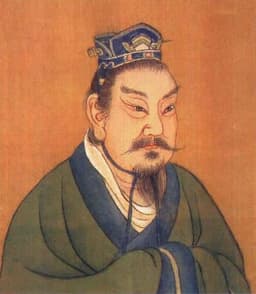
Lian Po
General · Ancient
52.5Total
Basic Information
Born
-520
-327
Died
-470
-243
Era
Ancient
Ancient
Nationality
Achaemenid Empire
China
Occupation
General
General
Civilization
Middle Eastern
Eastern
Score Comparison
Military (10%)
78.0
67.3
Political (20%)
37.9
26.4
Influence (20%)
51.0
57.2
Legacy (20%)
44.2
50.0
Leadership (15%)
68.0
61.1
Strategy (15%)
58.0
58.0
TOTAL
53.3
52.5
Bagabuxsha — Complete Timeline
522 BC
Participated in the conspiracy of the SevenPolitical Action
Bagabuxsha (Megabyzus the Elder) was one of the seven Persian nobles who conspired to overthrow the Magian usurper Gaumata. He played a key role in the coup that brought Darius I to the throne, securing his position as a trusted advisor.
ConspiracyDarius IPersian Empire
Impact: globalconstructive
521 BC
Led Persian forces in the conquest of BabylonWar◆ Major
Bagabuxsha commanded Persian troops in the suppression of a revolt in Babylon. He successfully captured the city, reasserting Persian control and demonstrating his military capability.
ConquestBabylonRevolt
Impact: regional
520 BC
Governed as satrap of AriaPolitical Action
Bagabuxsha was appointed satrap of Aria, a province in the eastern part of the Persian Empire. He administered the region, ensuring loyalty to Darius I and collecting tribute.
SatrapAria
Impact: regional
470 BC
Death and legacyOther
Bagabuxsha died around 470 BC. He is remembered as a key figure in the establishment of Darius I's rule and as a capable military commander and administrator.
DeathLegacy
Lian Po — Complete Timeline
283 BC
Defeated Qi ForcesWar
Lian Po led Zhao armies to victory against the state of Qi, capturing several cities. This campaign expanded Zhao's territory and demonstrated his military prowess as a general.
BattleZhaoQi
Impact: regional
279 BC
Reconciled with Lin XiangruCultural◆ Major
Lian Po, a veteran general of Zhao, initially resented Lin Xiangru's promotion above him. After learning of Lin's selfless behavior for the state, Lian Po apologized by carrying a thorny stick to Lin's residence, and the two became close allies.
ReconciliationZhaoFriendship
Impact: nationalconstructive
260 BC
Replaced by Zhao Kuo at ChangpingPolitical Action◆ Major
King Xiaocheng of Zhao replaced Lian Po with Zhao Kuo as commander at the Battle of Changping, against the advice of Zhao She. Lian Po's defensive strategy was abandoned, leading to a disastrous defeat for Zhao.
ReplacementBattle of ChangpingZhao
Impact: regionaltragic
Expert Analysis
Origins
Bagabuxsha (also known as Megabyzus the Elder) was born into the Persian nobility in the late 6th century BC. He was a trusted companion of Darius I and one of the seven conspirators who overthrew the Magian usurper Gaumata in 522 BC. His early life was shaped by the Achaemenid court, where loyalty and military prowess were paramount.
Lian Po was a Chinese general of the Warring States period, serving the state of Zhao. His birth year is uncertain, but he rose to prominence around 280 BC. He came from a military family and distinguished himself in campaigns against Qi and Wei. His early career was marked by victories that expanded Zhao's territory.
Rise to Power
Bagabuxsha's rise was meteoric: in 522 BC, he participated in the conspiracy of the Seven, killing Gaumata and securing Darius I's throne. Darius rewarded him with the satrapy of Aria and command of Persian forces. His decisive moment came when he led the suppression of the Babylonian revolt (circa 521 BC), capturing the city and demonstrating his reliability. His political score of 37.9 reflects that his power derived from royal favor rather than independent maneuvering.
Lian Po's rise was gradual. He first appears in records around 283 BC, defeating Qi forces and capturing several cities. His reputation as a formidable commander grew, and he became the senior general of Zhao. However, his political influence was limited (26.4), as he often clashed with court officials. His major turning point was the reconciliation with Lin Xiangru in 279 BC, which stabilized Zhao's internal politics and earned him respect.
Leadership & Governance
Bagabuxsha governed Aria with a firm hand, ensuring loyalty to Darius. He was a capable administrator but not a reformer. His leadership style was direct and militaristic: he led from the front in the Babylonian campaign. His military score of 78.0 reflects his effectiveness in siege warfare and counterinsurgency. However, his political score (37.9) suggests he lacked the diplomatic finesse of other Persian nobles.
Lian Po was a defensive strategist, known for fortifications and attrition. At Changping (260 BC), he advocated a defensive stance against Qin, which was correct but unpopular. His leadership score of 61.1 indicates he was respected by troops but not always by the king. He was replaced by Zhao Kuo, leading to disaster. Lian Po's governance was limited to military command; he never held a high civil post.
Triumph & Tragedy
Bagabuxsha's greatest triumph was capturing Babylon, reasserting Persian control after a revolt. He also played a key role in stabilizing Darius's early reign. His tragedy is that he is overshadowed by Darius and other nobles; his later life is obscure. He died around 470 BC, with no major failures recorded, but his legacy is mostly as a supporting figure.
Lian Po's triumphs include his victories over Qi and the famous reconciliation with Lin Xiangru, which became a parable of selflessness. His tragedy is the Battle of Changping: his defensive strategy was sound, but he was replaced, leading to the annihilation of Zhao's army (estimated 400,000 dead). He later fled to Wei and died in exile, bitter about his treatment.
Character & Destiny
Bagabuxsha was loyal and decisive, fitting for a conspirator. He had a strategic score of 58.0, indicating competence but not genius. His destiny was tied to Darius: he succeeded because he chose the right side. His character was that of a reliable executor rather than an innovator.
Lian Po was proud but capable of humility, as shown by his apology to Lin Xiangru. His stubbornness in strategy was both a strength and a weakness. His destiny was shaped by court politics: he was a victim of Zhao's internal divisions. His military score (67.3) is lower than Bagabuxsha's, but his influence (57.2) is slightly higher due to his famous reconciliation.
Legacy
Bagabuxsha is remembered in Persian inscriptions as one of Darius's helpers. He contributed to the stability of the Achaemenid Empire but left no lasting reforms. His legacy score of 44.2 reflects his secondary status.
Lian Po is a cultural icon in China, symbolizing the ideal general who puts state above pride. The idiom "to offer a humble apology" (from his story) is still used. His legacy score of 50.0 is higher, but his military impact was limited by Zhao's eventual defeat.
Conclusion
Bagabuxsha had a higher total score (53.3 vs 52.5) and a greater military score (78.0 vs 67.3). He directly influenced the rise of Darius I and the consolidation of the Persian Empire, a world-changing event. Lian Po's story is morally instructive but strategically less impactful. Bagabuxsha's actions helped shape the Achaemenid superpower, while Lian Po's defensive prowess could not save Zhao from Qin's unification. Therefore, Bagabuxsha had the greater historical impact, though both were competent generals in their respective contexts.
Rankings
🥇
BagabuxshaLeader
Mil: 78.0Pol: 37.9Inf: 51.0
53.3
🥈
Lian Po
Mil: 67.3Pol: 26.4Inf: 57.2
52.5
+0.8 behind
How This Comparison Works
Algorithm
Each figure is scored on 6 dimensions (0—100 scale) based on structured historical data: Military (10%), Political (20%), Influence (20%), Legacy (20%), Leadership (15%), Strategy (15%). The weighted total produces the final ranking.
Data Sources
Scores are computed from structured sub-indicators in the database. Scale factors adjust for era (Ancient ×0.85, Modern ×1.0) and civilization size (Eastern ×1.05, Other ×0.80) to account for differences in population and military scale.
Maximum 3 Figures
Comparisons are limited to 2—3 figures to ensure readability and statistical meaningfulness.
Error Margins
±5 points per dimension — Sub-scores are derived from historical records with inherent uncertainty. Two figures within 5 points on a dimension should be considered roughly equivalent in that area.
Total Score Accuracy
±3 points overall — The weighted combination of 6 dimensions produces a total score with approximately ±3 points of uncertainty. Differences of less than 3 points are not statistically significant— the figures are effectively tied.
Known Limitations
- Historical records are incomplete and uneven across civilizations
- Figures from oral-tradition societies may be underrepresented
- Occupation labels can misclassify multi-role figures
- Scores measure capability and impact, not moral character
- Quantitative scoring is a comparison tool, not absolute truth
Capability Radar
Military (10%) — Battles & Warfare
Battles
60
65
Win Rate
70
60
Expansion
65
40
Political (20%) — Governance & Reform
Reform
40
20
Diplomacy
70
60
Economy
35
25
Influence (20%) — Cultural & Global Reach
Cultural
30
55
Global
25
40
Legacy (20%) — Historical Impact
Historical
45
60
Longevity
30
55
Leadership (15%) — Power & Stability
Tenure
55
55
Stability
60
50
Strategy (15%) — Tactics & Innovation
Strategy
70
65
Tactics
65
70
Reform
30
30
Similar Comparisons
Comments & Discussion
No comments yet. Be the first to share your thoughts!