Loading...
This comparison has not been analyzed yet.
One-time AI generation (~1 minute). Scores and timeline are already available below.
Babrak Karmal vs Wu Tingfang
Wu Tingfang leads by 1.8 pts · 2 figures compared
…
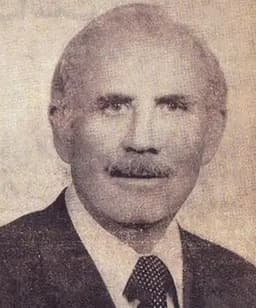
Babrak Karmal
Politician · Modern
43.0Total
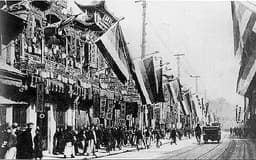
Wu Tingfang
Politician · Modern
44.8Total
Basic Information
Born
1929
1842
Died
—
1922
Era
Modern
Modern
Nationality
Afghanistan
China
Occupation
Politician
Politician
Civilization
Middle Eastern
Eastern
Score Comparison
Military (10%)
33.2
12.7
Political (20%)
29.3
48.0
Influence (20%)
48.6
56.4
Legacy (20%)
38.3
45.0
Leadership (15%)
55.3
48.4
Strategy (15%)
52.8
36.8
TOTAL
43.0
44.8
Babrak Karmal — Complete Timeline
1979 AD
Presidency of Afghanistan (1979-1986)Political Action◆ Major
Babrak Karmal was installed as President of Afghanistan by the Soviet Union in December 1979, following the Soviet invasion. He led the Democratic Republic of Afghanistan during the early years of the Soviet-Afghan War, implementing unpopular reforms and relying on Soviet military support.
Soviet InvasionPuppet GovernmentCommunist
Impact: national
1986 AD
Replacement by Najibullah (1986)Political Action◆ Major
Karmal was replaced as General Secretary of the People's Democratic Party by Mohammad Najibullah in May 1986, under Soviet pressure. He was effectively sidelined, though he remained in Afghanistan until his death. This marked the end of his direct political influence.
Power StruggleNajibullahSoviet Policy
Impact: national
1996 AD
Death in Moscow (1996)Other
Babrak Karmal died in Moscow in 1996, reportedly from liver cancer. He had been living in exile in the Soviet Union since his removal from power. His death went largely unnoticed in Afghanistan, where the civil war was raging.
ExileDeathMoscow
Impact: national
Wu Tingfang — Complete Timeline
1896 AD
Served as Minister to the United StatesPolitical Action◆ Major
Wu Tingfang served as Qing China's minister to the United States, Spain, and Peru. He negotiated treaties, promoted Chinese interests, and worked to improve China's international image.
DiplomacyUnited StatesQing Dynasty
Impact: globalconstructive
1901 AD
Negotiated the Boxer ProtocolPolitical Action
Wu Tingfang participated in negotiations for the Boxer Protocol, which ended the Boxer Rebellion. He worked to reduce the indemnity and protect Chinese sovereignty, though the terms remained harsh.
DiplomacyBoxer RebellionTreaty
Impact: global
1912 AD
Authored the Legal Code for the Republic of ChinaReform◆ Major
Wu Tingfang drafted the legal code for the new Republic of China, drawing on Western legal principles. His work laid the foundation for modern Chinese law, though implementation was limited.
Legal ReformConstitutionModernization
Impact: nationalconstructive
1917 AD
Acted as Premier of the Republic of ChinaPolitical Action◆ Major
Wu Tingfang served as acting Premier of the Republic of China during the Beiyang government. He attempted to restore constitutional order but was thwarted by warlord Zhang Xun's restoration of the Qing emperor.
PremiershipConstitutional CrisisWarlord Era
Impact: national
This comparison has not been analyzed yet.
One-time AI generation (~1 minute). Scores and timeline are already available below.
Rankings
🥇
Wu TingfangLeader
Mil: 12.7Pol: 48.0Inf: 56.4
44.8
🥈
Babrak Karmal
Mil: 33.2Pol: 29.3Inf: 48.6
43.0
+1.8 behind
How This Comparison Works
Algorithm
Each figure is scored on 6 dimensions (0—100 scale) based on structured historical data: Military (10%), Political (20%), Influence (20%), Legacy (20%), Leadership (15%), Strategy (15%). The weighted total produces the final ranking.
Data Sources
Scores are computed from structured sub-indicators in the database. Scale factors adjust for era (Ancient ×0.85, Modern ×1.0) and civilization size (Eastern ×1.05, Other ×0.80) to account for differences in population and military scale.
Maximum 3 Figures
Comparisons are limited to 2—3 figures to ensure readability and statistical meaningfulness.
Error Margins
±5 points per dimension — Sub-scores are derived from historical records with inherent uncertainty. Two figures within 5 points on a dimension should be considered roughly equivalent in that area.
Total Score Accuracy
±3 points overall — The weighted combination of 6 dimensions produces a total score with approximately ±3 points of uncertainty. Differences of less than 3 points are not statistically significant— the figures are effectively tied.
Known Limitations
- Historical records are incomplete and uneven across civilizations
- Figures from oral-tradition societies may be underrepresented
- Occupation labels can misclassify multi-role figures
- Scores measure capability and impact, not moral character
- Quantitative scoring is a comparison tool, not absolute truth
Capability Radar
Military (10%) — Battles & Warfare
Battles
5
12
Win Rate
5
18
Expansion
5
23
Political (20%) — Governance & Reform
Reform
20
30
Diplomacy
20
65
Economy
15
25
Influence (20%) — Cultural & Global Reach
Cultural
15
30
Global
15
40
Legacy (20%) — Historical Impact
Historical
20
40
Longevity
10
30
Leadership (15%) — Power & Stability
Tenure
40
20
Stability
10
20
Strategy (15%) — Tactics & Innovation
Strategy
5
21
Tactics
5
27
Reform
5
28
Similar Comparisons
Comments & Discussion
No comments yet. Be the first to share your thoughts!