Loading...
Milton Obote vs Wu Tingfang
Milton Obote leads by 5.6 pts · 2 figures compared
…
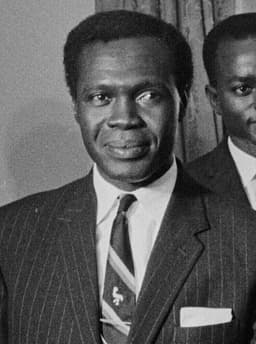
Milton Obote
Politician · Modern
50.4Total
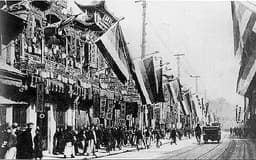
Wu Tingfang
Politician · Modern
44.8Total
Basic Information
Born
1925
1842
Died
—
1922
Era
Modern
Modern
Nationality
Uganda
China
Occupation
Politician
Politician
Civilization
Other
Eastern
Score Comparison
Military (10%)
41.6
12.7
Political (20%)
46.6
48.0
Influence (20%)
51.8
56.4
Legacy (20%)
43.3
45.0
Leadership (15%)
67.0
48.4
Strategy (15%)
53.8
36.8
TOTAL
50.4
44.8
Milton Obote — Complete Timeline
1962 AD
Became first Prime Minister of independent UgandaPolitical Action◆ Major
Milton Obote became the first Prime Minister of Uganda upon independence from Britain. He led a coalition government with the Kabaka Yekka party, marking the beginning of his political dominance.
IndependencePrime MinisterUganda
Impact: nationalconstructive
1966 AD
Suspended the constitution and assumed executive powersPolitical Action◆ Major
Obote suspended the constitution, abolished the federal system, and assumed executive powers, effectively making himself President. He also ordered the arrest of several ministers and attacked the Lubiri Palace, forcing the Kabaka into exile.
Constitutional CrisisPower GrabKabaka Crisis
Impact: nationaldestructive
1971 AD
Overthrown by Idi AminPolitical Action◆ Major
While attending a Commonwealth summit in Singapore, Obote was overthrown in a military coup led by his army commander Idi Amin. Obote went into exile in Tanzania, beginning eight years of Amin's brutal rule.
CoupExileIdi Amin
Impact: nationaltragic
1980 AD
Returned to power after Tanzanian invasionWar◆ Major
Obote returned to Uganda after the Tanzanian army and Ugandan rebels overthrew Idi Amin. He won the 1980 general election, which was widely criticized as rigged, and became President again.
Return to PowerElectionTanzania
Impact: national
1985 AD
Second overthrow and exilePolitical Action◆ Major
Obote was overthrown for a second time by his own army commanders, led by Tito Okello and Bazilio Olara-Okello. He fled to Zambia, where he remained in exile until his death in 2005.
CoupExileEnd of Presidency
Impact: nationaltragic
Wu Tingfang — Complete Timeline
1896 AD
Served as Minister to the United StatesPolitical Action◆ Major
Wu Tingfang served as Qing China's minister to the United States, Spain, and Peru. He negotiated treaties, promoted Chinese interests, and worked to improve China's international image.
DiplomacyUnited StatesQing Dynasty
Impact: globalconstructive
1901 AD
Negotiated the Boxer ProtocolPolitical Action
Wu Tingfang participated in negotiations for the Boxer Protocol, which ended the Boxer Rebellion. He worked to reduce the indemnity and protect Chinese sovereignty, though the terms remained harsh.
DiplomacyBoxer RebellionTreaty
Impact: global
1912 AD
Authored the Legal Code for the Republic of ChinaReform◆ Major
Wu Tingfang drafted the legal code for the new Republic of China, drawing on Western legal principles. His work laid the foundation for modern Chinese law, though implementation was limited.
Legal ReformConstitutionModernization
Impact: nationalconstructive
1917 AD
Acted as Premier of the Republic of ChinaPolitical Action◆ Major
Wu Tingfang served as acting Premier of the Republic of China during the Beiyang government. He attempted to restore constitutional order but was thwarted by warlord Zhang Xun's restoration of the Qing emperor.
PremiershipConstitutional CrisisWarlord Era
Impact: national
Expert Analysis
Origins
Milton Obote was born in 1925 in Akokoro, Uganda, into the Langi ethnic group. His father was a chief, providing him with some privilege. He attended Makerere University but was expelled for political activism, which shaped his early nationalist stance. Wu Tingfang was born in 1842 in Malacca, British Malaya, to a Chinese family. He studied at St. Paul's College in Hong Kong and later at the University of London, earning a law degree. His international education gave him a global perspective.
Rise to Power
Obote rose through the Ugandan nationalist movement, co-founding the Uganda People's Congress (UPC) in 1960. He became the first Prime Minister of independent Uganda on October 9, 1962, leading a coalition with the Kabaka Yekka party. Wu Tingfang entered Qing officialdom after serving as a diplomat. He was appointed Minister to the United States in 1896, gaining prominence. After the 1911 Revolution, he served as Minister of Justice and briefly as acting Premier of the Republic of China in 1917.
Leadership & Governance
Obote's governance was marked by centralization of power. In 1966, he suspended the constitution, abolished federal systems, and assumed executive powers, leading to a violent confrontation with the Buganda kingdom. His policies favored state control but were often undermined by corruption and ethnic tensions. Wu Tingfang, as a diplomat, focused on legal reform. He drafted the legal code for the Republic of China, integrating Western principles. As acting premier, he attempted to restore constitutional order but was thwarted by military factions, reflecting his preference for rule of law.
Triumph & Tragedy
Obote's greatest success was leading Uganda to independence and initially stabilizing the country. However, his suspension of the constitution and authoritarian turn led to his overthrow by Idi Amin in 1971 while abroad. His return to power in 1980 after the Tanzanian invasion was marred by disputed elections and civil war, ending in a second overthrow in 1985. Obote scored 67.0 in leadership but only 41.6 in military, reflecting his inability to control the army. Wu Tingfang's triumph was negotiating the Boxer Protocol (1901), reducing China's indemnity. His tragedy was the failure of his constitutional efforts; his acting premiership lasted only weeks as he resigned in frustration. He scored 56.4 in influence but 36.8 in strategy, indicating limited political maneuvering.
Character & Destiny
Obote was pragmatic but ruthless, willing to use force to maintain power. His decision to attack the Lubiri palace in 1966 showed a willingness to destroy rivals. This aggressiveness alienated allies, leading to his isolation. Wu Tingfang was scholarly and principled, believing in legalism and diplomacy. His inability to compromise in a volatile political environment led to his marginalization. Historical assessments often view Obote as a flawed nation-builder, while Wu is seen as a capable diplomat out of his depth in domestic politics.
Legacy
Obote's legacy is mixed. He is remembered for independence and early development, but also for authoritarianism and the chaos that followed his rule. His political scores (46.6) and legacy (43.3) reflect this ambiguity. Wu Tingfang's legal code influenced modern Chinese law, and his diplomatic work set precedents. However, his impact is limited compared to transformative figures. He scores 48.0 in political and 45.0 in legacy.
Conclusion
Milton Obote had a greater impact on his nation, despite his failures. His total score of 50.4 versus Wu's 44.8 reflects this. Obote's actions directly shaped Uganda's trajectory, for better or worse, while Wu's contributions, though significant, were more incremental. Obote's leadership score (67.0) and strategy (53.8) outweigh Wu's influence (56.4) in terms of raw effect. Thus, Obote emerges as the more consequential figure, even if his legacy is deeply flawed.
Rankings
🥇
Milton OboteLeader
Mil: 41.6Pol: 46.6Inf: 51.8
50.4
🥈
Wu Tingfang
Mil: 12.7Pol: 48.0Inf: 56.4
44.8
+5.6 behind
How This Comparison Works
Algorithm
Each figure is scored on 6 dimensions (0—100 scale) based on structured historical data: Military (10%), Political (20%), Influence (20%), Legacy (20%), Leadership (15%), Strategy (15%). The weighted total produces the final ranking.
Data Sources
Scores are computed from structured sub-indicators in the database. Scale factors adjust for era (Ancient ×0.85, Modern ×1.0) and civilization size (Eastern ×1.05, Other ×0.80) to account for differences in population and military scale.
Maximum 3 Figures
Comparisons are limited to 2—3 figures to ensure readability and statistical meaningfulness.
Error Margins
±5 points per dimension — Sub-scores are derived from historical records with inherent uncertainty. Two figures within 5 points on a dimension should be considered roughly equivalent in that area.
Total Score Accuracy
±3 points overall — The weighted combination of 6 dimensions produces a total score with approximately ±3 points of uncertainty. Differences of less than 3 points are not statistically significant— the figures are effectively tied.
Known Limitations
- Historical records are incomplete and uneven across civilizations
- Figures from oral-tradition societies may be underrepresented
- Occupation labels can misclassify multi-role figures
- Scores measure capability and impact, not moral character
- Quantitative scoring is a comparison tool, not absolute truth
Capability Radar
Military (10%) — Battles & Warfare
Battles
10
12
Win Rate
10
18
Expansion
10
23
Political (20%) — Governance & Reform
Reform
40
30
Diplomacy
30
65
Economy
30
25
Influence (20%) — Cultural & Global Reach
Cultural
20
30
Global
20
40
Legacy (20%) — Historical Impact
Historical
40
40
Longevity
20
30
Leadership (15%) — Power & Stability
Tenure
55
20
Stability
15
20
Strategy (15%) — Tactics & Innovation
Strategy
10
21
Tactics
10
27
Reform
15
28
Similar Comparisons
Comments & Discussion
No comments yet. Be the first to share your thoughts!