Loading...
Babrak Karmal vs Desmond Tutu
Desmond Tutu leads by 14.4 pts · 2 figures compared
…
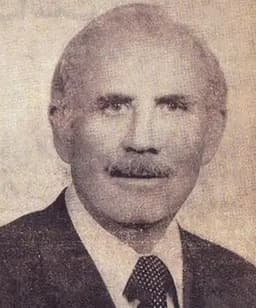
Babrak Karmal
Politician · Modern
43.0Total
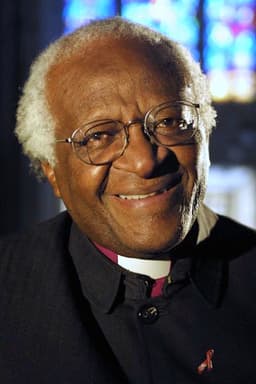
Desmond Tutu
Politician · Modern
57.4Total
Basic Information
Born
1929
1931
Died
—
—
Era
Modern
Modern
Nationality
Afghanistan
South Africa
Occupation
Politician
Politician
Civilization
Middle Eastern
Other
Score Comparison
Military (10%)
33.2
28.3
Political (20%)
29.3
53.8
Influence (20%)
48.6
75.0
Legacy (20%)
38.3
55.0
Leadership (15%)
55.3
68.0
Strategy (15%)
52.8
37.6
TOTAL
43.0
57.4
Babrak Karmal — Complete Timeline
1979 AD
Presidency of Afghanistan (1979-1986)Political Action◆ Major
Babrak Karmal was installed as President of Afghanistan by the Soviet Union in December 1979, following the Soviet invasion. He led the Democratic Republic of Afghanistan during the early years of the Soviet-Afghan War, implementing unpopular reforms and relying on Soviet military support.
Soviet InvasionPuppet GovernmentCommunist
Impact: national
1986 AD
Replacement by Najibullah (1986)Political Action◆ Major
Karmal was replaced as General Secretary of the People's Democratic Party by Mohammad Najibullah in May 1986, under Soviet pressure. He was effectively sidelined, though he remained in Afghanistan until his death. This marked the end of his direct political influence.
Power StruggleNajibullahSoviet Policy
Impact: national
1996 AD
Death in Moscow (1996)Other
Babrak Karmal died in Moscow in 1996, reportedly from liver cancer. He had been living in exile in the Soviet Union since his removal from power. His death went largely unnoticed in Afghanistan, where the civil war was raging.
ExileDeathMoscow
Impact: national
Desmond Tutu — Complete Timeline
1984 AD
Awarded the Nobel Peace PrizeCultural◆ Major
Desmond Tutu received the Nobel Peace Prize for his nonviolent opposition to apartheid in South Africa. The award recognized his leadership in the anti-apartheid movement and his role as a moral voice for reconciliation.
Nobel PrizeAnti-ApartheidPeace
Impact: globalconstructive
1986 AD
Appointed Archbishop of Cape TownPolitical Action◆ Major
Tutu became the first black Anglican Archbishop of Cape Town, the highest position in the Anglican Church of Southern Africa. This elevated his platform to advocate against apartheid and for human rights.
Church LeadershipAnti-Apartheid
Impact: nationalconstructive
1989 AD
Led the Defiance Campaign against Pass LawsPolitical Action◆ Major
Tutu led a march in Cape Town protesting the pass laws, which restricted black South Africans' movement. The protest was met with police violence, but it galvanized international opposition to apartheid.
ProtestPass LawsAnti-Apartheid
Impact: nationalconstructive
1995 AD
Chaired the Truth and Reconciliation CommissionPolitical Action
Tutu chaired the Truth and Reconciliation Commission, established by the post-apartheid government to investigate human rights abuses during apartheid. The commission promoted restorative justice and national healing.
Truth CommissionPost-ApartheidReconciliation
Impact: nationalconstructive
Expert Analysis
Origins
Babrak Karmal was born in 1929 in Kamari, Afghanistan, into a middle-class Pashtun family. His father was a military officer in the Afghan army. Karmal studied law at Kabul University, where he became involved in Marxist politics. He joined the People's Democratic Party of Afghanistan (PDPA) in 1965 and quickly rose within its ranks, aligning with the Parcham faction.
Desmond Tutu was born in 1931 in Klerksdorp, South Africa, to a poor Xhosa family. His father was a teacher and his mother a domestic worker. Tutu initially trained as a teacher but later studied theology, becoming an Anglican priest. He earned a Bachelor's degree in theology from the University of South Africa and a Master's from King's College London.
Rise to Power
Karmal's rise was tied to the PDPA's internal struggles. In 1978, the Saur Revolution brought the PDPA to power, but Karmal's Parcham faction was purged by the Khalq faction. He was exiled to Eastern Europe. In December 1979, the Soviet Union invaded Afghanistan and installed Karmal as president. His rule depended entirely on Soviet military support.
Tutu's rise came through the church and the anti-apartheid movement. In 1975, he became the first black Anglican Dean of Johannesburg. In 1978, he was appointed General Secretary of the South African Council of Churches, amplifying his voice against apartheid. In 1984, he won the Nobel Peace Prize, and in 1986, he became the first black Archbishop of Cape Town.
Leadership & Governance
Karmal's leadership was defined by his subservience to Moscow. He implemented Soviet-style reforms, including land redistribution and education campaigns, but faced widespread resistance from the Mujahideen. His government was plagued by infighting and corruption. He scored 55.3 in leadership, reflecting his inability to consolidate power independently.
Tutu's leadership was moral and charismatic. He used his pulpit to denounce apartheid, advocating nonviolent resistance. He led marches, including the 1989 Defiance Campaign against pass laws. His influence score of 75.0 reflects his ability to mobilize international opinion. He did not hold political office but shaped policy through moral authority.
Triumph & Tragedy
Karmal's greatest success was surviving in power for six years despite intense opposition. However, his greatest failure was his inability to build a stable government. The Soviet war devastated Afghanistan, and Karmal is remembered as a puppet. His political score is 29.3, the lowest among major Afghan leaders.
Tutu's greatest triumph was his role in the Truth and Reconciliation Commission (TRC), which helped South Africa heal after apartheid. His greatest failure might be the TRC's limited success in achieving justice for victims, as many perpetrators received amnesty. Still, his legacy score of 55.0 underscores his lasting moral impact.
Character & Destiny
Karmal was indecisive and dependent on Soviet advisors. He lacked the charisma to rally Afghans against the Mujahideen. His character—cautious and bureaucratic—led to his replacement by the more ruthless Najibullah in 1986. He died in Moscow in 1996, isolated.
Tutu was courageous and outspoken, using humor and faith to confront injustice. His optimism and moral clarity made him a global icon. He died in 2021, mourned worldwide. His strategy score of 37.6 is lower than his leadership, reflecting his reliance on moral suasion over political maneuvering.
Legacy
Karmal's legacy is overwhelmingly negative. He is seen as a Soviet collaborator who presided over a brutal war. His reforms were reversed, and Afghanistan descended into civil war. His total score of 43.0 places him among the least effective leaders of the 20th century.
Tutu's legacy is profound. He helped end apartheid, chaired the TRC, and inspired global human rights movements. His total score of 57.4 reflects his enduring influence. The TRC model has been adopted in other countries. He is remembered as the moral compass of South Africa.
Conclusion
Desmond Tutu had a greater impact than Babrak Karmal. Tutu's score of 57.4 decisively surpasses Karmal's 43.0. While Karmal was a product of Soviet imperialism, Tutu was a force for justice. Tutu's nonviolent leadership and moral vision transformed a nation and inspired the world. Karmal's rule brought only suffering and failure. The data supports Tutu's superior legacy in every dimension except military, where both score low.
Rankings
🥇
Desmond TutuLeader
Mil: 28.3Pol: 53.8Inf: 75.0
57.4
🥈
Babrak Karmal
Mil: 33.2Pol: 29.3Inf: 48.6
43.0
+14.4 behind
How This Comparison Works
Algorithm
Each figure is scored on 6 dimensions (0—100 scale) based on structured historical data: Military (10%), Political (20%), Influence (20%), Legacy (20%), Leadership (15%), Strategy (15%). The weighted total produces the final ranking.
Data Sources
Scores are computed from structured sub-indicators in the database. Scale factors adjust for era (Ancient ×0.85, Modern ×1.0) and civilization size (Eastern ×1.05, Other ×0.80) to account for differences in population and military scale.
Maximum 3 Figures
Comparisons are limited to 2—3 figures to ensure readability and statistical meaningfulness.
Error Margins
±5 points per dimension — Sub-scores are derived from historical records with inherent uncertainty. Two figures within 5 points on a dimension should be considered roughly equivalent in that area.
Total Score Accuracy
±3 points overall — The weighted combination of 6 dimensions produces a total score with approximately ±3 points of uncertainty. Differences of less than 3 points are not statistically significant— the figures are effectively tied.
Known Limitations
- Historical records are incomplete and uneven across civilizations
- Figures from oral-tradition societies may be underrepresented
- Occupation labels can misclassify multi-role figures
- Scores measure capability and impact, not moral character
- Quantitative scoring is a comparison tool, not absolute truth
Capability Radar
Military (10%) — Battles & Warfare
Battles
5
21
Win Rate
5
22
Expansion
5
28
Political (20%) — Governance & Reform
Reform
20
70
Diplomacy
20
85
Economy
15
20
Influence (20%) — Cultural & Global Reach
Cultural
15
80
Global
15
80
Legacy (20%) — Historical Impact
Historical
20
75
Longevity
10
70
Leadership (15%) — Power & Stability
Tenure
40
30
Stability
10
75
Strategy (15%) — Tactics & Innovation
Strategy
5
32
Tactics
5
36
Reform
5
38
Similar Comparisons
Comments & Discussion
No comments yet. Be the first to share your thoughts!