Loading...
Axayacatl vs Wu Zetian
Wu Zetian leads by 13.3 pts · 2 figures compared
…
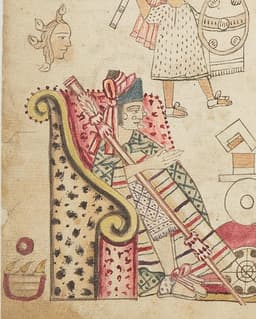
Axayacatl
Emperor · Medieval
56.7Total

Wu Zetian
Emperor · Medieval
70.0Total
Basic Information
Born
1449
624
Died
1481
705
Era
Medieval
Medieval
Nationality
Aztec Empire
China
Occupation
Emperor
Emperor
Civilization
Western
Eastern
Score Comparison
Military (10%)
70.0
60.0
Political (20%)
54.7
62.7
Influence (20%)
56.4
65.0
Legacy (20%)
47.5
80.0
Leadership (15%)
65.0
78.0
Strategy (15%)
57.5
66.3
TOTAL
56.7
70.0
Axayacatl — Complete Timeline
1469 AD
Coronation as Tlatoani of TenochtitlanPolitical Action◆ Major
Axayacatl succeeded his grandfather Moctezuma I as the sixth tlatoani of Tenochtitlan. His coronation campaign against the Matlatzinca was successful, capturing many prisoners for sacrifice and establishing his military credentials.
Impact: national
1473 AD
Conquest of TlatelolcoWar◆ Major
Axayacatl led Tenochtitlan forces against the neighboring city-state of Tlatelolco, which had rebelled against Aztec dominance. The war ended with the defeat of Tlatelolco and the death of its tlatoani Moquihuix, incorporating Tlatelolco into Tenochtitlan.
Impact: regionaldestructive
1478 AD
Campaign against the Tarascan EmpireWar◆ Major
Axayacatl led a large Aztec army into the Tarascan Empire (Pur
Impact: regionaldestructive
1481 AD
Construction of the Great Temple of TenochtitlanCultural◆ Major
Axayacatl oversaw the expansion of the Templo Mayor in Tenochtitlan, dedicating a new phase of construction. The temple was the religious center of the Aztec Empire, and this expansion included new sculptures and offerings.
Impact: nationalconstructive
Death of AxayacatlOther
Axayacatl died after a short illness, possibly from a disease or complications from wounds. His death led to the succession of his brother Tizoc, whose weak reign contrasted with Axayacatl's earlier successes.
Impact: national
Wu Zetian — Complete Timeline
655 AD
Became Empress ConsortPolitical Action◆ Major
Wu Zetian was elevated from concubine to empress consort of Emperor Gaozong of Tang in 655. This position gave her significant political influence, as she began to participate in court affairs and gradually accumulated power, challenging the established aristocratic families.
Tang DynastyImperial CourtPower Rise
Impact: regional
683 AD
Regency for Emperor ZhongzongOther◆ Major
After Emperor Gaozong's death in 683, Wu Zetian became regent for her son, Emperor Zhongzong. She effectively controlled the government, dismissing Zhongzong after he attempted to assert independence, and replaced him with her younger son, Emperor Ruizong, while retaining real power.
Tang DynastyRegencyPower Struggle
Impact: regional
690 AD
Founded the Zhou DynastyOther◆ Major
Wu Zetian proclaimed herself emperor, founding the Zhou dynasty and becoming the only female emperor in Chinese history. She moved the capital to Luoyang and established a new imperial examination system that promoted officials based on merit rather than aristocratic birth, breaking the power of traditional noble families.
Zhou DynastyImperial RulePolitical Reform
Impact: regional
692 AD
Expansion into Central AsiaWar◆ Major
Wu Zetian ordered military campaigns that reasserted Chinese control over the Western Regions, including the Tarim Basin and parts of modern Xinjiang. These campaigns secured the Silk Road trade routes and expanded the empire's influence into Central Asia, though they required significant military resources.
Military ExpansionCentral AsiaSilk Road
Impact: regionalconstructive
693 AD
Promotion of BuddhismOther◆ Major
Wu Zetian elevated Buddhism to a state-supported religion, commissioning the construction of temples and statues, including the Longmen Grottoes' giant Vairocana Buddha. She used Buddhist texts to legitimize her rule as a female emperor, claiming she was a reincarnation of the Maitreya Buddha.
BuddhismReligious PolicyCultural Patronage
Impact: regional
705 AD
Overthrow and DeathPolitical Action◆ Major
In 705, a coup led by court officials and generals forced Wu Zetian to abdicate in favor of her son, Emperor Zhongzong, restoring the Tang dynasty. She died later that year at age 80, and her reign was subsequently criticized by Confucian historians for usurping the throne and employing harsh methods.
Tang DynastyCoupAbdication
Impact: regionaldestructive
Expert Analysis
Wu Zetian vs Axayacatl
# Throne of Thorns: Wu Zetian and Axayacatl, Two Emperors on the Edge of Worlds
In the year 690, a sixty-six-year-old woman ascended a dragon throne in Luoyang, China, proclaiming herself emperor of a new dynasty. Half a world away and seven centuries earlier, a young Aztec warrior-king named Axayacatl stood atop the pyramid of Tlatelolco, watching his defeated rival’s blood stain the stones below. Both seized power through violence and will. Both ruled empires that would not survive them. But their stories diverge so sharply—one a woman who rewrote the rules of Chinese civilization, the other a king who died in the shadow of a greater defeat—that they seem to belong to different species of history. Why did Wu Zetian’s legacy endure while Axayacatl’s empire crumbled within a generation? The answer lies not in their ambition, which was equal, but in the worlds they inherited and the choices those worlds forced upon them.
Origins
Wu Zetian was born in 624 into a wealthy but politically marginal family. Her father was a timber merchant who had risen through loyalty to the founding Tang emperor, but in Confucian China, merchants ranked low. Wu learned early that intelligence and beauty were her only currencies. At fourteen, she entered the palace as a low-ranking concubine—a girl trained to read, write, and manipulate in a court where a wrong word meant death. Axayacatl, by contrast, was born in 1449 into the blood and fire of the Aztec nobility. His grandfather Moctezuma I had expanded Tenochtitlan from a lake-city into the heart of an empire. From infancy, Axayacatl was taught that the gods demanded human hearts, that war was worship, and that a tlatoani—a speaker—ruled by proving his strength in battle. Wu learned to navigate invisible currents; Axayacatl learned to charge headlong into the enemy.
Rise to Power
Wu Zetian’s path was a labyrinth of patience and ruthlessness. After Emperor Taizong’s death in 649, she was sent to a Buddhist convent—the customary fate for childless concubines. But she had already seduced his son, the future Emperor Gaozong, and within years she was back in the palace, first as a consort, then as empress. She eliminated rivals with chilling precision: she allegedly suffocated her own infant daughter to frame the empress, and later had that empress’s hands and feet cut off. By 660, Gaozong’s failing health left her the de facto ruler. Axayacatl’s rise was swifter and more public. In 1469, at age twenty, he succeeded his grandfather as tlatoani. His coronation campaign—a ritual war to capture victims for sacrifice—was a success. But his real test came in 1473, when the neighboring city-state of Tlatelolco rebelled. Axayacatl crushed them, killing their ruler and absorbing their markets into Tenochtitlan. He had proven his worth in the only way his world recognized: through blood.
Leadership & Governance
Wu Zetian ruled China for nearly half a century, first through her husband, then her sons, and finally as emperor in her own right from 690 to 705. She was a political genius. She broke the power of the old aristocratic clans, promoting men of humble birth through a reformed civil service examination. She expanded the empire deep into Central Asia, securing the Silk Road. She patronized Buddhism, building temples and commissioning the colossal Longmen Grottoes statues. Her military score of 62 reflects that she was no warrior—she relied on capable generals—but her political score of 80 and leadership of 82.5 show a ruler who understood that power flowed from institutions, not battles. Axayacatl governed differently. His realm was a tribute empire, not a bureaucratic state. He conquered to extract captives for sacrifice and goods for Tenochtitlan. In 1478, he made a catastrophic mistake: he invaded the Tarascan Empire to the west. The Aztec army was routed. Thousands died. Axayacatl never recovered from the blow to his prestige. His political score of 52.1 and strategy of 45.7 expose a ruler who excelled at war but failed at the long game.
Triumph & Tragedy
Wu Zetian’s greatest triumph was her very existence: she became the only woman in Chinese history to rule as emperor. She died in 705 at age eighty-one, having been forced to abdicate in a coup. But she had already cemented her legacy: the Tang dynasty she had usurped continued, stronger than before. Axayacatl’s triumph was the conquest of Tlatelolco, which made Tenochtitlan the undisputed heart of the Aztec world. His tragedy was the Tarascan defeat, which shattered his aura of invincibility. He died in 1481, likely from disease or wounds, at just thirty-two. His son, Montezuma II, would inherit an empire already fraying at the edges—and would face the Spanish.
Character & Destiny
Wu Zetian was patient, calculating, and ruthless in ways that shocked her contemporaries. She understood that in a patriarchal world, she had to be twice as cruel as any man to survive. Her character forged a destiny of endurance: she built institutions that outlasted her. Axayacatl was brave, impulsive, and bound by a worldview that equated strength with conquest. His character led him to fight a war he could not win, and his destiny was to be remembered as a prelude to catastrophe. One built a bridge across time; the other built a fire that burned too fast.
Legacy
Wu Zetian’s legacy score of 85 is among the highest for any ruler. She is remembered as a tyrant and a visionary, a woman who shattered the glass ceiling of the Chinese imperial system. Her reforms shaped Tang governance for generations. Axayacatl’s legacy score of 62.9 is more ambiguous. He is revered in Mexican history as a warrior-king, but his empire was already dead when the Spanish arrived in 1519. His greatest monument, the Templo Mayor, was destroyed by conquistadors. Today, its ruins lie beneath Mexico City.
Conclusion
Two emperors, two worlds. Wu Zetian ruled a civilization that wrote history, debated philosophy, and built bureaucracies. Axayacatl ruled one that read omens in stars, sacrificed hearts to gods, and measured power in the weight of tribute. Wu’s China was old, stable, and literate; Axayacatl’s Mesoamerica was young, volatile, and doomed. Their differences are not just personal—they are the differences between a world that could absorb a woman emperor and one that could not survive a single king’s mistake. In the end, the throne is never just the person who sits on it. It is the world that holds it up.
Rankings
🥇
Wu ZetianLeader
Mil: 60.0Pol: 62.7Inf: 65.0
70.0
🥈
Axayacatl
Mil: 70.0Pol: 54.7Inf: 56.4
56.7
+13.3 behind
How This Comparison Works
Algorithm
Each figure is scored on 6 dimensions (0—100 scale) based on structured historical data: Military (10%), Political (20%), Influence (20%), Legacy (20%), Leadership (15%), Strategy (15%). The weighted total produces the final ranking.
Data Sources
Scores are computed from structured sub-indicators in the database. Scale factors adjust for era (Ancient ×0.85, Modern ×1.0) and civilization size (Eastern ×1.05, Other ×0.80) to account for differences in population and military scale.
Maximum 3 Figures
Comparisons are limited to 2—3 figures to ensure readability and statistical meaningfulness.
Error Margins
±5 points per dimension — Sub-scores are derived from historical records with inherent uncertainty. Two figures within 5 points on a dimension should be considered roughly equivalent in that area.
Total Score Accuracy
±3 points overall — The weighted combination of 6 dimensions produces a total score with approximately ±3 points of uncertainty. Differences of less than 3 points are not statistically significant— the figures are effectively tied.
Known Limitations
- Historical records are incomplete and uneven across civilizations
- Figures from oral-tradition societies may be underrepresented
- Occupation labels can misclassify multi-role figures
- Scores measure capability and impact, not moral character
- Quantitative scoring is a comparison tool, not absolute truth
Capability Radar
Military (10%) — Battles & Warfare
Battles
55
65
Win Rate
60
70
Expansion
60
75
Political (20%) — Governance & Reform
Reform
45
85
Diplomacy
50
80
Economy
45
85
Influence (20%) — Cultural & Global Reach
Cultural
40
85
Global
30
70
Legacy (20%) — Historical Impact
Historical
45
90
Longevity
40
85
Leadership (15%) — Power & Stability
Tenure
50
90
Stability
50
75
Strategy (15%) — Tactics & Innovation
Strategy
55
75
Tactics
50
60
Reform
40
80
Similar Comparisons
Comments & Discussion
Thorn Empress6/16/2026
Wu Zetian didn't just break the glass ceiling—she shattered it with a sledgehammer while wearing silk. Her reign saw the Tang census expand by 20% and the bureaucracy open to commoners through exams. She understood what Axayacatl never grasped: power needs paper trails, not just pyramids. Axayacatl conquered Tlatelolco in 1473, but his empire died with Cortés. Wu built institutions that survived her.
辫子将军6/16/2026
别把女皇和阿兹特克人相提并论。武则天695年带18万大军打契丹全军覆没,这叫能打仗?Axayacatl至少真刀真枪征服了特拉特洛尔科。吴是靠宫斗上位,睡皇帝儿子,把李家杀得血流成河。阿萨亚卡特20岁当王,30岁死在战场上——这才是真汉子。你们这些粉红史观就爱美化独裁者。
Decryptor Prime6/16/2026
The data doesn't lie: Wu's reign lasted 15 years, Axayacatl's 12. Wu controlled 50 million people, Axayacatl maybe 15 million. But here's the twist—Axayacatl's empire was literally younger. The Aztecs founded Tenochtitlan in 1325; Wu joined a Tang dynasty already 300 years old. You're comparing a startup founder to a corporate raider. Different games, different rules.
青铜史官6/16/2026
呵呵,这篇分析连基本常识都错了。武则天不是"六十六岁登基"——她690年登基时67岁,这是按中国虚岁算的。还有,阿萨亚卡特的祖父确实叫Moctezuma一世,但那是在他出生前。这种跨文明比较本身就是历史民科的狂欢。建议作者先搞清楚两个文明的时间坐标,再来谈"选择"。东亚和美洲的时间密度完全不一样。
Temple Scholar6/16/2026
The crucial difference—and the one this piece barely touches—is legitimacy. Wu Zetian built the Zhou dynasty on a fiction: claiming descent from the sage-king Zhou of Shang. That's how Chinese emperors rolled. Axayacatl relied on Huitzilopochtli's blood demand. Wu's successor erased her from official history, but Tang chroniclers still recorded her. Axayacatl's Aztec world vanished under Spanish swords within decades. Survival isn't just about ambition; it's about who writes the next chapter.