Loading...
Axayacatl vs Taejo of Joseon
Taejo of Joseon leads by 13.7 pts · 2 figures compared
…
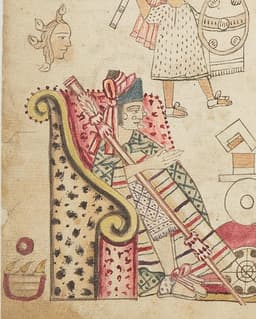
Axayacatl
Emperor · Medieval
56.7Total
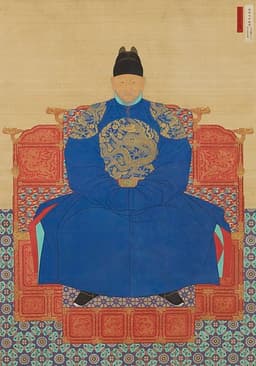
Taejo of Joseon
Emperor · Medieval
70.4Total
Basic Information
Born
1449
1335
Died
1481
1408
Era
Medieval
Medieval
Nationality
Aztec Empire
Korea
Occupation
Emperor
Emperor
Civilization
Western
Eastern
Score Comparison
Military (10%)
70.0
74.7
Political (20%)
54.7
65.0
Influence (20%)
56.4
65.0
Legacy (20%)
47.5
80.0
Leadership (15%)
65.0
72.0
Strategy (15%)
57.5
61.2
TOTAL
56.7
70.4
Axayacatl — Complete Timeline
1469 AD
Coronation as Tlatoani of TenochtitlanPolitical Action◆ Major
Axayacatl succeeded his grandfather Moctezuma I as the sixth tlatoani of Tenochtitlan. His coronation campaign against the Matlatzinca was successful, capturing many prisoners for sacrifice and establishing his military credentials.
Impact: national
1473 AD
Conquest of TlatelolcoWar◆ Major
Axayacatl led Tenochtitlan forces against the neighboring city-state of Tlatelolco, which had rebelled against Aztec dominance. The war ended with the defeat of Tlatelolco and the death of its tlatoani Moquihuix, incorporating Tlatelolco into Tenochtitlan.
Impact: regionaldestructive
1478 AD
Campaign against the Tarascan EmpireWar◆ Major
Axayacatl led a large Aztec army into the Tarascan Empire (Pur
Impact: regionaldestructive
1481 AD
Construction of the Great Temple of TenochtitlanCultural◆ Major
Axayacatl oversaw the expansion of the Templo Mayor in Tenochtitlan, dedicating a new phase of construction. The temple was the religious center of the Aztec Empire, and this expansion included new sculptures and offerings.
Impact: nationalconstructive
Death of AxayacatlOther
Axayacatl died after a short illness, possibly from a disease or complications from wounds. His death led to the succession of his brother Tizoc, whose weak reign contrasted with Axayacatl's earlier successes.
Impact: national
Taejo of Joseon — Complete Timeline
1380 AD
Battle of HwangsanWar
General Yi Seong-gye defeated a Japanese pirate (wokou) force at Hwangsan. This victory enhanced his military reputation and demonstrated his capability as a commander.
WokouGoryeo Military
1388 AD
Wihwado RetreatPolitical Action
General Yi Seong-gye, ordered to invade the Ming dynasty's Liaodong region, turned his army back at Wihwado Island. This act of defiance against the Goryeo court led to a coup that eventually brought him to power.
CoupGoryeo-Ming RelationsPower Shift
Impact: national
1391 AD
Land Reform and the Gwajeon LawReform◆ Major
Taejo implemented the Gwajeon Law, a land reform that redistributed land from the old Goryeo aristocracy to his supporters and the state. This weakened the old elite and strengthened the new Joseon ruling class.
Land ReformSocial ChangeJoseon
Impact: nationalconstructive
1392 AD
Founding of the Joseon DynastyPolitical Action
Yi Seong-gye deposed the last Goryeo king and founded the Joseon dynasty, with its capital at Hanyang (modern Seoul). He established a new ruling class based on Confucian ideology, replacing the Buddhist-influenced Goryeo system.
Joseon DynastyConfucianismKorean History
Impact: regionalconstructive
1394 AD
Promulgation of the Gyeongguk DaejeonReform◆ Major
Taejo of Joseon ordered the compilation of the Gyeongguk Daejeon, a comprehensive legal code that established the administrative and social structure of the Joseon dynasty. This code remained in effect for centuries.
Legal CodeGovernanceConfucianism
Impact: nationalconstructive
Expert Analysis
Taejo of Joseon vs Axayacatl
# The Founder and the Conqueror: Two Paths to Power in a World of Change
On a summer day in 1388, a Korean general stood on an island in the Yalu River, his army behind him, the fate of a kingdom in his hands. He had been ordered to invade China, to prove his loyalty to a dying dynasty. Instead, Yi Seong-gye turned his troops around, marched back to the capital, and set in motion the fall of Goryeo. Less than a century later, on the other side of the world, a young Aztec emperor named Axayacatl stood atop the Great Temple of Tenochtitlan, watching his warriors crush the rebellion of Tlatelolco. Both men seized power in moments of crisis. But where one built a dynasty that would last five centuries, the other left an empire that crumbled within a generation of his death. What made the difference?
Origins
Yi Seong-gye was born in 1335 into a world of chaos. The Mongol Empire had dominated Korea for decades, but by his youth, Mongol power was receding, leaving Goryeo a fractured kingdom torn between pro-Mongol factions and reformist scholars. Yi’s father was a minor official in the northeastern frontier, a region where the old aristocratic order was weaker and military talent mattered more than bloodlines. Yi grew up hunting and fighting, learning the practical arts of war and command. He was a man of the borderlands, shaped by the hard edges of a crumbling world.
Axayacatl, born in 1449, inherited a very different reality. He was the grandson of Moctezuma I, the great expansionist who had turned Tenochtitlan from a city-state into the heart of an empire. The Aztec world was one of ritual warfare, where the capture of prisoners for sacrifice was as important as the conquest of territory. Axayacatl was raised in the calmecac, the elite school for noble youth, drilled in the theology of war and the politics of tribute. He did not climb from obscurity; he stepped into a throne already warm.
Rise to Power
Yi Seong-gye’s ascent was forged in fire. In 1380, at the Battle of Hwangsan, he crushed a Japanese pirate fleet that had terrorized the coast, earning a reputation as the kingdom’s most capable general. But his true turning point came eight years later, when the Goryeo court ordered him to invade Ming China. Yi saw the campaign as suicidal—the Ming were too strong, the army too weak, the cause a lie. At Wihwado Island, he made his choice. He did not merely retreat; he turned his military fame into political capital, allying with reformist Confucian scholars who despised the old Goryeo aristocracy. In 1392, he deposed the last Goryeo king and declared the Joseon dynasty.
Axayacatl’s path was smoother, but no less bloody. In 1469, at age twenty, he was crowned tlatoani of Tenochtitlan. His coronation campaign—a ritual war to capture prisoners for sacrifice—failed to produce enough victims, a bad omen that haunted his reign. Four years later, when the neighboring city of Tlatelolco rebelled, Axayacatl responded with overwhelming force. He personally led the assault, smashing the rebellion and integrating Tlatelolco’s markets into Tenochtitlan’s economy. It was a brilliant victory, but it was also the high point of his reign.
Leadership & Governance
Taejo of Joseon governed as a reformer. He understood that to secure his dynasty, he needed more than loyalty—he needed a new order. In 1391, he implemented the Gwajeon Law, a land reform that stripped the old Goryeo aristocracy of their estates and redistributed land to his supporters and the peasantry. This broke the economic backbone of the old regime and tied the new state to Confucian ideals of merit and stability. He moved the capital to Hanyang, modern Seoul, and ordered the compilation of the Gyeongguk Daejeon, a comprehensive legal code that would govern Korea for centuries. Taejo was not a military genius—his strategy score sits at 63.8—but he was a political architect of rare skill, with a leadership score of 81.6.
Axayacatl ruled differently. He was a warrior-emperor, leading campaigns personally, but his political vision was narrower. His conquest of Tlatelolco was decisive, but his 1478 campaign against the Tarascan Empire was a disaster. Leading a massive army into western Mexico, he was routed by the Purépecha, suffering a defeat that shattered the myth of Aztec invincibility. His political score of 52.1 reflects a ruler who could command in battle but could not build lasting institutions. He expanded the Great Temple of Tenochtitlan, but he left no legal code, no land reform, no administrative system that outlasted him.
Triumph & Tragedy
Taejo’s greatest triumph was the founding of Joseon itself—a dynasty that would endure until 1910. But his tragedy was personal. He abdicated in 1398 after a bloody succession struggle between his sons, a conflict that left his heir dead and his family shattered. He spent his final years in a Buddhist temple, watching from the sidelines as his own creation consumed his children.
Axayacatl’s triumph was the conquest of Tlatelolco, a moment of personal glory that cemented his power. His tragedy came in 1481, when he died suddenly at age thirty-two, possibly from disease or wounds. He left no clear successor, no stable transition. His son, Montezuma II, would inherit an empire that was already cracking, and within forty years of Axayacatl’s death, the Spanish would arrive.
Character & Destiny
Taejo was cautious, calculating, and patient. He knew when to fight and when to retreat—literally, at Wihwado. He surrounded himself with scholars who shared his vision of a Confucian state, and he was willing to compromise, to delegate, to build consensus. His legacy score of 85.0 reflects a man who thought in centuries.
Axayacatl was bold, aggressive, and impulsive. He charged into battle, but he also charged into disaster. His defeat by the Tarascans was not just a military failure; it was a failure of strategy, of intelligence, of patience. He ruled for only twelve years, and in that time, he expanded the empire but did not strengthen it. His legacy score of 62.9 suggests a ruler who was remembered but not revered.
Legacy
Taejo is remembered as the founder of Korea’s longest dynasty, a figure who transformed a war-torn kingdom into a Confucian civilization. His legal code, his land reforms, his capital city—all endure in modern Korea’s DNA. Axayacatl is remembered as a footnote, a bridge between the great Moctezuma I and the doomed Montezuma II. His name survives in the Aztec chronicles, but his empire did not survive him.
Conclusion
The difference between these two rulers is not one of talent or ambition. Both were capable, both were ruthless, both sought power. The difference is one of vision. Taejo built a system that could outlast him—laws, land, institutions, a new class of loyal officials. Axayacatl built only himself. He conquered cities, but he did not conquer the chaos that would consume his world. In the end, the founder of Joseon understood what the conqueror of Tlatelolco did not: that power is not about the moment of victory, but about what you leave behind when the victory fades.
Rankings
🥇
Taejo of JoseonLeader
Mil: 74.7Pol: 65.0Inf: 65.0
70.4
🥈
Axayacatl
Mil: 70.0Pol: 54.7Inf: 56.4
56.7
+13.7 behind
How This Comparison Works
Algorithm
Each figure is scored on 6 dimensions (0—100 scale) based on structured historical data: Military (10%), Political (20%), Influence (20%), Legacy (20%), Leadership (15%), Strategy (15%). The weighted total produces the final ranking.
Data Sources
Scores are computed from structured sub-indicators in the database. Scale factors adjust for era (Ancient ×0.85, Modern ×1.0) and civilization size (Eastern ×1.05, Other ×0.80) to account for differences in population and military scale.
Maximum 3 Figures
Comparisons are limited to 2—3 figures to ensure readability and statistical meaningfulness.
Error Margins
±5 points per dimension — Sub-scores are derived from historical records with inherent uncertainty. Two figures within 5 points on a dimension should be considered roughly equivalent in that area.
Total Score Accuracy
±3 points overall — The weighted combination of 6 dimensions produces a total score with approximately ±3 points of uncertainty. Differences of less than 3 points are not statistically significant— the figures are effectively tied.
Known Limitations
- Historical records are incomplete and uneven across civilizations
- Figures from oral-tradition societies may be underrepresented
- Occupation labels can misclassify multi-role figures
- Scores measure capability and impact, not moral character
- Quantitative scoring is a comparison tool, not absolute truth
Capability Radar
Military (10%) — Battles & Warfare
Battles
55
75
Win Rate
60
80
Expansion
60
65
Political (20%) — Governance & Reform
Reform
45
85
Diplomacy
50
70
Economy
45
65
Influence (20%) — Cultural & Global Reach
Cultural
40
80
Global
30
60
Legacy (20%) — Historical Impact
Historical
45
85
Longevity
40
80
Leadership (15%) — Power & Stability
Tenure
50
70
Stability
50
75
Strategy (15%) — Tactics & Innovation
Strategy
55
75
Tactics
50
70
Reform
40
60
Similar Comparisons
Comments & Discussion
GRUDGE GENERAL6/16/2026
Yi Seong-gye’s choice to defy the Goryeo king at Wihwado Island in 1388 wasn’t just brilliant strategy—it was pure political survival disguised as loyalty. He knew invading Ming China would bleed his army dry for a dying cause. Axayacatl’s conquest of Tlatelolco in 1473? Impressive brutality, but he wasted Aztec strength on internal feuds, not long-term consolidation. One man built a dynasty; the other just made more room for Cortés later. History’s verdict is clear.
烽火铁锤6/16/2026
拿朝鲜王朝500年对比阿兹特克不到两代就垮台,纯属偷换概念。李成桂起兵时高丽已经烂透了,他不过是抢到最后一个座位。阿萨亚卡特尔在1473年打垮特拉特洛尔科时,面对的可是正在膨胀中的三国同盟。你让李成桂去对付15世纪的蒙古试试?别拿长寿王朝当美德,要看是在什么牌桌上玩。
STATS MUTINY6/16/2026
This comparison's fatal flaw is ignoring scale and timeline. Axayacatl ruled 11 years (1469–1481); Yi Seong-gye reigned 6 (1392–1398) and abdicated. Both left empires to successors, but Korea had a unified, literate bureaucracy down to county level—the Aztec "empire" was a tributary network held by fear. Axayacatl's conquests added more tribute routes, yes, but Yi's regime inherited an actual state apparatus. Let's compare apples-to-apples: who faced more internal revolts per decade?
石斧书简6/16/2026
你们说得天花乱坠,但漏了最要命的变量——文字记录。李成桂有《朝鲜王朝实录》这种官方史书替他洗白,他杀郑梦周、废昌王的那点脏事,早就被删成忠臣归正的叙事。阿萨亚卡特尔呢?留下的只有敌人写的碑文和西班牙人的二手转述,连他的生年都是推论。拿一套完整档案对比残缺史料,这算不上公正的历史比较,充其量是文献多者胜。