Loading...
Axayacatl vs Henry the Fowler
Henry the Fowler leads by 4.2 pts · 2 figures compared
…
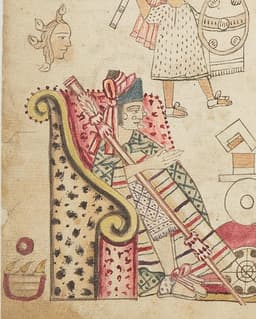
Axayacatl
Emperor · Medieval
56.7Total
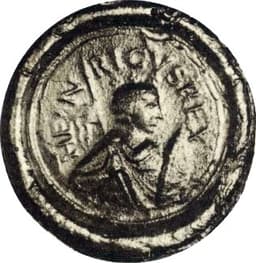
Henry the Fowler
Emperor · Medieval
60.9Total
Basic Information
Born
1449
876
Died
1481
936
Era
Medieval
Medieval
Nationality
Aztec Empire
East Francia
Occupation
Emperor
Emperor
Civilization
Western
Western
Score Comparison
Military (10%)
70.0
70.0
Political (20%)
54.7
59.3
Influence (20%)
56.4
55.0
Legacy (20%)
47.5
52.0
Leadership (15%)
65.0
85.0
Strategy (15%)
57.5
55.0
TOTAL
56.7
60.9
Axayacatl — Complete Timeline
1469 AD
Coronation as Tlatoani of TenochtitlanPolitical Action◆ Major
Axayacatl succeeded his grandfather Moctezuma I as the sixth tlatoani of Tenochtitlan. His coronation campaign against the Matlatzinca was successful, capturing many prisoners for sacrifice and establishing his military credentials.
Impact: national
1473 AD
Conquest of TlatelolcoWar◆ Major
Axayacatl led Tenochtitlan forces against the neighboring city-state of Tlatelolco, which had rebelled against Aztec dominance. The war ended with the defeat of Tlatelolco and the death of its tlatoani Moquihuix, incorporating Tlatelolco into Tenochtitlan.
Impact: regionaldestructive
1478 AD
Campaign against the Tarascan EmpireWar◆ Major
Axayacatl led a large Aztec army into the Tarascan Empire (Pur
Impact: regionaldestructive
1481 AD
Construction of the Great Temple of TenochtitlanCultural◆ Major
Axayacatl oversaw the expansion of the Templo Mayor in Tenochtitlan, dedicating a new phase of construction. The temple was the religious center of the Aztec Empire, and this expansion included new sculptures and offerings.
Impact: nationalconstructive
Death of AxayacatlOther
Axayacatl died after a short illness, possibly from a disease or complications from wounds. His death led to the succession of his brother Tizoc, whose weak reign contrasted with Axayacatl's earlier successes.
Impact: national
Henry the Fowler — Complete Timeline
919 AD
Election as King of East FranciaPolitical Action
Henry the Fowler was elected King of East Francia by the Saxon and Frankish nobles at Fritzlar on May 6, 919. He was the first Saxon king, marking the transition from Carolingian to Ottonian rule. His election was contested by other dukes but he prevailed.
ElectionAccessionOttonian Dynasty
Impact: regionalconstructive
921 AD
Treaty of Bonn (921)Political Action◆ Major
Henry the Fowler signed the Treaty of Bonn with Charles the Simple of West Francia, recognizing each other's royal titles and establishing peaceful relations. This treaty ended Carolingian claims over East Francia and solidified Henry's legitimacy as an independent king.
TreatyRecognitionDiplomacy
Impact: regionalconstructive
924 AD
Nine-Year Truce with the MagyarsPolitical Action◆ Major
Henry the Fowler negotiated a nine-year truce with the Magyars, agreeing to pay tribute in exchange for a halt to their raids. He used this period to fortify towns, reorganize the army, and train cavalry. This strategic pause was crucial for his later military reforms.
TruceMagyarsMilitary Reform
Impact: regionalconstructive
929 AD
Battle of Lenzen (929)War◆ Major
Henry the Fowler's forces defeated a Slavic army at the Battle of Lenzen, securing the eastern frontier of East Francia. This victory allowed Henry to consolidate control over the Elbe region and establish the March of Brandenburg, a key step in German eastward expansion.
BattleSlavic WarsEastern Expansion
Impact: regionalconstructive
933 AD
Battle of Riade (933)War
After the truce with the Magyars expired, Henry the Fowler led a German army to victory at the Battle of Riade (near Merseburg). The defeat of the Magyar cavalry ended their raids into East Francia for a generation and established Henry's reputation as a defender of Christendom.
BattleMagyarsVictory
Impact: regionalconstructive
936 AD
Death of Henry the FowlerOther◆ Major
Henry the Fowler died on July 2, 936, at Memleben. He was succeeded by his son, Otto I, who would become Holy Roman Emperor. Henry's reign laid the foundations for the Ottonian dynasty and the medieval German kingdom.
DeathSuccessionOttonian
Impact: regional
Expert Analysis
Henry the Fowler vs Axayacatl
# The King Who Paid Tribute and the Emperor Who Built Pyramids
On a summer morning in 933, Henry the Fowler stood with his Saxon cavalry on the plains near Riade, watching the Magyar horsemen mass across the river. For nine years, he had paid them gold to stay away—a bitter price for any king. Now the truce was over, and the tribute had bought him something more valuable than peace: time. Across the ocean and a world away, in 1478, the Aztec tlatoani Axayacatl led his largest army ever into the Tarascan highlands. He had conquered cities, crushed rivals, and expanded the Great Temple in Tenochtitlan. But in the western mountains, the Tarascans waited with bronze-tipped weapons and discipline the Aztecs had never faced. Two rulers, two civilizations, two paths to power—and two very different answers to the question of how a king should hold his throne.
Origins
Henry was born in 876 into a Saxon noble family that had spent generations fighting for survival against Vikings, Slavs, and fellow Germans. The Carolingian Empire was crumbling, and the eastern lands that would become Germany were a patchwork of competing duchies. Henry learned war as a young man, defending his father's lands, but he also learned patience. The Saxon nobility valued consensus, and a king who could not persuade could not rule.
Axayacatl was born in 1449 into an Aztec world that had already mastered the Valley of Mexico. His grandfather Moctezuma I had expanded Tenochtitlan from a lake city into an imperial capital. The Aztecs believed their gods demanded blood, and their kings proved themselves through war. Axayacatl grew up in a culture where a ruler's legitimacy rested on his ability to capture enemies for sacrifice—and where failure meant not just political death, but cosmic disorder.
Rise to Power
Henry's path to kingship was a negotiation. In 919, the Saxon and Frankish nobles met at Fritzlar and elected him King of East Francia. But he was not crowned with any ceremony—he refused unction, saying a king should rule by the sword, not the oil of priests. Two years later, he signed the Treaty of Bonn with Charles the Simple of West Francia, a quiet recognition that the old Carolingian unity was dead. Henry did not conquer his kingdom; he assembled it, piece by piece, through treaties and marriages and the slow building of trust.
Axayacatl's rise was more dramatic. When Moctezuma I died in 1469, the Aztec council chose the young prince as tlatoani. But the coronation required a campaign—he had to take captives to feed the gods. His first war was against the city of Tlatelolco, a former ally that had grown too powerful. In 1473, Axayacatl crushed the rebellion, and the market of Tlatelolco became part of Tenochtitlan. His rise was sealed in blood.
Leadership & Governance
Henry ruled as a pragmatist. His greatest achievement was the nine-year truce with the Magyars in 924. Many nobles saw tribute as shameful, but Henry understood that the Magyar raids were destroying his kingdom's ability to fight. He used the years to build fortified towns, train heavy cavalry, and forge alliances with the duchies of Swabia, Bavaria, and Lorraine. When the truce expired, he was ready. At the Battle of Riade in 933, his armored horsemen broke the Magyar charge, and the raiders never threatened East Francia again. Henry also secured the eastern frontier at the Battle of Lenzen in 929, defeating a Slavic army so decisively that the Slavs paid tribute for decades. His political score of 74.5 reflects a king who knew that strength came from preparation, not pride.
Axayacatl ruled as a conqueror. His military score of 60.1 is deceptive—he was a capable commander, but the Aztec system demanded constant expansion. After Tlatelolco, he turned west toward the Tarascan Empire. In 1478, he led perhaps 24,000 warriors into the mountains. The Tarascans met him with organized battalions armed with copper swords and bronze-tipped spears—technology the Aztecs lacked. The battle was a disaster. Axayacatl lost most of his army and barely escaped. He never recovered. His political score of 52.1 reflects the brittleness of an empire built on fear: one defeat, and the cracks began to show.
Triumph & Tragedy
Henry's triumph was Riade. When the Magyar horsemen fled, he had proven that German arms could defend the land. But his greatest victory was perhaps unseen: he died in 936 at Memleben, peacefully, with his kingdom united and his son Otto ready to inherit. He had built a dynasty that would become the Holy Roman Empire.
Axayacatl's triumph was the Great Temple. In 1481, he dedicated a new phase of the Templo Mayor, the pyramid at the heart of Tenochtitlan. The temple was a statement of power, a mountain of stone and blood that proclaimed Aztec dominance. But within months, Axayacatl was dead—probably from disease or wounds. He was only 32. His tragedy was not just the Tarascan defeat, but the fragility of an empire that demanded constant victory. His son Montezuma II would inherit a throne that was already trembling.
Character & Destiny
Henry was a builder. He understood that power required patience, that a kingdom was not taken but grown. He accepted humiliation—paying tribute, negotiating with equals—because he saw the long game. His strategy score of 55.2 is modest, but his leadership score of 75.7 reveals a man who could inspire loyalty without demanding worship.
Axayacatl was a warrior-god in a world that demanded sacrifice. He could not afford patience. The Aztec cosmos required blood, and a king who did not feed the gods would be devoured by them. His strategy score of 45.7 reflects the trap of his culture: he had to attack, even when attack was foolish. His leadership score of 79.8 shows he was brave, but bravery without strategy is just a faster way to die.
Legacy
Henry the Fowler left behind a dynasty. His son Otto I became Holy Roman Emperor, and the Ottonian dynasty ruled Germany for a century. Today, Henry is remembered as the founder of the medieval German kingdom, a king who turned tribute into triumph. His legacy score of 65.7 is solid, but his influence score of 72.7 reflects his true impact: he created the political architecture that would shape Central Europe for centuries.
Axayacatl left behind a pyramid and a son. Montezuma II would face Hernán Cortés, and the Aztec Empire would fall. Axayacatl's legacy score of 62.9 is complicated—he expanded the empire but also exposed its weakness. His influence score of 74.9 is high because the Aztecs remembered him as a builder, but the Tarascan defeat haunted them. The temple he built still stands in Mexico City, a monument to a king who conquered a city but could not conquer his own gods.
Conclusion
Two kings, separated by an ocean and a worldview. Henry paid tribute to buy time; Axayacatl paid in blood to buy glory. Henry built a kingdom that lasted; Axayacatl built a temple that still inspires awe. In the end, the difference was not in their courage or their ambition, but in their understanding of power. Henry knew that a king's first duty is to survive. Axayacatl knew that an Aztec king's first duty is to sacrifice. One built a dynasty; the other built a monument. Both were trapped by their worlds—and both, in their own way, shaped the world that followed.
Rankings
🥇
Henry the FowlerLeader
Mil: 70.0Pol: 59.3Inf: 55.0
60.9
🥈
Axayacatl
Mil: 70.0Pol: 54.7Inf: 56.4
56.7
+4.2 behind
How This Comparison Works
Algorithm
Each figure is scored on 6 dimensions (0—100 scale) based on structured historical data: Military (10%), Political (20%), Influence (20%), Legacy (20%), Leadership (15%), Strategy (15%). The weighted total produces the final ranking.
Data Sources
Scores are computed from structured sub-indicators in the database. Scale factors adjust for era (Ancient ×0.85, Modern ×1.0) and civilization size (Eastern ×1.05, Other ×0.80) to account for differences in population and military scale.
Maximum 3 Figures
Comparisons are limited to 2—3 figures to ensure readability and statistical meaningfulness.
Error Margins
±5 points per dimension — Sub-scores are derived from historical records with inherent uncertainty. Two figures within 5 points on a dimension should be considered roughly equivalent in that area.
Total Score Accuracy
±3 points overall — The weighted combination of 6 dimensions produces a total score with approximately ±3 points of uncertainty. Differences of less than 3 points are not statistically significant— the figures are effectively tied.
Known Limitations
- Historical records are incomplete and uneven across civilizations
- Figures from oral-tradition societies may be underrepresented
- Occupation labels can misclassify multi-role figures
- Scores measure capability and impact, not moral character
- Quantitative scoring is a comparison tool, not absolute truth
Capability Radar
Military (10%) — Battles & Warfare
Battles
55
55
Win Rate
60
60
Expansion
60
60
Political (20%) — Governance & Reform
Reform
45
75
Diplomacy
50
70
Economy
45
65
Influence (20%) — Cultural & Global Reach
Cultural
40
55
Global
30
40
Legacy (20%) — Historical Impact
Historical
45
65
Longevity
40
60
Leadership (15%) — Power & Stability
Tenure
50
70
Stability
50
70
Strategy (15%) — Tactics & Innovation
Strategy
55
65
Tactics
50
50
Reform
40
70
Similar Comparisons
Comments & Discussion
1. **SaxonWarrior88**6/16/2026
Henry the Fowler was the ultimate pragmatist while Axayacatl was a gambler who lost his shirt. Paying tribute to Magyars for nine years wasn’t cowardice—it was genius military strategy. He built a network of fortified towns, trained heavy cavalry, and waited. Axayacatl? He charged into Tarascan territory with obsidian blades against bronze weapons and got crushed. One king understood logistics, the other was a glory-hunter.
2. **PyramidSchemeV2**6/16/2026
阿哈亚卡特尔的失败不是他的错,而是整个文明系统的锅。阿兹特克人靠祭祀和人质来控制帝国,没有真正整合土地。塔拉斯卡人不一样,他们有青铜武器和更强的政治结构。亨利·福勒呢?他学的是法兰克人的封建制,把萨克森贵族绑在一起。如果阿哈亚卡特尔出生在德国,也许他的金字塔能建得更大,但他的帝国注定是个纸老虎。
3. **DataCruncher_007**6/16/2026
The numbers tell the story: Henry paid nine years of Danegeld-style tribute (maybe 5,000 silver marks total) and got defense infrastructure. Axayacatl mobilized 24,000 troops in 1478 and lost maybe half to Tarascan counter-attacks. That’s a 50% attrition rate vs. Henry’s zero battlefield losses before Riade. Tribute-buying bought survival; religious warfare bought defeat. Simple arithmetic.
4. **Classics&Clash**6/16/2026
这就像比较奥德修斯和亚历山大——两种不同的“王权”观。亨利是日耳曼式的“一致同意”统治者,通过耐心和会议凝聚部落,像迁徙时期的领袖。阿哈亚卡特尔是特诺奇蒂特兰的神圣国王,他的权力来自太阳神的神圣使命,必须不断征服并建庙。当亨利付钱时,他在玩长棋;当阿哈亚卡特尔战败时,他削弱了自己的神性权威。两种文明,两种王冠的代价。
5. **RevisionistHeat**6/16/2026
Let’s stop romanticizing Henry. He paid off nomads with Saxon peasants’ gold, built forts to hide behind, and called it ‘strategy.’ Yeah, he won against Magyars, but that was after starving them of loot for years. Axayacatl at least fought a real empire—the Tarascans were no joke. Henry’s victory was against tribes with zero supply lines; Axayacatl faced bronze weaponry and institutional warfare. Give me the guy who lost fighting a peer power over the one who defeated pushover nomads.