Loading...
Axayacatl vs Gyeongjong of Goryeo
Axayacatl leads by 9.6 pts · 2 figures compared
…
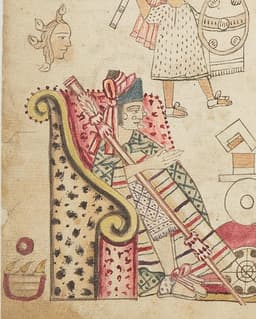
Axayacatl
Emperor · Medieval
56.7Total
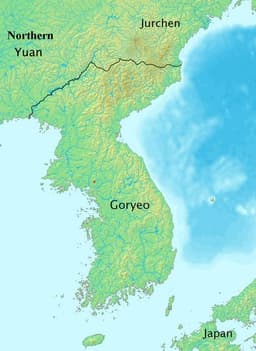
Gyeongjong of Goryeo
Emperor · Medieval
47.1Total
Basic Information
Born
1449
955
Died
1481
981
Era
Medieval
Medieval
Nationality
Aztec Empire
Korea
Occupation
Emperor
Emperor
Civilization
Western
Eastern
Score Comparison
Military (10%)
70.0
20.0
Political (20%)
54.7
53.8
Influence (20%)
56.4
53.3
Legacy (20%)
47.5
47.5
Leadership (15%)
65.0
48.8
Strategy (15%)
57.5
45.0
TOTAL
56.7
47.1
Axayacatl — Complete Timeline
1469 AD
Coronation as Tlatoani of TenochtitlanPolitical Action◆ Major
Axayacatl succeeded his grandfather Moctezuma I as the sixth tlatoani of Tenochtitlan. His coronation campaign against the Matlatzinca was successful, capturing many prisoners for sacrifice and establishing his military credentials.
Impact: national
1473 AD
Conquest of TlatelolcoWar◆ Major
Axayacatl led Tenochtitlan forces against the neighboring city-state of Tlatelolco, which had rebelled against Aztec dominance. The war ended with the defeat of Tlatelolco and the death of its tlatoani Moquihuix, incorporating Tlatelolco into Tenochtitlan.
Impact: regionaldestructive
1478 AD
Campaign against the Tarascan EmpireWar◆ Major
Axayacatl led a large Aztec army into the Tarascan Empire (Pur
Impact: regionaldestructive
1481 AD
Construction of the Great Temple of TenochtitlanCultural◆ Major
Axayacatl oversaw the expansion of the Templo Mayor in Tenochtitlan, dedicating a new phase of construction. The temple was the religious center of the Aztec Empire, and this expansion included new sculptures and offerings.
Impact: nationalconstructive
Death of AxayacatlOther
Axayacatl died after a short illness, possibly from a disease or complications from wounds. His death led to the succession of his brother Tizoc, whose weak reign contrasted with Axayacatl's earlier successes.
Impact: national
Gyeongjong of Goryeo — Complete Timeline
976 AD
Institution of the Jeonsigwa Land SystemReform◆ Major
King Gyeongjong established the jeonsigwa, a land distribution system that allocated state-owned farmland to government officials based on their rank. This reform aimed to secure royal revenue and control over land, while providing a stable income for the bureaucracy.
Impact: nationalconstructive
Expert Analysis
Gyeongjong of Goryeo vs Axayacatl
# The Emperor and the Tlatoani: Two Medieval Rulers, Two Worlds Apart
On a spring morning in 976, King Gyeongjong of Goryeo sat in his palace in Kaesong, signing a decree that would reshape Korean society for generations. Across the world, five centuries earlier by the Aztec calendar, the tlatoani Axayacatl stood atop the Great Temple of Tenochtitlan, watching the smoke rise from the conquered city of Tlatelolco. Both men ruled in the medieval age, both inherited thrones, and both left marks on history. Yet their paths could not have been more different. One built a system of bureaucratic stability; the other built an empire through blood and sacrifice. Why did these two rulers, born into the same broad era, pursue such divergent destinies?
Origins
Gyeongjong was born in 955 into the fragile early years of the Goryeo dynasty, which had unified the Korean peninsula only a generation before. His father, King Gwangjong, had purged the old aristocracy and centralized power, leaving his son a kingdom still scarred by factional strife. The young prince grew up in a court where Confucian scholars debated land reform and tax policy, where the ideal ruler was a sage who balanced the books as much as he commanded armies.
Axayacatl, born in 1449, entered a world of a different order entirely. The Aztec Empire was still expanding, its capital Tenochtitlan rising from the lake like a vision of war and worship. His grandfather Moctezuma I had extended Aztec dominion across central Mexico, and the young noble was trained not in civil administration but in the art of war, the capture of prisoners for sacrifice, and the relentless logic of imperial tribute. Where Gyeongjong inherited a state that needed organizing, Axayacatl inherited one that needed conquering.
Rise to Power
Gyeongjong ascended the throne in 975 after his father's death, at the age of twenty. There was no dramatic struggle, no coronation campaign. The transition was smooth, almost bureaucratic—a son succeeding a father in a dynasty still establishing its legitimacy. His power came from the throne itself, not from personal conquest.
Axayacatl's coronation in 1469 was a very different affair. As the sixth tlatoani of Tenochtitlan, he had to prove himself immediately. Aztec tradition demanded that a new ruler conduct a coronation campaign—a war of conquest to secure captives for the sacrifice that would consecrate his reign. So Axayacatl marched against the city of Tlatelolco, a rival state that had once shared the island with Tenochtitlan. By 1473, he had crushed its rebellion and absorbed it into the Aztec fold. The victory was not merely military; it was existential. In the Aztec world, a ruler who could not conquer could not rule.
Leadership & Governance
Here the two rulers diverge most sharply. Gyeongjong's great achievement was the *jeonsigwa* land system of 976, a reform that allocated state-owned farmland according to official rank rather than hereditary right. It was a masterpiece of bureaucratic statecraft, designed to break the power of old aristocratic families and tie the new nobility directly to the crown. The system stabilized state finances, created a loyal class of officials, and ensured that the king, not the clans, controlled the land. Gyeongjong governed with scrolls and ledgers, not spears and shields.
Axayacatl governed through war. His military campaigns extended Aztec control over much of central Mexico, including the conquest of Tlatelolco. But his leadership had a fatal flaw: overreach. In 1478, he led a massive Aztec army into the Tarascan Empire, a rival state in western Mexico that had never been subdued. The result was a catastrophic defeat—the worst the Aztecs had ever suffered. Thousands of warriors died, and Axayacatl himself barely escaped. His strategy score of 30.0 reflects this failure: he was a brave warrior but not a thoughtful commander.
Triumph & Tragedy
Gyeongjong's triumph was quiet but enduring. The *jeonsigwa* system outlasted his reign and became the backbone of Goryeo's governance for centuries. His tragedy was personal: he died young in 981, at just twenty-six, after only six years on the throne. We do not know the cause, but his early death meant he never saw the full fruits of his reforms.
Axayacatl's triumph was the conquest of Tlatelolco and the expansion of the Great Temple of Tenochtitlan, which he dedicated in 1481. The temple was the spiritual heart of the Aztec world, its layers of construction marking the power of successive tlatoani. His tragedy was the Tarascan defeat, which shattered the myth of Aztec invincibility and left the empire vulnerable. He died the same year, possibly from wounds or illness, at the age of thirty-two.
Character & Destiny
Gyeongjong was a reformer, not a warrior. His military score of 55.1 suggests competence but no brilliance. He understood that the survival of his dynasty depended not on conquest but on institutions. The *jeonsigwa* was his answer to the chaos of hereditary power—a system that rewarded merit and loyalty over birth. His character was patient, methodical, and conservative.
Axayacatl was a conqueror, not a bureaucrat. His military score of 60.1 and leadership score of 79.8 show a man of action, but his political score of 52.1 reveals a ruler who never mastered the art of sustainable governance. He expanded the empire but did not consolidate it. His character was bold, aggressive, and ultimately tragic—a man who built his legacy on victories that could not last.
Legacy
Gyeongjong is remembered in Korea as a quiet architect of stability. His *jeonsigwa* system influenced land policy for centuries, and his reign is seen as a foundation of Goryeo's golden age. His legacy score of 64.4 reflects this enduring but understated impact.
Axayacatl is remembered as the father of Montezuma II, the tlatoani who would face Cortés. His conquest of Tlatelolco and his defeat by the Tarascans both shaped the Aztec Empire's trajectory—the former strengthening it, the latter weakening it. His legacy score of 62.9 is similar to Gyeongjong's, but it is a legacy of war and sacrifice, not reform.
Conclusion
Gyeongjong and Axayacatl never knew of each other's existence. One ruled a peninsula in East Asia, the other an empire in the Valley of Mexico. Yet both faced the same fundamental challenge: how to hold power in a world where power was always contested. Gyeongjong chose the slow path of institutions, laws, and land grants. Axayacatl chose the swift path of conquest, tribute, and temples. One built a system that outlasted him; the other built an empire that would be destroyed within a generation of his son's reign.
The difference between them is not a matter of right or wrong. It is a matter of worlds. In Goryeo, the ideal ruler was a sage-king who governed through virtue and law. In Tenochtitlan, the ideal ruler was a warrior-priest who fed the gods with blood. Both were products of their time, place, and culture. And both remind us that history is not a single story but a thousand different answers to the same eternal question: how shall we rule?
Rankings
🥇
AxayacatlLeader
Mil: 70.0Pol: 54.7Inf: 56.4
56.7
🥈
Gyeongjong of Goryeo
Mil: 20.0Pol: 53.8Inf: 53.3
47.1
+9.6 behind
How This Comparison Works
Algorithm
Each figure is scored on 6 dimensions (0—100 scale) based on structured historical data: Military (10%), Political (20%), Influence (20%), Legacy (20%), Leadership (15%), Strategy (15%). The weighted total produces the final ranking.
Data Sources
Scores are computed from structured sub-indicators in the database. Scale factors adjust for era (Ancient ×0.85, Modern ×1.0) and civilization size (Eastern ×1.05, Other ×0.80) to account for differences in population and military scale.
Maximum 3 Figures
Comparisons are limited to 2—3 figures to ensure readability and statistical meaningfulness.
Error Margins
±5 points per dimension — Sub-scores are derived from historical records with inherent uncertainty. Two figures within 5 points on a dimension should be considered roughly equivalent in that area.
Total Score Accuracy
±3 points overall — The weighted combination of 6 dimensions produces a total score with approximately ±3 points of uncertainty. Differences of less than 3 points are not statistically significant— the figures are effectively tied.
Known Limitations
- Historical records are incomplete and uneven across civilizations
- Figures from oral-tradition societies may be underrepresented
- Occupation labels can misclassify multi-role figures
- Scores measure capability and impact, not moral character
- Quantitative scoring is a comparison tool, not absolute truth
Capability Radar
Military (10%) — Battles & Warfare
Battles
55
5
Win Rate
60
5
Expansion
60
5
Political (20%) — Governance & Reform
Reform
45
70
Diplomacy
50
40
Economy
45
65
Influence (20%) — Cultural & Global Reach
Cultural
40
30
Global
30
20
Legacy (20%) — Historical Impact
Historical
45
45
Longevity
40
40
Leadership (15%) — Power & Stability
Tenure
50
55
Stability
50
50
Strategy (15%) — Tactics & Innovation
Strategy
55
5
Tactics
50
5
Reform
40
5
Similar Comparisons
Comments & Discussion
Crimson Chronicle6/16/2026
Gyeongjong’s land reforms were a masterstroke of bureaucratic pacification—signing away aristocratic power legally while Axayacatl burned Tlatelolco’s temples. One wrote edicts, the other wrote in blood. Which legacy actually held? Korea’s civil service exam system outlasted Gyeongjong’s reign by centuries; Axayacatl’s empire crumbled within 50 years of his death. Show me a flower-war casualty list that stabilized a dynasty.
铁血数据控6/16/2026
别忽悠我了,说Gyeongjong搞土地改革——证据呢?《高丽史》里记载的田柴科制度实际执行到他的时代已经烂了,地方豪族阳奉阴违。而Axayacatl扩张阿兹特克帝国的数字更可疑,特诺奇蒂特兰城人口数据全靠西班牙人的吹嘘。两个中世纪统治者,一个靠儒家理想画饼,一个靠宗教狂热杀伐——本质都是资源再分配的暴力游戏,别美化谁了。