Loading...
Authari vs Yelu Abaoji
Yelu Abaoji leads by 16.3 pts · 2 figures compared
…
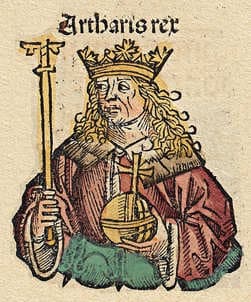
Authari
Emperor · Medieval
46.4Total
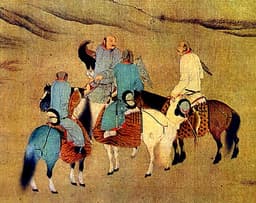
Yelu Abaoji
Emperor · Medieval
62.7Total
Basic Information
Born
540
872
Died
590
926
Era
Medieval
Medieval
Nationality
Lombards
China
Occupation
Emperor
Emperor
Civilization
Western
Eastern
Score Comparison
Military (10%)
10.0
77.2
Political (20%)
39.4
59.6
Influence (20%)
56.4
68.0
Legacy (20%)
45.0
40.0
Leadership (15%)
64.5
80.3
Strategy (15%)
45.0
69.6
TOTAL
46.4
62.7
Authari — Complete Timeline
568 AD
Invasion of ItalyWar
Authari led the Lombard invasion of Italy, crossing the Alps and establishing a kingdom. This conquest seized large parts of the Italian peninsula from Byzantine control, founding the Lombard Kingdom in Italy.
Lombard InvasionConquestItaly
Impact: regionaldestructive
572 AD
Establishment of the Lombard KingdomPolitical Action◆ Major
Authari established Pavia as the capital of the Lombard Kingdom, consolidating Lombard rule over northern and central Italy. He organized the kingdom into duchies, creating a stable political structure that lasted for centuries.
State FormationCapitalLombard Kingdom
Impact: regionalconstructive
589 AD
Marriage to TheudelindaPolitical Action
Authari married Theudelinda, a Bavarian princess, to strengthen alliances with the Bavarians and promote Catholic conversion among the Lombards. The marriage produced no heir, but Theudelinda later became a key figure in Lombard politics.
Marriage AllianceDynastic PoliticsCatholic Conversion
Impact: nationalconstructive
Yelu Abaoji — Complete Timeline
907 AD
Unified Khitan tribesPolitical Action◆ Major
Yelu Abaoji was elected khagan of the Khitan tribes, unifying them under his leadership. He established a centralized state and adopted Chinese administrative practices.
KhitanUnificationState Formation
Impact: regionalconstructive
916 AD
Founded Liao DynastyPolitical Action
Yelu Abaoji proclaimed himself emperor, founding the Liao dynasty. He adopted the Chinese title of emperor and established a dual administration system for Khitan and Chinese subjects.
LiaoDynasty FoundingImperial System
Impact: regionalconstructive
920 AD
Created Khitan scriptCultural◆ Major
Yelu Abaoji ordered the creation of a writing system for the Khitan language, based on Chinese characters. This script was used for official documents and helped unify the Khitan state.
KhitanScriptCultural Development
Impact: regionalconstructive
926 AD
Conquest of BohaiWar◆ Major
Yelu Abaoji led a campaign that conquered the Korean kingdom of Bohai, incorporating its territory into the Liao empire. This expanded Liao's influence into Manchuria and Korea.
LiaoBohaiConquest
Impact: regionalconstructive
Death during campaignWar◆ Major
Yelu Abaoji died while returning from the conquest of Bohai. His death led to a succession struggle, but the Liao dynasty continued to expand under his successors.
LiaoDeathSuccession
Impact: regionaltragic
Expert Analysis
Yelu Abaoji vs Authari
The Khagan and the Conqueror: Two Barbarian Kings Who Forged Kingdoms from Chaos
In the year 916, on the windswept steppes of what is now northern China, a Khitan chieftain named Yelu Abaoji declared himself emperor, adopting the Chinese title of Tian Huangdi, or “Heavenly Emperor.” It was an audacious act of cultural appropriation, a barbarian claiming the mandate of heaven. Half a world away, in the year 572, a Lombard warrior named Authari had already made a similar, if less ceremonious, claim. He had established Pavia as the capital of a new kingdom carved from the wreckage of Roman Italy. Both men were outsiders, leading nomadic or semi-nomadic peoples into the heart of an ancient civilization. Yet their stories diverged as sharply as the fates of the empires they built. Why did one found a dynasty that lasted two centuries, while the other left a kingdom that would soon be swallowed by its neighbors?
Origins
Yelu Abaoji was born in 872 into the Yila tribe of the Khitan, a confederation of nomadic peoples living in the shadow of the Tang dynasty. The Tang, once the undisputed master of East Asia, was collapsing into warlordism and rebellion. Abaoji grew up in a world of shifting alliances, where a clever chieftain could exploit the chaos. He learned to ride and fight before he could read, but he also absorbed the administrative lessons of his Chinese neighbors, understanding that true power came not just from the saddle, but from the scroll. Authari, born around 540, emerged from a very different kind of chaos. The Lombards were a Germanic tribe, hardened by centuries of migration and war. They had been foederati—allies—of the Byzantine Empire, but the ruinous Gothic Wars (535–554) had left Italy devastated and depopulated. Authari’s world was one of pure survival, where a king’s authority rested on his ability to lead his warriors to plunder and land.
Rise to Power
Abaoji’s path was one of patient consolidation. In 907, he was elected khagan of all Khitan tribes, a title that in earlier times might have been a death sentence—elected leaders were often killed when they grew too powerful. But Abaoji had already centralized power, crushing rival chieftains and creating a standing army loyal to him alone. He did not merely conquer; he built a state. Authari’s rise was a single, violent lunge. In 568, he led the Lombard invasion of Italy, crossing the Alps with a horde of warriors, women, and children. They seized vast territories from the Byzantines, who were too exhausted to resist. There was no election, no elaborate political strategy—just a king leading his people to a new home. Where Abaoji’s rise was a chess game, Authari’s was a cavalry charge.
Leadership & Governance
Here the two men reveal their starkest differences. Abaoji was a political genius. He adopted the Chinese imperial system, complete with a bureaucracy, a tax system, and a legal code. In 920, he ordered the creation of the Khitan script, a writing system based on Chinese characters. This was not mere vanity; it was a tool of control, allowing him to issue decrees, record history, and administer a sprawling empire. His conquest of the Korean kingdom of Bohai in 926 was a masterpiece of military strategy, but it was his governance that ensured the Liao dynasty would survive him. Authari, by contrast, ruled as a traditional Germanic war-king. He established Pavia as his capital and parceled out conquered lands to his loyal dukes, but he never built a central administration. The Lombard kingdom remained a loose federation of semi-independent dukes, held together only by the king’s personal prestige. His marriage to the Bavarian princess Theudelinda in 589 was a smart diplomatic move, aimed at securing alliances and promoting Catholic conversion, but it could not substitute for the institutional foundations that Abaoji had laid.
Triumph & Tragedy
Abaoji’s greatest moment was the conquest of Bohai in 926, a campaign that doubled the size of his empire and gave him access to Korean iron and grain. His greatest tragedy came immediately after: he died that same year, on the march home, at the age of 54. His death triggered a succession crisis, but the Liao dynasty endured because he had built a state that could function without him. Authari’s triumph was the invasion of Italy itself—a feat of arms that carved a kingdom from the heart of Christendom. His tragedy was that he died young, in 590, possibly poisoned, leaving no strong heir and a kingdom that was little more than a personal possession. Without him, the Lombard kingdom drifted into a long decline, eventually falling to Charlemagne in 774.
Character & Destiny
Abaoji was a visionary, a man who understood that to rule a settled civilization, a barbarian must become a bureaucrat. He was ruthless—he executed rivals without hesitation—but he was also a builder. His character was that of a pragmatist who saw the future and adapted to it. Authari was a warrior-king in the old mold: brave, charismatic, and impulsive. He led from the front, but he never thought beyond the next battle. His destiny was to be a conqueror, not a founder. One man’s personality built a system; the other’s built a legend.
Legacy
Abaoji’s legacy is the Liao dynasty, which ruled northern China for nearly 200 years (916–1125) and established a model of dual administration—Chinese-style bureaucracy for the settled population, tribal custom for the nomads—that would be copied by later conquest dynasties. He is remembered as a founding father, a figure of immense political and cultural influence. Authari’s legacy is more ambiguous. He founded a kingdom, but it was a kingdom that never truly unified Italy. His name is known to historians, but not to the world. The Lombards left their name to Lombardy, but their kingdom was a footnote in the larger story of the Middle Ages.
Conclusion
Standing on opposite sides of the world, Yelu Abaoji and Authari faced the same challenge: how to turn a barbarian conquest into a lasting civilization. Abaoji succeeded because he understood that power must be institutionalized, that a kingdom is more than a king. Authari failed because he could not see beyond the sword. The difference between them is the difference between a dynasty and a raid. One built a bridge between the steppe and the palace; the other simply crossed a river. In the end, the Khagan who learned to write outlasted the conqueror who only knew how to fight.
Rankings
🥇
Yelu AbaojiLeader
Mil: 77.2Pol: 59.6Inf: 68.0
62.7
🥈
Authari
Mil: 10.0Pol: 39.4Inf: 56.4
46.4
+16.3 behind
How This Comparison Works
Algorithm
Each figure is scored on 6 dimensions (0—100 scale) based on structured historical data: Military (10%), Political (20%), Influence (20%), Legacy (20%), Leadership (15%), Strategy (15%). The weighted total produces the final ranking.
Data Sources
Scores are computed from structured sub-indicators in the database. Scale factors adjust for era (Ancient ×0.85, Modern ×1.0) and civilization size (Eastern ×1.05, Other ×0.80) to account for differences in population and military scale.
Maximum 3 Figures
Comparisons are limited to 2—3 figures to ensure readability and statistical meaningfulness.
Error Margins
±5 points per dimension — Sub-scores are derived from historical records with inherent uncertainty. Two figures within 5 points on a dimension should be considered roughly equivalent in that area.
Total Score Accuracy
±3 points overall — The weighted combination of 6 dimensions produces a total score with approximately ±3 points of uncertainty. Differences of less than 3 points are not statistically significant— the figures are effectively tied.
Known Limitations
- Historical records are incomplete and uneven across civilizations
- Figures from oral-tradition societies may be underrepresented
- Occupation labels can misclassify multi-role figures
- Scores measure capability and impact, not moral character
- Quantitative scoring is a comparison tool, not absolute truth
Capability Radar
Military (10%) — Battles & Warfare
Battles
35
75
Win Rate
40
80
Expansion
45
82
Political (20%) — Governance & Reform
Reform
30
88
Diplomacy
35
75
Economy
25
70
Influence (20%) — Cultural & Global Reach
Cultural
30
60
Global
20
55
Legacy (20%) — Historical Impact
Historical
35
70
Longevity
25
65
Leadership (15%) — Power & Stability
Tenure
40
72
Stability
30
65
Strategy (15%) — Tactics & Innovation
Strategy
35
78
Tactics
30
70
Reform
25
85
Similar Comparisons
Comments & Discussion
Abu's Ghost6/16/2026
Any military historian can see the fatal flaw: Authari lacked a conscription system for his core Lombard warriors, forcing him to rely on unreliable Roman militias who changed sides faster than a gust of wind off the Po River. Compare that to Abaoji's brilliant organization of the Khitan into ordo regiments - each soldier personally loyal to the emperor, fed by assigned pastures and tribute grain. That logistical spine kept the Liao fighting for generations.
游牧数据控6/16/2026
别扯什么天命,看硬数据:阿保机吞并渤海国后,辖下可战之兵瞬间飙到三十万,是出征前的三倍!奥塔里呢?572年攻占帕维亚时,伦巴第战士撑死四万人,还得分兵驻守残破的罗马城墙。人口基数决定王国命运,阿保机能动用庞大的游牧-农耕混合人口,奥塔里连征个税都得求拜占庭点头,不死才怪。
Classics Snob6/16/2026
You're comparing an emperor who cribbed Chinese bureaucracy to a Germanic war-king who never bothered learning Latin administration. Authari's kingdom barely had a written tax code - his "chancery" was basically a tent with a tired monk. Abaoji, however, commissioned Khitan script, built Confucian-style academies for Khitan nobles, and even minted bilingual coins. That's not chance; that's strategic civilization-building versus cattle-herding politics.
赛博史官6/16/2026
冷知识:阿保机之死是一场精心策划的政治谋杀,被他那位汉化极深的皇后述律平逼着自尽陪葬,目的是清除传统贵族势力。奥塔里呢?584年被毒死,凶手是他身边的罗马管家。这说明什么?阿保机的敌人是内部守旧派,奥塔里的敌人是外部的文明残余。前者玩的是权力迭代,后者连敌人是谁都没搞清——这就是帝国与酋邦的本质差异了。
Che Guevara's Beard6/16/2026
Revisionist truth: both were reactionary empire-builders who crushed tribal democracies under iron boots. Abaoji centralized the Khitan tribal council, executed dissenters by dismemberment, and imposed Chinese-style primogeniture on a traditionally elective system. Authari forcibly sedentarized Lombard war bands into feudal estates. The real heroes were the ordinary horse archers and farmers who got drafted to fight for men who never tasted their own blood. Same old story, different barbarians.