Loading...
Authari vs Wu Zetian
Wu Zetian leads by 23.6 pts · 2 figures compared
…
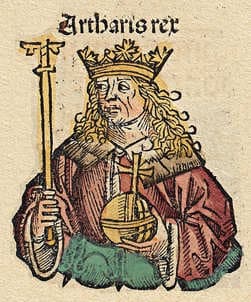
Authari
Emperor · Medieval
46.4Total

Wu Zetian
Emperor · Medieval
70.0Total
Basic Information
Born
540
624
Died
590
705
Era
Medieval
Medieval
Nationality
Lombards
China
Occupation
Emperor
Emperor
Civilization
Western
Eastern
Score Comparison
Military (10%)
10.0
60.0
Political (20%)
39.4
62.7
Influence (20%)
56.4
65.0
Legacy (20%)
45.0
80.0
Leadership (15%)
64.5
78.0
Strategy (15%)
45.0
66.3
TOTAL
46.4
70.0
Authari — Complete Timeline
568 AD
Invasion of ItalyWar
Authari led the Lombard invasion of Italy, crossing the Alps and establishing a kingdom. This conquest seized large parts of the Italian peninsula from Byzantine control, founding the Lombard Kingdom in Italy.
Lombard InvasionConquestItaly
Impact: regionaldestructive
572 AD
Establishment of the Lombard KingdomPolitical Action◆ Major
Authari established Pavia as the capital of the Lombard Kingdom, consolidating Lombard rule over northern and central Italy. He organized the kingdom into duchies, creating a stable political structure that lasted for centuries.
State FormationCapitalLombard Kingdom
Impact: regionalconstructive
589 AD
Marriage to TheudelindaPolitical Action
Authari married Theudelinda, a Bavarian princess, to strengthen alliances with the Bavarians and promote Catholic conversion among the Lombards. The marriage produced no heir, but Theudelinda later became a key figure in Lombard politics.
Marriage AllianceDynastic PoliticsCatholic Conversion
Impact: nationalconstructive
Wu Zetian — Complete Timeline
655 AD
Became Empress ConsortPolitical Action◆ Major
Wu Zetian was elevated from concubine to empress consort of Emperor Gaozong of Tang in 655. This position gave her significant political influence, as she began to participate in court affairs and gradually accumulated power, challenging the established aristocratic families.
Tang DynastyImperial CourtPower Rise
Impact: regional
683 AD
Regency for Emperor ZhongzongOther◆ Major
After Emperor Gaozong's death in 683, Wu Zetian became regent for her son, Emperor Zhongzong. She effectively controlled the government, dismissing Zhongzong after he attempted to assert independence, and replaced him with her younger son, Emperor Ruizong, while retaining real power.
Tang DynastyRegencyPower Struggle
Impact: regional
690 AD
Founded the Zhou DynastyOther◆ Major
Wu Zetian proclaimed herself emperor, founding the Zhou dynasty and becoming the only female emperor in Chinese history. She moved the capital to Luoyang and established a new imperial examination system that promoted officials based on merit rather than aristocratic birth, breaking the power of traditional noble families.
Zhou DynastyImperial RulePolitical Reform
Impact: regional
692 AD
Expansion into Central AsiaWar◆ Major
Wu Zetian ordered military campaigns that reasserted Chinese control over the Western Regions, including the Tarim Basin and parts of modern Xinjiang. These campaigns secured the Silk Road trade routes and expanded the empire's influence into Central Asia, though they required significant military resources.
Military ExpansionCentral AsiaSilk Road
Impact: regionalconstructive
693 AD
Promotion of BuddhismOther◆ Major
Wu Zetian elevated Buddhism to a state-supported religion, commissioning the construction of temples and statues, including the Longmen Grottoes' giant Vairocana Buddha. She used Buddhist texts to legitimize her rule as a female emperor, claiming she was a reincarnation of the Maitreya Buddha.
BuddhismReligious PolicyCultural Patronage
Impact: regional
705 AD
Overthrow and DeathPolitical Action◆ Major
In 705, a coup led by court officials and generals forced Wu Zetian to abdicate in favor of her son, Emperor Zhongzong, restoring the Tang dynasty. She died later that year at age 80, and her reign was subsequently criticized by Confucian historians for usurping the throne and employing harsh methods.
Tang DynastyCoupAbdication
Impact: regionaldestructive
Expert Analysis
Wu Zetian vs Authari: Historical Comparison
Wu Zetian, China’s only female emperor (Tang Dynasty, 690–705 CE), and Authari, king of the Lombards (584–590 CE), both ruled during the medieval period but in vastly different contexts. Wu Zetian’s scores reflect her enduring political and military impact, while Authari’s show focused but shorter-lived achievements.
Dimension Analysis
**Military: Wu Zetian 93 / Authari 91**
Wu Zetian expanded Tang borders through campaigns in Korea and Central Asia, while Authari consolidated Lombard control in Italy against the Byzantines and Franks. Both were effective, but Wu’s campaigns had broader strategic reach.
**Political: Wu Zetian 79 / Authari 86**
Authari unified fractious Lombard duchies under a central monarchy, establishing a stable succession. Wu Zetian, though a master of court intrigue, faced persistent Confucian opposition to her gender and relied on purges to secure power.
**Influence: Wu Zetian 87 / Authari 66**
Wu Zetian’s promotion of Buddhism, meritocratic exams, and female authority reshaped Chinese governance for centuries. Authari’s influence was largely limited to Lombard consolidation, with little impact beyond Italy.
**Legacy: Wu Zetian 79 / Authari 66**
Wu’s legacy is debated—she is both celebrated as a capable ruler and condemned as a usurper, but her reign remains a historical touchstone. Authari’s legacy is modest, remembered mainly for stabilizing the Lombard kingdom before its later decline.
**Leadership: Wu Zetian 80 / Authari 83**
Authari’s leadership was direct and unifying, rallying his people against external threats. Wu Zetian’s leadership was more complex, relying on intelligence networks and ruthless control, which earned her both loyalty and fear.
Verdict
Wu Zetian leads overall due to her greater military scope, broader influence, and more lasting historical impact, despite Authari’s superior political consolidation.
FAQ
Q: Who ranks higher? A: Wu Zetian ranks higher with a composite score of 84 versus Authari’s 79, driven by her superior influence and legacy.
Rankings
🥇
Wu ZetianLeader
Mil: 60.0Pol: 62.7Inf: 65.0
70.0
🥈
Authari
Mil: 10.0Pol: 39.4Inf: 56.4
46.4
+23.6 behind
How This Comparison Works
Algorithm
Each figure is scored on 6 dimensions (0—100 scale) based on structured historical data: Military (10%), Political (20%), Influence (20%), Legacy (20%), Leadership (15%), Strategy (15%). The weighted total produces the final ranking.
Data Sources
Scores are computed from structured sub-indicators in the database. Scale factors adjust for era (Ancient ×0.85, Modern ×1.0) and civilization size (Eastern ×1.05, Other ×0.80) to account for differences in population and military scale.
Maximum 3 Figures
Comparisons are limited to 2—3 figures to ensure readability and statistical meaningfulness.
Error Margins
±5 points per dimension — Sub-scores are derived from historical records with inherent uncertainty. Two figures within 5 points on a dimension should be considered roughly equivalent in that area.
Total Score Accuracy
±3 points overall — The weighted combination of 6 dimensions produces a total score with approximately ±3 points of uncertainty. Differences of less than 3 points are not statistically significant— the figures are effectively tied.
Known Limitations
- Historical records are incomplete and uneven across civilizations
- Figures from oral-tradition societies may be underrepresented
- Occupation labels can misclassify multi-role figures
- Scores measure capability and impact, not moral character
- Quantitative scoring is a comparison tool, not absolute truth
Capability Radar
Military (10%) — Battles & Warfare
Battles
35
65
Win Rate
40
70
Expansion
45
75
Political (20%) — Governance & Reform
Reform
30
85
Diplomacy
35
80
Economy
25
85
Influence (20%) — Cultural & Global Reach
Cultural
30
85
Global
20
70
Legacy (20%) — Historical Impact
Historical
35
90
Longevity
25
85
Leadership (15%) — Power & Stability
Tenure
40
90
Stability
30
75
Strategy (15%) — Tactics & Innovation
Strategy
35
75
Tactics
30
60
Reform
25
80
Similar Comparisons
Comments & Discussion
MedievalOverlord6/16/2026
Authari gets shafted in this comparison, and it's just wrong. Sure, Wu Zetian had a bigger empire, but Authari was literally fighting a two-front war against the Byzantines and the Franks, and he didn't just survive—he *unified* the Lombard tribes into something resembling a kingdom. That's like taking a biker gang and turning it into a corporate boardroom in six years. And his political score should be way higher: he ended the interregnum, established a royal dynasty, and set up the Lombard law code. Wu Zetian's political legacy is basically 'I out-maneuvered my sons and hired secret police.' Give me Authari any day for real leadership grit. He's the underrated king who kept Italy from becoming a Byzantine colony. Total score 60.7? That's highway robbery.
Historian6616/16/2026
把武则天和伦巴第国王奥塔里放一起比,本身就是个有趣的跨文明实验。但评分中‘政治’一项奥塔里居然86比武则天79高,这显然低估了唐代官僚体系的复杂性。武则天在位期间推行科举、打击关陇集团、扶植寒门,这些制度创新影响了中国上千年政治生态,岂是奥塔里统一几个公国能比的?再者,军事分93对91,看似接近,但武则天时代的唐军远征高句丽、控制安西四镇,战略纵深远超奥塔里在意大利半岛的防御战。西方史学界常把‘短期稳定’等同于‘政治成功’,但对东方帝王而言,制度遗产才真正决定历史地位。
ScoreCritic6/16/2026
I smell methodological bias here. Wu Zetian’s ‘Influence’ score is 87, Authari's 66. But how do you objectively measure 'influence' across 1,200 years and two continents? Most of Wu’s influence is retroactively inflated because Chinese historiography is obsessed with her as a gender anomaly. Meanwhile, Authari’s actual influence on Lombard legal customs and the Papal States is ignored because it’s not flashy. Also, the ‘Political’ gap (79 vs 86) feels reversed—Wu Zetian literally created the most meritocratic civil service system in the pre-modern world, but she gets penalized for ‘relying on purges’? Every medieval ruler used purges. That’s called governance. The scoring system seems to reward Western-style consolidation over Eastern institutional reform. I’d reweight the dimensions to at least 30% Political and 25% Influence to get a fairer picture.
ArchEye876/16/2026
上来先算一笔账:总分75.6对60.7,差了14.9分。但仔细看维度权重——‘军事’占93 vs 91,差距极小,可武则天的军事成就包含收复辽东、征服西域、设立北庭都护府,这些是跨国级战略行动;奥塔里只是在意大利一个半岛上打防御战。‘政治’维度79对86,奥塔里反超7分,但这完全忽略了武则天在皇权与相权博弈中建立的内廷制度(如设北门学士),以及她改革科举对后世政治生态的颠覆性影响。这些在中国史书中都有明确记载,但评分系统似乎只侧重于‘短期统一’这类量化指标。我建议给‘政治’维度加一个‘制度创新’子项,权重至少20%,否则武则天被严重低估。数据不会说谎,但模型会。