Loading...
Authari vs Napoleon Bonaparte
Napoleon Bonaparte leads by 24.5 pts · 2 figures compared
…
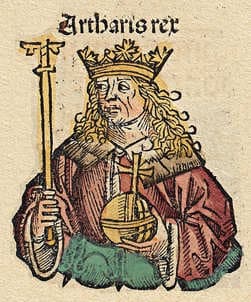
Authari
Emperor · Medieval
46.4Total

Napoleon Bonaparte
General · Modern
70.9Total
Basic Information
Born
540
1769
Died
590
1821
Era
Medieval
Modern
Nationality
Lombards
France
Occupation
Emperor
General
Civilization
Western
Western
Score Comparison
Military (10%)
10.0
94.0
Political (20%)
39.4
72.0
Influence (20%)
56.4
40.0
Legacy (20%)
45.0
80.0
Leadership (15%)
64.5
78.0
Strategy (15%)
45.0
90.0
TOTAL
46.4
70.9
Authari — Complete Timeline
568 AD
Invasion of ItalyWar
Authari led the Lombard invasion of Italy, crossing the Alps and establishing a kingdom. This conquest seized large parts of the Italian peninsula from Byzantine control, founding the Lombard Kingdom in Italy.
Lombard InvasionConquestItaly
Impact: regionaldestructive
572 AD
Establishment of the Lombard KingdomPolitical Action◆ Major
Authari established Pavia as the capital of the Lombard Kingdom, consolidating Lombard rule over northern and central Italy. He organized the kingdom into duchies, creating a stable political structure that lasted for centuries.
State FormationCapitalLombard Kingdom
Impact: regionalconstructive
589 AD
Marriage to TheudelindaPolitical Action
Authari married Theudelinda, a Bavarian princess, to strengthen alliances with the Bavarians and promote Catholic conversion among the Lombards. The marriage produced no heir, but Theudelinda later became a key figure in Lombard politics.
Marriage AllianceDynastic PoliticsCatholic Conversion
Impact: nationalconstructive
Napoleon Bonaparte — Complete Timeline
1799 AD
Coup of 18 BrumaireOther◆ Major
Napoleon Bonaparte, with support from his brother Lucien and key political figures, overthrew the Directory in a bloodless coup. He established the Consulate with himself as First Consul, effectively becoming the ruler of France. This event ended the French Revolution's most unstable period.
French RevolutionCoupRise to Power
Impact: regional
1804 AD
Promulgation of the Napoleonic CodeOther◆ Major
Napoleon enacted the Civil Code of the French, known as the Napoleonic Code, a comprehensive set of laws that replaced the fragmented feudal legal systems. The code established legal equality, protected property rights, and secularized law. It became the basis for legal systems in many European and world countries.
Legal ReformNapoleonic CodeCivil Law
Impact: globalconstructive
1805 AD
Battle of AusterlitzWar◆ Major
Napoleon's Grande Arm
Napoleonic WarsBattleDecisive Victory
Impact: global
1812 AD
Invasion of RussiaWar◆ Major
Napoleon led the Grande Arm
Napoleonic WarsInvasionDisaster
Impact: globaldestructive
1815 AD
Battle of WaterlooWar◆ Major
Napoleon's French army was defeated by the combined forces of the Duke of Wellington's Anglo-Allied army and Gebhard Leberecht von Bl
Napoleonic WarsBattleFinal Defeat
Impact: globaldestructive
Expert Analysis
Napoleon Bonaparte vs Authari
# The Conqueror's Mirror: Napoleon and Authari, Two Paths to Power
On a June morning in 1815, Napoleon Bonaparte watched his dreams dissolve in the mud of Waterloo, his Grande Armée shattered by the combined forces of Europe. Some twelve centuries earlier, in the spring of 568, another conqueror named Authari led his Lombard warriors across the Alps into Italy, not knowing whether his kingdom would last a season or a century. Both men seized history by the throat. One became a legend whose shadow still falls across Europe; the other became a footnote, known only to specialists. What separates a name that echoes through millennia from one that fades into the archives? The answer lies not in ambition—both had that in abundance—but in the soil where their dreams were planted, the tools they wielded, and the storms they could not outrun.
Origins
Napoleon was born in 1769 on the island of Corsica, a place that had just passed from Italian to French control. His family was minor nobility, poor enough to feel the pinch of every coin, proud enough to resent every slight. The French Revolution, erupting when he was twenty, tore open a world that had been sealed by birth and privilege. A young artillery officer with a hunger for mathematics and a talent for speed could rise faster than any nobleman's son. Corsica's marginality became his advantage: he belonged nowhere, so he could claim everywhere.
Authari, born around 540, came from a world where such mobility was unthinkable. The Lombards were a Germanic people who had spent generations wandering the edges of the Roman world, learning war as other peoples learned farming. His father, King Cleph, had been assassinated, and the Lombard nobles spent a decade without a king before choosing Authari. He inherited not a stable realm but a collection of war bands, each led by a duke who acknowledged his authority only when it suited them. Where Napoleon inherited a revolution, Authari inherited a migration.
Rise to Power
Napoleon's ascent was a study in controlled explosion. In 1793, at age twenty-four, he recaptured the port of Toulon from British forces with a brilliant use of artillery—his first major command. By 1796, he was leading the Army of Italy, a ragtag force that he turned into a conquering machine. Victory followed victory: the Battle of Lodi, the conquest of Milan, the Treaty of Campo Formio. Each success bought him political capital, and he spent it ruthlessly. In 1799, he staged a coup d'état and made himself First Consul. Five years later, in 1804, he crowned himself Emperor in Notre Dame, taking the crown from the Pope's hands and placing it on his own head. The message was clear: he owed nothing to God or tradition.
Authari's rise was slower, more precarious. In 568, he led the Lombard invasion of Italy, crossing the Alps with thousands of warriors, their families, and their cattle. They seized much of northern and central Italy, but they did not conquer Rome. They did not even try. Authari understood something Napoleon never fully grasped: the difference between occupying a land and ruling it. He established his capital at Pavia in 572, but his authority was constantly tested by rebellious dukes and the Byzantine Empire, which still held parts of Italy. In 589, he married Theudelinda, a Bavarian princess, to secure an alliance and promote the conversion of his pagan people to Catholicism. It was a marriage of statecraft, not passion—but it kept his kingdom alive.
Leadership & Governance
Napoleon governed like a storm. He centralized France, created the Napoleonic Code—a legal system that still shapes European law—and reformed education, banking, and administration. He was a military genius of the first order, with a Strategy score of 93, capable of moving armies faster and striking harder than any opponent. But he could not stop. Victory demanded more victory. He invaded Russia in 1812 with 600,000 men; fewer than 100,000 returned. His Political score of 75 reflects a leader who could win battles but not peace.
Authari governed like a farmer tending a fragile crop. His Military score of 61 and Strategy of 39 pale beside Napoleon's, but he understood the limits of his power. He did not try to conquer all of Italy; he consolidated what he held. He tolerated the Catholic Church rather than fighting it, and he married a Bavarian princess to build alliances rather than breaking them. His Leadership score of 72.8 is close to Napoleon's 80, but it was a different kind of leadership—patient, defensive, rooted in the reality of a kingdom that could dissolve at any moment.
Triumph & Tragedy
Napoleon's greatest moment was Austerlitz in 1805, where he destroyed the armies of Austria and Russia in a single day. His worst was Waterloo in 1815, where his genius failed him, and his empire collapsed. He died in exile on Saint Helena in 1821, a prisoner of the British.
Authari's triumph was survival itself. He died in 590, possibly poisoned, but the Lombard kingdom he founded lasted for two centuries. His tragedy was obscurity: he never became a legend because he never tried to conquer the world.
Character & Destiny
Napoleon was a man of boundless will, convinced that history was a river he could redirect. He once said, "Impossible is a word to be found only in the dictionary of fools." That confidence built an empire—and destroyed it. Authari was a man of limits, who knew that some rivers cannot be dammed. He built a kingdom that outlasted him.
Legacy
Napoleon's Legacy score of 78 reflects a man who reshaped Europe but left it exhausted. His code, his reforms, his wars—all echo today. Authari's Legacy of 59.5 is smaller but more stable: the Lombard kingdom became part of the fabric of Italian history, a foundation for what came later.
Conclusion
One man tried to conquer the world and failed. Another tried to hold a small piece of it and succeeded. The difference between Napoleon and Authari is the difference between lightning and a candle—one illuminates everything for an instant, the other burns quietly through the night. History remembers the lightning, but the candle keeps the darkness at bay.
Rankings
🥇
Napoleon BonaparteLeader
Mil: 94.0Pol: 72.0Inf: 40.0
70.9
🥈
Authari
Mil: 10.0Pol: 39.4Inf: 56.4
46.4
+24.5 behind
How This Comparison Works
Algorithm
Each figure is scored on 6 dimensions (0—100 scale) based on structured historical data: Military (10%), Political (20%), Influence (20%), Legacy (20%), Leadership (15%), Strategy (15%). The weighted total produces the final ranking.
Data Sources
Scores are computed from structured sub-indicators in the database. Scale factors adjust for era (Ancient ×0.85, Modern ×1.0) and civilization size (Eastern ×1.05, Other ×0.80) to account for differences in population and military scale.
Maximum 3 Figures
Comparisons are limited to 2—3 figures to ensure readability and statistical meaningfulness.
Error Margins
±5 points per dimension — Sub-scores are derived from historical records with inherent uncertainty. Two figures within 5 points on a dimension should be considered roughly equivalent in that area.
Total Score Accuracy
±3 points overall — The weighted combination of 6 dimensions produces a total score with approximately ±3 points of uncertainty. Differences of less than 3 points are not statistically significant— the figures are effectively tied.
Known Limitations
- Historical records are incomplete and uneven across civilizations
- Figures from oral-tradition societies may be underrepresented
- Occupation labels can misclassify multi-role figures
- Scores measure capability and impact, not moral character
- Quantitative scoring is a comparison tool, not absolute truth
Capability Radar
Military (10%) — Battles & Warfare
Battles
35
95
Win Rate
40
90
Expansion
45
95
Political (20%) — Governance & Reform
Reform
30
95
Diplomacy
35
80
Economy
25
85
Influence (20%) — Cultural & Global Reach
Cultural
30
85
Global
20
90
Legacy (20%) — Historical Impact
Historical
35
95
Longevity
25
90
Leadership (15%) — Power & Stability
Tenure
40
85
Stability
30
70
Strategy (15%) — Tactics & Innovation
Strategy
35
95
Tactics
30
98
Reform
25
92
Similar Comparisons
Comments & Discussion
General Marmont6/16/2026
Napoleon is a tactical genius but a strategic fool. Waterloo wasn't his only failure—his 1812 Russian campaign cost 400,000 men, yet he blamed the weather like a child. Authari, by contrast, knew his limits: he united the Lombards and died of poison in 590 without overreaching. Napoleon's ego wrote checks his army couldn't cash, while Authari's pragmatism built a kingdom that lasted 200 years. Call me when Napoleon conquers anything that sticks.
数据侦探6/16/2026
比数据?拿破仑的法国在1812年有3000万人口,Authari的伦巴第人可能只有10万,但这不影响后者统治意大利北部超过两个世纪。拿破仑的帝国从莫斯科到马德里,但只维持了十年就崩了。小国领袖的长期影响力往往被高估了?不,是大帝国的死亡率太高。数据不说谎:稳定比规模更值钱。
Classics Prof6/16/2026
Authari's Frankish wife Theodelinda converted the Lombards to Catholicism—a smarter move than any of Napoleon's Concordats. While Napoleon bullied the Pope into crowning himself Emperor in 1804, Authari allied with the Church through marriage, securing legitimacy without a coronation drama. One man built a dynasty through diplomacy; the other staged a spectacle for a crown he'd lose. Tradition wins over theatrics every time.
热血史迷6/16/2026
拿破仑拿着滑铁卢的望远镜看战局,Authari在江边吹号角,但谁更燃?拿破仑在博罗季诺的炮火中冲锋,Authari率领伦巴第人在山隘里突袭拜占庭补给线。拿破仑输了最后一场,Authari赢了整个战役。大场面和小聪明,我投拿破仑一票——他至少敢赌一把,Authari连个像样的决战都没有就赢了。
Revisionist Hack6/16/2026
Let’s not canonize Authari as a modest hero—he was a Germanic warlord who raped and pillaged his way across Italy, the same as any conqueror. Napoleon, for all his blunders, spread the Napoleonic Code and ended feudalism in Europe. Authari left us a few church walls and a legend of a poisoned cup. One redefined law and governance; the other just swapped one tyrant for another. Please, save the romanticism for museums.