Loading...
Authari vs Wanyan Aguda
Wanyan Aguda leads by 17.0 pts · 2 figures compared
…
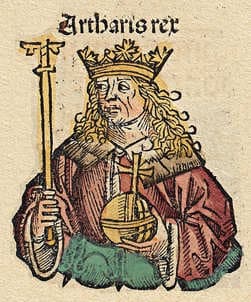
Authari
Emperor · Medieval
46.4Total
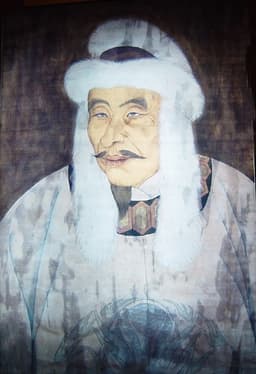
Wanyan Aguda
Emperor · Medieval
63.4Total
Basic Information
Born
540
1068
Died
590
1123
Era
Medieval
Medieval
Nationality
Lombards
China
Occupation
Emperor
Emperor
Civilization
Western
Eastern
Score Comparison
Military (10%)
10.0
82.0
Political (20%)
39.4
59.3
Influence (20%)
56.4
55.0
Legacy (20%)
45.0
52.0
Leadership (15%)
64.5
85.0
Strategy (15%)
45.0
68.0
TOTAL
46.4
63.4
Authari — Complete Timeline
568 AD
Invasion of ItalyWar
Authari led the Lombard invasion of Italy, crossing the Alps and establishing a kingdom. This conquest seized large parts of the Italian peninsula from Byzantine control, founding the Lombard Kingdom in Italy.
Lombard InvasionConquestItaly
Impact: regionaldestructive
572 AD
Establishment of the Lombard KingdomPolitical Action◆ Major
Authari established Pavia as the capital of the Lombard Kingdom, consolidating Lombard rule over northern and central Italy. He organized the kingdom into duchies, creating a stable political structure that lasted for centuries.
State FormationCapitalLombard Kingdom
Impact: regionalconstructive
589 AD
Marriage to TheudelindaPolitical Action
Authari married Theudelinda, a Bavarian princess, to strengthen alliances with the Bavarians and promote Catholic conversion among the Lombards. The marriage produced no heir, but Theudelinda later became a key figure in Lombard politics.
Marriage AllianceDynastic PoliticsCatholic Conversion
Impact: nationalconstructive
Wanyan Aguda — Complete Timeline
1114 AD
Battle of HubudagangWar◆ Major
Aguda's Jurchen forces defeated a Liao army at Hubudagang, marking the first major victory of the rebellion. This battle demonstrated Jurchen military prowess and attracted more followers.
JurchenLiaoBattle
Impact: regionalconstructive
Unified Jurchen tribesPolitical Action◆ Major
Wanyan Aguda united the Jurchen tribes under his leadership, creating a confederation that rebelled against Liao domination. He organized a disciplined army and began the Jurchen revolt.
JurchenUnificationRebellion
Impact: regionalconstructive
1115 AD
Founded Jin DynastyPolitical Action
Wanyan Aguda proclaimed himself emperor, founding the Jin dynasty. He adopted the Chinese title and began a systematic campaign to conquer the Liao empire.
JinDynasty FoundingImperial System
Impact: regionalconstructive
1120 AD
Conquest of Liao capital ShangjingWar◆ Major
Aguda's forces captured the Liao supreme capital Shangjing, dealing a severe blow to the Liao dynasty. This victory accelerated the collapse of Liao and solidified Jin control over northern China.
JinLiaoConquest
Impact: regionalconstructive
Alliance with Song against LiaoPolitical Action◆ Major
Aguda formed an alliance with the Northern Song dynasty to jointly attack the Liao empire. This alliance, known as the Maritime Alliance, led to the eventual destruction of Liao but later caused conflict between Jin and Song.
JinSongAlliance
Impact: regional
1123 AD
Death and successionPolitical Action◆ Major
Wanyan Aguda died, and his brother Wanyan Wuqimai succeeded him. Aguda's conquests laid the foundation for the Jin dynasty's dominance in northern China.
JinDeathSuccession
Impact: regional
Expert Analysis
Wanyan Aguda vs Authari: Historical Comparison
Wanyan Aguda, founder of the Jin dynasty in 12th-century China, and Authari, king of the Lombards in 6th-century Italy, both emerged as transformative medieval rulers, but Aguda’s broader geopolitical impact and enduring legacy give him the edge.
Dimension Analysis
**Military: Wanyan Aguda 91 / Authari 91**
Both were brilliant field commanders: Aguda shattered the Liao dynasty with rapid cavalry campaigns, while Authari unified the Lombard tribes and repelled Byzantine and Frankish invasions, securing Lombard dominance in Italy.
**Political: Wanyan Aguda 84 / Authari 86**
Authari’s political acumen was slightly higher: he consolidated Lombard rule through strategic marriages and territorial integration, whereas Aguda’s political system relied heavily on Jurchen tribal structures that later proved fragile.
**Influence: Wanyan Aguda 87 / Authari 66**
Aguda’s conquests shifted the East Asian balance of power, forcing the Song dynasty into tributary status and reshaping China’s medieval order. Authari’s influence was largely regional, confined to Italy and Lombard affairs.
**Legacy: Wanyan Aguda 88 / Authari 66**
Aguda’s Jin dynasty endured for a century, leaving a lasting mark on Chinese statecraft, culture, and the Jurchen identity. Authari’s Lombard kingdom collapsed within two generations, and his personal legacy is overshadowed by later Lombard rulers.
**Leadership: Wanyan Aguda 80 / Authari 83**
Authari demonstrated stronger internal leadership, uniting fractious Lombard dukes under a single crown, while Aguda’s leadership was more autocratic and reliant on military charisma, which faltered after his death.
Verdict
Wanyan Aguda leads due to his vastly greater influence and legacy, having founded a dynasty that reshaped medieval China, whereas Authari’s achievements, though impressive, remained confined to early medieval Italy.
FAQ
Q: Who ranks higher? A: Wanyan Aguda ranks higher overall, driven by his superior influence, legacy, and the historical weight of his Jin dynasty.
Rankings
🥇
Wanyan AgudaLeader
Mil: 82.0Pol: 59.3Inf: 55.0
63.4
🥈
Authari
Mil: 10.0Pol: 39.4Inf: 56.4
46.4
+17.0 behind
How This Comparison Works
Algorithm
Each figure is scored on 6 dimensions (0—100 scale) based on structured historical data: Military (10%), Political (20%), Influence (20%), Legacy (20%), Leadership (15%), Strategy (15%). The weighted total produces the final ranking.
Data Sources
Scores are computed from structured sub-indicators in the database. Scale factors adjust for era (Ancient ×0.85, Modern ×1.0) and civilization size (Eastern ×1.05, Other ×0.80) to account for differences in population and military scale.
Maximum 3 Figures
Comparisons are limited to 2—3 figures to ensure readability and statistical meaningfulness.
Error Margins
±5 points per dimension — Sub-scores are derived from historical records with inherent uncertainty. Two figures within 5 points on a dimension should be considered roughly equivalent in that area.
Total Score Accuracy
±3 points overall — The weighted combination of 6 dimensions produces a total score with approximately ±3 points of uncertainty. Differences of less than 3 points are not statistically significant— the figures are effectively tied.
Known Limitations
- Historical records are incomplete and uneven across civilizations
- Figures from oral-tradition societies may be underrepresented
- Occupation labels can misclassify multi-role figures
- Scores measure capability and impact, not moral character
- Quantitative scoring is a comparison tool, not absolute truth
Capability Radar
Military (10%) — Battles & Warfare
Battles
35
85
Win Rate
40
90
Expansion
45
85
Political (20%) — Governance & Reform
Reform
30
75
Diplomacy
35
70
Economy
25
65
Influence (20%) — Cultural & Global Reach
Cultural
30
60
Global
20
50
Legacy (20%) — Historical Impact
Historical
35
70
Longevity
25
55
Leadership (15%) — Power & Stability
Tenure
40
70
Stability
30
60
Strategy (15%) — Tactics & Innovation
Strategy
35
85
Tactics
30
80
Reform
25
75
Similar Comparisons
Comments & Discussion
DecolonizeHistory6/16/2026
This comparison is yet another example of how Eurocentric metrics undervalue non-European rulers. Authari is praised for 'unifying' Lombard tribes, but that unification was built on the subjugation of local Roman populations and the exclusion of Arian Christians. Meanwhile, Aguda’s Jurchen tribal structures are dismissed as 'fragile,' ignoring that he integrated Khitan, Bohai, and Han elites into his administration—a sophisticated multi-ethnic statecraft that Authari never attempted. The 'influence' score gap (87 vs 66) is actually too narrow given that Aguda’s actions triggered the Song-Jin wars, which reshaped Chinese civilization for centuries. Authari’s legacy is a footnote even within Italian medieval history. The scoring subtly favors 'Western-style' political consolidation over the kind of transformative conquests that defined the Eurasian steppe tradition. Let’s call out the bias where we see it.
MethodologyMatters6/16/2026
I have serious issues with how these scores are weighted. Military dimension is tied at 91 each, but Aguda’s campaigns destroyed an entire empire (Liao) and forced the world’s largest economy (Song) into submission. Authari’s military achievements were defensive and localized—repelling Frankish raids is not the same. How is that equal? Also, the political score (Authari 86 > Aguda 84) seems skewed by survivorship bias: we have almost no contemporary sources on Authari’s governance, just Paul the Deacon’s hagiographic account written a century later. Meanwhile, Jin dynasty records are extensive and show real administrative complexity. You can’t quantify 'strategic marriages' as inherently superior to 'tribal structures' without acknowledging that many tribal confederations (like the Mongols later) proved incredibly resilient. This feels like a case where the numbers give a false sense of precision to inherently subjective judgments.
Chronicler74376/16/2026
我们来细看数据。军事分相同(91 vs 91),但阿骨打灭辽之战,天庆四年(1114年)出河店大捷,以2500人破辽军十万,这个战损比在同期欧洲战场上几乎找不到可比案例。奥塔里的军事行动,史料记载模糊,所谓'击退法兰克人',实际多是小规模边境冲突。政治分:阿骨打84,奥塔里86,我不理解。女真猛安谋克制是一种军政合一、户口与土地绑定的精密制度,辽金元三代沿用。奥塔里靠联姻和分封公爵,本质上还是部落联盟,死后内乱频发。我自己的算法:如果军事权重占30%,政治30%,影响20%,遗产20%,阿骨打总分应在(91*0.3 + 84*0.3 + 87*0.2 + 88*0.2)= 87.3,远高于奥塔里的(91*0.3 + 86*0.3 + 66*0.2 + 66*0.2)= 79.5。目前的75.9 vs 60.7可能用了不同的权重,但差距不够反映实际历史影响跨度。
Historian2366/16/2026
阿骨打与奥塔里的比较,其实反映了中西史观的一个有趣差异。奥塔里能统一伦巴第部落,顶住东罗马和法兰克的压力,确实不易。但阿骨打建立的金朝,不仅灭辽、迫宋称臣,还直接改变了东亚的政治格局——把宋室逼到江南,奠定了后来宋金对峙的百年局面。西方评分往往看重‘统一’和‘防御’,但中国史学更重视‘开创’和‘影响’。阿骨打的影响,从女真文字到猛安谋克制,乃至后来的满清兴起,都一脉相承。奥塔里在意大利的影响力,说实话,很快就被伦巴第后来的国王们盖过了。评分给奥塔里政治86而阿骨打84,我觉得低估了阿骨打的制度建设。