Loading...
Authari vs Pachacuti
Pachacuti leads by 23.0 pts · 2 figures compared
…
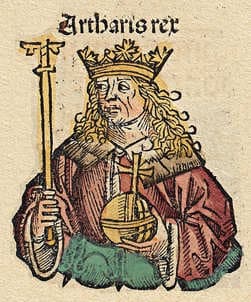
Authari
Emperor · Medieval
46.4Total
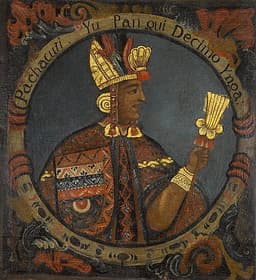
Pachacuti
Emperor · Medieval
69.4Total
Basic Information
Born
540
1418
Died
590
1472
Era
Medieval
Medieval
Nationality
Lombards
Inca Empire
Occupation
Emperor
Emperor
Civilization
Western
Other
Score Comparison
Military (10%)
10.0
78.5
Political (20%)
39.4
58.1
Influence (20%)
56.4
65.0
Legacy (20%)
45.0
72.0
Leadership (15%)
64.5
78.0
Strategy (15%)
45.0
69.2
TOTAL
46.4
69.4
Authari — Complete Timeline
568 AD
Invasion of ItalyWar
Authari led the Lombard invasion of Italy, crossing the Alps and establishing a kingdom. This conquest seized large parts of the Italian peninsula from Byzantine control, founding the Lombard Kingdom in Italy.
Lombard InvasionConquestItaly
Impact: regionaldestructive
572 AD
Establishment of the Lombard KingdomPolitical Action◆ Major
Authari established Pavia as the capital of the Lombard Kingdom, consolidating Lombard rule over northern and central Italy. He organized the kingdom into duchies, creating a stable political structure that lasted for centuries.
State FormationCapitalLombard Kingdom
Impact: regionalconstructive
589 AD
Marriage to TheudelindaPolitical Action
Authari married Theudelinda, a Bavarian princess, to strengthen alliances with the Bavarians and promote Catholic conversion among the Lombards. The marriage produced no heir, but Theudelinda later became a key figure in Lombard politics.
Marriage AllianceDynastic PoliticsCatholic Conversion
Impact: nationalconstructive
Pachacuti — Complete Timeline
1438 AD
Conquest of the Chanka KingdomWar
Pachacuti led the Inca army to defeat the Chanka, a powerful rival, in a decisive battle near Cusco. This victory secured his position as Sapa Inca and initiated a period of rapid expansion, transforming the Inca from a small kingdom into a vast empire.
ConquestInca ExpansionChanka
Impact: regional
1440 AD
Reconstruction of CuscoCultural◆ Major
Pachacuti rebuilt Cusco as the imperial capital, designing it in the shape of a puma and constructing massive stone structures like Sacsayhuam
Urban PlanningArchitectureInca Empire
Impact: regionalconstructive
1450 AD
Initiation of Machu Picchu's ConstructionCultural◆ Major
Pachacuti ordered the construction of Machu Picchu, a royal estate and ceremonial site high in the Andes. The complex featured sophisticated dry-stone masonry and terraced agriculture, serving as a symbol of Inca engineering and a retreat for the emperor.
ArchitectureRoyal EstateInca Engineering
Impact: regionalconstructive
Expert Analysis
Pachacuti vs Authari
# The Mountain and the Plain
In 1438, on a battlefield near the sacred city of Cusco, a young Inca prince rallied a fleeing army and turned certain defeat into a triumph that would echo for centuries. A hundred and thirty years earlier, in 568, a Lombard war leader led his people across the Alps into a fractured Italy, seizing lands that the Roman Empire had ruled for half a millennium. Pachacuti and Authari both built kingdoms from the chaos of their times, but the worlds they created could not have been more different—one a mountain empire of breathtaking ambition, the other a fragile foothold in a land of ruins. Why did one man forge a civilization that still astounds us, while the other left a legacy that history nearly forgot?
Origins
Pachacuti was born in 1418 into the royal lineage of the Inca, a small kingdom in the high Andes that had yet to dream of empire. The ninth son of the Sapa Inca, he was not expected to rule. But the Andes shaped a people accustomed to extremes—thin air, steep slopes, and the constant threat of earthquake and frost. The Inca world was one of stone and sky, where survival demanded collective effort and absolute obedience to the sun god Inti. Pachacuti grew up in a culture that worshipped order, where the land itself was sacred and the ruler was a living god.
Authari, born around 540, came from a very different world. The Lombards were a Germanic people who had wandered for generations, pressing against the borders of the fading Roman Empire. They were warriors of the northern forests and plains, where loyalty was personal, power was earned by the sword, and kings were elected by armed assemblies. Authari inherited a tradition of movement, not settlement—a people who measured their strength not in stone cities but in the number of spears that followed their war chief.
Rise to Power
Pachacuti’s rise came through a single, desperate moment. In 1438, the Chanka—a powerful rival kingdom—attacked Cusco. The Inca ruler and his heir fled, leaving the city to its fate. But Pachacuti, then a prince named Yupanqui, refused to abandon his home. He gathered what warriors remained, invoked the sun god, and led a counterattack that shattered the Chanka army. The victory was so complete that his father abdicated, and Yupanqui took the name Pachacuti—“Earthshaker.” He had not merely won a battle; he had rewritten the Inca destiny.
Authari’s path was slower and bloodier. The Lombards had spent decades skirmishing with Byzantines and other Germanic tribes. In 568, Authari led them across the Alps into Italy, a land exhausted by decades of war between the Eastern Roman Empire and the Ostrogoths. The invasion was less a single stroke than a grinding advance. Authari seized Pavia in 572 and declared it his capital, but the conquest was never complete. Byzantine garrisons held out in Ravenna, Rome, and the south. Authari’s kingdom was a patchwork of occupied cities and uneasy truces.
Leadership & Governance
Pachacuti was a revolutionary administrator. He transformed Cusco from a modest town into a capital shaped like a sacred puma, with massive stone walls fitted so precisely that a knife blade could not slip between them. He divided his empire into four quarters, each governed by loyal nobles, and imposed a system of labor taxation that built roads, storehouses, and terraces across the Andes. He ordered the construction of Machu Picchu around 1450, a royal estate that remains one of the world’s great wonders. His rule was absolute, but it was also visionary—he understood that conquest alone could not hold an empire.
Authari ruled as a war chief among equals. He established Pavia as his capital and minted coins bearing his name, but he could not impose the kind of centralized order that Pachacuti achieved. The Lombard kingdom was a confederation of dukes, each commanding his own warriors and often defying the king. Authari’s marriage in 589 to Theudelinda, a Bavarian princess, was a political move to secure alliances and encourage conversion to Catholicism, but it revealed a fundamental weakness: he needed to bargain, not command. His Italy remained a battlefield of competing loyalties.
Triumph & Tragedy
Pachacuti’s greatest triumph was not a single battle but the creation of an imperial system that lasted for generations. He expanded Inca control from modern Ecuador to Chile, binding diverse peoples through a network of roads, a common language, and the worship of Inti. His tragedy came later, in the civil wars that followed his death and the Spanish conquest that erased his empire. But even in ruin, his works endured—Machu Picchu, the terraces of Moray, the stone walls of Cusco.
Authari’s triumph was survival itself. He carved a Lombard kingdom out of Roman Italy and kept it alive against Byzantine counterattacks and internal revolts. His tragedy was that the kingdom never truly cohered. After his death in 590—likely poisoned—the Lombard realm fragmented into warring duchies, and within two centuries it was absorbed by the Franks. Authari left no Machu Picchu, no enduring legend. He was a king of the moment, not of the ages.
Character & Destiny
Pachacuti was a builder. His mind moved from the battlefield to the drafting table, from the siege to the irrigation canal. He saw the world as something to be shaped, like the stones of Cusco, and he possessed the ruthless patience to do it. His name means “Earthshaker,” but he was also an earth-maker—a man who believed that order, imposed from above, could transform chaos into civilization.
Authari was a conqueror, not a builder. He saw Italy as a prize to be taken, not a foundation to be laid. He could lead warriors but not construct institutions. His personality reflected his people’s restless past: fierce, proud, and ultimately unable to settle. Where Pachacuti thought in centuries, Authari thought in seasons. One built for eternity; the other fought for the day.
Legacy
Pachacuti’s legacy is written in stone. Machu Picchu draws millions of visitors each year. The Inca road system still stretches across the Andes. His political reforms influenced later empires and continue to fascinate historians. He is remembered as the father of the Inca Empire, a figure of almost mythic proportions.
Authari’s legacy is quieter. He founded a kingdom that gave its name to Lombardy, a region of modern Italy. The Lombard legal code influenced later European law. But his story is known mostly to specialists. He is a footnote in the long decline of Rome, a reminder that not all conquerors become founders.
Conclusion
Standing on the terraces of Machu Picchu, one feels the weight of Pachacuti’s ambition—a vision so vast it could reshape mountains. Walking through the ruins of Pavia, one senses Authari’s struggle—a king trying to hold a kingdom together with little more than will and a sword. Both men lived in the same medieval centuries, both built realms from the ashes of older worlds. But one built with stone and systems, the other with spears and oaths. Their different fates remind us that history rewards not just the conqueror, but the one who knows what to build after the battle is won.
Rankings
🥇
PachacutiLeader
Mil: 78.5Pol: 58.1Inf: 65.0
69.4
🥈
Authari
Mil: 10.0Pol: 39.4Inf: 56.4
46.4
+23.0 behind
How This Comparison Works
Algorithm
Each figure is scored on 6 dimensions (0—100 scale) based on structured historical data: Military (10%), Political (20%), Influence (20%), Legacy (20%), Leadership (15%), Strategy (15%). The weighted total produces the final ranking.
Data Sources
Scores are computed from structured sub-indicators in the database. Scale factors adjust for era (Ancient ×0.85, Modern ×1.0) and civilization size (Eastern ×1.05, Other ×0.80) to account for differences in population and military scale.
Maximum 3 Figures
Comparisons are limited to 2—3 figures to ensure readability and statistical meaningfulness.
Error Margins
±5 points per dimension — Sub-scores are derived from historical records with inherent uncertainty. Two figures within 5 points on a dimension should be considered roughly equivalent in that area.
Total Score Accuracy
±3 points overall — The weighted combination of 6 dimensions produces a total score with approximately ±3 points of uncertainty. Differences of less than 3 points are not statistically significant— the figures are effectively tied.
Known Limitations
- Historical records are incomplete and uneven across civilizations
- Figures from oral-tradition societies may be underrepresented
- Occupation labels can misclassify multi-role figures
- Scores measure capability and impact, not moral character
- Quantitative scoring is a comparison tool, not absolute truth
Capability Radar
Military (10%) — Battles & Warfare
Battles
35
85
Win Rate
40
90
Expansion
45
90
Political (20%) — Governance & Reform
Reform
30
92
Diplomacy
35
75
Economy
25
80
Influence (20%) — Cultural & Global Reach
Cultural
30
85
Global
20
65
Legacy (20%) — Historical Impact
Historical
35
80
Longevity
25
70
Leadership (15%) — Power & Stability
Tenure
40
85
Stability
30
82
Strategy (15%) — Tactics & Innovation
Strategy
35
88
Tactics
30
80
Reform
25
85
Similar Comparisons
Comments & Discussion
PachacutiPundit6/16/2026
This comparison is utterly lopsided. The 1438 battle near Cusco against the Chanka wasn't just a military victory; it was a cosmological revolution. Pachacuti literally reshaped the sacred valley, taming the Urubamba River and planting carved stone monuments, while Authari just squabbled over Roman ruins. One built the Qhapaq Ñan, a 25,000-mile highway over the Andes; the other left behind a few crumbling walls. Mountain gods always beat plain ghosts.
安第斯之鹰6/16/2026
拿Authari和Pachacuti比?简直是把山间巨鹰和草丛里的蚱蜢相提并论。印加人在库斯科用一千块形状不一的石头拼出完美城墙,每块严丝合缝,连刀片都插不进去——这可是在没有铁器、没有轮子的情况下。而Authari带着伦巴第人翻过阿尔卑斯山,不过是在前罗马省份的废墟里捡拾剩饭。一个是创建文明法则的立法者,一个只是在旧帝国的尸身上扒衣服。
RomanRuinRat6/16/2026
Let's be honest: Authari's Italy was a toxic waste dump of plagues, famines, and broken aqueducts. The so-called "Exarchate of Ravenna" was a joke—Byzantine governors hiding behind mosquito-infested marshes while Goths and Lombards brawled over rubble. Meanwhile, Pachacuti had fresh terraces, orderly mita labor, and a centralized state that actually worked. One man inherited a corpse and didn't know what to do with it; the other built a living organism from scratch. Not even close.
平民历史学家6/16/2026
我受够了这种"大人物史观"!Pachacuti确实牛逼,但他站在印加悠久的农业文脉上,利用的是山脉间天然的梯田体系和早已存在的羊毛贸易网络。而Authari面对的是一地鸡毛:意大利人口从700万暴跌到400万,狼群在罗马论坛上嚎叫。在那个烂摊子里,挺过二十年不被灭族就是胜利。别指望伦巴第蛮王能变出马丘比丘,给他同样的物资条件和时间,说不定也能搞出点名堂。
CulturedContrarian6/16/2026
Oh, spare me the "mountain genius" worship. Pachacuti's empire was a theocratic nightmare—mandatory worship of Inti, state-controlled economy, and a death penalty for moving your sandal off the official Qhapaq Ñan. Authari's Lombards, by contrast, adapted to local Roman law and kept Latin literacy alive in their courts. You want tyranny with aqueducts, or freedom with chaos? I'll take the Lombard's pragmatic mess over the Inca's petrified order any day.