Loading...
This comparison has not been analyzed yet.
One-time AI generation (~1 minute). Scores and timeline are already available below.
Authari vs King Gwangjong
King Gwangjong leads by 11.1 pts · 2 figures compared
…
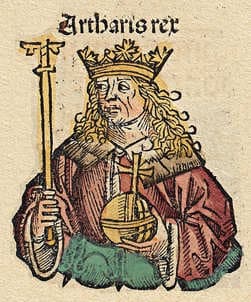
Authari
Emperor · Medieval
46.4Total

King Gwangjong
Emperor · Medieval
57.5Total
Basic Information
Born
540
925
Died
590
975
Era
Medieval
Medieval
Nationality
Lombards
Korea
Occupation
Emperor
Emperor
Civilization
Western
Eastern
Score Comparison
Military (10%)
10.0
50.0
Political (20%)
39.4
72.0
Influence (20%)
56.4
53.3
Legacy (20%)
45.0
50.0
Leadership (15%)
64.5
66.0
Strategy (15%)
45.0
60.0
TOTAL
46.4
57.5
Authari — Complete Timeline
568 AD
Invasion of ItalyWar
Authari led the Lombard invasion of Italy, crossing the Alps and establishing a kingdom. This conquest seized large parts of the Italian peninsula from Byzantine control, founding the Lombard Kingdom in Italy.
Lombard InvasionConquestItaly
Impact: regionaldestructive
572 AD
Establishment of the Lombard KingdomPolitical Action◆ Major
Authari established Pavia as the capital of the Lombard Kingdom, consolidating Lombard rule over northern and central Italy. He organized the kingdom into duchies, creating a stable political structure that lasted for centuries.
State FormationCapitalLombard Kingdom
Impact: regionalconstructive
589 AD
Marriage to TheudelindaPolitical Action
Authari married Theudelinda, a Bavarian princess, to strengthen alliances with the Bavarians and promote Catholic conversion among the Lombards. The marriage produced no heir, but Theudelinda later became a key figure in Lombard politics.
Marriage AllianceDynastic PoliticsCatholic Conversion
Impact: nationalconstructive
King Gwangjong — Complete Timeline
956 AD
Promulgation of Slave Emancipation EdictReform◆ Major
Gwangjong issued an edict freeing many slaves and reclassifying them as commoners. This measure aimed to undermine the economic base of powerful clans who relied on slave labor, while increasing the tax-paying population under direct royal control.
Social ReformSlaveryCentralization
Impact: nationalprogressive
Purge of Powerful ClansPolitical Action◆ Major
King Gwangjong initiated a systematic purge of powerful aristocratic clans that had dominated Goryeo politics. He ordered the execution or exile of many nobles, confiscated their lands, and freed thousands of slaves to weaken the old elite and strengthen royal authority.
CentralizationPurgeAristocracy
Impact: nationaldestructive
958 AD
Institution of Civil Service ExaminationsReform◆ Major
Gwangjong established the gwageo civil service examination system in Goryeo, based on the Chinese Tang model. This reform allowed talented individuals from lower social classes to enter government service, reducing the power of hereditary aristocrats and creating a merit-based bureaucracy.
MeritocracyBureaucracyConfucian Reform
Impact: nationalprogressive
960 AD
Enactment of Purple Robe EdictPolitical Action
Gwangjong decreed that only the king could grant the right to wear purple robes, a symbol of high office. This edict stripped powerful nobles of their self-assumed privileges and reinforced the king's sole authority to confer rank and status.
Royal AuthoritySumptuary LawCentralization
Impact: national
This comparison has not been analyzed yet.
One-time AI generation (~1 minute). Scores and timeline are already available below.
Rankings
🥇
King GwangjongLeader
Mil: 50.0Pol: 72.0Inf: 53.3
57.5
🥈
Authari
Mil: 10.0Pol: 39.4Inf: 56.4
46.4
+11.1 behind
How This Comparison Works
Algorithm
Each figure is scored on 6 dimensions (0—100 scale) based on structured historical data: Military (10%), Political (20%), Influence (20%), Legacy (20%), Leadership (15%), Strategy (15%). The weighted total produces the final ranking.
Data Sources
Scores are computed from structured sub-indicators in the database. Scale factors adjust for era (Ancient ×0.85, Modern ×1.0) and civilization size (Eastern ×1.05, Other ×0.80) to account for differences in population and military scale.
Maximum 3 Figures
Comparisons are limited to 2—3 figures to ensure readability and statistical meaningfulness.
Error Margins
±5 points per dimension — Sub-scores are derived from historical records with inherent uncertainty. Two figures within 5 points on a dimension should be considered roughly equivalent in that area.
Total Score Accuracy
±3 points overall — The weighted combination of 6 dimensions produces a total score with approximately ±3 points of uncertainty. Differences of less than 3 points are not statistically significant— the figures are effectively tied.
Known Limitations
- Historical records are incomplete and uneven across civilizations
- Figures from oral-tradition societies may be underrepresented
- Occupation labels can misclassify multi-role figures
- Scores measure capability and impact, not moral character
- Quantitative scoring is a comparison tool, not absolute truth
Capability Radar
Military (10%) — Battles & Warfare
Battles
35
20
Win Rate
40
25
Expansion
45
15
Political (20%) — Governance & Reform
Reform
30
85
Diplomacy
35
60
Economy
25
55
Influence (20%) — Cultural & Global Reach
Cultural
30
40
Global
20
20
Legacy (20%) — Historical Impact
Historical
35
55
Longevity
25
50
Leadership (15%) — Power & Stability
Tenure
40
70
Stability
30
65
Strategy (15%) — Tactics & Innovation
Strategy
35
40
Tactics
30
30
Reform
25
45
Similar Comparisons
Comments & Discussion
No comments yet. Be the first to share your thoughts!