Loading...
Authari vs Henry the Fowler
Henry the Fowler leads by 14.5 pts · 2 figures compared
…
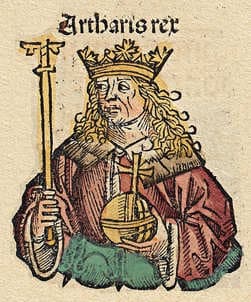
Authari
Emperor · Medieval
46.4Total
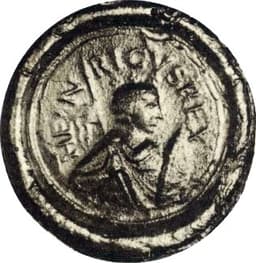
Henry the Fowler
Emperor · Medieval
60.9Total
Basic Information
Born
540
876
Died
590
936
Era
Medieval
Medieval
Nationality
Lombards
East Francia
Occupation
Emperor
Emperor
Civilization
Western
Western
Score Comparison
Military (10%)
10.0
70.0
Political (20%)
39.4
59.3
Influence (20%)
56.4
55.0
Legacy (20%)
45.0
52.0
Leadership (15%)
64.5
85.0
Strategy (15%)
45.0
55.0
TOTAL
46.4
60.9
Authari — Complete Timeline
568 AD
Invasion of ItalyWar
Authari led the Lombard invasion of Italy, crossing the Alps and establishing a kingdom. This conquest seized large parts of the Italian peninsula from Byzantine control, founding the Lombard Kingdom in Italy.
Lombard InvasionConquestItaly
Impact: regionaldestructive
572 AD
Establishment of the Lombard KingdomPolitical Action◆ Major
Authari established Pavia as the capital of the Lombard Kingdom, consolidating Lombard rule over northern and central Italy. He organized the kingdom into duchies, creating a stable political structure that lasted for centuries.
State FormationCapitalLombard Kingdom
Impact: regionalconstructive
589 AD
Marriage to TheudelindaPolitical Action
Authari married Theudelinda, a Bavarian princess, to strengthen alliances with the Bavarians and promote Catholic conversion among the Lombards. The marriage produced no heir, but Theudelinda later became a key figure in Lombard politics.
Marriage AllianceDynastic PoliticsCatholic Conversion
Impact: nationalconstructive
Henry the Fowler — Complete Timeline
919 AD
Election as King of East FranciaPolitical Action
Henry the Fowler was elected King of East Francia by the Saxon and Frankish nobles at Fritzlar on May 6, 919. He was the first Saxon king, marking the transition from Carolingian to Ottonian rule. His election was contested by other dukes but he prevailed.
ElectionAccessionOttonian Dynasty
Impact: regionalconstructive
921 AD
Treaty of Bonn (921)Political Action◆ Major
Henry the Fowler signed the Treaty of Bonn with Charles the Simple of West Francia, recognizing each other's royal titles and establishing peaceful relations. This treaty ended Carolingian claims over East Francia and solidified Henry's legitimacy as an independent king.
TreatyRecognitionDiplomacy
Impact: regionalconstructive
924 AD
Nine-Year Truce with the MagyarsPolitical Action◆ Major
Henry the Fowler negotiated a nine-year truce with the Magyars, agreeing to pay tribute in exchange for a halt to their raids. He used this period to fortify towns, reorganize the army, and train cavalry. This strategic pause was crucial for his later military reforms.
TruceMagyarsMilitary Reform
Impact: regionalconstructive
929 AD
Battle of Lenzen (929)War◆ Major
Henry the Fowler's forces defeated a Slavic army at the Battle of Lenzen, securing the eastern frontier of East Francia. This victory allowed Henry to consolidate control over the Elbe region and establish the March of Brandenburg, a key step in German eastward expansion.
BattleSlavic WarsEastern Expansion
Impact: regionalconstructive
933 AD
Battle of Riade (933)War
After the truce with the Magyars expired, Henry the Fowler led a German army to victory at the Battle of Riade (near Merseburg). The defeat of the Magyar cavalry ended their raids into East Francia for a generation and established Henry's reputation as a defender of Christendom.
BattleMagyarsVictory
Impact: regionalconstructive
936 AD
Death of Henry the FowlerOther◆ Major
Henry the Fowler died on July 2, 936, at Memleben. He was succeeded by his son, Otto I, who would become Holy Roman Emperor. Henry's reign laid the foundations for the Ottonian dynasty and the medieval German kingdom.
DeathSuccessionOttonian
Impact: regional
Expert Analysis
Henry the Fowler vs Authari
### The Forging of Kingdoms: Henry the Fowler and Authari
On a May morning in 919, the nobles of Saxony and Franconia gathered at the royal palace of Fritzlar. They were there to elect a new king, a man who would restore order to a realm shattered by Magyar raids and internal strife. Half a continent away and three centuries earlier, in the spring of 568, a Lombard war band descended from the Alpine passes into the fertile plains of Italy, their king at their head, determined to carve a new homeland from the wreckage of Roman order. Two kings, two moments of foundation. One built a dynasty that would crown the first Holy Roman Emperor; the other established a kingdom that would endure for two centuries. What separated the architect of Germany from the conqueror of Italy?
### Origins
Henry the Fowler was born in 876 into the turbulent world of East Francia, a kingdom struggling to define itself after the collapse of Charlemagne’s empire. His father, Otto the Illustrious, was Duke of Saxony, and Henry grew up in the shadow of constant threat: Vikings from the north, Slavs from the east, and most terrifyingly, the Magyars—horsemen from the Asian steppes whose lightning raids burned monasteries and villages alike. Henry’s Saxony was a land of forests, fortified towns, and a warrior aristocracy that valued practical skill over courtly refinement. His nickname, “the Fowler,” came from his reputed love of hunting birds when news of his election reached him—a story that, whether true or not, captures his down-to-earth nature.
Authari, born in 540, emerged from a different world: the Lombards were a Germanic people who had spent generations wandering the margins of the Roman world, first in Pannonia (modern Hungary), then as federates and sometimes foes of the Byzantine Empire. His father, King Cleph, had been assassinated after just 18 months on the throne, plunging the Lombards into a decade of rule by dukes—a chaotic interregnum that left them leaderless and restless. Authari inherited a people who were not builders but takers, shaped by migration and war, with no settled homeland to call their own. Where Henry’s challenge was to defend and unify, Authari’s was to conquer.
### Rise to Power
Henry’s path to kingship was one of negotiation and compromise. When the Carolingian line failed in East Francia, the great dukes—of Saxony, Franconia, Swabia, and Bavaria—chose one of their own. Henry was elected at Fritzlar in 919, but his authority was far from absolute. The Duke of Swabia initially refused to recognize him; the Duke of Bavaria ignored him entirely. Henry’s genius lay in his patience. He did not crush his rivals but won them over, granting the Duke of Swabia his title in exchange for loyalty and persuading the Duke of Bavaria to submit through a combination of pressure and diplomacy.
Authari’s rise was far more violent. Elected king in 584 after a decade of ducal rule, he inherited a fractured people but also an opportunity. The Byzantine Empire, exhausted by wars with the Persians and the Ostrogoths, had left Italy under-defended. Authari seized the moment. In 568, he led the Lombard invasion—a mass migration of warriors, women, and children—crossing the Julian Alps into the Veneto. Within a year, his forces had overrun much of northern Italy. Pavia fell after a three-year siege in 572, and Authari made it his capital. His rise was not a matter of persuasion but of momentum: he gave his people a purpose and a prize.
### Leadership & Governance
Henry the Fowler was a ruler of calculation, not charisma. His military score of 60.1 and strategy score of 55.2 reflect a man who avoided pitched battles when possible. His greatest achievement—the 924 Nine-Year Truce with the Magyars—was a masterstroke of pragmatism. He agreed to pay tribute, buying time to fortify his kingdom. He built a network of fortified towns (burhs) and trained a new cavalry force from the free peasantry, not the nobility. When the truce expired in 933, he ambushed the Magyars at Riade, shattering their myth of invincibility. His political score of 74.5 and leadership score of 75.7 show a ruler who governed through alliance and gradual centralization, never overreaching.
Authari, with a military score of 61.0 and a strategy score of 39.5, was a bolder but less subtle commander. He conquered through sheer aggression, but his kingdom was a patchwork of dukes who often acted independently. His political score of 54.6 reflects the fragility of his rule: he could seize land but struggled to govern it. His marriage to Theudelinda in 589 was a rare diplomatic move, aimed at securing Bavarian support and promoting Catholic conversion among his Arian Lombards. But Authari’s power rested on personal authority, not institutions. He was a war leader, not a state-builder.
### Triumph & Tragedy
Henry’s triumph was the Battle of Riade in 933, where his fortified strategy and disciplined cavalry broke the Magyar threat for a generation. It was a victory not of brute force but of preparation—a payoff for years of patient fortification. His tragedy came in 936, when he died at Memleben, just as his son Otto I was poised to inherit a unified kingdom. Henry never wore the imperial crown, but he laid the foundation for his son’s coronation as Holy Roman Emperor in 962.
Authari’s triumph was the Lombard invasion itself—the seizure of a kingdom from the most powerful empire of the age. By 572, he controlled the Po Valley, Tuscany, and much of central Italy. His tragedy was his death in 590, possibly poisoned, leaving his kingdom still fragile, divided between Arian and Catholic factions. His successor, Agilulf, would build on his work, but Authari died before he could consolidate his conquest.
### Character & Destiny
Henry was a builder, a man who understood that power was cultivated, not seized. His signature act—the truce with the Magyars—was humiliating but wise. He once said, “A king who cannot wait is no king at all.” His character was shaped by the land he ruled: practical, stubborn, and patient.
Authari was a conqueror, a man who believed that will could overcome any obstacle. His invasion of Italy was audacious, but he lacked Henry’s long view. He ruled through fear and glory, not institutions. His character reflected the Lombard wanderer’s ethos: take what you can, hold what you take, and move on when you must.
### Legacy
Henry the Fowler left a dynasty. The Ottonian line he founded would produce Otto I, Otto II, and Otto III, shaping the Holy Roman Empire for a century. His reforms—the burhs, the cavalry, the negotiated peace—became the template for German kingship. Today, he is remembered as the first true German king, the father of the medieval German state.
Authari left a kingdom, but not a dynasty. His Lombard realm endured until 774, when Charlemagne conquered it, but Authari’s bloodline faded. He is remembered as a founder, but not a builder—a king who seized Italy but could not secure it. His legacy is the Lombard identity that survived in northern Italy, but his name is less known than Henry’s.
### Conclusion
Standing at the crossroads of history, Henry and Authari chose different paths. Henry built walls, Authari burned them. Henry negotiated, Authari conquered. One created a nation, the other a memory. Their stories remind us that the greatest leaders are not always the most brilliant generals or the most charismatic kings—but those who understand that kingdoms are not won in a single battle, but forged through patient years of fortification, compromise, and endurance. Henry the Fowler, the bird-hunter of Saxony, may have seemed an unlikely founder of an empire. But in the end, it was the man who knew how to wait who built what lasted.
Rankings
🥇
Henry the FowlerLeader
Mil: 70.0Pol: 59.3Inf: 55.0
60.9
🥈
Authari
Mil: 10.0Pol: 39.4Inf: 56.4
46.4
+14.5 behind
How This Comparison Works
Algorithm
Each figure is scored on 6 dimensions (0—100 scale) based on structured historical data: Military (10%), Political (20%), Influence (20%), Legacy (20%), Leadership (15%), Strategy (15%). The weighted total produces the final ranking.
Data Sources
Scores are computed from structured sub-indicators in the database. Scale factors adjust for era (Ancient ×0.85, Modern ×1.0) and civilization size (Eastern ×1.05, Other ×0.80) to account for differences in population and military scale.
Maximum 3 Figures
Comparisons are limited to 2—3 figures to ensure readability and statistical meaningfulness.
Error Margins
±5 points per dimension — Sub-scores are derived from historical records with inherent uncertainty. Two figures within 5 points on a dimension should be considered roughly equivalent in that area.
Total Score Accuracy
±3 points overall — The weighted combination of 6 dimensions produces a total score with approximately ±3 points of uncertainty. Differences of less than 3 points are not statistically significant— the figures are effectively tied.
Known Limitations
- Historical records are incomplete and uneven across civilizations
- Figures from oral-tradition societies may be underrepresented
- Occupation labels can misclassify multi-role figures
- Scores measure capability and impact, not moral character
- Quantitative scoring is a comparison tool, not absolute truth
Capability Radar
Military (10%) — Battles & Warfare
Battles
35
55
Win Rate
40
60
Expansion
45
60
Political (20%) — Governance & Reform
Reform
30
75
Diplomacy
35
70
Economy
25
65
Influence (20%) — Cultural & Global Reach
Cultural
30
55
Global
20
40
Legacy (20%) — Historical Impact
Historical
35
65
Longevity
25
60
Leadership (15%) — Power & Stability
Tenure
40
70
Stability
30
70
Strategy (15%) — Tactics & Innovation
Strategy
35
65
Tactics
30
50
Reform
25
70
Similar Comparisons
Comments & Discussion
Beak-and-Bow6/16/2026
Henry the Fowler’s bird-catching story is too convenient—pure PR. A man who just unified fractious dukes against Magyar raiders doesn’t get caught off-guard by an election. That “fowler” nickname was retroactively spun to paint him as a reluctant, folksy king. Meanwhile, Authari’s Lombards didn’t need myths—they conquered Italy with blood and iron, no hunting tales required. Henry built with bureaucracy; Authari built with swords. I know which foundation I’d bet on.
铁蹄诗人6/16/2026
Authari就是个半野蛮军阀,靠长矛和恐吓统治,连罗马法律体系都懒得学。亨利一世至少建立了堡垒网络、重组了骑兵、与教会合作制订防御策略——这才是治理国家的样子。伦巴第王国二百年就垮了,而亨利奠定的东法兰克直接演化成神圣罗马帝国。你还真以为武力能比制度更持久?醒醒吧。
ParchmentShatters6/16/2026
The data skews toward Henry because surviving records favor literate Saxon monasteries over illiterate Lombard war camps. That “kingdom lasting two centuries” stat for Authari? It’s a stretch—Lombard Italy fractured into duchies within decades, with Authari’s own successor assassinated. Henry’s real edge was not strategy but timing: he faced a Magyar threat that unified his nobles, while Authari faced rival Lombard warlords. Apples to oranges, but the orange is rotting.
编年史侦探6/16/2026
你们都在谈论战争,却忽略了最关键的一点:Henry the Fowler 禁止了部族私斗并建立了神圣的王权和平(Königsfriede),而 Authari 的统治依然依赖劫掠经济。伦巴第王国从未真正建立过统一的税收制度或皇家法庭。亨利颁布的宪章和召集的帝国会议才是王国长存的基石。对比不是蛮力,而是行政智慧。
DustAndDrift6/16/2026
Both were rough kings for rough times, but Henry had the visionary edge. While Authari conquered a dying Byzantine remnant, Henry beat the Magyars at Riade in 933 using a coordinated mobile strike force—a tactic his son Otto perfected. That’s concrete military evolution, not just tribal invasion. Authari’s legacy is a footnote in a Lombard saga; Henry’s is the blueprint for medieval Germany. I’ll take the builder over the raider.