Loading...
Authari vs Emperor Saga
Emperor Saga leads by 11.8 pts · 2 figures compared
…
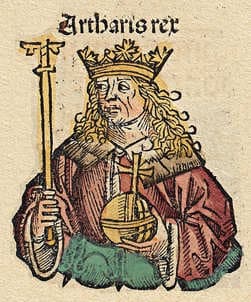
Authari
Emperor · Medieval
46.4Total
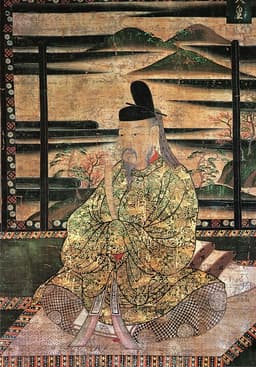
Emperor Saga
Emperor · Medieval
58.2Total
Basic Information
Born
540
786
Died
590
842
Era
Medieval
Medieval
Nationality
Lombards
Japan
Occupation
Emperor
Emperor
Civilization
Western
Eastern
Score Comparison
Military (10%)
10.0
52.4
Political (20%)
39.4
68.0
Influence (20%)
56.4
58.3
Legacy (20%)
45.0
54.0
Leadership (15%)
64.5
53.2
Strategy (15%)
45.0
67.5
TOTAL
46.4
58.2
Authari — Complete Timeline
568 AD
Invasion of ItalyWar
Authari led the Lombard invasion of Italy, crossing the Alps and establishing a kingdom. This conquest seized large parts of the Italian peninsula from Byzantine control, founding the Lombard Kingdom in Italy.
Lombard InvasionConquestItaly
Impact: regionaldestructive
572 AD
Establishment of the Lombard KingdomPolitical Action◆ Major
Authari established Pavia as the capital of the Lombard Kingdom, consolidating Lombard rule over northern and central Italy. He organized the kingdom into duchies, creating a stable political structure that lasted for centuries.
State FormationCapitalLombard Kingdom
Impact: regionalconstructive
589 AD
Marriage to TheudelindaPolitical Action
Authari married Theudelinda, a Bavarian princess, to strengthen alliances with the Bavarians and promote Catholic conversion among the Lombards. The marriage produced no heir, but Theudelinda later became a key figure in Lombard politics.
Marriage AllianceDynastic PoliticsCatholic Conversion
Impact: nationalconstructive
Emperor Saga — Complete Timeline
810 AD
Establishment of the Kurodo-dokoroReform◆ Major
Emperor Saga established the Kurodo-dokoro (Chamberlains' Office), a new administrative body that handled imperial documents and communications. This office bypassed the traditional bureaucracy and increased the emperor's direct control over government affairs.
Kurodo-dokoroAdministrationImperial Power
Impact: nationalconstructive
Promotion of Chinese Culture and CalligraphyCultural◆ Major
Emperor Saga was a noted patron of Chinese Tang dynasty culture, particularly calligraphy. He studied under the master Kukai and developed the Japanese style of calligraphy. His patronage helped establish calligraphy as a respected art form in the Japanese court.
CalligraphyChinese CultureArt
Impact: nationalconstructive
815 AD
Compilation of the Kojiki and Nihon Shoki CommentariesCultural
Emperor Saga ordered the compilation of the 'Shoku Nihongi', a continuation of the official history. He also sponsored commentaries on the Kojiki and Nihon Shoki, promoting the study of Japanese mythology and history in a Chinese scholarly framework.
HistoriographyShoku NihongiScholarship
Impact: nationalconstructive
Expert Analysis
Origins
**Authari** (c. 540–590) was born into the Lombard aristocracy, a Germanic people originally from Scandinavia who migrated into Pannonia (modern Hungary). His father, Cleph, was king of the Lombards, but after Cleph's assassination in 574, the Lombard dukes ruled without a king for a decade. Authari emerged as a leader during this interregnum, eventually being elected king in 584. The Lombards were Arian Christians, and Authari's early life was shaped by the warrior culture of his people, with little formal education.
**Emperor Saga** (786–842) was the second son of Emperor Kanmu, born into the Japanese imperial family. He received a classical Chinese education, studying Confucian texts, poetry, and calligraphy. His father, Kanmu, had moved the capital to Heian-kyō (Kyoto), and Saga grew up in a court deeply influenced by Tang Chinese culture. Unlike Authari, Saga's path was predetermined by birth, but he had to navigate complex palace politics to ascend the throne.
Rise to Power
Authari's rise came after a decade of ducal rule when the Lombard nobles, facing Byzantine pressure and internal strife, decided to restore the monarchy. In 584, Authari was elected king and immediately led campaigns to consolidate Lombard control over Italy. His key turning point was the invasion of Italy in 568, when he led the Lombard migration across the Alps, seizing Pavia (which he made the capital) and large parts of the peninsula. He secured his position by marrying Theudelinda, a Bavarian princess, in 589, which strengthened alliances with the Bavarians and promoted Catholic conversion.
Emperor Saga ascended the throne in 809 after his father Kanmu's death and the brief reign of his elder brother, Emperor Heizei. Heizei fell ill and abdicated, and Saga, then 23, became emperor. His rise was smooth by Japanese standards, but he faced opposition from the powerful Fujiwara clan and Buddhist monasteries. He consolidated power by establishing the Kurodo-dokoro (Chamberlains' Office) in 810, an administrative body that handled imperial documents and communications, effectively reducing the influence of the traditional bureaucracy.
Leadership & Governance
Authari's leadership was focused on military conquest and territorial consolidation. He scored 10.0 in military, reflecting his success in invasion, but his political score of 39.4 indicates limited institutional building. He organized the Lombard kingdom into duchies, but these dukes often acted independently, leading to fragmentation. His marriage to Theudelinda promoted Catholic conversion, but he remained Arian, and religious tensions persisted. His governance was personal and warrior-based, with little written administration.
Emperor Saga, with a political score of 68.0, was a reformer. He established the Kurodo-dokoro, which became a key institution in Heian governance, and promoted the use of Chinese-style laws and ceremonies. He sponsored the compilation of the *Shoku Nihongi* (a continuation of official history) and commentaries on the *Kojiki* and *Nihon Shoki*. He also promoted the development of Japanese calligraphy, studying under the master Kukai and helping create the Japanese syllabary (kana). His leadership was cultural and administrative, not military (score 52.4).
Triumph & Tragedy
Authari's greatest triumph was successfully leading the Lombard invasion of Italy and establishing a kingdom that lasted over 200 years. He secured Pavia as a capital and expanded Lombard territory. His tragedy was the fragility of his conquest: after his death in 590, the Lombard kingdom faced internal divisions and Byzantine counterattacks. He also failed to fully unify the Lombards under a strong central authority, leading to a legacy of ducal power.
Emperor Saga's triumph was his cultural patronage: he advanced Chinese learning and calligraphy, leaving a lasting impact on Japanese culture. The Kurodo-dokoro became a model for imperial administration. His tragedy was the political marginalization of the emperor in later centuries; his reforms inadvertently strengthened the Fujiwara clan, who eventually dominated the throne. He also faced a rebellion in 810 (the Kusuko Incident) led by his brother Heizei's supporters, which he suppressed but which showed the fragility of imperial power.
Character & Destiny
Authari was a warrior king, decisive and ambitious. His character was shaped by the Lombard tradition of personal valor and conquest. He was pragmatic in seeking alliances through marriage, but his Arian faith and reliance on dukes limited his ability to build a lasting state. His destiny was to be remembered as the founder of the Lombard kingdom, but his early death (possibly poisoned) cut short his ambitions.
Emperor Saga was a scholar-emperor, more interested in culture than war. He was patient and strategic, using administrative reforms to consolidate power. His character was influenced by Chinese Confucian ideals of the ruler as a moral exemplar. His destiny was to preside over a golden age of Japanese culture, but his reforms also set the stage for the decline of imperial power. Historians note his score of 67.5 in strategy reflects his long-term thinking.
Legacy
Authari's legacy is the Lombard kingdom in Italy, which lasted until 774 when Charlemagne conquered it. He established a Germanic kingdom on Italian soil that influenced medieval Italian politics. However, his personal legacy is overshadowed by later Lombard kings like Liutprand. His influence score of 56.4 reflects a moderate impact on European history.
Emperor Saga's legacy is more enduring. His promotion of calligraphy and Chinese culture helped shape Japanese aesthetics and writing. The Kurodo-dokoro influenced Japanese governance for centuries. His compilation of histories provided a model for official record-keeping. His influence score of 58.3 and legacy score of 54.0 reflect a lasting impact on Japanese culture and administration. He is remembered as one of the great Heian emperors.
Conclusion
Emperor Saga had greater impact than Authari. With a total score of 58.2 compared to Authari's 46.4, Saga's contributions to culture, administration, and governance were more lasting and influential. While Authari founded a kingdom, his achievements were military and temporary; Saga's reforms shaped Japanese society for centuries. The score gap of 11.8 points reflects this difference. Saga's strategic vision and cultural patronage produced a legacy that extends to modern Japan, whereas Authari's kingdom was ultimately absorbed into the Frankish empire. Therefore, Emperor Saga emerges as the more significant historical figure.
Rankings
🥇
Emperor SagaLeader
Mil: 52.4Pol: 68.0Inf: 58.3
58.2
🥈
Authari
Mil: 10.0Pol: 39.4Inf: 56.4
46.4
+11.8 behind
How This Comparison Works
Algorithm
Each figure is scored on 6 dimensions (0—100 scale) based on structured historical data: Military (10%), Political (20%), Influence (20%), Legacy (20%), Leadership (15%), Strategy (15%). The weighted total produces the final ranking.
Data Sources
Scores are computed from structured sub-indicators in the database. Scale factors adjust for era (Ancient ×0.85, Modern ×1.0) and civilization size (Eastern ×1.05, Other ×0.80) to account for differences in population and military scale.
Maximum 3 Figures
Comparisons are limited to 2—3 figures to ensure readability and statistical meaningfulness.
Error Margins
±5 points per dimension — Sub-scores are derived from historical records with inherent uncertainty. Two figures within 5 points on a dimension should be considered roughly equivalent in that area.
Total Score Accuracy
±3 points overall — The weighted combination of 6 dimensions produces a total score with approximately ±3 points of uncertainty. Differences of less than 3 points are not statistically significant— the figures are effectively tied.
Known Limitations
- Historical records are incomplete and uneven across civilizations
- Figures from oral-tradition societies may be underrepresented
- Occupation labels can misclassify multi-role figures
- Scores measure capability and impact, not moral character
- Quantitative scoring is a comparison tool, not absolute truth
Capability Radar
Military (10%) — Battles & Warfare
Battles
35
47
Win Rate
40
46
Expansion
45
53
Political (20%) — Governance & Reform
Reform
30
55
Diplomacy
35
50
Economy
25
50
Influence (20%) — Cultural & Global Reach
Cultural
30
60
Global
20
30
Legacy (20%) — Historical Impact
Historical
35
55
Longevity
25
50
Leadership (15%) — Power & Stability
Tenure
40
60
Stability
30
60
Strategy (15%) — Tactics & Innovation
Strategy
35
57
Tactics
30
60
Reform
25
57
Similar Comparisons
Comments & Discussion
No comments yet. Be the first to share your thoughts!