Loading...
Augustus vs Wedem Arad
Augustus leads by 37.4 pts · 2 figures compared
…

Augustus
Emperor · Ancient
85.9Total
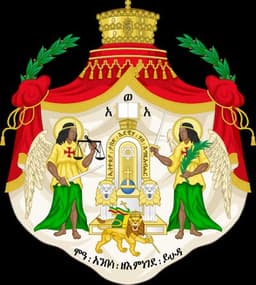
Wedem Arad
Emperor · Medieval
48.5Total
Basic Information
Born
63
1270
Died
—
1314
Era
Ancient
Medieval
Nationality
Roman Empire
Ethiopia
Occupation
Emperor
Emperor
Civilization
Western
Other
Score Comparison
Military (10%)
72.0
50.0
Political (20%)
90.0
35.1
Influence (20%)
88.0
58.0
Legacy (20%)
90.0
45.8
Leadership (15%)
88.0
55.3
Strategy (15%)
75.0
39.6
TOTAL
85.9
48.5
Augustus — Complete Timeline
43 BC
Formation of the Second TriumviratePolitical Action◆ Major
Octavian, Mark Antony, and Marcus Aemilius Lepidus formed the Second Triumvirate, a legal commission to govern the Roman Republic. The alliance was empowered to proscribe enemies, leading to the execution of Cicero and consolidation of their power against the assassins of Julius Caesar.
Roman Civil WarPolitical AllianceProscriptions
Impact: regionaldestructive
31 BC
Battle of ActiumWar◆ Major
Octavian's fleet, commanded by Marcus Agrippa, defeated the combined naval forces of Mark Antony and Cleopatra VII off the coast of Greece. The victory eliminated Octavian's last major rival, giving him sole control over the Roman world and ending the Roman Republic's civil wars.
Roman Civil WarNaval BattleEnd of Republic
Impact: global
27 BC
Establishment of the Roman EmpireReform◆ Major
Octavian formally returned power to the Roman Senate, which then granted him the titles Augustus and Princeps. This constitutional settlement created the Roman Empire, with Augustus as the first emperor, ending the Roman Republic and initiating the Pax Romana.
Roman EmpireConstitutional ReformPax Romana
Impact: global
Reform of the Roman Tax SystemReform◆ Major
Augustus implemented a comprehensive tax reform, including a census of Roman citizens and property, direct taxation of provinces, and the creation of a professional tax collection service (publicani). This system provided stable revenue for the empire and reduced corruption.
Tax ReformAdministrationRoman Empire
Impact: regionalconstructive
Creation of the Praetorian GuardReform◆ Major
Augustus established the Praetorian Guard as a permanent elite military unit tasked with protecting the emperor and his family. Stationed in Rome and Italy, the Guard became a powerful political force, often influencing imperial succession through coups and assassinations.
Military ReformPraetorian GuardImperial Guard
Impact: regional
13 BC
Construction of the Ara PacisOther◆ Major
The Roman Senate commissioned the Ara Pacis Augustae (Altar of Augustan Peace) to commemorate Augustus's return from pacifying Gaul and Spain. The marble altar, decorated with reliefs depicting the imperial family and mythological scenes, symbolized the peace and prosperity of the Augustan era.
Building ProjectPropagandaAugustan Art
Impact: regionalconstructive
Wedem Arad — Complete Timeline
1306 AD
First Contact with EuropePolitical Action◆ Major
Wedem Arad sent an embassy to Europe, likely to the court of Pope Clement V in Avignon. This was the first recorded diplomatic contact between Ethiopia and a European power since antiquity, establishing a precedent for future Ethiopian-European relations.
Impact: regional
Expert Analysis
Augustus vs Wedem Arad
# The Emperor Who Built an Age and the Emperor Who Opened a Door
In the year 1306, a small delegation of Ethiopian monks and nobles arrived at the papal court in Avignon, their dark robes and exotic features drawing stares from cardinals and clerks. They carried a letter from their emperor, Wedem Arad, seeking alliance with Christendom. Half a world away and thirteen centuries earlier, a pale young man named Gaius Octavius stood before the Roman Senate, his hands steady as he accepted powers that would transform a republic into an empire. One man would build a system that lasted two centuries; the other would open a door that remained ajar for two hundred years. Why did their paths diverge so dramatically?
Origins
Augustus was born into chaos. The Roman Republic was tearing itself apart when Gaius Octavius arrived in 63 BC, the grandnephew of Julius Caesar. His father died when he was four, and his mother raised him in the shadow of civil war. He learned early that survival meant reading men’s ambitions and masking his own. His was a world of iron discipline, political murder, and the relentless logic of power.
Wedem Arad ascended the throne of Ethiopia in 1270, inheriting a kingdom that had weathered centuries of isolation. The Solomonic dynasty, claiming descent from the Queen of Sheba and King Solomon, ruled a highland realm surrounded by Muslim sultanates and the remnants of ancient Christian kingdoms. Ethiopia was a fortress of faith, cut off from Europe by the Islamic conquest of North Africa. Wedem Arad’s world was not one of expansion but of preservation—a kingdom looking inward, its horizons bounded by mountains and enemies.
Rise to Power
Augustus entered history through assassination. When Julius Caesar was murdered in 44 BC, the nineteen-year-old Octavius learned he had been named the dictator’s heir. He rushed to Rome, outmaneuvered his rivals, formed the Second Triumvirate with Mark Antony and Lepidus, and together they hunted down Caesar’s assassins. At Philippi in 42 BC, he proved he could command armies—but his true genius lay in the political arena. He waited, let Antony overreach in Egypt, and then crushed him at the Battle of Actium in 31 BC. By 27 BC, he had become Augustus, the revered one, without a civil war to his name as aggressor.
Wedem Arad’s rise was quieter. He inherited a throne, not a revolution. His power came not from battlefield triumphs but from lineage and the Church. Ethiopian emperors were crowned at Axum, their legitimacy tied to the Ark of the Covenant, which tradition claimed was hidden in their kingdom. There were no dramatic coups, no naval battles—just the steady weight of tradition and the slow machinery of court politics.
Leadership & Governance
Augustus governed with a revolutionary’s cunning and a conservative’s mask. He preserved the forms of the Republic—the Senate, the assemblies, the consuls—while concentrating all real power in his own hands. He reformed taxation, created a professional civil service, established the Praetorian Guard, and launched a building program that turned Rome from brick to marble. His military score of 72 reflects a commander who knew when to fight and when to delegate; his political score of 92 reveals the architect of a system that outlasted him by centuries.
Wedem Arad’s governance was fundamentally different. Ethiopia was a feudal theocracy, where the emperor ruled through regional lords and the Ethiopian Orthodox Church. His political score of 44.3 suggests a leader who managed his realm competently but without innovation. His great achievement was diplomatic: sending that embassy to Europe in 1306, seeking military alliance against Muslim powers. It was a bold move for a king whose predecessors had looked only inward. Yet the embassy achieved little—the Pope was embroiled in his own conflicts, and Europe’s attention was fixed on the Crusades.
Triumph & Tragedy
Augustus’s triumph was the Pax Romana—two centuries of relative peace across the Mediterranean. He defeated his enemies, stabilized the frontiers, and left an empire that would endure for five hundred years. His tragedy was personal: his beloved daughter Julia was exiled for adultery, his chosen heirs died young, and he spent his final years watching his family unravel. He died in AD 14, aged seventy-six, having transformed the world but unable to secure his own bloodline.
Wedem Arad’s triumph was that first contact—a fragile thread thrown across continents. His tragedy was that the thread frayed. After his death in 1314, Ethiopia turned inward again. It would be another two centuries before meaningful European contact resumed, and by then, the world had changed. He opened a door, but the wind blew it shut.
Character & Destiny
Augustus was cold, calculating, and patient. Suetonius records that he often repeated a Greek proverb: “Make haste slowly.” He was a master of timing, knowing when to strike and when to wait. His personality was the opposite of Antony’s passionate recklessness—and that contrast won him an empire. He understood that power was not about glory but about endurance.
Wedem Arad remains a shadow. We know little of his character—no speeches, no personal letters. He acted as his era demanded: a king of a besieged Christian kingdom, reaching out to fellow believers. His score of 40 in leadership suggests a competent but not extraordinary ruler. His destiny was to be remembered not for what he did, but for what he attempted—a first step that no one followed.
Legacy
Augustus’s legacy is immeasurable. He gave his name to an age, and his title—“Augustus”—became a synonym for imperial majesty. The Roman Empire he founded shaped Western law, language, and governance for two millennia. His scores of 90 in legacy and 88 in influence place him among history’s giants.
Wedem Arad’s legacy is quieter. His embassy is a footnote in European history but a landmark in Ethiopian history—the moment when a medieval African kingdom tried to join the wider world. His score of 57.8 in legacy reflects a man who mattered more to his own people than to the globe. Yet in an age of globalization, his attempt to bridge civilizations seems prescient.
Conclusion
Augustus built an empire that defined the West. Wedem Arad sent a letter that defined a moment. One man’s life is a story of power, ambition, and the cold logic of statecraft; the other’s is a story of faith, isolation, and the fragile hope of connection. They are not comparable in achievement—but they are comparable in humanity. Both faced the same question: How do you secure your people’s future? Augustus answered with armies and laws; Wedem Arad answered with a message in a bottle. History remembers the builder, but it also remembers the one who dared to knock.
Rankings
🥇
AugustusLeader
Mil: 72.0Pol: 90.0Inf: 88.0
85.9
🥈
Wedem Arad
Mil: 50.0Pol: 35.1Inf: 58.0
48.5
+37.4 behind
How This Comparison Works
Algorithm
Each figure is scored on 6 dimensions (0—100 scale) based on structured historical data: Military (10%), Political (20%), Influence (20%), Legacy (20%), Leadership (15%), Strategy (15%). The weighted total produces the final ranking.
Data Sources
Scores are computed from structured sub-indicators in the database. Scale factors adjust for era (Ancient ×0.85, Modern ×1.0) and civilization size (Eastern ×1.05, Other ×0.80) to account for differences in population and military scale.
Maximum 3 Figures
Comparisons are limited to 2—3 figures to ensure readability and statistical meaningfulness.
Error Margins
±5 points per dimension — Sub-scores are derived from historical records with inherent uncertainty. Two figures within 5 points on a dimension should be considered roughly equivalent in that area.
Total Score Accuracy
±3 points overall — The weighted combination of 6 dimensions produces a total score with approximately ±3 points of uncertainty. Differences of less than 3 points are not statistically significant— the figures are effectively tied.
Known Limitations
- Historical records are incomplete and uneven across civilizations
- Figures from oral-tradition societies may be underrepresented
- Occupation labels can misclassify multi-role figures
- Scores measure capability and impact, not moral character
- Quantitative scoring is a comparison tool, not absolute truth
Capability Radar
Military (10%) — Battles & Warfare
Battles
75
15
Win Rate
80
20
Expansion
85
10
Political (20%) — Governance & Reform
Reform
95
20
Diplomacy
90
55
Economy
85
15
Influence (20%) — Cultural & Global Reach
Cultural
85
20
Global
90
40
Legacy (20%) — Historical Impact
Historical
95
35
Longevity
95
30
Leadership (15%) — Power & Stability
Tenure
95
40
Stability
95
30
Strategy (15%) — Tactics & Innovation
Strategy
85
10
Tactics
70
10
Reform
90
5
Similar Comparisons
Comments & Discussion
帝国考据员6/16/2026
比较荒谬:奥古斯都的《功德碑》自吹自擂,韦德姆的宫廷编年史却低调得多。问题是奥古斯都留下的是罗马道路系统,标准化货币,还有《奥古斯都民法》——这个影响至今。韦德姆开门,但门后只有几个传教士和武器交易,连大使馆都没建。基础建设才决定成败。
REVISIONIST_FIREBRAND6/16/2026
Stop romanticizing isolation. Wedem Arad’s Ethiopia was a siege state, not a fortress. His “door” admitted exactly zero European allies who helped beat back Adal. Augustus at least solved his immediate crisis—the Republic was dying anyway. Wedem clung to a myth of Solomonic purity while his kingdom paid tribute to Muslim sultans. Hardly a visionary.
AUGUSTUS_AGITATOR6/16/2026
Augustus was a PR genius who sold stability at the cost of freedom. Sure, the Pax Romana was real, but it depended on suffocating dissent. His “restored republic” was a stage-managed illusion. Meanwhile, Wedem Arad’s letter to Avignon was desperate—he needed firearms against Adal, not a philosophical alliance. Augustus had the luxury of consolidation; Wedem was playing survival poker.
CRYPTO_CLIO6/16/2026
数据不说谎:奥古斯都统治下人口普查显示罗马城从50万降到25万,战乱、瘟疫、兵役全算他账上。韦德姆·阿拉德呢?埃塞俄比亚没有人口崩溃的记载,他成功在外交上孤立穆斯林包围圈。所以别吹什么“黄金时代”,奥古斯都的稳定是用人命堆的,韦德姆的开门才是真博弈。
SOLOMONIC_SAVIOR6/16/2026
Wedem Arad’s real achievement wasn’t Europe—it was keeping Ethiopia Christian when every neighbor fell. By 1300, Nubia was Muslim, but Ethiopia held. That letter to Avignon? A strategic masterstroke to play crusader card without losing sovereignty. Augustus built an empire that collapsed; Wedem built a faith that outlasted empires.