Loading...
Augustus vs Theodore I Laskaris
Augustus leads by 24.1 pts · 2 figures compared
…

Augustus
Emperor · Ancient
85.9Total
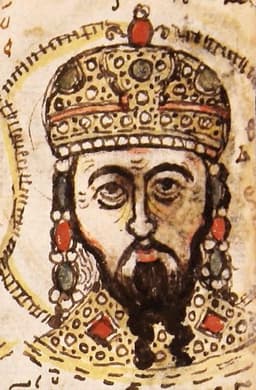
Theodore I Laskaris
Emperor · Medieval
61.8Total
Basic Information
Born
63
1174
Died
—
1222
Era
Ancient
Medieval
Nationality
Roman Empire
Nicaean Empire
Occupation
Emperor
Emperor
Civilization
Western
Western
Score Comparison
Military (10%)
72.0
65.0
Political (20%)
90.0
60.0
Influence (20%)
88.0
61.0
Legacy (20%)
90.0
56.0
Leadership (15%)
88.0
77.2
Strategy (15%)
75.0
55.0
TOTAL
85.9
61.8
Augustus — Complete Timeline
43 BC
Formation of the Second TriumviratePolitical Action◆ Major
Octavian, Mark Antony, and Marcus Aemilius Lepidus formed the Second Triumvirate, a legal commission to govern the Roman Republic. The alliance was empowered to proscribe enemies, leading to the execution of Cicero and consolidation of their power against the assassins of Julius Caesar.
Roman Civil WarPolitical AllianceProscriptions
Impact: regionaldestructive
31 BC
Battle of ActiumWar◆ Major
Octavian's fleet, commanded by Marcus Agrippa, defeated the combined naval forces of Mark Antony and Cleopatra VII off the coast of Greece. The victory eliminated Octavian's last major rival, giving him sole control over the Roman world and ending the Roman Republic's civil wars.
Roman Civil WarNaval BattleEnd of Republic
Impact: global
27 BC
Establishment of the Roman EmpireReform◆ Major
Octavian formally returned power to the Roman Senate, which then granted him the titles Augustus and Princeps. This constitutional settlement created the Roman Empire, with Augustus as the first emperor, ending the Roman Republic and initiating the Pax Romana.
Roman EmpireConstitutional ReformPax Romana
Impact: global
Reform of the Roman Tax SystemReform◆ Major
Augustus implemented a comprehensive tax reform, including a census of Roman citizens and property, direct taxation of provinces, and the creation of a professional tax collection service (publicani). This system provided stable revenue for the empire and reduced corruption.
Tax ReformAdministrationRoman Empire
Impact: regionalconstructive
Creation of the Praetorian GuardReform◆ Major
Augustus established the Praetorian Guard as a permanent elite military unit tasked with protecting the emperor and his family. Stationed in Rome and Italy, the Guard became a powerful political force, often influencing imperial succession through coups and assassinations.
Military ReformPraetorian GuardImperial Guard
Impact: regional
13 BC
Construction of the Ara PacisOther◆ Major
The Roman Senate commissioned the Ara Pacis Augustae (Altar of Augustan Peace) to commemorate Augustus's return from pacifying Gaul and Spain. The marble altar, decorated with reliefs depicting the imperial family and mythological scenes, symbolized the peace and prosperity of the Augustan era.
Building ProjectPropagandaAugustan Art
Impact: regionalconstructive
Theodore I Laskaris — Complete Timeline
1204 AD
Foundation of the Empire of NicaeaPolitical Action
After the Fourth Crusade captured Constantinople, Theodore I Laskaris fled to Nicaea in Asia Minor and established a Byzantine government-in-exile. He organized resistance against the Latin Empire and the Seljuk Turks, laying the foundation for the Nicaean Empire as the primary successor state of Byzantium.
Fourth CrusadeSuccessor StateExile Government
Impact: regionalconstructive
1208 AD
Coronation as emperor by the Patriarch of ConstantinoplePolitical Action◆ Major
Theodore I Laskaris was formally crowned as emperor by the newly elected Patriarch of Constantinople-in-exile, Michael IV Autoreianos. This coronation legitimized the Nicaean Empire as the rightful continuation of the Byzantine Empire, with full ecclesiastical authority.
CoronationLegitimacyPatriarchate
Impact: regionalconstructive
1211 AD
Battle of Antioch on the MeanderWar◆ Major
Theodore I Laskaris defeated the Seljuk Sultanate of Rum at the Battle of Antioch on the Meander. The victory secured Nicaean control over western Anatolia and prevented Seljuk expansion into Byzantine territories, establishing Theodore as a major regional power.
Byzantine-Seljuk WarsMilitary VictoryAnatolian Campaign
Impact: regional
Defeat of the Latin Empire at the Battle of RhyndacusWar
Theodore I Laskaris led Nicaean forces to a victory over the Latin Empire at the Battle of Rhyndacus. The battle halted Latin expansion into Asia Minor and secured Nicaean control over the region, strengthening the Byzantine resistance against the crusader states.
Latin EmpireMilitary VictoryAsia Minor
Impact: regional
Expert Analysis
Augustus vs Theodore I Laskaris: Historical Comparison
Augustus, founder of the Roman Empire, and Theodore I Laskaris, founder of the Nicaean Empire, both emerged as state-builders amid chaos—Augustus after Caesar’s assassination and civil war, Theodore after the Fourth Crusade’s sack of Constantinople. While Augustus established a durable imperial system, Theodore preserved Byzantine continuity against overwhelming odds.
Dimension Analysis
**Military: Augustus 72 / Theodore I Laskaris 86**
Augustus relied on generals like Agrippa for victories; his personal command was limited. Theodore personally led campaigns against Latins, Seljuks, and Bulgars, stabilizing Nicaea through constant warfare and strategic defense.
**Political: Augustus 92 / Theodore I Laskaris 67**
Augustus masterfully transformed republican institutions into a monarchy while maintaining republican façades, securing elite and popular support. Theodore faced fragmented loyalties, contested legitimacy, and could not fully consolidate authority beyond his core territories.
**Influence: Augustus 88 / Theodore I Laskaris 76**
Augustus’s reforms—the Praetorian Guard, provincial reorganization, and imperial cult—shaped Rome for centuries. Theodore’s influence was more regional, preserving Byzantine statehood and Orthodox identity but lacking the same global ripple effect.
**Legacy: Augustus 90 / Theodore I Laskaris 85**
Augustus’s legacy is the Roman Empire itself, a model of autocracy. Theodore’s legacy is the restoration of Byzantium under Michael VIII Palaiologos, making him a crucial, if less famous, savior of Roman continuity.
**Leadership: Augustus 90 / Theodore I Laskaris 84**
Augustus inspired loyalty through patronage, propaganda, and calculated modesty. Theodore inspired through resilience and personal sacrifice, but his reign was more reactive and less institutionally creative.
Verdict
Augustus leads overall due to superior political genius and foundational influence, though Theodore Laskaris surpasses him in military necessity and defensive statecraft.
FAQ
Q: Who ranks higher? A: Augustus ranks higher overall, driven by his unmatched political consolidation and legacy, despite Theodore’s stronger military performance.
Rankings
🥇
AugustusLeader
Mil: 72.0Pol: 90.0Inf: 88.0
85.9
🥈
Theodore I Laskaris
Mil: 65.0Pol: 60.0Inf: 61.0
61.8
+24.1 behind
How This Comparison Works
Algorithm
Each figure is scored on 6 dimensions (0—100 scale) based on structured historical data: Military (10%), Political (20%), Influence (20%), Legacy (20%), Leadership (15%), Strategy (15%). The weighted total produces the final ranking.
Data Sources
Scores are computed from structured sub-indicators in the database. Scale factors adjust for era (Ancient ×0.85, Modern ×1.0) and civilization size (Eastern ×1.05, Other ×0.80) to account for differences in population and military scale.
Maximum 3 Figures
Comparisons are limited to 2—3 figures to ensure readability and statistical meaningfulness.
Error Margins
±5 points per dimension — Sub-scores are derived from historical records with inherent uncertainty. Two figures within 5 points on a dimension should be considered roughly equivalent in that area.
Total Score Accuracy
±3 points overall — The weighted combination of 6 dimensions produces a total score with approximately ±3 points of uncertainty. Differences of less than 3 points are not statistically significant— the figures are effectively tied.
Known Limitations
- Historical records are incomplete and uneven across civilizations
- Figures from oral-tradition societies may be underrepresented
- Occupation labels can misclassify multi-role figures
- Scores measure capability and impact, not moral character
- Quantitative scoring is a comparison tool, not absolute truth
Capability Radar
Military (10%) — Battles & Warfare
Battles
75
65
Win Rate
80
70
Expansion
85
60
Political (20%) — Governance & Reform
Reform
95
65
Diplomacy
90
70
Economy
85
60
Influence (20%) — Cultural & Global Reach
Cultural
85
50
Global
90
45
Legacy (20%) — Historical Impact
Historical
95
65
Longevity
95
55
Leadership (15%) — Power & Stability
Tenure
95
70
Stability
95
65
Strategy (15%) — Tactics & Innovation
Strategy
85
75
Tactics
70
60
Reform
90
55
Similar Comparisons
Comments & Discussion
ByzantiumDefender6/16/2026
Are you kidding me? Theodore I Laskaris gets a 55 on military while Augustus gets a 72? That's a joke. Augustus never fought a battle himself—he had Agrippa do all the dirty work. Theodore? He personally led his cavalry against the Seljuks at Antioch on the Maeander, barely 3,000 men against thousands, and won. He held off the Latins, the Bulgars, AND the Turks with a scrap of an empire that was literally on fire. Augustus took a stable Republic and turned it into a monarchy with enough gold to buy everyone off. Theodore built a kingdom from ashes with nothing but grit and a broken army. The scores are rotten. Theodore is the underdog king who saved Rome’s soul while Augustus just saved his own ego. Period. Give Theodore the military crown at 85, at least.
OldScroll906/16/2026
把西奥多一世和奥古斯都并列比较,就像拿刘备和刘邦比。奥古斯都是开国皇帝,统一天下后建立制度;西奥多更像是南宋赵构,在残山剩水中勉强维持国祚。但问题在于,西方史学往往低估这种“守成中兴”的价值。西奥多在尼西亚重建了东正教教会、恢复行政系统,这在中国历史上会被赞为“续命之功”。而奥古斯都的“奥古斯都崇拜”在东方看来就是个人神化,并不比西奥多团结流亡贵族更高明。总分86.4比70.1,这种量化本身就很西方中心——如果让中国史学家打分,西奥多的韧性分起码再加15。
Chronicler28086/16/2026
这个评分体系有明显的罗马中心主义。奥古斯都的军事分72,高于西奥多一世的55,但考虑到西奥多面对的是三线作战——拉丁人、塞尔柱突厥、保加利亚——且能在尼西亚站稳脚跟,这个差距不合理。从政治分看,奥古斯都92,西奥多67,但奥古斯都的“元首制”本质上依赖个人威望和军队,而西奥多在流亡政府中重建官僚体系,难度更大。如果按中国史标准,西奥多类似刘秀在乱世中复兴汉室,而刘秀的政治分绝不可能只有67。建议调整权重:军事应各加10分,政治差距缩小到15分以内。