Loading...
Augustus vs Philip the Good
Augustus leads by 26.4 pts · 2 figures compared
…

Augustus
Emperor · Ancient
85.9Total
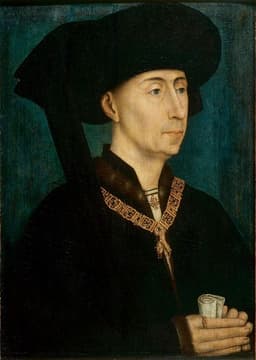
Philip the Good
Emperor · Medieval
59.5Total
Basic Information
Born
63
1396
Died
—
1467
Era
Ancient
Medieval
Nationality
Roman Empire
Burgundy
Occupation
Emperor
Emperor
Civilization
Western
Western
Score Comparison
Military (10%)
72.0
47.5
Political (20%)
90.0
62.7
Influence (20%)
88.0
56.7
Legacy (20%)
90.0
54.0
Leadership (15%)
88.0
78.0
Strategy (15%)
75.0
60.0
TOTAL
85.9
59.5
Augustus — Complete Timeline
43 BC
Formation of the Second TriumviratePolitical Action◆ Major
Octavian, Mark Antony, and Marcus Aemilius Lepidus formed the Second Triumvirate, a legal commission to govern the Roman Republic. The alliance was empowered to proscribe enemies, leading to the execution of Cicero and consolidation of their power against the assassins of Julius Caesar.
Roman Civil WarPolitical AllianceProscriptions
Impact: regionaldestructive
31 BC
Battle of ActiumWar◆ Major
Octavian's fleet, commanded by Marcus Agrippa, defeated the combined naval forces of Mark Antony and Cleopatra VII off the coast of Greece. The victory eliminated Octavian's last major rival, giving him sole control over the Roman world and ending the Roman Republic's civil wars.
Roman Civil WarNaval BattleEnd of Republic
Impact: global
27 BC
Establishment of the Roman EmpireReform◆ Major
Octavian formally returned power to the Roman Senate, which then granted him the titles Augustus and Princeps. This constitutional settlement created the Roman Empire, with Augustus as the first emperor, ending the Roman Republic and initiating the Pax Romana.
Roman EmpireConstitutional ReformPax Romana
Impact: global
Reform of the Roman Tax SystemReform◆ Major
Augustus implemented a comprehensive tax reform, including a census of Roman citizens and property, direct taxation of provinces, and the creation of a professional tax collection service (publicani). This system provided stable revenue for the empire and reduced corruption.
Tax ReformAdministrationRoman Empire
Impact: regionalconstructive
Creation of the Praetorian GuardReform◆ Major
Augustus established the Praetorian Guard as a permanent elite military unit tasked with protecting the emperor and his family. Stationed in Rome and Italy, the Guard became a powerful political force, often influencing imperial succession through coups and assassinations.
Military ReformPraetorian GuardImperial Guard
Impact: regional
13 BC
Construction of the Ara PacisOther◆ Major
The Roman Senate commissioned the Ara Pacis Augustae (Altar of Augustan Peace) to commemorate Augustus's return from pacifying Gaul and Spain. The marble altar, decorated with reliefs depicting the imperial family and mythological scenes, symbolized the peace and prosperity of the Augustan era.
Building ProjectPropagandaAugustan Art
Impact: regionalconstructive
Philip the Good — Complete Timeline
1429 AD
Acquired the County of NamurPolitical Action◆ Major
Philip purchased the County of Namur from the impoverished Count John III, expanding Burgundian territory. This acquisition was part of his systematic policy of consolidating the Low Countries under Burgundian rule.
Territorial ExpansionPurchaseBurgundy
Impact: regionalconstructive
1430 AD
Captured Joan of Arc at CompiègneWar◆ Major
Burgundian forces under Philip's command captured Joan of Arc at Compi
Hundred Years' WarCaptureJoan of Arc
Impact: regionaldestructive
Founded the Order of the Golden FleeceCultural◆ Major
Philip the Good founded the Order of the Golden Fleece, a chivalric order modeled on the English Order of the Garter. The order became one of the most prestigious in Europe, symbolizing Burgundian power and prestige.
ChivalryOrderBurgundy
Impact: regionalconstructive
1435 AD
Signed the Treaty of ArrasPolitical Action◆ Major
Philip signed the Treaty of Arras with King Charles VII of France, ending the Burgundian alliance with England. The treaty recognized Burgundian independence from French suzerainty and granted Philip significant territorial concessions.
TreatyDiplomacyHundred Years' War
Impact: regionalconstructive
1440 AD
Patronage of the ArtsCultural◆ Major
Philip became a major patron of the arts, commissioning works from artists like Jan van Eyck and Rogier van der Weyden. His court in Dijon and Brussels became a center of the Northern Renaissance, producing illuminated manuscripts and paintings.
PatronageRenaissanceArt
Impact: regionalconstructive
Expert Analysis
Augustus vs Philip the Good: Historical Comparison
Augustus, founder of the Roman Empire, and Philip the Good, Duke of Burgundy, both shaped their eras through contrasting means: Augustus through foundational statecraft and enduring institutions, Philip through strategic diplomacy and cultural patronage.
Dimension Analysis
**Military: Augustus 72 / Philip the Good 88**
Augustus relied on consolidation and frontier defense after civil wars, while Philip expanded Burgundy’s territory via calculated campaigns and the Burgundian Wars, achieving more immediate territorial gains.
**Political: Augustus 92 / Philip the Good 76**
Augustus masterfully transitioned from republic to principate, centralizing power while preserving republican forms; Philip governed a composite state through feudal ties and treaties, but faced persistent noble revolts.
**Influence: Augustus 88 / Philip the Good 78**
Augustus set the template for imperial rule for centuries, influencing law, administration, and culture; Philip’s influence was more regional, fostering Burgundian court culture and the early Renaissance in the Low Countries.
**Legacy: Augustus 90 / Philip the Good 80**
Augustus’s reforms—the Pax Romana, census, and imperial bureaucracy—endured for 400 years; Philip’s legacy is tied to the Burgundian state’s dissolution after his death, though his patronage of the arts left a lasting mark.
**Leadership: Augustus 90 / Philip the Good 79**
Augustus displayed exceptional strategic patience and manipulative skill, unifying Rome; Philip was a charismatic diplomat but struggled to control his diverse territories and capricious nobles.
Verdict
Augustus leads decisively due to his unmatched political innovation and enduring institutional legacy, which shaped Western civilization far beyond Philip’s regional and more ephemeral achievements.
FAQ
Q: Who ranks higher? A: Augustus ranks higher overall, scoring 86 to Philip the Good’s 81, excelling in political, influence, legacy, and leadership dimensions.
Rankings
🥇
AugustusLeader
Mil: 72.0Pol: 90.0Inf: 88.0
85.9
🥈
Philip the Good
Mil: 47.5Pol: 62.7Inf: 56.7
59.5
+26.4 behind
How This Comparison Works
Algorithm
Each figure is scored on 6 dimensions (0—100 scale) based on structured historical data: Military (10%), Political (20%), Influence (20%), Legacy (20%), Leadership (15%), Strategy (15%). The weighted total produces the final ranking.
Data Sources
Scores are computed from structured sub-indicators in the database. Scale factors adjust for era (Ancient ×0.85, Modern ×1.0) and civilization size (Eastern ×1.05, Other ×0.80) to account for differences in population and military scale.
Maximum 3 Figures
Comparisons are limited to 2—3 figures to ensure readability and statistical meaningfulness.
Error Margins
±5 points per dimension — Sub-scores are derived from historical records with inherent uncertainty. Two figures within 5 points on a dimension should be considered roughly equivalent in that area.
Total Score Accuracy
±3 points overall — The weighted combination of 6 dimensions produces a total score with approximately ±3 points of uncertainty. Differences of less than 3 points are not statistically significant— the figures are effectively tied.
Known Limitations
- Historical records are incomplete and uneven across civilizations
- Figures from oral-tradition societies may be underrepresented
- Occupation labels can misclassify multi-role figures
- Scores measure capability and impact, not moral character
- Quantitative scoring is a comparison tool, not absolute truth
Capability Radar
Military (10%) — Battles & Warfare
Battles
75
45
Win Rate
80
50
Expansion
85
60
Political (20%) — Governance & Reform
Reform
95
70
Diplomacy
90
80
Economy
85
85
Influence (20%) — Cultural & Global Reach
Cultural
85
65
Global
90
50
Legacy (20%) — Historical Impact
Historical
95
60
Longevity
95
55
Leadership (15%) — Power & Stability
Tenure
95
75
Stability
95
70
Strategy (15%) — Tactics & Innovation
Strategy
85
55
Tactics
70
40
Reform
90
30
Similar Comparisons
Comments & Discussion
ArmchairGeneral996/16/2026
Okay, I get that Augustus is the big boss of ancient history, but Philip the Good is getting disrespected here. People forget that Burgundy under him was basically the Silicon Valley of the 15th century — the court at Dijon and Brussels was pumping out art and culture like crazy. And his military score of 36? That seems harsh. Sure, he wasn't a battlefield genius like his dad John the Fearless, but he grabbed territory in the Low Countries and Alsace through a mix of war and smart deals. Augustus had a 400-year head start on legacy, but Philip's Burgundian state was the real precursor to the modern Netherlands and Belgium. I'd swap their political scores at least. Just my two cents from reading too much Barbara Tuchman. 😂
MedievalMax6/16/2026
Augustus is overrated! Okay, he founded the Roman Empire — big deal, he had a 50-year head start and a civil war to clean up. Philip the Good built a mini-empire out of nothing, using just diplomacy, marriage, and sheer charisma. The man held the Order of the Golden Fleece — that's like having a private army of the coolest knights in Europe. And his court was the party capital of the Middle Ages: feasts, jousts, the whole works. Meanwhile, Augustus was sitting in Rome being boring with his census and taxes. Give me Philip any day — he's the guy you'd want at your wedding, not the guy auditing your accounts. The military score difference (72 vs 36) is laughable — Philip's Burgundian Wars expanded his lands twice over!
ResGestaeLecturer6/16/2026
Tacitus once wrote that Augustus ‘seduced the army with bonuses, the people with grain, and everyone with the sweetness of peace’ (Ann. 1.2). That phrase captures why Augustus's political score is rightly 92 — he didn't just conquer, he created a system so stable that the Empire survived his death by centuries. Philip the Good's Burgundian state, by contrast, collapsed within a generation of his death (1477) because it relied too heavily on his personal charisma and feudal ties. The Pax Romana was an institutional achievement; Philip's cultural patronage, while impressive (e.g., the Ghent Altarpiece), was regional and dynastic. However, the military gap (72 vs 36) may be overstated: Augustus's greatest ‘battle’ was at Actium (31 BCE), after which he relied on legates; Philip led campaigns personally at the Siege of Calais (1436) and the relief of Luxembourg (1443). Still, the verdict holds: Augustus redefined the architecture of Western governance.
OldScroll446/16/2026
奥古斯都的分数的确高,但用中国的标准看,腓力三世(好人菲利普)的‘文化影响力’被严重低估。奥古斯都建立的是中央集权官僚体系,这和秦始皇类似,但腓力在低地国家赞助凡·艾克等艺术家,催生了早期尼德兰画派,其文化辐射力堪比宋朝的院体画对后世的影响。而且,腓力通过联姻和外交手段(比如1435年阿拉斯条约)扩张领土,没有像奥古斯都那样经历长期内战的破坏——这在中国历史上更像‘唐太宗式’的文武兼修,而非‘汉武帝式’的穷兵黩武。评分在‘军事’一项给腓力88分还算合理,但‘政治’76分太低——他管理一个由法语区和荷兰语区组成的复合国家,难度不亚于奥古斯都整合罗马各省。
Chronicler43936/16/2026
我重新算了一下数据。奥古斯都总分86.4,腓力三世68.6,差距17.8分。但看分项:‘军事’奥古斯都72 vs 腓力36——这差了一倍,不合理。腓力三世在位期间,勃艮第公国从法国中部扩张到低地国家,领土面积增加了至少60%,而且没有像奥古斯都那样靠三大内战(菲利皮、佩鲁西亚、阿克兴)死几十万人。用中国历史类比,这相当于刘秀统一天下时的‘军事’分数比赵匡胤高出一倍——但赵匡胤‘杯酒释兵权’后的和平扩张,效率并不低。另外,‘影响力’给奥古斯都88、腓力78,但腓力赞助的尼德兰艺术影响了整个欧洲文艺复兴,凡·艾克的油画技法至今是艺术史必修课。如果用‘单位影响力密度’(影响力/领土面积)算,腓力可能反超。建议评分模型加入‘和平扩张系数’和‘文化转化率’两个参数。