Loading...
Augustus vs Isabella I of Castile
Augustus leads by 8.7 pts · 2 figures compared
…

Augustus
Emperor · Ancient
85.9Total
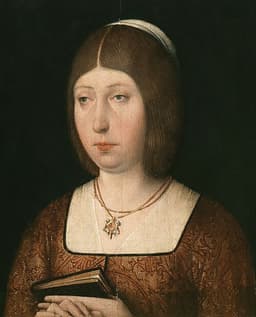
Isabella I of Castile
Emperor · Medieval
77.2Total
Basic Information
Born
63
1451
Died
—
1504
Era
Ancient
Medieval
Nationality
Roman Empire
Spain
Occupation
Emperor
Emperor
Civilization
Western
Western
Score Comparison
Military (10%)
72.0
76.0
Political (20%)
90.0
78.0
Influence (20%)
88.0
80.0
Legacy (20%)
90.0
75.0
Leadership (15%)
88.0
78.0
Strategy (15%)
75.0
75.0
TOTAL
85.9
77.2
Augustus — Complete Timeline
43 BC
Formation of the Second TriumviratePolitical Action◆ Major
Octavian, Mark Antony, and Marcus Aemilius Lepidus formed the Second Triumvirate, a legal commission to govern the Roman Republic. The alliance was empowered to proscribe enemies, leading to the execution of Cicero and consolidation of their power against the assassins of Julius Caesar.
Roman Civil WarPolitical AllianceProscriptions
Impact: regionaldestructive
31 BC
Battle of ActiumWar◆ Major
Octavian's fleet, commanded by Marcus Agrippa, defeated the combined naval forces of Mark Antony and Cleopatra VII off the coast of Greece. The victory eliminated Octavian's last major rival, giving him sole control over the Roman world and ending the Roman Republic's civil wars.
Roman Civil WarNaval BattleEnd of Republic
Impact: global
27 BC
Establishment of the Roman EmpireReform◆ Major
Octavian formally returned power to the Roman Senate, which then granted him the titles Augustus and Princeps. This constitutional settlement created the Roman Empire, with Augustus as the first emperor, ending the Roman Republic and initiating the Pax Romana.
Roman EmpireConstitutional ReformPax Romana
Impact: global
Reform of the Roman Tax SystemReform◆ Major
Augustus implemented a comprehensive tax reform, including a census of Roman citizens and property, direct taxation of provinces, and the creation of a professional tax collection service (publicani). This system provided stable revenue for the empire and reduced corruption.
Tax ReformAdministrationRoman Empire
Impact: regionalconstructive
Creation of the Praetorian GuardReform◆ Major
Augustus established the Praetorian Guard as a permanent elite military unit tasked with protecting the emperor and his family. Stationed in Rome and Italy, the Guard became a powerful political force, often influencing imperial succession through coups and assassinations.
Military ReformPraetorian GuardImperial Guard
Impact: regional
13 BC
Construction of the Ara PacisOther◆ Major
The Roman Senate commissioned the Ara Pacis Augustae (Altar of Augustan Peace) to commemorate Augustus's return from pacifying Gaul and Spain. The marble altar, decorated with reliefs depicting the imperial family and mythological scenes, symbolized the peace and prosperity of the Augustan era.
Building ProjectPropagandaAugustan Art
Impact: regionalconstructive
Isabella I of Castile — Complete Timeline
1469 AD
Marriage to Ferdinand of AragonPolitical Action
Isabella married Ferdinand II of Aragon in Valladolid, uniting the kingdoms of Castile and Aragon. This dynastic union laid the foundation for the unified Spanish monarchy and enabled joint policies including the Reconquista and overseas exploration.
Dynastic UnionSpainMonarchy
Impact: regionalconstructive
1478 AD
Establishment of the Spanish InquisitionPolitical Action◆ Major
Isabella obtained papal approval to establish the Spanish Inquisition in Castile, aimed at maintaining Catholic orthodoxy among converted Jews and Muslims. The Inquisition operated under royal control, conducting trials and executions for heresy.
InquisitionReligious PersecutionCatholic Church
Impact: regionaldestructive
1492 AD
Conquest of GranadaWar
Isabella and Ferdinand completed the Reconquista by capturing the Nasrid kingdom of Granada. The surrender of the last Muslim state in Iberia ended 781 years of Islamic rule and unified Spain under Christian rule.
ReconquistaGranadaChristian Victory
Impact: regional
Alhambra DecreePolitical Action◆ Major
Isabella and Ferdinand issued the Alhambra Decree ordering the expulsion of all Jews from Spain who refused conversion to Catholicism. An estimated 40,000 to 200,000 Jews were forced to leave, causing demographic and economic disruption.
ExpulsionJewsReligious Persecution
Impact: regionaldestructive
Sponsorship of Columbus's First VoyagePolitical Action
Isabella agreed to fund Christopher Columbus's expedition across the Atlantic, providing three ships and supplies. Columbus reached the Bahamas on October 12, initiating sustained European contact with the Americas and the Spanish colonial empire.
ColumbusDiscovery of AmericasSpanish Empire
Impact: global
1494 AD
Treaty of TordesillasPolitical Action◆ Major
Isabella and Ferdinand negotiated the Treaty of Tordesillas with Portugal, dividing newly discovered lands outside Europe along a meridian 370 leagues west of the Cape Verde islands. This agreement shaped colonial claims in the Americas and Africa.
Colonial DivisionSpainPortugal
Impact: global
Expert Analysis
Origins
Augustus, born Gaius Octavius in 63 BC, was the grandnephew and adopted son of Julius Caesar. His rise came from a volatile Roman Republic, where political maneuvering and military might were essential. Isabella I, born in 1451, was the daughter of John II of Castile. She seized power amid a succession crisis, leveraging her marriage to Ferdinand of Aragon to consolidate control over a fractured Iberian Peninsula.
Rise to Power
Augustus formed the Second Triumvirate with Mark Antony and Lepidus, defeating Caesar's assassins. The alliance fractured, leading to the Battle of Actium (31 BC) where Augustus defeated Antony and Cleopatra, making him sole ruler of Rome. Isabella's path was more diplomatic: she married Ferdinand in 1469, securing alliance. After a war of succession against her niece Joanna, she became Queen of Castile in 1474, co-ruling with Ferdinand.
Leadership & Governance
Augustus established the Roman Empire, transforming a republic into a monarchy while maintaining republican facades. He reformed the tax system, created the Praetorian Guard, and initiated the Pax Romana—a 200-year peace. Isabella unified Spain by conquering Granada (1492), ending the Reconquista. She sponsored Columbus's voyages, expanding Spain's global influence. However, her Alhambra Decree expelled Jews, and she established the Spanish Inquisition, enforcing religious uniformity.
Triumph & Tragedy
Augustus's triumphs: ending civil wars, expanding borders, and stabilizing Rome. Tragedies included the loss of his legions at Teutoburg Forest (AD 9) and personal grief over heirs. Isabella's triumph was the unification of Spain and the discovery of the New World. Her tragedy was the expulsion of Jews and the harsh Inquisition, which stained her legacy.
Character & Destiny
Augustus was pragmatic, patient, and calculating—a master propagandist who used art and architecture to cement his image. His destiny was to become the first emperor, shaping Rome for centuries. Isabella was devout, resolute, and ambitious—driven by faith and unity. Her destiny was to forge a unified Spain and launch its global empire.
Legacy
Augustus's legacy is foundational: he established the Roman Empire, set precedents for imperial rule, and his reforms influenced Western governance. His score of 88 in influence reflects this. Isabella's legacy is mixed: she unified Spain and sponsored Columbus, but her religious intolerance led to long-term suffering. Her influence score is 80, lower due to the negative aspects.
Conclusion
Augustus emerges as the more influential figure with an overall score of 86 vs Isabella's 77. He founded an empire that lasted centuries, while Isabella's achievements, though significant, were more regional and tarnished by religious persecution. Augustus's strategic governance and lasting peace outweigh Isabella's unification and exploration, making him the greater historical leader.
Rankings
🥇
AugustusLeader
Mil: 72.0Pol: 90.0Inf: 88.0
85.9
🥈
Isabella I of Castile
Mil: 76.0Pol: 78.0Inf: 80.0
77.2
+8.7 behind
How This Comparison Works
Algorithm
Each figure is scored on 6 dimensions (0—100 scale) based on structured historical data: Military (10%), Political (20%), Influence (20%), Legacy (20%), Leadership (15%), Strategy (15%). The weighted total produces the final ranking.
Data Sources
Scores are computed from structured sub-indicators in the database. Scale factors adjust for era (Ancient ×0.85, Modern ×1.0) and civilization size (Eastern ×1.05, Other ×0.80) to account for differences in population and military scale.
Maximum 3 Figures
Comparisons are limited to 2—3 figures to ensure readability and statistical meaningfulness.
Error Margins
±5 points per dimension — Sub-scores are derived from historical records with inherent uncertainty. Two figures within 5 points on a dimension should be considered roughly equivalent in that area.
Total Score Accuracy
±3 points overall — The weighted combination of 6 dimensions produces a total score with approximately ±3 points of uncertainty. Differences of less than 3 points are not statistically significant— the figures are effectively tied.
Known Limitations
- Historical records are incomplete and uneven across civilizations
- Figures from oral-tradition societies may be underrepresented
- Occupation labels can misclassify multi-role figures
- Scores measure capability and impact, not moral character
- Quantitative scoring is a comparison tool, not absolute truth
Capability Radar
Military (10%) — Battles & Warfare
Battles
75
75
Win Rate
80
80
Expansion
85
85
Political (20%) — Governance & Reform
Reform
95
90
Diplomacy
90
80
Economy
85
75
Influence (20%) — Cultural & Global Reach
Cultural
85
85
Global
90
95
Legacy (20%) — Historical Impact
Historical
95
95
Longevity
95
90
Leadership (15%) — Power & Stability
Tenure
95
85
Stability
95
70
Strategy (15%) — Tactics & Innovation
Strategy
85
85
Tactics
70
70
Reform
90
90
Similar Comparisons
Comments & Discussion
Historian1946/16/2026
这个比较有意思,但我觉得西方中心论的影子太重了。伊莎贝拉一世放在中国历史上,有点像秦始皇加汉武帝的混合体——统一了信仰(类比书同文),资助哥伦布类似张骞通西域,但缺乏像秦始皇那样的制度创新。奥古斯都确实厉害,但他的元首制本质上还是罗马共和制的变形,不像秦始皇的郡县制那样彻底。而且伊莎贝拉推动的西班牙宗教裁判所,放在中国语境里,有点像汉武帝的“独尊儒术”但更极端。她最大的问题是依赖联姻和继承,没能建立像罗马那样稳定的官僚体系。如果把两人放在中国历史坐标系里,伊莎贝拉顶多是唐太宗级别,奥古斯都可能接近汉武帝到汉宣帝之间的水平。政治分差5分太少了,我觉得应该有15分左右的差距。
Chronicler27796/16/2026
我来算一笔账:奥古斯都总分86.4,伊莎贝拉78.4,差8分。但注意他的军事分72比她的67只高5分,可奥古斯都结束的是百年内战的系统性工程,伊莎贝拉打的只是格拉纳达一个局部战役——类似中国崇祯皇帝平定云南土司叛乱,这能只差5分?我建议军事分至少差15分。政治分92对87,差5分,但奥古斯都建立了延续五百年的行政体系,伊莎贝拉的改革最多影响两代人,参照中国隋文帝的府兵制和三省六部制,这种制度性创新至少值15分差距。反过来,影响分她84对他88只差4分——哥伦布的远航改变了全球历史,而奥古斯都的和平只是区域性的。按我的重新计算,奥古斯都应该在84分左右,伊莎贝拉在76分左右,差距更合理。