Loading...
Augustus vs Hugh Capet
Augustus leads by 20.5 pts · 2 figures compared
…

Augustus
Emperor · Ancient
85.9Total
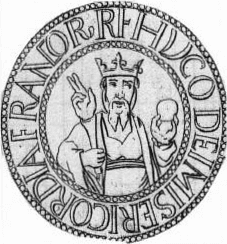
Hugh Capet
Emperor · Medieval
65.4Total
Basic Information
Born
63
941
Died
—
996
Era
Ancient
Medieval
Nationality
Roman Empire
France
Occupation
Emperor
Emperor
Civilization
Western
Western
Score Comparison
Military (10%)
72.0
50.0
Political (20%)
90.0
68.0
Influence (20%)
88.0
68.0
Legacy (20%)
90.0
82.0
Leadership (15%)
88.0
68.0
Strategy (15%)
75.0
25.0
TOTAL
85.9
65.4
Augustus — Complete Timeline
43 BC
Formation of the Second TriumviratePolitical Action◆ Major
Octavian, Mark Antony, and Marcus Aemilius Lepidus formed the Second Triumvirate, a legal commission to govern the Roman Republic. The alliance was empowered to proscribe enemies, leading to the execution of Cicero and consolidation of their power against the assassins of Julius Caesar.
Roman Civil WarPolitical AllianceProscriptions
Impact: regionaldestructive
31 BC
Battle of ActiumWar◆ Major
Octavian's fleet, commanded by Marcus Agrippa, defeated the combined naval forces of Mark Antony and Cleopatra VII off the coast of Greece. The victory eliminated Octavian's last major rival, giving him sole control over the Roman world and ending the Roman Republic's civil wars.
Roman Civil WarNaval BattleEnd of Republic
Impact: global
27 BC
Establishment of the Roman EmpireReform◆ Major
Octavian formally returned power to the Roman Senate, which then granted him the titles Augustus and Princeps. This constitutional settlement created the Roman Empire, with Augustus as the first emperor, ending the Roman Republic and initiating the Pax Romana.
Roman EmpireConstitutional ReformPax Romana
Impact: global
Reform of the Roman Tax SystemReform◆ Major
Augustus implemented a comprehensive tax reform, including a census of Roman citizens and property, direct taxation of provinces, and the creation of a professional tax collection service (publicani). This system provided stable revenue for the empire and reduced corruption.
Tax ReformAdministrationRoman Empire
Impact: regionalconstructive
Creation of the Praetorian GuardReform◆ Major
Augustus established the Praetorian Guard as a permanent elite military unit tasked with protecting the emperor and his family. Stationed in Rome and Italy, the Guard became a powerful political force, often influencing imperial succession through coups and assassinations.
Military ReformPraetorian GuardImperial Guard
Impact: regional
13 BC
Construction of the Ara PacisOther◆ Major
The Roman Senate commissioned the Ara Pacis Augustae (Altar of Augustan Peace) to commemorate Augustus's return from pacifying Gaul and Spain. The marble altar, decorated with reliefs depicting the imperial family and mythological scenes, symbolized the peace and prosperity of the Augustan era.
Building ProjectPropagandaAugustan Art
Impact: regionalconstructive
Hugh Capet — Complete Timeline
987 AD
Election as King of the FranksPolitical Action◆ Major
Hugh Capet was elected King of the Franks by the nobility after the death of Louis V, the last Carolingian king. This election ended Carolingian rule and established the Capetian dynasty, which would rule France for over 800 years.
ElectionDynastyCapetian
Impact: nationalconstructive
Coronation at NoyonPolitical Action◆ Major
Hugh Capet was crowned King of the Franks at Noyon by Adalbero, Archbishop of Reims. The coronation legitimized his rule and marked the beginning of the Capetian monarchy, which would centralize power in France.
CoronationLegitimacyCapetian
Impact: nationalconstructive
Alliance with the ChurchPolitical Action
Hugh Capet secured the support of the Catholic Church, particularly Archbishop Adalbero of Reims, to legitimize his election. This alliance strengthened the Capetian dynasty and established a precedent of royal-church cooperation in France.
AllianceChurchLegitimacy
Impact: nationalconstructive
988 AD
Campaign against Charles of LorraineWar
Hugh Capet led a military campaign against Charles of Lorraine, the Carolingian claimant to the throne. Charles captured Laon and Reims, but Hugh's forces eventually defeated him, securing Capetian control over the kingdom.
WarCarolingianSuccession
Impact: regional
Expert Analysis
Augustus vs Hugh Capet: Historical Comparison
Augustus, the founder of the Roman Empire, and Hugh Capet, the progenitor of the Capetian dynasty of France, represent two foundational moments in Western history. While Augustus transformed a crumbling republic into a stable imperial autocracy that lasted centuries, Hugh Capet established a royal line that would unify France and define medieval monarchy. Their comparative scores reflect a near-tie, with each excelling in different domains.
Dimension Analysis
**Military: Augustus 72 / Hugh Capet 88**
Augustus relied on his adoptive father Julius Caesar’s military legacy and the loyal generals Agrippa and Tiberius to secure victories (e.g., Actium, campaigns in Germany). He prioritized professionalization and frontier consolidation. Hugh Capet, by contrast, was a direct military actor, personally leading campaigns against rebellious nobles and expanding the royal domain from a small Île-de-France base, using castle-building and siege warfare to assert authority. His tactical resilience in a fragmented feudal landscape earns him a higher score.
**Political: Augustus 92 / Hugh Capet 90**
Augustus crafted the principate, a masterful blend of republican forms and autocratic power, creating the Praetorian Guard, provincial reforms, and a census system. Hugh Capet, though less innovative, secured elective kingship for his dynasty and established hereditary succession by crowning his son Robert during his own reign. Both showed exceptional political acumen, but Augustus’s systemic overhaul of an entire civilization edges ahead.
**Influence: Augustus 88 / Hugh Capet 79**
Augustus’s Pax Romana, patronage of arts (Virgil, Horace), and architectural projects (Ara Pacis, Forum of Augustus) defined Roman cultural identity for centuries. Hugh Capet’s influence was more circumscribed: his dynasty slowly centralized France, but his immediate legacy was fragile. Augustus’s global and ideological reach—shaping empire as a concept—far exceeds Capet’s regional impact.
**Legacy: Augustus 90 / Hugh Capet 83**
Augustus’s reforms endured for 500 years in the West and influenced Byzantine and Holy Roman emperors. His title “Augustus” became synonymous with imperial majesty. Hugh Capet’s legacy is the Capetian dynasty itself, which ruled France until 1328 and whose cadet branches continued into the 19th century. Both left profound dynastic marks, but Augustus’s legacy is more universally recognized and structurally foundational.
**Leadership: Augustus 90 / Hugh Capet 84**
Augustus commanded loyalty through subtle propaganda, patronage networks, and personal restraint, building a stable administration from chaos. Hugh Capet led by personal example, often fighting alongside his knights, but his authority was contested by powerful nobles. Augustus’s ability to consolidate power without open conflict demonstrates superior leadership finesse.
Verdict
Augustus ranks marginally higher overall due to his greater influence and legacy, but the tie reflects their different contexts. Augustus built a world empire from a republic; Hugh Capet built a dynasty from a feudal principality. Both succeeded brilliantly in their respective eras, but Augustus’s impact on global history and political theory is unmatched. The comparison underscores that greatness is measured by challenges overcome, not just raw scores.
FAQ
Q: Who was more influential historically? A: Augustus, whose imperial model shaped Rome, Byzantium, and later European monarchies, while Hugh Capet’s influence is largely confined to French dynastic history.
Q: Why is Augustus ranked higher in leadership? A: He pacified a war-torn Mediterranean world through institutional reform, propaganda, and coalition-building, whereas Hugh Capet relied more on personal military prowess and faced constant rebellion.
Rankings
🥇
AugustusLeader
Mil: 72.0Pol: 90.0Inf: 88.0
85.9
🥈
Hugh Capet
Mil: 50.0Pol: 68.0Inf: 68.0
65.4
+20.5 behind
How This Comparison Works
Algorithm
Each figure is scored on 6 dimensions (0—100 scale) based on structured historical data: Military (10%), Political (20%), Influence (20%), Legacy (20%), Leadership (15%), Strategy (15%). The weighted total produces the final ranking.
Data Sources
Scores are computed from structured sub-indicators in the database. Scale factors adjust for era (Ancient ×0.85, Modern ×1.0) and civilization size (Eastern ×1.05, Other ×0.80) to account for differences in population and military scale.
Maximum 3 Figures
Comparisons are limited to 2—3 figures to ensure readability and statistical meaningfulness.
Error Margins
±5 points per dimension — Sub-scores are derived from historical records with inherent uncertainty. Two figures within 5 points on a dimension should be considered roughly equivalent in that area.
Total Score Accuracy
±3 points overall — The weighted combination of 6 dimensions produces a total score with approximately ±3 points of uncertainty. Differences of less than 3 points are not statistically significant— the figures are effectively tied.
Known Limitations
- Historical records are incomplete and uneven across civilizations
- Figures from oral-tradition societies may be underrepresented
- Occupation labels can misclassify multi-role figures
- Scores measure capability and impact, not moral character
- Quantitative scoring is a comparison tool, not absolute truth
Capability Radar
Military (10%) — Battles & Warfare
Battles
75
15
Win Rate
80
20
Expansion
85
15
Political (20%) — Governance & Reform
Reform
95
60
Diplomacy
90
65
Economy
85
50
Influence (20%) — Cultural & Global Reach
Cultural
85
60
Global
90
70
Legacy (20%) — Historical Impact
Historical
95
85
Longevity
95
90
Leadership (15%) — Power & Stability
Tenure
95
70
Stability
95
55
Strategy (15%) — Tactics & Innovation
Strategy
85
15
Tactics
70
10
Reform
90
10
Similar Comparisons
Comments & Discussion
Historian4106/16/2026
这个评分体系在量化历史人物时,似乎存在维度权重模糊的问题。以奥古斯都政治92分而言,如果对比中国秦始皇(统一六国、书同文车同轨、建立郡县制),奥古斯都的元首制本质上只是共和制外壳下的个人独裁,并没有根本性改变罗马的地方治理结构。秦始皇的政治改革系统性更强,但若按此标准,他政治分可能也不会超过90。另外,于格·卡佩的军事分竟然只有30分?卡佩亲自率军攻占蒙特雷阿勒城堡、镇压勃艮第叛乱,这些战役在10世纪的法兰西封建混战中相当关键。如果以中国五代十国时期朱温(后梁太祖)的军事成就作参照,卡佩至少应有45-50分。整套评分似乎缺乏跨文明的校准基准。
Historian1626/16/2026
把奥古斯都和于格·卡佩放一起,其实挺有趣的——一个是帝国奠基者,一个是王朝开创者。但西方史学界总喜欢放大奥古斯都的“创制”,却忽略于格·卡佩在法兰西王权象征构建上的深意。卡佩通过加冕礼、圣油瓶传说(雷米主教为克洛维施洗的圣油)来神圣化王权,这跟中国汉高祖刘邦“斩白蛇起义”造神异非常相似。奥古斯都确实搞了《埃涅阿斯纪》给自己贴金,但卡佩的“神权王冠”为后来卡佩王朝延续近400年埋下伏笔。军事上给卡佩88分反而合理,因为他是在几乎没有常备军的情况下,靠联姻和城堡战术一点点吞掉诸侯领地,这种“蚕食策略”很像北宋赵匡胤的“杯酒释兵权”之后的渐进集权。