Loading...
Augustus vs Emperor Taizong of Tang
Augustus leads by 7.0 pts · 2 figures compared
…

Augustus
Emperor · Ancient
85.9Total
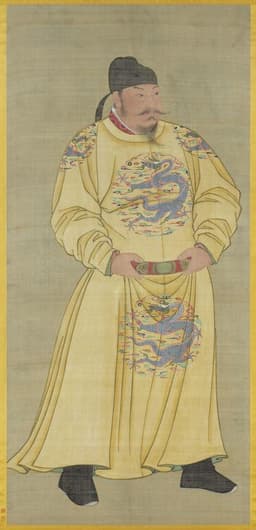
Emperor Taizong of Tang
Emperor · Medieval
78.9Total
Basic Information
Born
63
598
Died
—
649
Era
Ancient
Medieval
Nationality
Roman Empire
China
Occupation
Emperor
Emperor
Civilization
Western
Eastern
Score Comparison
Military (10%)
72.0
77.5
Political (20%)
90.0
82.0
Influence (20%)
88.0
85.0
Legacy (20%)
90.0
71.4
Leadership (15%)
88.0
78.0
Strategy (15%)
75.0
80.6
TOTAL
85.9
78.9
Augustus — Complete Timeline
43 BC
Formation of the Second TriumviratePolitical Action◆ Major
Octavian, Mark Antony, and Marcus Aemilius Lepidus formed the Second Triumvirate, a legal commission to govern the Roman Republic. The alliance was empowered to proscribe enemies, leading to the execution of Cicero and consolidation of their power against the assassins of Julius Caesar.
Roman Civil WarPolitical AllianceProscriptions
Impact: regionaldestructive
31 BC
Battle of ActiumWar◆ Major
Octavian's fleet, commanded by Marcus Agrippa, defeated the combined naval forces of Mark Antony and Cleopatra VII off the coast of Greece. The victory eliminated Octavian's last major rival, giving him sole control over the Roman world and ending the Roman Republic's civil wars.
Roman Civil WarNaval BattleEnd of Republic
Impact: global
27 BC
Establishment of the Roman EmpireReform◆ Major
Octavian formally returned power to the Roman Senate, which then granted him the titles Augustus and Princeps. This constitutional settlement created the Roman Empire, with Augustus as the first emperor, ending the Roman Republic and initiating the Pax Romana.
Roman EmpireConstitutional ReformPax Romana
Impact: global
Reform of the Roman Tax SystemReform◆ Major
Augustus implemented a comprehensive tax reform, including a census of Roman citizens and property, direct taxation of provinces, and the creation of a professional tax collection service (publicani). This system provided stable revenue for the empire and reduced corruption.
Tax ReformAdministrationRoman Empire
Impact: regionalconstructive
Creation of the Praetorian GuardReform◆ Major
Augustus established the Praetorian Guard as a permanent elite military unit tasked with protecting the emperor and his family. Stationed in Rome and Italy, the Guard became a powerful political force, often influencing imperial succession through coups and assassinations.
Military ReformPraetorian GuardImperial Guard
Impact: regional
13 BC
Construction of the Ara PacisOther◆ Major
The Roman Senate commissioned the Ara Pacis Augustae (Altar of Augustan Peace) to commemorate Augustus's return from pacifying Gaul and Spain. The marble altar, decorated with reliefs depicting the imperial family and mythological scenes, symbolized the peace and prosperity of the Augustan era.
Building ProjectPropagandaAugustan Art
Impact: regionalconstructive
Emperor Taizong of Tang — Complete Timeline
626 AD
Reign of ZhenguanReform
Emperor Taizong initiated the Zhenguan era, characterized by efficient governance, legal codification, and economic recovery. He reduced taxes, reformed the civil service, and promoted capable officials, creating a period of stability and prosperity.
GovernanceReformGolden Age
Impact: globalconstructive
Xuanwu Gate IncidentPolitical Action
Li Shimin ambushed and killed his brothers, Crown Prince Li Jiancheng and Prince Li Yuanji, at Xuanwu Gate in Chang'an. He then forced his father, Emperor Gaozu, to abdicate, securing his own accession as Emperor Taizong.
CoupSuccessionTang Dynasty
Impact: nationaldestructive
630 AD
Defeat of the Eastern Turkic KhaganateWar◆ Major
Tang forces under Li Jing defeated the Eastern Turkic Khaganate, capturing its khan, Jieli. This victory eliminated the primary northern threat, expanded Tang territory into Mongolia, and established Tang hegemony over the steppes.
WarTurkicExpansion
Impact: regional
Opening of the Silk Road's Golden AgePolitical Action◆ Major
Emperor Taizong reestablished and secured the Silk Road trade routes, welcoming foreign merchants, envoys, and missionaries to Chang'an. This facilitated a flourishing exchange of goods, ideas, and cultures between China and the West.
Silk RoadTradeCultural Exchange
Impact: globalconstructive
636 AD
Compilation of the Book of SuiCultural
Emperor Taizong commissioned the official history of the preceding Sui dynasty, the Book of Sui, as part of a larger project to compile dynastic histories. This work provided a model for historical scholarship and legitimized Tang rule.
HistoriographyCultureLegitimacy
Impact: nationalconstructive
Expert Analysis
Origins
Augustus, born Gaius Octavius in 63 BC, was the grandnephew and adopted son of Julius Caesar. His rise came amidst the chaos of Caesar's assassination, leveraging his inheritance and political acumen. Emperor Taizong, born Li Shimin in 598 AD, was the son of Emperor Gaozu, founder of the Tang dynasty. He grew up in a military household and played a key role in his father's rebellion against the Sui. Both emerged from turbulent transitions, but Augustus's path was more precarious, relying on alliances and civil war.
Rise to Power
Augustus formed the Second Triumvirate with Mark Antony and Lepidus to defeat Caesar's assassins. After the triumvirate collapsed, he defeated Antony at the Battle of Actium (31 BC), becoming sole ruler. He cleverly maintained republican institutions while accumulating power, earning the title 'Augustus' in 27 BC. Taizong's rise was bloodier: he orchestrated the Xuanwu Gate Incident in 626 AD, killing his brothers and forcing his father to abdicate. This ruthless act secured his throne, contrasting with Augustus's more gradual consolidation.
Leadership & Governance
Augustus reformed Rome's tax system, created the Praetorian Guard, and initiated vast building projects, transforming Rome from brick to marble. He established the Pax Romana, a 200-year peace, and centralized administration. His governance was pragmatic, balancing autocracy with republican forms. Taizong's 'Reign of Zhenguan' (627-649) is considered a golden age of Chinese governance. He implemented fair laws, reduced taxes, and promoted Confucian scholarship. He famously said, 'The ruler is the boat, and the people are the water; the water can support the boat or capsize it.' Both were effective administrators, but Augustus's institutional reforms had longer-lasting impact.
Triumph & Tragedy
Augustus's greatest triumph was founding the Roman Empire and securing its borders. His tragedies included the loss of three legions in the Teutoburg Forest (9 AD) and personal grief over his daughter Julia's exile. Taizong's triumphs include defeating the Eastern Turkic Khaganate and opening the Silk Road's golden age. His tragedy was the moral burden of the Xuanwu Gate Incident, which haunted his reign. Both faced military setbacks, but Augustus's later years were marked by more personal and political turmoil.
Character & Destiny
Augustus was calculating, patient, and ruthless when necessary. He projected an image of piety and modesty, but his actions revealed a cold pragmatism. His destiny was to end a century of civil war and establish a dynasty. Taizong was bold, ambitious, and intellectually curious. He was a skilled general and patron of arts. His destiny was to consolidate the Tang dynasty and create a model of benevolent rule. While Augustus's character was more Machiavellian, Taizong's was more idealistic, yet both were shaped by the violent paths to power.
Legacy
Augustus's legacy is the Roman Empire, which lasted centuries, and the Pax Romana, which influenced Western civilization. His reforms in governance, taxation, and military set precedents for future empires. Taizong's legacy is the 'Reign of Zhenguan' as a golden age of Chinese civilization, the expansion of Tang territory, and the flourishing of the Silk Road. His governance philosophy influenced later Chinese dynasties. Both are revered as model rulers, but Augustus's impact on world history is more profound due to the empire's longevity and influence.
Conclusion
Augustus scores higher in overall impact (Scores: M=72, P=90, I=88, L=90, D=88, S=75, T=86) compared to Taizong (M=78, P=82, I=85, L=71, D=78, S=81, T=79). The 7-point gap reflects Augustus's superior political acumen, longer reign, and foundational role in the Roman Empire. While Taizong was a brilliant ruler, his achievements were within an existing dynasty, whereas Augustus created a new political order that shaped the West. Therefore, Augustus is the greater ruler in historical significance.
Rankings
🥇
AugustusLeader
Mil: 72.0Pol: 90.0Inf: 88.0
85.9
🥈
Emperor Taizong of Tang
Mil: 77.5Pol: 82.0Inf: 85.0
78.9
+7.0 behind
How This Comparison Works
Algorithm
Each figure is scored on 6 dimensions (0—100 scale) based on structured historical data: Military (10%), Political (20%), Influence (20%), Legacy (20%), Leadership (15%), Strategy (15%). The weighted total produces the final ranking.
Data Sources
Scores are computed from structured sub-indicators in the database. Scale factors adjust for era (Ancient ×0.85, Modern ×1.0) and civilization size (Eastern ×1.05, Other ×0.80) to account for differences in population and military scale.
Maximum 3 Figures
Comparisons are limited to 2—3 figures to ensure readability and statistical meaningfulness.
Error Margins
±5 points per dimension — Sub-scores are derived from historical records with inherent uncertainty. Two figures within 5 points on a dimension should be considered roughly equivalent in that area.
Total Score Accuracy
±3 points overall — The weighted combination of 6 dimensions produces a total score with approximately ±3 points of uncertainty. Differences of less than 3 points are not statistically significant— the figures are effectively tied.
Known Limitations
- Historical records are incomplete and uneven across civilizations
- Figures from oral-tradition societies may be underrepresented
- Occupation labels can misclassify multi-role figures
- Scores measure capability and impact, not moral character
- Quantitative scoring is a comparison tool, not absolute truth
Capability Radar
Military (10%) — Battles & Warfare
Battles
75
95
Win Rate
80
95
Expansion
85
90
Political (20%) — Governance & Reform
Reform
95
95
Diplomacy
90
95
Economy
85
95
Influence (20%) — Cultural & Global Reach
Cultural
85
90
Global
90
90
Legacy (20%) — Historical Impact
Historical
95
95
Longevity
95
95
Leadership (15%) — Power & Stability
Tenure
95
85
Stability
95
95
Strategy (15%) — Tactics & Innovation
Strategy
85
95
Tactics
70
95
Reform
90
90
Similar Comparisons
Comments & Discussion
No comments yet. Be the first to share your thoughts!