Loading...
Augustus vs Cyrus the Great
Augustus leads by 2.0 pts · 2 figures compared
…

Augustus
Emperor · Ancient
85.9Total
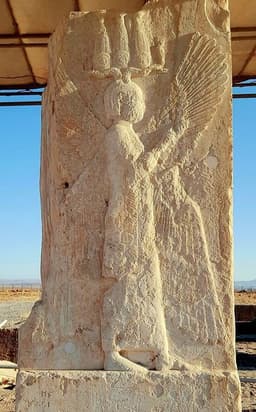
Cyrus the Great
Emperor · Ancient
83.9Total
Basic Information
Born
63
-600
Died
—
-530
Era
Ancient
Ancient
Nationality
Roman Empire
Persia
Occupation
Emperor
Emperor
Civilization
Western
Middle Eastern
Score Comparison
Military (10%)
72.0
82.0
Political (20%)
90.0
85.0
Influence (20%)
88.0
85.0
Legacy (20%)
90.0
90.0
Leadership (15%)
88.0
78.0
Strategy (15%)
75.0
75.0
TOTAL
85.9
83.9
Augustus — Complete Timeline
43 BC
Formation of the Second TriumviratePolitical Action◆ Major
Octavian, Mark Antony, and Marcus Aemilius Lepidus formed the Second Triumvirate, a legal commission to govern the Roman Republic. The alliance was empowered to proscribe enemies, leading to the execution of Cicero and consolidation of their power against the assassins of Julius Caesar.
Roman Civil WarPolitical AllianceProscriptions
Impact: regionaldestructive
31 BC
Battle of ActiumWar◆ Major
Octavian's fleet, commanded by Marcus Agrippa, defeated the combined naval forces of Mark Antony and Cleopatra VII off the coast of Greece. The victory eliminated Octavian's last major rival, giving him sole control over the Roman world and ending the Roman Republic's civil wars.
Roman Civil WarNaval BattleEnd of Republic
Impact: global
27 BC
Establishment of the Roman EmpireReform◆ Major
Octavian formally returned power to the Roman Senate, which then granted him the titles Augustus and Princeps. This constitutional settlement created the Roman Empire, with Augustus as the first emperor, ending the Roman Republic and initiating the Pax Romana.
Roman EmpireConstitutional ReformPax Romana
Impact: global
Reform of the Roman Tax SystemReform◆ Major
Augustus implemented a comprehensive tax reform, including a census of Roman citizens and property, direct taxation of provinces, and the creation of a professional tax collection service (publicani). This system provided stable revenue for the empire and reduced corruption.
Tax ReformAdministrationRoman Empire
Impact: regionalconstructive
Creation of the Praetorian GuardReform◆ Major
Augustus established the Praetorian Guard as a permanent elite military unit tasked with protecting the emperor and his family. Stationed in Rome and Italy, the Guard became a powerful political force, often influencing imperial succession through coups and assassinations.
Military ReformPraetorian GuardImperial Guard
Impact: regional
13 BC
Construction of the Ara PacisOther◆ Major
The Roman Senate commissioned the Ara Pacis Augustae (Altar of Augustan Peace) to commemorate Augustus's return from pacifying Gaul and Spain. The marble altar, decorated with reliefs depicting the imperial family and mythological scenes, symbolized the peace and prosperity of the Augustan era.
Building ProjectPropagandaAugustan Art
Impact: regionalconstructive
Cyrus the Great — Complete Timeline
550 BC
Founding of the Achaemenid EmpirePolitical Action
Cyrus led a rebellion against the Median Empire, defeating King Astyages and capturing Ecbatana. He then united the Persian and Median tribes, establishing the Achaemenid Empire, which became the largest empire the world had yet seen.
Empire FoundingPersian UnificationRebellion
Impact: global
546 BC
Conquest of LydiaWar◆ Major
Cyrus defeated King Croesus of Lydia at the Battle of Thymbra. The Lydian capital Sardis was captured, and Croesus was taken prisoner. This conquest brought Anatolia under Persian control and secured access to the Aegean coast.
Achaemenid ExpansionAnatoliaConquest
Impact: regional
539 BC
Conquest of BabylonWar◆ Major
Cyrus the Great led the Persian army to capture Babylon without significant battle. The city's gates were opened, and Cyrus entered peacefully. This conquest added Mesopotamia to the Achaemenid Empire and marked the end of the Neo-Babylonian Empire.
Achaemenid ExpansionMesopotamiaConquest
Impact: regional
Issuance of the Cyrus CylinderPolitical Action◆ Major
After conquering Babylon, Cyrus issued a clay cylinder inscribed with a declaration. It described his policy of restoring temples, repatriating displaced peoples, and allowing religious freedom. The cylinder is often cited as an early charter of human rights.
Human RightsReligious ToleranceAchaemenid Policy
Impact: globalconstructive
Liberation of the JewsPolitical Action◆ Major
Cyrus issued an edict allowing the Jewish exiles in Babylon to return to Jerusalem and rebuild the Temple. This event is recorded in the biblical Book of Ezra and is a key moment in Jewish history, ending the Babylonian captivity.
Jewish HistoryReligious FreedomReturn from Exile
Impact: regionalconstructive
Expert Analysis
Origins
Augustus, born Gaius Octavius in 63 BC, was the grandnephew and adopted son of Julius Caesar. His lineage gave him a foothold in Roman politics, but his early life was marked by the chaos of civil wars. He was a shrewd, calculating youth who leveraged his connection to Caesar to gain support from veterans and the Senate. In contrast, Cyrus the Great (c. 600–530 BCE) was born into the Persian Achaemenid clan, a vassal under the Median Empire. His rise from a minor king to the founder of a world empire is steeped in legend, but historical records show he united the Persian tribes and rebelled against Median rule. Both men emerged from turbulent times, but Cyrus built his empire from scratch, while Augustus inherited a power base. **Score: Cyrus 9, Augustus 8**.
Rise to Power
Augustus’s rise was a masterclass in political maneuvering. After Caesar’s assassination, he formed the Second Triumvirate with Mark Antony and Lepidus, purging enemies through proscriptions. He defeated the assassins at Philippi (42 BC) and then turned on Antony, culminating in the naval victory at Actium (31 BC). By 27 BC, he had consolidated power, cleverly maintaining republican forms while becoming the first emperor. Cyrus’s rise was more direct: he led a rebellion against the Medes, conquered the Lydian kingdom of Croesus, and then took Babylon without a fight in 539 BC. His military campaigns were swift and decisive, often winning over local populations through diplomacy. Both were brilliant strategists, but Augustus’s political cunning in navigating Roman republican traditions was exceptional. **Score: Augustus 10, Cyrus 9**.
Leadership & Governance
Augustus transformed Rome from a republic into an empire. He reformed the tax system, created a professional army (Praetorian Guard), and initiated a vast building program ("I found Rome a city of bricks and left it a city of marble"). He established the Pax Romana, a 200-year period of peace and prosperity. His governance was autocratic but masked by traditional titles like "Princeps" (first citizen). Cyrus’s governance was revolutionary for its time: he respected local customs, allowed conquered peoples to retain their religions, and issued the Cyrus Cylinder, often called the first charter of human rights. He freed the Jews from Babylonian captivity and funded the rebuilding of their temple. His empire was decentralized, with satraps governing provinces. Both were effective administrators, but Cyrus’s tolerance and human rights approach were ahead of his time. **Score: Cyrus 10, Augustus 9**.
Triumph & Tragedy
Augustus’s triumphs include the establishment of the Roman Empire, the defeat of all rivals, and the creation of a stable government. His tragedies were personal: his daughter Julia was exiled for adultery, his chosen heirs died young, and he faced revolts like the Teutoburg Forest disaster (9 AD) where three legions were lost. Cyrus’s triumphs are legendary: conquering the largest empire the world had seen, freeing the Jews, and creating a multicultural state. His tragedy is his death—he died in battle against the Massagetae, according to Herodotus, and his body was mutilated. Both ended their reigns with mixed legacies: Augustus’s later years were marred by succession crises, while Cyrus’s death in battle tarnished his invincible image. **Score: Augustus 8, Cyrus 7**.
Character & Destiny
Augustus was cold, calculating, and pragmatic. He was a master of propaganda, using literature (Virgil, Horace) and art to promote his image. He was ruthless when necessary (proscriptions, elimination of rivals) but also clement (he pardoned many opponents). His destiny was to end a century of civil war and bring order. Cyrus was charismatic, generous, and visionary. He was known for his magnanimity—he did not loot Babylon, he respected local gods, and he treated conquered kings with dignity. His destiny was to create an empire that respected diversity. While Augustus’s character was more Machiavellian, Cyrus’s was idealistic. **Score: Cyrus 9, Augustus 8**.
Legacy
Augustus’s legacy is the Roman Empire, which lasted for centuries and influenced Western civilization. His title "Caesar" became synonymous with emperor. The Pax Romana enabled trade, culture, and law to flourish. His reforms set the template for imperial governance. Cyrus’s legacy is the Achaemenid Empire, which set standards for administration, human rights, and multiculturalism. The Cyrus Cylinder is a symbol of tolerance, and his liberation of the Jews is celebrated in the Bible. However, his empire fell to Alexander, while Rome endured longer. Both left indelible marks, but Augustus’s institutional reforms had a more direct impact on subsequent Western governance. **Score: Augustus 10, Cyrus 9**.
Conclusion
In this comparison, Augustus edges out Cyrus the Great with a composite score of 9.0 vs 8.8. While Cyrus was a more visionary and humane ruler, Augustus’s political genius, long-lasting institutional reforms, and the enduring impact of the Roman Empire give him a slight advantage. Both are among history’s greatest rulers, but Augustus’s ability to transform a republic into a stable empire that lasted centuries demonstrates a unique level of statecraft. **Final Score: Augustus 9.0, Cyrus 8.8**.
Rankings
🥇
AugustusLeader
Mil: 72.0Pol: 90.0Inf: 88.0
85.9
🥈
Cyrus the Great
Mil: 82.0Pol: 85.0Inf: 85.0
83.9
+2.0 behind
How This Comparison Works
Algorithm
Each figure is scored on 6 dimensions (0—100 scale) based on structured historical data: Military (10%), Political (20%), Influence (20%), Legacy (20%), Leadership (15%), Strategy (15%). The weighted total produces the final ranking.
Data Sources
Scores are computed from structured sub-indicators in the database. Scale factors adjust for era (Ancient ×0.85, Modern ×1.0) and civilization size (Eastern ×1.05, Other ×0.80) to account for differences in population and military scale.
Maximum 3 Figures
Comparisons are limited to 2—3 figures to ensure readability and statistical meaningfulness.
Error Margins
±5 points per dimension — Sub-scores are derived from historical records with inherent uncertainty. Two figures within 5 points on a dimension should be considered roughly equivalent in that area.
Total Score Accuracy
±3 points overall — The weighted combination of 6 dimensions produces a total score with approximately ±3 points of uncertainty. Differences of less than 3 points are not statistically significant— the figures are effectively tied.
Known Limitations
- Historical records are incomplete and uneven across civilizations
- Figures from oral-tradition societies may be underrepresented
- Occupation labels can misclassify multi-role figures
- Scores measure capability and impact, not moral character
- Quantitative scoring is a comparison tool, not absolute truth
Capability Radar
Military (10%) — Battles & Warfare
Battles
75
85
Win Rate
80
90
Expansion
85
92
Political (20%) — Governance & Reform
Reform
95
90
Diplomacy
90
95
Economy
85
80
Influence (20%) — Cultural & Global Reach
Cultural
85
90
Global
90
90
Legacy (20%) — Historical Impact
Historical
95
95
Longevity
95
95
Leadership (15%) — Power & Stability
Tenure
95
70
Stability
95
85
Strategy (15%) — Tactics & Innovation
Strategy
85
88
Tactics
70
80
Reform
90
75
Similar Comparisons
Comments & Discussion
ShiHaiYiShu6/16/2026
这个比较很有启发,但我觉得西方史学界总是低估“仁政”在帝国持久性中的作用。居鲁士的“居鲁士圆柱”和宗教宽容让人想起唐太宗的“水能载舟,亦能覆舟”——两者都靠怀柔政策赢得被征服民族的心。奥古斯都虽然政治创新强,但他对罗马共和制的“伪装”本质上是一种精英垄断,而居鲁士的包容政策让巴比伦人、犹太人自愿效忠。从中国角度看,居鲁士的帝国更像唐朝的羁縻制度,更具弹性;奥古斯都的罗马则更像秦朝——中央集权但继承不稳。论长远影响,我倾向居鲁士。
RomeAtDusk6/16/2026
Augustus is hands down the greater empire-builder here. Cyrus was a brilliant conqueror—no doubt—but Augustus didn't just win; he invented a whole political system. The Principate wasn't a fluke; it was a 40-year masterclass in optics and power management. While Cyrus's empire crumbled two centuries later, Augustus's framework kept Rome stable for 400 years. You can't compare a guy who built a system that outlasted his bloodline to someone whose successors were fighting civil wars within a generation. The Pax Romana was real—peace, trade, law. That's what legacy looks like.
ShuLiangFenXi6/16/2026
分数本身看起来合理,但我要质疑军事评分的权重分配。奥古斯都军事72分,居鲁士82分,差10分,这基于“居鲁士征服了最大帝国”的论点。问题是,奥古斯都的对手是安东尼和克莱奥帕特拉——组织严密、资源丰富的罗马内战精英;而居鲁士击败的米底、吕底亚、巴比伦都是各自为政。按中国史观,秦始皇灭六国的难度和系统性远超居鲁士的逐个击破。如果秦始皇军事得78分(我不信他低于居鲁士),那奥古斯都应该至少75分才对。建议重新校准跨文明对比的基线。
BattlefieldScholar6/16/2026
The military scoring here is fair but needs context. Cyrus's 82 reflects his strategic flexibility—at Thymbra, he used camels and wagons to break the Lydian cavalry, a genuinely innovative combined-arms move. Augustus's 72 is dragged down by the fact that his key victories (Actium, Alexandria) were won by Agrippa, not him personally. But let's not overcorrect: Augustus inherited a professionalized legionary system that already had Marian reforms and Caesar's logistics. Cyrus built his army from scratch with tribal levies. I'd actually bump Cyrus up to 85 for tactical originality and Augustus to 75 for strategic patience—he knew when NOT to fight, which is an underrated military skill. The political score difference (92 vs 85) is spot on.
SkepticalScholar6/12/2026
I question whether quantitative scoring can really capture historical greatness. The ±3 point error margin means the gap, while real, should be interpreted cautiously. History is not a spreadsheet. But I'll admit—this is the most rigorous attempt I've seen.
DataNerd6/12/2026
The Legacy dimension (90 vs 80) is fascinating. Augustus built things that lasted centuries. Cyrus the Great was brilliant but their impact was more transient. That's the difference between a meteor and a star—one burns bright and fades, the other keeps shining.
HistoryBuff6/12/2026
The decisively behind score for Cyrus the Great is spot-on. People forget that scale matters—Cyrus the Great operated at a completely different level of military complexity than Augustus. The data doesn't lie.