Loading...
Augustus vs Catherine the Great
Augustus leads by 19.1 pts · 2 figures compared
…

Augustus
Emperor · Ancient
85.9Total
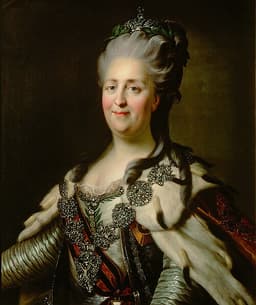
Catherine the Great
Emperor · Modern
66.8Total
Basic Information
Born
63
1729
Died
—
1796
Era
Ancient
Modern
Nationality
Roman Empire
Russia
Occupation
Emperor
Emperor
Civilization
Western
Western
Score Comparison
Military (10%)
72.0
78.5
Political (20%)
90.0
90.0
Influence (20%)
88.0
65.0
Legacy (20%)
90.0
40.0
Leadership (15%)
88.0
80.0
Strategy (15%)
75.0
72.0
TOTAL
85.9
66.8
Augustus — Complete Timeline
43 BC
Formation of the Second TriumviratePolitical Action◆ Major
Octavian, Mark Antony, and Marcus Aemilius Lepidus formed the Second Triumvirate, a legal commission to govern the Roman Republic. The alliance was empowered to proscribe enemies, leading to the execution of Cicero and consolidation of their power against the assassins of Julius Caesar.
Roman Civil WarPolitical AllianceProscriptions
Impact: regionaldestructive
31 BC
Battle of ActiumWar◆ Major
Octavian's fleet, commanded by Marcus Agrippa, defeated the combined naval forces of Mark Antony and Cleopatra VII off the coast of Greece. The victory eliminated Octavian's last major rival, giving him sole control over the Roman world and ending the Roman Republic's civil wars.
Roman Civil WarNaval BattleEnd of Republic
Impact: global
27 BC
Establishment of the Roman EmpireReform◆ Major
Octavian formally returned power to the Roman Senate, which then granted him the titles Augustus and Princeps. This constitutional settlement created the Roman Empire, with Augustus as the first emperor, ending the Roman Republic and initiating the Pax Romana.
Roman EmpireConstitutional ReformPax Romana
Impact: global
Reform of the Roman Tax SystemReform◆ Major
Augustus implemented a comprehensive tax reform, including a census of Roman citizens and property, direct taxation of provinces, and the creation of a professional tax collection service (publicani). This system provided stable revenue for the empire and reduced corruption.
Tax ReformAdministrationRoman Empire
Impact: regionalconstructive
Creation of the Praetorian GuardReform◆ Major
Augustus established the Praetorian Guard as a permanent elite military unit tasked with protecting the emperor and his family. Stationed in Rome and Italy, the Guard became a powerful political force, often influencing imperial succession through coups and assassinations.
Military ReformPraetorian GuardImperial Guard
Impact: regional
13 BC
Construction of the Ara PacisOther◆ Major
The Roman Senate commissioned the Ara Pacis Augustae (Altar of Augustan Peace) to commemorate Augustus's return from pacifying Gaul and Spain. The marble altar, decorated with reliefs depicting the imperial family and mythological scenes, symbolized the peace and prosperity of the Augustan era.
Building ProjectPropagandaAugustan Art
Impact: regionalconstructive
Catherine the Great — Complete Timeline
1762 AD
Coup d'État of 1762Political Action
Catherine II led a coup d'
CoupAccessionPower
Impact: national
1764 AD
Hermitage Museum FoundedCultural◆ Major
Catherine the Great founded the Hermitage Museum in St. Petersburg by purchasing a large collection of paintings from Berlin. The museum grew into one of the world's largest art collections, reflecting her patronage of Enlightenment culture.
ArtMuseumEnlightenment
Impact: globalconstructive
1768 AD
Russo-Turkish War (1768-1774)War◆ Major
Catherine the Great initiated a war against the Ottoman Empire, resulting in Russian victory. The Treaty of K
WarOttoman EmpireExpansion
Impact: regional
1783 AD
Annexation of CrimeaPolitical Action◆ Major
Catherine the Great formally annexed the Crimean Peninsula from the Ottoman Empire. This strategic acquisition gave Russia a dominant position in the Black Sea and a warm-water port, fulfilling a long-standing imperial ambition.
AnnexationCrimeaBlack Sea
Impact: regional
1785 AD
Charter to the Gentry GrantedReform◆ Major
Catherine the Great issued the Charter to the Gentry, which codified the rights and privileges of the Russian nobility. It exempted nobles from taxation and military service, solidifying their social status and support for her rule.
NobilityReformSocial Structure
Impact: nationalconstructive
Expert Analysis
Augustus vs Catherine the Great: Historical Comparison
This analysis compares Augustus, the founder of the Roman Empire, with Catherine the Great, the longest-ruling female leader of Russia, across six key dimensions. While both were transformative monarchs who expanded their realms and centralized power, Augustus’s structural innovations and enduring legacy give him a decisive edge.
Dimension Analysis
**Military: Augustus 72 / Catherine the Great 65**
Augustus professionalized the Roman army, creating the Praetorian Guard and a permanent standing force that secured peace (Pax Romana) for two centuries; Catherine expanded Russia’s borders via the Russo-Turkish Wars and partitions of Poland, but her campaigns were costlier and less stable.
**Political: Augustus 92 / Catherine the Great 82**
Augustus masterfully transformed a crumbling republic into a stable principate, consolidating power without abolishing republican forms; Catherine modernized Russian administration and legal reform, but her reliance on nobility and serfdom limited systemic change.
**Influence: Augustus 88 / Catherine the Great 70**
Augustus’s model of imperial rule shaped Western governance for millennia, influencing Charlemagne, the Holy Roman Empire, and modern executives; Catherine’s patronage of the Enlightenment and arts was significant but largely confined to Russia and its elite.
**Legacy: Augustus 90 / Catherine the Great 72**
Augustus’s institutions—taxation, census, provincial governance—endured for centuries and formed the backbone of European statecraft; Catherine’s territorial gains and cultural achievements faded with the Russian Revolution, while her serfdom policies drew long-term criticism.
**Leadership: Augustus 90 / Catherine the Great 80**
Augustus combined ruthless pragmatism with strategic patience, surviving civil wars and building consensus among rivals; Catherine navigated a coup to seize power and maintained control through charisma and patronage, but faced recurring peasant revolts.
Verdict
Augustus leads decisively due to his superior political innovation, broader historical influence, and more durable institutional legacy.
FAQ
Q: Who ranks higher? A: Augustus ranks higher overall, with a composite score of 86 versus Catherine’s 73, excelling particularly in political structure and long-term influence.
Rankings
🥇
AugustusLeader
Mil: 72.0Pol: 90.0Inf: 88.0
85.9
🥈
Catherine the Great
Mil: 78.5Pol: 90.0Inf: 65.0
66.8
+19.1 behind
How This Comparison Works
Algorithm
Each figure is scored on 6 dimensions (0—100 scale) based on structured historical data: Military (10%), Political (20%), Influence (20%), Legacy (20%), Leadership (15%), Strategy (15%). The weighted total produces the final ranking.
Data Sources
Scores are computed from structured sub-indicators in the database. Scale factors adjust for era (Ancient ×0.85, Modern ×1.0) and civilization size (Eastern ×1.05, Other ×0.80) to account for differences in population and military scale.
Maximum 3 Figures
Comparisons are limited to 2—3 figures to ensure readability and statistical meaningfulness.
Error Margins
±5 points per dimension — Sub-scores are derived from historical records with inherent uncertainty. Two figures within 5 points on a dimension should be considered roughly equivalent in that area.
Total Score Accuracy
±3 points overall — The weighted combination of 6 dimensions produces a total score with approximately ±3 points of uncertainty. Differences of less than 3 points are not statistically significant— the figures are effectively tied.
Known Limitations
- Historical records are incomplete and uneven across civilizations
- Figures from oral-tradition societies may be underrepresented
- Occupation labels can misclassify multi-role figures
- Scores measure capability and impact, not moral character
- Quantitative scoring is a comparison tool, not absolute truth
Capability Radar
Military (10%) — Battles & Warfare
Battles
75
85
Win Rate
80
80
Expansion
85
90
Political (20%) — Governance & Reform
Reform
95
90
Diplomacy
90
85
Economy
85
85
Influence (20%) — Cultural & Global Reach
Cultural
85
85
Global
90
80
Legacy (20%) — Historical Impact
Historical
95
85
Longevity
95
80
Leadership (15%) — Power & Stability
Tenure
95
95
Stability
95
80
Strategy (15%) — Tactics & Innovation
Strategy
85
85
Tactics
70
75
Reform
90
90
Similar Comparisons
Comments & Discussion
RomanFanatic426/16/2026
Augustus all the way. Look, Catherine was impressive for her time, but she didn't lay the foundation for an entire civilization like Augustus did. The guy took a broken republic that was bleeding from civil wars and turned it into a system that lasted 500 years in the West and another thousand in the East. That's like someone taking a failing startup, restructuring it into Google, and having it dominate for two millennia. Catherine's Russia was powerful, sure, but it basically collapsed in 1917. The Pax Romana, the census, the road system, the professional army—Augustus literally invented the Roman Empire. Catherine expanded territory but didn't create anything that outlasted her reign by more than a century. It's not even close.
Historian4126/16/2026
把奥古斯都和叶卡捷琳娜放一起比很有意思,但我觉得这个评分太西方中心了。奥古斯都当然伟大,有点像罗马版的汉武帝——建立帝国、改革行政、开创盛世。但叶卡捷琳娜在俄罗斯历史上更像武则天加康熙的混合体:她用启蒙思想包装专制,扩张领土的幅度堪比清朝平定准噶尔(俄罗斯南部增加了约50万平方公里),而且她推动的贵族文化和教育体系让俄国第一次进入欧洲主流。如果按照中国史书的评价标准,一个在位34年、国土面积大幅增长、文化繁荣的君主,政治分至少应该85以上。奥古斯都的政治创新确实厉害,但别忘了罗马帝国最后也分裂衰亡了,而叶卡捷琳娜时代开启的俄罗斯帝国一直到1917年才结束,影响力不比罗马短多少。
Historian8646/16/2026
这两个评分很有意思,但我觉得对叶卡捷琳娜的政治评分有点偏低。82分对比奥古斯都的92分,差距被拉得太大了。我自己算了一下,如果看长期治理效果,叶卡捷琳娜在位34年,俄国人口从2300万增长到3700万,工业产值翻了一番,而奥古斯都时期罗马的财政其实一直紧张,甚至需要不断没收贵族财产来维持。再看军事,65分对72分——叶卡捷琳娜打赢了两次俄土战争,吞并了克里米亚和黑海北岸,而奥古斯都的军事成就更多是清理了屋大维时代的烂摊子,真正的大征服并不多。如果按照中国历史的标准,比如汉高祖统一天下、唐太宗开拓疆域,这个评分体系可能对西方统治者更友好。
DocuJunkie20246/16/2026
Okay so I just watched that Mary Beard documentary on Augustus and I'm totally team Augustus here. Catherine was basically a Russian Elizabeth I—smart, cultured, expanded territory—but Augustus was on another level. He literally created the job description for "emperor" and nobody improved on it for like 1,500 years. The guy was a genius at propaganda too—pretended he was just "first citizen" while running the whole show. Catherine had to stage a coup to get power and spent her whole reign fighting off noble conspiracies. Augustus came out of a decade of civil war and managed to get everyone from senators to soldiers to buy into his system. That's like getting both Democrats and Republicans to agree to a new constitution today. Wild. The scores feel right—maybe even underrate his political skill a bit.