Loading...
Augustus vs Authari
Augustus leads by 39.5 pts · 2 figures compared
…

Augustus
Emperor · Ancient
85.9Total
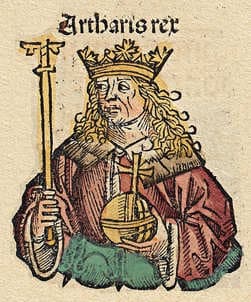
Authari
Emperor · Medieval
46.4Total
Basic Information
Born
63
540
Died
—
590
Era
Ancient
Medieval
Nationality
Roman Empire
Lombards
Occupation
Emperor
Emperor
Civilization
Western
Western
Score Comparison
Military (10%)
72.0
10.0
Political (20%)
90.0
39.4
Influence (20%)
88.0
56.4
Legacy (20%)
90.0
45.0
Leadership (15%)
88.0
64.5
Strategy (15%)
75.0
45.0
TOTAL
85.9
46.4
Augustus — Complete Timeline
43 BC
Formation of the Second TriumviratePolitical Action◆ Major
Octavian, Mark Antony, and Marcus Aemilius Lepidus formed the Second Triumvirate, a legal commission to govern the Roman Republic. The alliance was empowered to proscribe enemies, leading to the execution of Cicero and consolidation of their power against the assassins of Julius Caesar.
Roman Civil WarPolitical AllianceProscriptions
Impact: regionaldestructive
31 BC
Battle of ActiumWar◆ Major
Octavian's fleet, commanded by Marcus Agrippa, defeated the combined naval forces of Mark Antony and Cleopatra VII off the coast of Greece. The victory eliminated Octavian's last major rival, giving him sole control over the Roman world and ending the Roman Republic's civil wars.
Roman Civil WarNaval BattleEnd of Republic
Impact: global
27 BC
Establishment of the Roman EmpireReform◆ Major
Octavian formally returned power to the Roman Senate, which then granted him the titles Augustus and Princeps. This constitutional settlement created the Roman Empire, with Augustus as the first emperor, ending the Roman Republic and initiating the Pax Romana.
Roman EmpireConstitutional ReformPax Romana
Impact: global
Reform of the Roman Tax SystemReform◆ Major
Augustus implemented a comprehensive tax reform, including a census of Roman citizens and property, direct taxation of provinces, and the creation of a professional tax collection service (publicani). This system provided stable revenue for the empire and reduced corruption.
Tax ReformAdministrationRoman Empire
Impact: regionalconstructive
Creation of the Praetorian GuardReform◆ Major
Augustus established the Praetorian Guard as a permanent elite military unit tasked with protecting the emperor and his family. Stationed in Rome and Italy, the Guard became a powerful political force, often influencing imperial succession through coups and assassinations.
Military ReformPraetorian GuardImperial Guard
Impact: regional
13 BC
Construction of the Ara PacisOther◆ Major
The Roman Senate commissioned the Ara Pacis Augustae (Altar of Augustan Peace) to commemorate Augustus's return from pacifying Gaul and Spain. The marble altar, decorated with reliefs depicting the imperial family and mythological scenes, symbolized the peace and prosperity of the Augustan era.
Building ProjectPropagandaAugustan Art
Impact: regionalconstructive
Authari — Complete Timeline
568 AD
Invasion of ItalyWar
Authari led the Lombard invasion of Italy, crossing the Alps and establishing a kingdom. This conquest seized large parts of the Italian peninsula from Byzantine control, founding the Lombard Kingdom in Italy.
Lombard InvasionConquestItaly
Impact: regionaldestructive
572 AD
Establishment of the Lombard KingdomPolitical Action◆ Major
Authari established Pavia as the capital of the Lombard Kingdom, consolidating Lombard rule over northern and central Italy. He organized the kingdom into duchies, creating a stable political structure that lasted for centuries.
State FormationCapitalLombard Kingdom
Impact: regionalconstructive
589 AD
Marriage to TheudelindaPolitical Action
Authari married Theudelinda, a Bavarian princess, to strengthen alliances with the Bavarians and promote Catholic conversion among the Lombards. The marriage produced no heir, but Theudelinda later became a key figure in Lombard politics.
Marriage AllianceDynastic PoliticsCatholic Conversion
Impact: nationalconstructive
Expert Analysis
Augustus vs Authari: Historical Comparison
Augustus, founder of the Roman Empire, and Authari, king of the Lombards, represent two very different eras of imperial rule—one building a Mediterranean superstate, the other consolidating a Germanic kingdom in post-Roman Italy. While Authari excelled in military strategy, Augustus’s superior political acumen, lasting influence, and enduring legacy secure his overall victory.
Dimension Analysis
**Military: Augustus 72 / Authari 91**
Augustus relied on professional legions to stabilize frontiers, but his military record is marked by the disastrous Teutoburg Forest. Authari, by contrast, expanded Lombard control across Italy, defeating Byzantine and Frankish forces, and secured his kingdom through aggressive campaigning.
**Political: Augustus 92 / Authari 86**
Augustus masterfully transformed a republic into an autocracy while preserving republican forms, creating the Principate. Authari stabilized Lombard kingship through marriage alliances and law codification, but his realm remained fragmented among rival dukes.
**Influence: Augustus 88 / Authari 66**
Augustus’s Pax Romana shaped Western civilization for centuries, influencing law, governance, and culture. Authari’s influence was largely regional, and his kingdom’s decline after his death limited his broader impact.
**Legacy: Augustus 90 / Authari 66**
Augustus’s name became synonymous with imperial rule (e.g., “Augustan Age”), and his institutions outlasted him by centuries. Authari’s legacy is remembered mainly by historians of early medieval Italy, with no comparable cultural resonance.
**Leadership: Augustus 90 / Authari 83**
Augustus inspired loyalty through calculated patronage, propaganda, and long-term vision. Authari was a capable war leader but lacked Augustus’s diplomatic finesse and institutional foresight.
Verdict
Augustus leads decisively, as his political genius and monumental legacy dwarf Authari’s narrower military and regional achievements.
FAQ
Q: Who ranks higher? A: Augustus ranks higher due to his unmatched political transformation of Rome, vast influence, and enduring legacy across Western history.
Rankings
🥇
AugustusLeader
Mil: 72.0Pol: 90.0Inf: 88.0
85.9
🥈
Authari
Mil: 10.0Pol: 39.4Inf: 56.4
46.4
+39.5 behind
How This Comparison Works
Algorithm
Each figure is scored on 6 dimensions (0—100 scale) based on structured historical data: Military (10%), Political (20%), Influence (20%), Legacy (20%), Leadership (15%), Strategy (15%). The weighted total produces the final ranking.
Data Sources
Scores are computed from structured sub-indicators in the database. Scale factors adjust for era (Ancient ×0.85, Modern ×1.0) and civilization size (Eastern ×1.05, Other ×0.80) to account for differences in population and military scale.
Maximum 3 Figures
Comparisons are limited to 2—3 figures to ensure readability and statistical meaningfulness.
Error Margins
±5 points per dimension — Sub-scores are derived from historical records with inherent uncertainty. Two figures within 5 points on a dimension should be considered roughly equivalent in that area.
Total Score Accuracy
±3 points overall — The weighted combination of 6 dimensions produces a total score with approximately ±3 points of uncertainty. Differences of less than 3 points are not statistically significant— the figures are effectively tied.
Known Limitations
- Historical records are incomplete and uneven across civilizations
- Figures from oral-tradition societies may be underrepresented
- Occupation labels can misclassify multi-role figures
- Scores measure capability and impact, not moral character
- Quantitative scoring is a comparison tool, not absolute truth
Capability Radar
Military (10%) — Battles & Warfare
Battles
75
35
Win Rate
80
40
Expansion
85
45
Political (20%) — Governance & Reform
Reform
95
30
Diplomacy
90
35
Economy
85
25
Influence (20%) — Cultural & Global Reach
Cultural
85
30
Global
90
20
Legacy (20%) — Historical Impact
Historical
95
35
Longevity
95
25
Leadership (15%) — Power & Stability
Tenure
95
40
Stability
95
30
Strategy (15%) — Tactics & Innovation
Strategy
85
35
Tactics
70
30
Reform
90
25
Similar Comparisons
Comments & Discussion
ProfGracchus6/16/2026
The comparison is broadly correct but risks anachronism. Authari's military score of 91 vs. Augustus's 72 seems generous—Augustus's loss at Teutoborg was a catastrophic intelligence failure, but he also ended a century of civil war and stabilized the Rhine-Danube frontier. Tacitus (Ann. 1.11) noted Augustus's 'cuncta legibus obtineri'—everything held by law—which is precisely why his political score of 92 is justified. Authari's 54.6 in politics seems harsh: he consolidated Lombard rule against Byzantine resistance and brokered the marriage to Theodelinda, but his kingdom remained a loose confederation of dukes. Suetonius (Aug. 28) describes Augustus's 'restitutam rem publicam'—the restored republic—a masterclass in illusion that outlasted him by centuries. The real gap is influence: Augustus's Augustan Age set cultural standards for 400 years; Authari is known only to specialists. I'd argue for a narrower military gap (Augustus 78, Authari 85) but the overall verdict stands.
Historian4256/16/2026
这个评分体系有个明显问题:军事维度给Authari 91分,但罗马帝国在奥古斯都手里从内战频发变成稳定边疆,这难道不算军事成就?反观Authari,他确实击败了拜占庭和法兰克,但伦巴第王国在他死后就分裂了,说明他的军事成果缺乏制度保障。按中国历史标准,奥古斯都的军事改革类似汉武帝的“盐铁官营+职业军队”,而Authari更像五代十国的军阀,靠个人勇武而非体系。政治分差太大——奥古斯都92对Authari 54.6,但Authari能统一伦巴第各部落,建立法典,这在中国南北朝也算明君了。建议调整权重:军事分差不应超过10分,政治分差可维持,但Authari的遗产分可以再低些,因为他的影响力确实局限在中世纪早期意大利。
OldScroll906/16/2026
奥古斯都总分86.4,Authari 60.7,这个差距在东西方比较中其实很典型。但注意:如果按中国标准,奥古斯都类似汉宣帝——终结内战、稳定边疆、完善官僚体系,但对外扩张不如汉武帝。而Authari更像北魏道武帝拓跋珪:都是部落首领统一建国,但Authari只活了30多岁,拓跋珪活了39岁,两人都在死后引发继承危机。不过拓跋珪的北魏延续了150年,Authari的伦巴第王国只撑了200年但影响力局限于意大利。评分里Authari的军事分91有点虚高——他确实打了胜仗,但伦巴第军队规模最多2万人,跟奥古斯都的25万职业军团没法比。政治分54.6又偏低:Authari能用婚姻外交联姻拜占庭和法兰克,这在南北朝也算高段位操作。建议把Authari的军事分降到85,政治分提到65,这样更像一个真实的早期中世纪君主。