Loading...
Augustine of Hippo vs Confucius
Confucius leads by 4.8 pts · 2 figures compared
…

Augustine of Hippo
Philosopher · Ancient
56.6Total
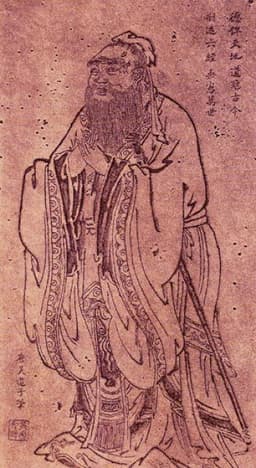
Confucius
Philosopher · Ancient
61.4Total
Basic Information
Born
354
-551
Died
430
-479
Era
Ancient
Ancient
Nationality
Roman Empire
China
Occupation
Philosopher
Philosopher
Civilization
Western
Eastern
Score Comparison
Military (10%)
9.0
8.7
Political (20%)
32.9
35.1
Influence (20%)
80.0
95.0
Legacy (20%)
87.0
87.0
Leadership (15%)
31.8
35.4
Strategy (15%)
42.2
44.3
TOTAL
56.6
61.4
Augustine of Hippo — Complete Timeline
386 AD
Conversion to ChristianityCultural
Augustine of Hippo converted to Christianity in Milan, influenced by Bishop Ambrose and his mother Monica. This conversion, described in his *Confessions*, ended his earlier Manichaean beliefs and set him on a path to becoming a leading Church Father.
ConversionChristianityChurch Father
Impact: globalconstructive
393 AD
Council of HippoCultural◆ Major
Augustine of Hippo participated in the Council of Hippo, which helped define the biblical canon for the Western Church. His influence contributed to the acceptance of certain books and the rejection of others, standardizing Christian scripture.
CouncilBibleCanon
Impact: globalconstructive
398 AD
Confessions PublishedCultural◆ Major
Augustine of Hippo published *Confessions*, an autobiographical work detailing his spiritual journey and conversion. The book explored themes of sin, grace, and divine providence, becoming a foundational text in Western Christian theology and literature.
BookTheologyAutobiography
Impact: globalconstructive
426 AD
City of God PublishedCultural
Augustine of Hippo completed *City of God*, a major theological work written in response to the sack of Rome in 410. It contrasted the earthly city with the heavenly city, shaping Christian views on history, politics, and the relationship between church and state.
BookTheologyPhilosophy of History
Impact: globalconstructive
430 AD
Siege of Hippo RegiusWar◆ Major
Augustine of Hippo died during the Siege of Hippo Regius by the Vandals under King Genseric. The siege marked the decline of Roman North Africa, and Augustine's death occurred as his city was under attack, symbolizing the end of an era.
SiegeVandalsDeath
Impact: regionaltragic
Confucius — Complete Timeline
501 BC
Appointment as Minister of Crime in LuPolitical Action
Confucius served as Minister of Crime in the state of Lu, where he implemented reforms to improve public order and justice. His tenure was short-lived due to political opposition, but it demonstrated his practical application of Confucian principles.
GovernmentReformLu
constructive
500 BC
Teaching Career in LuCultural
Confucius traveled through the state of Lu, teaching a group of disciples about ethics, ritual, and governance. He compiled and edited classical texts, including the Five Classics, and developed his philosophy centered on ren (benevolence) and li (ritual propriety).
TeachingPhilosophyConfucianism
Impact: globalconstructive
497 BC
Exile and Travels through Warring StatesPolitical Action◆ Major
After falling out of favor in Lu, Confucius went into voluntary exile, traveling to various states including Wei, Song, and Chen. He sought a ruler who would adopt his teachings, but was largely unsuccessful, spending 14 years wandering.
ExileTravelPhilosophy
Impact: regional
481 BC
Compilation of the Spring and Autumn AnnalsCultural◆ Major
Confucius is traditionally credited with compiling the Spring and Autumn Annals, a historical chronicle of the state of Lu. This work became a foundational text for Confucian historiography, emphasizing moral judgment in historical recording.
HistoriographyClassicsConfucianism
Impact: globalconstructive
479 BC
Death and Posthumous InfluenceCultural
Confucius died in Qufu, Lu, at age 72. His disciples compiled his teachings into the Analects, which later became the core text of Confucianism. Over centuries, his philosophy became the dominant ethical and political system in East Asia.
DeathLegacyConfucianism
Impact: globalconstructive
Expert Analysis
Origins
Augustine of Hippo was born in 354 CE in Thagaste, Roman Africa (modern-day Algeria), to a Christian mother, Monica, and a pagan father, Patricius. His family was of modest means but ensured he received a classical Latin education in rhetoric and philosophy. Augustine's early life was marked by intellectual curiosity and a search for truth, leading him through Manichaeism, skepticism, and Neoplatonism before his conversion to Christianity in 386 CE.
Confucius was born in 551 BCE in the state of Lu (modern-day Shandong, China) into a noble but impoverished family. His father died when he was young, and he was raised by his mother. Despite his family's decline, Confucius received an education in the six arts: ritual, music, archery, charioteering, calligraphy, and mathematics. He was deeply influenced by the Zhou dynasty's cultural and political ideals, which he sought to revive.
Rise to Power
Augustine's rise to prominence began with his teaching career in rhetoric at Carthage, Rome, and Milan. In Milan, he was influenced by Bishop Ambrose's allegorical interpretations of the Bible and the Neoplatonic philosophy of Plotinus. His conversion in 386 CE led to his baptism and a return to North Africa, where he was ordained a priest in 391 CE and became Bishop of Hippo in 396 CE. His theological writings, especially during the Pelagian controversy (c. 411-430), established him as the leading theologian of Western Christianity.
Confucius's rise was less institutional. He served as a minor official in Lu, but his political career was limited. He gained fame as a teacher, attracting a group of disciples who recorded his sayings in the Analects. He traveled to various states offering advice on governance, but his ideas were rarely adopted. His reputation grew after his death, as his teachings were spread by disciples like Mencius and Xunzi, and later canonized as state orthodoxy by Emperor Wu of Han in the 2nd century BCE.
Leadership & Governance
Augustine's leadership was primarily ecclesiastical. As Bishop of Hippo, he managed church affairs, preached, and engaged in theological debates. He wrote extensively on the nature of the church, the sacraments, and the relationship between church and state. In his work *City of God*, he argued that the earthly city (the secular state) is distinct from the heavenly city (the community of the faithful), but both are subject to God's providence. He advocated for the use of force against heretics, a position that influenced later Christian justifications for religious coercion.
Confucius's governance ideal was based on moral example and ritual propriety. He believed that rulers should cultivate virtue and lead by example, as seen in his saying: "To govern by virtue is like the North Star, which remains in place while all other stars revolve around it." He emphasized the importance of filial piety, loyalty, and the rectification of names (ensuring that words match reality). His political influence was limited during his lifetime, but his ideas later became the foundation of China's civil service examination system.
Triumph & Tragedy
Augustine's greatest triumph was his theological synthesis of Christianity and classical philosophy, which shaped Western Christianity for centuries. His *Confessions* is a masterpiece of introspection and autobiography, and his *City of God* provided a Christian philosophy of history. However, his tragedy was the fall of Roman North Africa to the Vandals. He died in 430 CE during the Siege of Hippo, as the world he knew crumbled. His legacy was also marred by his harsh views on original sin and predestination, which later influenced Calvinism.
Confucius's triumph was the enduring influence of his ethical system. Confucianism became the dominant ideology in China, Korea, Japan, and Vietnam, shaping social structures and governance for over two millennia. His emphasis on education and meritocracy was revolutionary. However, his tragedy was his failure to achieve political reform in his lifetime. He died feeling that his teachings had been rejected, and his later canonization was posthumous. Moreover, his ideas were sometimes used to justify authoritarianism and social hierarchy.
Character & Destiny
Augustine was a passionate and introspective thinker, constantly wrestling with questions of sin, grace, and free will. His conversion narrative in *Confessions* reveals a man driven by guilt and a desire for truth. His character was forged in the crucible of personal struggle, and his destiny was to become the most influential Latin Church Father. He scored 31.8 in leadership and 42.2 in strategy, reflecting his theological rather than political dominance.
Confucius was a patient and idealistic teacher, dedicated to the revival of ancient wisdom. He was known for his humility and his unwavering commitment to moral principles. His character was shaped by his belief in the perfectibility of human beings through education and ritual. His destiny was to become the symbol of Chinese culture, despite his political failures. He scored 35.4 in leadership and 44.3 in strategy, slightly higher than Augustine in political metrics.
Legacy
Augustine's legacy is immense in Western thought. His concepts of original sin, divine grace, and the Trinity became central to Christian theology. His influence extends to philosophy (via the Augustinian tradition), political theory (the two cities), and literature (his autobiographical style). He scored 80.0 in influence and 87.0 in legacy, reflecting his deep impact on Western civilization.
Confucius's legacy is even broader in scope. His ethical teachings have shaped billions of lives over 2,500 years. The Analects remain a core text in East Asian education, and Confucian values like filial piety and harmony are embedded in social norms. He scored 95.0 in influence and 87.0 in legacy, the highest influence score among the two. His total score of 61.4 exceeds Augustine's 56.6 by 4.8 points.
Conclusion
While Augustine profoundly influenced Western Christianity and philosophy, Confucius's impact on a larger and more enduring civilization gives him a greater overall influence. Confucius's teachings have shaped the ethical and social fabric of East Asia for millennia, affecting governance, education, and family life. Augustine's influence, though deep, is more confined to the religious sphere. Therefore, Confucius scores higher in influence (95.0 vs. 80.0) and total (61.4 vs. 56.6), making him the more impactful figure in global history.
Rankings
🥇
ConfuciusLeader
Mil: 8.7Pol: 35.1Inf: 95.0
61.4
🥈
Augustine of Hippo
Mil: 9.0Pol: 32.9Inf: 80.0
56.6
+4.8 behind
How This Comparison Works
Algorithm
Each figure is scored on 6 dimensions (0—100 scale) based on structured historical data: Military (10%), Political (20%), Influence (20%), Legacy (20%), Leadership (15%), Strategy (15%). The weighted total produces the final ranking.
Data Sources
Scores are computed from structured sub-indicators in the database. Scale factors adjust for era (Ancient ×0.85, Modern ×1.0) and civilization size (Eastern ×1.05, Other ×0.80) to account for differences in population and military scale.
Maximum 3 Figures
Comparisons are limited to 2—3 figures to ensure readability and statistical meaningfulness.
Error Margins
±5 points per dimension — Sub-scores are derived from historical records with inherent uncertainty. Two figures within 5 points on a dimension should be considered roughly equivalent in that area.
Total Score Accuracy
±3 points overall — The weighted combination of 6 dimensions produces a total score with approximately ±3 points of uncertainty. Differences of less than 3 points are not statistically significant— the figures are effectively tied.
Known Limitations
- Historical records are incomplete and uneven across civilizations
- Figures from oral-tradition societies may be underrepresented
- Occupation labels can misclassify multi-role figures
- Scores measure capability and impact, not moral character
- Quantitative scoring is a comparison tool, not absolute truth
Capability Radar
Military (10%) — Battles & Warfare
Battles
14
15
Win Rate
20
15
Expansion
22
19
Political (20%) — Governance & Reform
Reform
20
85
Diplomacy
25
70
Economy
10
40
Influence (20%) — Cultural & Global Reach
Cultural
95
95
Global
90
90
Legacy (20%) — Historical Impact
Historical
95
95
Longevity
95
95
Leadership (15%) — Power & Stability
Tenure
30
20
Stability
15
75
Strategy (15%) — Tactics & Innovation
Strategy
22
22
Tactics
26
28
Reform
27
31
Similar Comparisons
Comments & Discussion
No comments yet. Be the first to share your thoughts!