Loading...
Askia Muhammad vs Harun al-Rashid
Harun al-Rashid leads by 0.1 pts · 2 figures compared
…
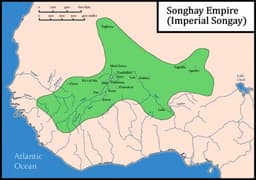
Askia Muhammad
Emperor · Medieval
71.2Total
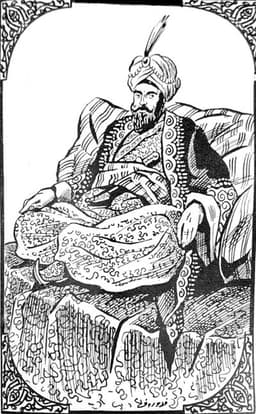
Harun al-Rashid
Emperor · Medieval
71.3Total
Basic Information
Born
1443
763
Died
1538
809
Era
Medieval
Medieval
Nationality
Songhai Empire
Abbasid Caliphate
Occupation
Emperor
Emperor
Civilization
Other
Middle Eastern
Score Comparison
Military (10%)
78.0
72.5
Political (20%)
70.3
70.0
Influence (20%)
82.0
71.0
Legacy (20%)
55.0
80.0
Leadership (15%)
78.0
72.0
Strategy (15%)
69.1
50.0
TOTAL
71.2
71.3
Askia Muhammad — Complete Timeline
1493 AD
Coup against Sonni BaruPolitical Action
Askia Muhammad overthrew Sonni Baru, the son of Sonni Ali, in a coup. Muhammad, a general under Sonni Ali, seized power after Baru refused to embrace Islam more fully, establishing the Askia dynasty.
CoupAskia DynastyIslam
Impact: regional
1496 AD
Pilgrimage to MeccaCultural◆ Major
Askia Muhammad made a pilgrimage to Mecca, traveling with a large retinue and distributing gold. He was appointed Caliph of the Sudan by the Abbasid caliph, enhancing his religious and political legitimacy.
PilgrimageMeccaCaliph
Impact: regionalconstructive
1498 AD
Administrative ReformsReform◆ Major
Askia Muhammad reorganized the Songhai Empire into provinces governed by appointed officials. He standardized weights, measures, and currency, and established a professional bureaucracy, improving tax collection and governance.
AdministrationBureaucracyTaxation
Impact: regionalconstructive
1500 AD
Promotion of Islamic ScholarshipCultural◆ Major
Askia Muhammad patronized Islamic scholars and built mosques and schools in Timbuktu, Gao, and Djenn
ScholarshipTimbuktuIslam
Impact: regionalconstructive
1512 AD
Conquest of the Hausa StatesWar◆ Major
Askia Muhammad led a military campaign against the Hausa city-states, including Kano and Katsina. He conquered them and imposed tribute, extending Songhai control over the Hausa region and securing trade routes.
ConquestHausa StatesTrade Routes
Impact: regional
Harun al-Rashid — Complete Timeline
786 AD
Accession to the CaliphatePolitical Action◆ Major
Harun al-Rashid became the fifth Abbasid caliph after the death of his brother Al-Hadi. His reign marked the beginning of a period of cultural and economic flourishing, often considered the zenith of Abbasid power.
SuccessionCaliphateGolden Age
Impact: regionalconstructive
Patronage of the Arts and SciencesCultural◆ Major
Harun al-Rashid's court in Baghdad became a center of learning and culture, attracting poets, scholars, and musicians. His patronage fostered the development of Arabic literature, including the tales later compiled as One Thousand and One Nights.
CulturePatronageLiterature
Impact: globalconstructive
790 AD
Military Campaigns Against ByzantiumWar
Harun al-Rashid led several campaigns into Byzantine Anatolia, capturing fortresses and extracting tribute. These raids, though not resulting in permanent conquest, demonstrated Abbasid military strength and secured the frontier.
Byzantine WarsMilitary CampaignFrontier
Impact: regional
797 AD
Diplomatic Exchange with CharlemagnePolitical Action◆ Major
Harun al-Rashid sent an embassy to the Frankish emperor Charlemagne, including gifts such as an elephant named Abul-Abbas. This exchange established diplomatic relations between the Abbasid Caliphate and the Carolingian Empire, facilitating trade and cultural contact.
DiplomacyCharlemagneInternational Relations
Impact: globalconstructive
803 AD
Suppression of the BarmakidsPolitical Action◆ Major
Harun al-Rashid ordered the execution of the powerful Barmakid family, who had served as viziers for decades. This purge removed a major political faction and consolidated Harun's personal authority, but also disrupted the administration.
PurgeBarmakidsPower Struggle
Impact: regionaldestructive
Expert Analysis
Origins
Askia Muhammad, born Muhammad ibn Abi Bakr al-Turi in 1442, was a Soninke general under Sonni Ali, the founder of the Songhai Empire. His early life was shaped by the expansionist policies of Sonni Ali, from whom he learned military and administrative skills. Harun al-Rashid, born in 763 in Rayy, Persia, was the son of the Abbasid caliph al-Mahdi and a Yemeni slave concubine. He was raised in the imperial court of Baghdad, surrounded by scholars and poets, and received a comprehensive education in Islamic law, literature, and military tactics.
Rise to Power
Askia Muhammad seized power in 1493 by overthrowing Sonni Baru, the son of Sonni Ali, in a coup. Baru had refused to embrace Islam, which alienated the Muslim merchant class and scholars. Muhammad, a devout Muslim, capitalized on this discontent, gathering support from the Islamic elite and military commanders. He defeated Baru at the Battle of Anfao and proclaimed himself Askia (a title meaning "forceful one"). Harun al-Rashid became caliph in 786 after the death of his brother al-Hadi, who was allegedly poisoned by his mother. Harun's early reign was dominated by the Barmakid family, who served as viziers and managed the empire's administration. The Barmakids had been instrumental in Harun's accession, but their power grew to threaten the caliph's authority.
Leadership & Governance
Askia Muhammad reorganized the Songhai Empire into provinces governed by appointed officials, creating a centralized bureaucracy. He standardized weights, measures, and currency, and established a system of taxation based on Islamic law. He promoted Islamic scholarship by building mosques and schools in Timbuktu, Gao, and Djenné, and invited scholars from North Africa. Harun al-Rashid initially delegated much of his authority to the Barmakids, who efficiently administered the vast Abbasid Empire. However, in 803, Harun purged the Barmakids, ordering the execution of the vizier Ja'far and the imprisonment of his family. This move consolidated his personal power but also disrupted the administrative machinery. Harun's patronage of the arts and sciences led to the flourishing of the House of Wisdom in Baghdad, where scholars translated Greek and Persian works.
Triumph & Tragedy
Askia Muhammad's greatest success was the expansion of the Songhai Empire to its largest extent, incorporating the Hausa states, the Mali Empire's remnants, and the salt mines of Taghaza. His pilgrimage to Mecca in 1496–1497 enhanced his prestige and solidified his position as a Muslim ruler. However, his later years were marred by a succession crisis; in 1528, his son Musa forced him into exile, and he died in 1538. Harun al-Rashid's reign saw the Abbasid Caliphate at its peak of cultural and economic prosperity. His diplomatic exchange with Charlemagne in 801 established trade and political ties between the Islamic world and Europe. However, his military campaigns against Byzantium were indecisive, and his suppression of the Barmakids weakened the state's administrative capacity, leading to future fragmentation.
Character & Destiny
Askia Muhammad was a devout Muslim and a pragmatic ruler. His military score of 78.0 reflects his conquests, but his political score of 70.3 indicates his ability to consolidate power through administrative reforms. His influence score of 82.0 is high due to his promotion of Islam in West Africa. Harun al-Rashid, with a military score of 72.5 and political score of 70.0, was less aggressive militarily but more culturally influential. His legacy score of 80.0 is bolstered by his association with the Golden Age of Islam and the Arabian Nights. However, his strategic score of 50.0 reflects his failure to address internal power struggles and the Barmakid purge.
Legacy
Askia Muhammad's legacy is the establishment of a centralized, Islamic state in West Africa that lasted until the Moroccan invasion in 1591. The Songhai Empire became a model of Islamic governance in the region, with Timbuktu emerging as a center of learning. Harun al-Rashid's legacy is the cultural and intellectual flourishing of Baghdad, which preserved and advanced knowledge in science, medicine, and philosophy. The House of Wisdom influenced European Renaissance through translations of Arabic works. However, the Abbasid Caliphate declined after his reign due to internal strife and external threats.
Conclusion
While both rulers scored nearly identically in total (71.2 vs 71.3), Harun al-Rashid's impact on global civilization through the preservation and advancement of knowledge during the Golden Age of Islam is more enduring. His patronage of the House of Wisdom and the cultural legacy of his court influenced subsequent Islamic and European societies. Askia Muhammad's achievements in building a centralized Islamic empire in West Africa were significant but more regionally contained. Therefore, Harun al-Rashid had greater overall impact.
Rankings
🥇
Harun al-RashidLeader
Mil: 72.5Pol: 70.0Inf: 71.0
71.3
🥈
Askia Muhammad
Mil: 78.0Pol: 70.3Inf: 82.0
71.2
+0.1 behind
How This Comparison Works
Algorithm
Each figure is scored on 6 dimensions (0—100 scale) based on structured historical data: Military (10%), Political (20%), Influence (20%), Legacy (20%), Leadership (15%), Strategy (15%). The weighted total produces the final ranking.
Data Sources
Scores are computed from structured sub-indicators in the database. Scale factors adjust for era (Ancient ×0.85, Modern ×1.0) and civilization size (Eastern ×1.05, Other ×0.80) to account for differences in population and military scale.
Maximum 3 Figures
Comparisons are limited to 2—3 figures to ensure readability and statistical meaningfulness.
Error Margins
±5 points per dimension — Sub-scores are derived from historical records with inherent uncertainty. Two figures within 5 points on a dimension should be considered roughly equivalent in that area.
Total Score Accuracy
±3 points overall — The weighted combination of 6 dimensions produces a total score with approximately ±3 points of uncertainty. Differences of less than 3 points are not statistically significant— the figures are effectively tied.
Known Limitations
- Historical records are incomplete and uneven across civilizations
- Figures from oral-tradition societies may be underrepresented
- Occupation labels can misclassify multi-role figures
- Scores measure capability and impact, not moral character
- Quantitative scoring is a comparison tool, not absolute truth
Capability Radar
Military (10%) — Battles & Warfare
Battles
75
60
Win Rate
80
65
Expansion
80
55
Political (20%) — Governance & Reform
Reform
90
70
Diplomacy
80
80
Economy
85
85
Influence (20%) — Cultural & Global Reach
Cultural
70
90
Global
60
85
Legacy (20%) — Historical Impact
Historical
75
85
Longevity
65
90
Leadership (15%) — Power & Stability
Tenure
85
75
Stability
80
70
Strategy (15%) — Tactics & Innovation
Strategy
75
60
Tactics
70
55
Reform
85
50
Similar Comparisons
Comments & Discussion
No comments yet. Be the first to share your thoughts!