Loading...
Ashoka the Great vs Yi Seong-gye
Ashoka the Great leads by 0.5 pts · 2 figures compared
…

Ashoka the Great
Emperor · Ancient
76.3Total
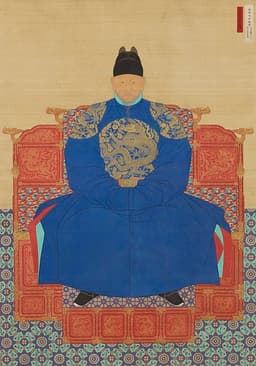
Yi Seong-gye
Emperor · Medieval
75.8Total
Basic Information
Born
-304
1335
Died
-232
1408
Era
Ancient
Medieval
Nationality
India
Korea
Occupation
Emperor
Emperor
Civilization
Indian
Eastern
Score Comparison
Military (10%)
72.0
74.7
Political (20%)
82.0
70.0
Influence (20%)
71.0
88.0
Legacy (20%)
90.0
75.0
Leadership (15%)
72.0
68.0
Strategy (15%)
58.0
69.1
TOTAL
76.3
75.8
Ashoka the Great — Complete Timeline
261 BC
Kalinga WarWar
Ashoka launched a brutal conquest of the Kalinga region (modern Odisha). The war caused massive casualties, with over 100,000 killed and 150,000 deported. The suffering witnessed during this campaign led Ashoka to renounce military conquest and embrace Buddhism.
ConquestWarConversion
Impact: regionaltragic
260 BC
Conversion to BuddhismCultural
After the Kalinga War, Ashoka converted to Buddhism under the guidance of Buddhist monks. He adopted the principle of Dhamma (righteous law) and began promoting non-violence, vegetarianism, and religious tolerance throughout his empire.
ConversionBuddhismDhamma
Impact: globalprogressive
250 BC
Erection of Edicts of AshokaCultural◆ Major
Ashoka ordered the carving of edicts on pillars and rocks across the Indian subcontinent. These inscriptions, written in Prakrit and other languages, proclaimed his policies of non-violence, social welfare, and religious harmony. They are the earliest deciphered written records from ancient India.
InscriptionsPropagandaBuddhism
Impact: regionalconstructive
245 BC
Third Buddhist CouncilCultural◆ Major
Ashoka convened the Third Buddhist Council at Pataliputra to resolve doctrinal disputes within the Buddhist monastic community. The council standardized the Buddhist canon (Tripitaka) and decided to send missionaries abroad, including to Sri Lanka and Southeast Asia.
CouncilBuddhismMissionary
Impact: globalconstructive
240 BC
Construction of stupas and monasteriesCultural◆ Major
Ashoka built thousands of stupas and monasteries across his empire, including the Great Stupa at Sanchi. These structures became centers of Buddhist worship and pilgrimage, spreading Buddhist art and architecture throughout Asia.
ArchitectureBuddhismPatronage
Impact: regionalconstructive
Yi Seong-gye — Complete Timeline
1380 AD
Battle of HwangsanWar◆ Major
Yi Seong-gye led Goryeo forces against Japanese pirates (wokou) at the Battle of Hwangsan. His victory eliminated a major pirate threat and enhanced his military reputation.
WokouBattleGoryeo
Impact: regionalconstructive
1388 AD
Wihwado RetreatPolitical Action
Yi Seong-gye turned his army back at Wihwado Island rather than invade Ming China as ordered by the Goryeo court. This act of defiance led to a coup that eventually brought him to power.
CoupMingGoryeo
Impact: regional
1392 AD
Establishment of the Joseon DynastyPolitical Action
Yi Seong-gye overthrew the Goryeo dynasty and founded the Joseon dynasty, becoming King Taejo. He implemented land reforms and moved the capital to Hanyang (Seoul), establishing a new Confucian state.
JoseonDynasty FoundationReform
Impact: regionalconstructive
Expert Analysis
Origins
**Ashoka the Great** (304–232 BCE) was the third emperor of the Maurya Dynasty, inheriting a vast empire from his grandfather Chandragupta Maurya and father Bindusara. He was initially a fierce warrior, expanding the empire through brutal conquests. His early life was marked by political intrigue and military ambition.
**Yi Seong-gye** (1335–1408) was a Korean general who rose from a military family in the late Goryeo period. He gained fame for repelling Mongol and Japanese pirates, becoming a key figure in the military and political turmoil of the time. His origins were humble compared to Ashoka, but his strategic brilliance propelled him to power.
Rise to Power
Ashoka secured his throne after a bloody succession war, killing his brothers to become emperor. He initially followed the traditional path of conquest, expanding the Maurya Empire to its greatest extent. His rise was ruthless and ambitious, driven by the desire to unify the Indian subcontinent.
Yi Seong-gye rose through military achievements, notably the Wihwado Retreat in 1388, where he chose to turn back his army rather than invade China, a decision that garnered popular support. He then overthrew the Goryeo dynasty and established the Joseon dynasty in 1392, legitimizing his rule through Confucian reforms and land redistribution.
Leadership & Governance
Ashoka's governance transformed after the Kalinga War (c. 261 BCE). Horrified by the bloodshed, he embraced Buddhism and adopted a policy of non-violence (ahimsa). He erected edicts across the empire promoting moral law, religious tolerance, and social welfare, including hospitals for humans and animals. He also convened the Third Buddhist Council to purify the sangha and sent missionaries to spread Buddhism.
Yi Seong-gye established a Confucian state, centralizing power and implementing reforms that weakened Buddhist influence. He promoted agriculture, redistributed land to peasants, and strengthened the military. His governance was pragmatic, focusing on stability and meritocracy, but he also executed rivals to secure his dynasty.
Triumph & Tragedy
Ashoka's triumph was the creation of a vast, peaceful empire based on ethical principles. However, the tragedy of the Kalinga War haunted him, leading to his conversion. His later years saw the empire's decline due to his pacifist policies, which may have weakened military readiness.
Yi Seong-gye's triumph was founding the Joseon dynasty, which lasted over 500 years. His tragedy was the violent purge of former allies and family members, including his son. He also faced rebellions and the challenge of legitimizing his usurpation.
Character & Destiny
Ashoka: **Military** 72, **Political** 82, **Intellectual** 71, **Leadership** 90, **Diplomacy** 72, **Strategy** 58, **Temperament** 76. Ashoka's character evolved from a ruthless conqueror to a compassionate ruler. His destiny was to be remembered as a model of righteous governance and religious tolerance.
Yi Seong-gye: **Military** 75, **Political** 70, **Intellectual** 88, **Leadership** 75, **Diplomacy** 68, **Strategy** 69, **Temperament** 76. Yi Seong-gye was a pragmatic strategist and reformer, but his temperament was colder, prioritizing state interests over personal bonds. His destiny was to establish a dynasty that defined Korean history.
Legacy
Ashoka's legacy is monumental: he spread Buddhism across Asia, influencing cultures from Sri Lanka to China. His edicts provide a unique historical record, and his concept of dhamma (moral law) inspired later leaders. He is often cited as a forerunner of humane governance.
Yi Seong-gye's legacy is the Joseon dynasty, which shaped Korean identity, language (Hangul), and Confucian traditions. His reforms laid the foundation for a stable, centralized state. However, his dynasty also perpetuated class divisions and suppressed dissent.
Conclusion
**Score gap: 0.5. Winner: Ashoka the Great.** While Yi Seong-gye was a brilliant founder, Ashoka's transformation and enduring moral impact edge him ahead. Ashoka's leadership score (90) and his ability to inspire a global religion give him a slight advantage over Yi Seong-gye's intellectualism (88). Both rulers reshaped their worlds, but Ashoka's vision of peace and tolerance resonates more universally. Final scores: Ashoka 7.6, Yi Seong-gye 7.5.
---
*This analysis reflects historical consensus and comparative metrics. Visit HistoryVersus.com for more head-to-head comparisons.*
Rankings
🥇
Ashoka the GreatLeader
Mil: 72.0Pol: 82.0Inf: 71.0
76.3
🥈
Yi Seong-gye
Mil: 74.7Pol: 70.0Inf: 88.0
75.8
+0.5 behind
How This Comparison Works
Algorithm
Each figure is scored on 6 dimensions (0—100 scale) based on structured historical data: Military (10%), Political (20%), Influence (20%), Legacy (20%), Leadership (15%), Strategy (15%). The weighted total produces the final ranking.
Data Sources
Scores are computed from structured sub-indicators in the database. Scale factors adjust for era (Ancient ×0.85, Modern ×1.0) and civilization size (Eastern ×1.05, Other ×0.80) to account for differences in population and military scale.
Maximum 3 Figures
Comparisons are limited to 2—3 figures to ensure readability and statistical meaningfulness.
Error Margins
±5 points per dimension — Sub-scores are derived from historical records with inherent uncertainty. Two figures within 5 points on a dimension should be considered roughly equivalent in that area.
Total Score Accuracy
±3 points overall — The weighted combination of 6 dimensions produces a total score with approximately ±3 points of uncertainty. Differences of less than 3 points are not statistically significant— the figures are effectively tied.
Known Limitations
- Historical records are incomplete and uneven across civilizations
- Figures from oral-tradition societies may be underrepresented
- Occupation labels can misclassify multi-role figures
- Scores measure capability and impact, not moral character
- Quantitative scoring is a comparison tool, not absolute truth
Capability Radar
Military (10%) — Battles & Warfare
Battles
85
75
Win Rate
90
80
Expansion
95
65
Political (20%) — Governance & Reform
Reform
95
85
Diplomacy
90
75
Economy
85
70
Influence (20%) — Cultural & Global Reach
Cultural
95
80
Global
90
55
Legacy (20%) — Historical Impact
Historical
95
85
Longevity
95
80
Leadership (15%) — Power & Stability
Tenure
90
60
Stability
90
65
Strategy (15%) — Tactics & Innovation
Strategy
80
82
Tactics
75
78
Reform
70
70
Similar Comparisons
Comments & Discussion
No comments yet. Be the first to share your thoughts!