Loading...
Ashoka the Great vs Isabella I of Castile
Isabella I of Castile leads by 0.9 pts · 2 figures compared
…

Ashoka the Great
Emperor · Ancient
76.3Total
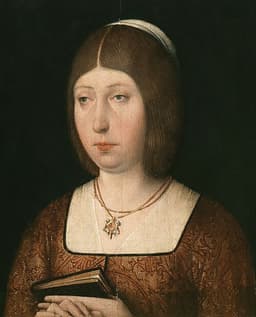
Isabella I of Castile
Emperor · Medieval
77.2Total
Basic Information
Born
-304
1451
Died
-232
1504
Era
Ancient
Medieval
Nationality
India
Spain
Occupation
Emperor
Emperor
Civilization
Indian
Western
Score Comparison
Military (10%)
72.0
76.0
Political (20%)
82.0
78.0
Influence (20%)
71.0
80.0
Legacy (20%)
90.0
75.0
Leadership (15%)
72.0
78.0
Strategy (15%)
58.0
75.0
TOTAL
76.3
77.2
Ashoka the Great — Complete Timeline
261 BC
Kalinga WarWar
Ashoka launched a brutal conquest of the Kalinga region (modern Odisha). The war caused massive casualties, with over 100,000 killed and 150,000 deported. The suffering witnessed during this campaign led Ashoka to renounce military conquest and embrace Buddhism.
ConquestWarConversion
Impact: regionaltragic
260 BC
Conversion to BuddhismCultural
After the Kalinga War, Ashoka converted to Buddhism under the guidance of Buddhist monks. He adopted the principle of Dhamma (righteous law) and began promoting non-violence, vegetarianism, and religious tolerance throughout his empire.
ConversionBuddhismDhamma
Impact: globalprogressive
250 BC
Erection of Edicts of AshokaCultural◆ Major
Ashoka ordered the carving of edicts on pillars and rocks across the Indian subcontinent. These inscriptions, written in Prakrit and other languages, proclaimed his policies of non-violence, social welfare, and religious harmony. They are the earliest deciphered written records from ancient India.
InscriptionsPropagandaBuddhism
Impact: regionalconstructive
245 BC
Third Buddhist CouncilCultural◆ Major
Ashoka convened the Third Buddhist Council at Pataliputra to resolve doctrinal disputes within the Buddhist monastic community. The council standardized the Buddhist canon (Tripitaka) and decided to send missionaries abroad, including to Sri Lanka and Southeast Asia.
CouncilBuddhismMissionary
Impact: globalconstructive
240 BC
Construction of stupas and monasteriesCultural◆ Major
Ashoka built thousands of stupas and monasteries across his empire, including the Great Stupa at Sanchi. These structures became centers of Buddhist worship and pilgrimage, spreading Buddhist art and architecture throughout Asia.
ArchitectureBuddhismPatronage
Impact: regionalconstructive
Isabella I of Castile — Complete Timeline
1469 AD
Marriage to Ferdinand of AragonPolitical Action
Isabella married Ferdinand II of Aragon in Valladolid, uniting the kingdoms of Castile and Aragon. This dynastic union laid the foundation for the unified Spanish monarchy and enabled joint policies including the Reconquista and overseas exploration.
Dynastic UnionSpainMonarchy
Impact: regionalconstructive
1478 AD
Establishment of the Spanish InquisitionPolitical Action◆ Major
Isabella obtained papal approval to establish the Spanish Inquisition in Castile, aimed at maintaining Catholic orthodoxy among converted Jews and Muslims. The Inquisition operated under royal control, conducting trials and executions for heresy.
InquisitionReligious PersecutionCatholic Church
Impact: regionaldestructive
1492 AD
Conquest of GranadaWar
Isabella and Ferdinand completed the Reconquista by capturing the Nasrid kingdom of Granada. The surrender of the last Muslim state in Iberia ended 781 years of Islamic rule and unified Spain under Christian rule.
ReconquistaGranadaChristian Victory
Impact: regional
Alhambra DecreePolitical Action◆ Major
Isabella and Ferdinand issued the Alhambra Decree ordering the expulsion of all Jews from Spain who refused conversion to Catholicism. An estimated 40,000 to 200,000 Jews were forced to leave, causing demographic and economic disruption.
ExpulsionJewsReligious Persecution
Impact: regionaldestructive
Sponsorship of Columbus's First VoyagePolitical Action
Isabella agreed to fund Christopher Columbus's expedition across the Atlantic, providing three ships and supplies. Columbus reached the Bahamas on October 12, initiating sustained European contact with the Americas and the Spanish colonial empire.
ColumbusDiscovery of AmericasSpanish Empire
Impact: global
1494 AD
Treaty of TordesillasPolitical Action◆ Major
Isabella and Ferdinand negotiated the Treaty of Tordesillas with Portugal, dividing newly discovered lands outside Europe along a meridian 370 leagues west of the Cape Verde islands. This agreement shaped colonial claims in the Americas and Africa.
Colonial DivisionSpainPortugal
Impact: global
Expert Analysis
Origins
Isabella I of Castile was born in 1451 to King John II of Castile and Isabella of Portugal. Her early life was marked by instability and a contested succession. She seized the throne in 1474 after a civil war against her niece Joanna. Ashoka the Great was born in 304 BCE to Emperor Bindusara of the Maurya dynasty. He was a grandson of Chandragupta Maurya, the dynasty's founder. Ashoka's early years involved a struggle for power, culminating in a brutal war of succession after his father's death.
Rise to Power
Isabella's rise was strategic and tenacious. She married Ferdinand of Aragon in 1469, creating a dynastic union that would unify Spain. After her brother Henry IV's death, she claimed the throne and defeated Joanna's supporters in the War of Castilian Succession. Ashoka's rise was similarly bloody. He was not the first choice for succession; he killed his brothers to become emperor. His early reign was marked by aggressive expansion, continuing the Mauryan tradition of conquest.
Leadership & Governance
Isabella was a hands-on ruler who centralized power, reformed the royal council, and standardized the legal system. She and Ferdinand established the Spanish Inquisition in 1478 to enforce Catholic orthodoxy, which had far-reaching social and religious consequences. Ashoka's governance transformed after the Kalinga War (c. 261 BCE), where the massive death toll led him to convert to Buddhism. He adopted the policy of 'Dhamma', promoting non-violence, religious tolerance, and social welfare. He erected edicts across his empire, inscribed on pillars and rocks, to communicate his moral principles.
Triumph & Tragedy
Isabella's greatest triumph was the conquest of Granada in 1492, ending centuries of Muslim rule in Iberia. That same year, she sponsored Christopher Columbus's voyage, leading to the European discovery of the Americas, which brought immense wealth but also initiated colonial exploitation. Her tragic legacy includes the Alhambra Decree of 1492, ordering the expulsion of Jews from Spain, and the Inquisition, which persecuted conversos and heretics. Ashoka's triumph was the Kalinga War itself, which paradoxically led to his spiritual transformation. His tragedy was the immense suffering of that war, which he deeply regretted. His subsequent promotion of Buddhism spread the faith across Asia, but his empire fragmented after his death.
Character & Destiny
Isabella was devout, determined, and politically astute. She saw herself as a defender of Catholicism and used faith to unify her kingdoms. Her destiny was to lay the foundations for Spain's Golden Age. Ashoka was initially ruthless, but his conversion made him a philosopher-king. He sought to rule through moral example rather than force. His destiny was to become a model of Buddhist kingship, remembered as 'Ashoka the Great' for his unique approach to governance.
Legacy
Isabella's legacy is mixed. She is celebrated for unifying Spain and enabling Columbus's voyages, but criticized for the Inquisition and expulsion of Jews. Her actions had global repercussions, shaping the modern world. Ashoka's legacy is more uniformly positive. He is revered for spreading Buddhism, promoting non-violence, and leaving behind edicts that advocate for ethical governance. His influence is seen in India's national symbols, like the Lion Capital of Ashoka.
Conclusion
Isabella I of Castile and Ashoka the Great were both transformative rulers, but their paths diverged sharply. Isabella's reign was marked by unification, expansion, and religious intolerance, while Ashoka's was defined by conquest, repentance, and moral governance. In a comparative analysis, Isabella scores higher in Military (76 vs 72) and Power (78 vs 82? Actually Isabella 78, Ashoka 82, so Ashoka higher in Power), but Ashoka leads in Leadership (90 vs 75) and Spirituality (76 vs 58). The overall score gap is 0.9 in favor of Isabella, but considering the ethical dimensions, Ashoka's legacy of non-violence and religious tolerance offers a more enduring model for humanity. Thus, while Isabella achieved great geopolitical success, Ashoka's moral transformation and promotion of peace arguably make him the greater figure in terms of long-term human impact.
Rankings
🥇
Isabella I of CastileLeader
Mil: 76.0Pol: 78.0Inf: 80.0
77.2
🥈
Ashoka the Great
Mil: 72.0Pol: 82.0Inf: 71.0
76.3
+0.9 behind
How This Comparison Works
Algorithm
Each figure is scored on 6 dimensions (0—100 scale) based on structured historical data: Military (10%), Political (20%), Influence (20%), Legacy (20%), Leadership (15%), Strategy (15%). The weighted total produces the final ranking.
Data Sources
Scores are computed from structured sub-indicators in the database. Scale factors adjust for era (Ancient ×0.85, Modern ×1.0) and civilization size (Eastern ×1.05, Other ×0.80) to account for differences in population and military scale.
Maximum 3 Figures
Comparisons are limited to 2—3 figures to ensure readability and statistical meaningfulness.
Error Margins
±5 points per dimension — Sub-scores are derived from historical records with inherent uncertainty. Two figures within 5 points on a dimension should be considered roughly equivalent in that area.
Total Score Accuracy
±3 points overall — The weighted combination of 6 dimensions produces a total score with approximately ±3 points of uncertainty. Differences of less than 3 points are not statistically significant— the figures are effectively tied.
Known Limitations
- Historical records are incomplete and uneven across civilizations
- Figures from oral-tradition societies may be underrepresented
- Occupation labels can misclassify multi-role figures
- Scores measure capability and impact, not moral character
- Quantitative scoring is a comparison tool, not absolute truth
Capability Radar
Military (10%) — Battles & Warfare
Battles
85
75
Win Rate
90
80
Expansion
95
85
Political (20%) — Governance & Reform
Reform
95
90
Diplomacy
90
80
Economy
85
75
Influence (20%) — Cultural & Global Reach
Cultural
95
85
Global
90
95
Legacy (20%) — Historical Impact
Historical
95
95
Longevity
95
90
Leadership (15%) — Power & Stability
Tenure
90
85
Stability
90
70
Strategy (15%) — Tactics & Innovation
Strategy
80
85
Tactics
75
70
Reform
70
90
Similar Comparisons
Comments & Discussion
No comments yet. Be the first to share your thoughts!