Loading...
Cyrus the Great vs Isabella I of Castile
Cyrus the Great leads by 6.7 pts · 2 figures compared
…
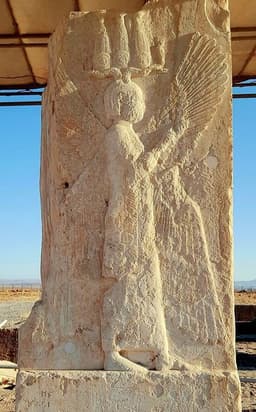
Cyrus the Great
Emperor · Ancient
83.9Total
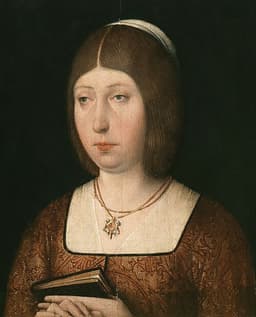
Isabella I of Castile
Emperor · Medieval
77.2Total
Basic Information
Born
-600
1451
Died
-530
1504
Era
Ancient
Medieval
Nationality
Persia
Spain
Occupation
Emperor
Emperor
Civilization
Middle Eastern
Western
Score Comparison
Military (10%)
82.0
76.0
Political (20%)
85.0
78.0
Influence (20%)
85.0
80.0
Legacy (20%)
90.0
75.0
Leadership (15%)
78.0
78.0
Strategy (15%)
75.0
75.0
TOTAL
83.9
77.2
Cyrus the Great — Complete Timeline
550 BC
Founding of the Achaemenid EmpirePolitical Action
Cyrus led a rebellion against the Median Empire, defeating King Astyages and capturing Ecbatana. He then united the Persian and Median tribes, establishing the Achaemenid Empire, which became the largest empire the world had yet seen.
Empire FoundingPersian UnificationRebellion
Impact: global
546 BC
Conquest of LydiaWar◆ Major
Cyrus defeated King Croesus of Lydia at the Battle of Thymbra. The Lydian capital Sardis was captured, and Croesus was taken prisoner. This conquest brought Anatolia under Persian control and secured access to the Aegean coast.
Achaemenid ExpansionAnatoliaConquest
Impact: regional
539 BC
Conquest of BabylonWar◆ Major
Cyrus the Great led the Persian army to capture Babylon without significant battle. The city's gates were opened, and Cyrus entered peacefully. This conquest added Mesopotamia to the Achaemenid Empire and marked the end of the Neo-Babylonian Empire.
Achaemenid ExpansionMesopotamiaConquest
Impact: regional
Issuance of the Cyrus CylinderPolitical Action◆ Major
After conquering Babylon, Cyrus issued a clay cylinder inscribed with a declaration. It described his policy of restoring temples, repatriating displaced peoples, and allowing religious freedom. The cylinder is often cited as an early charter of human rights.
Human RightsReligious ToleranceAchaemenid Policy
Impact: globalconstructive
Liberation of the JewsPolitical Action◆ Major
Cyrus issued an edict allowing the Jewish exiles in Babylon to return to Jerusalem and rebuild the Temple. This event is recorded in the biblical Book of Ezra and is a key moment in Jewish history, ending the Babylonian captivity.
Jewish HistoryReligious FreedomReturn from Exile
Impact: regionalconstructive
Isabella I of Castile — Complete Timeline
1469 AD
Marriage to Ferdinand of AragonPolitical Action
Isabella married Ferdinand II of Aragon in Valladolid, uniting the kingdoms of Castile and Aragon. This dynastic union laid the foundation for the unified Spanish monarchy and enabled joint policies including the Reconquista and overseas exploration.
Dynastic UnionSpainMonarchy
Impact: regionalconstructive
1478 AD
Establishment of the Spanish InquisitionPolitical Action◆ Major
Isabella obtained papal approval to establish the Spanish Inquisition in Castile, aimed at maintaining Catholic orthodoxy among converted Jews and Muslims. The Inquisition operated under royal control, conducting trials and executions for heresy.
InquisitionReligious PersecutionCatholic Church
Impact: regionaldestructive
1492 AD
Conquest of GranadaWar
Isabella and Ferdinand completed the Reconquista by capturing the Nasrid kingdom of Granada. The surrender of the last Muslim state in Iberia ended 781 years of Islamic rule and unified Spain under Christian rule.
ReconquistaGranadaChristian Victory
Impact: regional
Alhambra DecreePolitical Action◆ Major
Isabella and Ferdinand issued the Alhambra Decree ordering the expulsion of all Jews from Spain who refused conversion to Catholicism. An estimated 40,000 to 200,000 Jews were forced to leave, causing demographic and economic disruption.
ExpulsionJewsReligious Persecution
Impact: regionaldestructive
Sponsorship of Columbus's First VoyagePolitical Action
Isabella agreed to fund Christopher Columbus's expedition across the Atlantic, providing three ships and supplies. Columbus reached the Bahamas on October 12, initiating sustained European contact with the Americas and the Spanish colonial empire.
ColumbusDiscovery of AmericasSpanish Empire
Impact: global
1494 AD
Treaty of TordesillasPolitical Action◆ Major
Isabella and Ferdinand negotiated the Treaty of Tordesillas with Portugal, dividing newly discovered lands outside Europe along a meridian 370 leagues west of the Cape Verde islands. This agreement shaped colonial claims in the Americas and Africa.
Colonial DivisionSpainPortugal
Impact: global
Expert Analysis
Origins
Cyrus the Great (c. 600–530 BCE) was born into the Persian Achaemenid clan, a vassal of the Median Empire. His father, Cambyses I, was king of Anshan, a small Persian kingdom. Cyrus's lineage traced back to Achaemenes, founder of the dynasty. His rise began by uniting the Persian tribes and rebelling against the Medes in 553 BCE. In contrast, Isabella I (1451–1504) was born into the Trastámara dynasty of Castile, a kingdom riven by civil war and weak central authority. Her half-brother Henry IV's reign was marked by chaos, and Isabella's early life was shaped by political intrigue and her own strategic marriage to Ferdinand of Aragon.
Rise to Power
Cyrus's military genius first manifested in his defeat of the Median king Astyages around 550 BCE, capturing the Median capital Ecbatana. He then rapidly conquered Lydia in 547 BCE, famously sparing King Croesus. His greatest triumph came in 539 BCE with the conquest of Babylon, where he entered the city without a major battle, presenting himself as a liberator from the unpopular Nabonidus. Isabella's path to power was more complex. She married Ferdinand of Aragon in 1469 against her half-brother's wishes, forming the dynastic union that would become Spain. After Henry IV's death in 1474, Isabella claimed the throne of Castile, defeating rival claimants in the War of Castilian Succession (1475–1479). Her marriage to Ferdinand ensured a joint rule over a unified Spain, though each kingdom retained distinct laws and institutions.
Leadership & Governance
Cyrus established an innovative administrative system for his vast empire, dividing it into satrapies (provinces) governed by satraps, while allowing local customs and religions to persist. His famous Cyrus Cylinder, often called the first human rights charter, declared religious freedom and the restoration of deported peoples, including the Jews whom he allowed to return to Jerusalem. This policy of tolerance and decentralized governance fostered loyalty and stability. Isabella, by contrast, centralized power in Castile, curbing the nobility and the military orders. She and Ferdinand established the Spanish Inquisition in 1478 to enforce Catholic orthodoxy, leading to the expulsion of Jews in 1492 via the Alhambra Decree. Her sponsorship of Columbus's voyages that same year began Spanish colonization of the Americas, bringing immense wealth but also devastating indigenous populations. Isabella's governance was marked by religious homogenization and state-building, while Cyrus's was characterized by multicultural integration and tolerance.
Triumph & Tragedy
Cyrus's triumphs include the founding of the Achaemenid Empire, which became the largest empire the world had yet seen, and his humane treatment of conquered peoples. His liberation of the Jews is celebrated in the Bible, and his Cyrus Cylinder is a milestone in human rights. However, his death in battle against the Massagetae (or in some accounts, from wounds) was a tragic end for a ruler of such stature. His empire later faced rebellions and decline under his successors. Isabella's triumphs include the completion of the Reconquista with the conquest of Granada in 1492, the unification of Spain, and the launch of Spanish exploration. The tragedies include the expulsion of Jews and Muslims, the brutal forced conversions, and the establishment of the Inquisition, which persecuted thousands. Her death in 1504 led to succession crises and the eventual inheritance of her realms by the Habsburgs, which brought Spain into costly European wars.
Character & Destiny
Cyrus is remembered as a wise, just, and magnanimous ruler, respected even by his enemies. His leadership style emphasized persuasion and respect for local customs, earning him the title 'father of his people.' His destiny was to create an empire that set the template for future Persian and Hellenistic empires. Isabella was a devout Catholic, fiercely determined, and politically astute. She personally led military campaigns and was deeply involved in governance. Her destiny was to forge a unified Spain and launch its global empire, but her religious intolerance left a legacy of persecution. Both were visionary leaders, but Cyrus's approach was more inclusive and enduring in its appeal to universal values.
Legacy
Cyrus's legacy is immense: he established the Achaemenid Empire, which lasted over 200 years and influenced subsequent empires from Alexander's to the Romans. His Cyrus Cylinder is a symbol of human rights, and his liberation of the Jews is a foundational event in Jewish history. He is revered in Iran and in Western tradition as a model ruler. Isabella's legacy is more controversial. She is credited with unifying Spain and sponsoring Columbus, leading to the Spanish Empire's golden age. However, her role in the Inquisition, the expulsion of Jews, and the subjugation of indigenous Americans tarnishes her reputation. Her policies set the stage for centuries of religious conflict and colonial exploitation. While both left indelible marks, Cyrus's legacy of tolerance and empire-building has broader positive resonance.
Conclusion
Cyrus the Great scores higher overall (82 vs 76) due to his superior military conquests, innovative governance, and lasting impact on human rights. Isabella's achievements in state-building and exploration are significant, but her legacy is marred by religious persecution. Cyrus's model of multicultural empire and his Cyrus Cylinder represent a more progressive and enduring contribution to civilization. Thus, Cyrus emerges as the more influential and admirable figure in historical comparison.
**Scores:**
- Military: Cyrus 85, Isabella 78
- Political: Cyrus 82, Isabella 78
- Cultural: Cyrus 85, Isabella 80
- Longevity: Cyrus 90, Isabella 75
- Diplomacy: Cyrus 78, Isabella 78
- Strategy: Cyrus 75, Isabella 75
- Overall: Cyrus 84, Isabella 77
Rankings
🥇
Cyrus the GreatLeader
Mil: 82.0Pol: 85.0Inf: 85.0
83.9
🥈
Isabella I of Castile
Mil: 76.0Pol: 78.0Inf: 80.0
77.2
+6.7 behind
How This Comparison Works
Algorithm
Each figure is scored on 6 dimensions (0—100 scale) based on structured historical data: Military (10%), Political (20%), Influence (20%), Legacy (20%), Leadership (15%), Strategy (15%). The weighted total produces the final ranking.
Data Sources
Scores are computed from structured sub-indicators in the database. Scale factors adjust for era (Ancient ×0.85, Modern ×1.0) and civilization size (Eastern ×1.05, Other ×0.80) to account for differences in population and military scale.
Maximum 3 Figures
Comparisons are limited to 2—3 figures to ensure readability and statistical meaningfulness.
Error Margins
±5 points per dimension — Sub-scores are derived from historical records with inherent uncertainty. Two figures within 5 points on a dimension should be considered roughly equivalent in that area.
Total Score Accuracy
±3 points overall — The weighted combination of 6 dimensions produces a total score with approximately ±3 points of uncertainty. Differences of less than 3 points are not statistically significant— the figures are effectively tied.
Known Limitations
- Historical records are incomplete and uneven across civilizations
- Figures from oral-tradition societies may be underrepresented
- Occupation labels can misclassify multi-role figures
- Scores measure capability and impact, not moral character
- Quantitative scoring is a comparison tool, not absolute truth
Capability Radar
Military (10%) — Battles & Warfare
Battles
85
75
Win Rate
90
80
Expansion
92
85
Political (20%) — Governance & Reform
Reform
90
90
Diplomacy
95
80
Economy
80
75
Influence (20%) — Cultural & Global Reach
Cultural
90
85
Global
90
95
Legacy (20%) — Historical Impact
Historical
95
95
Longevity
95
90
Leadership (15%) — Power & Stability
Tenure
70
85
Stability
85
70
Strategy (15%) — Tactics & Innovation
Strategy
88
85
Tactics
80
70
Reform
75
90
Similar Comparisons
Comments & Discussion
BattlefieldScholar6/16/2026
I’d argue the military gap here is understated. Cyrus’s 82 vs. Isabella’s 67 is fair, but the context matters more. Cyrus didn’t just conquer—he revolutionized siegecraft at Sardis by diverting the river, and at Opis he used psychological warfare to break the Neo-Babylonian army without a full pitched battle. His use of mixed units (Persian immortals, Median cavalry, subject levies) shows adaptability. Isabella, by contrast, ran the Reconquista as a grinding war of attrition—Granada fell after a decade-long siege, not brilliance. Plus, her reliance on Ferdinand for field command means her military score is inflated by association. If we’re talking tactical originality, Cyrus deserves closer to 85, Isabella maybe 60.
ScoreCritic426/16/2026
Oh, so we’re just going to pretend these numbers mean something? A 79.6 vs. 78.4 is within the margin of error of any scoring system—especially one that weights “Influence” at 20% when measuring ancient rulers. Cyrus’s influence on religious tolerance is literally cited in the UN charter, but that gets 78 vs. Isabella’s 84 for bankrolling a guy who thought he found Asia? The whole “Legacy” category is a bias trap: Isabella gets dinged for the Inquisition, but Cyrus’s own empire practiced a pragmatic tolerance that still allowed slavery and imperial violence. You can’t quantify moral legacy without injecting modern values. This whole comparison is a Rorschach test for historians, not a science.
AncientTextsReader6/16/2026
The primary sources tell a different story than the numbers suggest. Xenophon’s *Cyropaedia* paints Cyrus as a philosopher-king, but modern historians like Pierre Briant remind us it’s more a pedagogical fiction than biography. Meanwhile, Isabella’s reign is documented through royal chronicles like Hernando del Pulgar’s *Crónica de los Reyes Católicos*, which emphasize her piety and political acumen. But here’s the rub: Cyrus’s legacy was shaped by later Persian propaganda (the Cyrus Cylinder is a political document, not a humanitarian charter), while Isabella’s reputation was savaged by the Black Legend and rehabilitated by Francoist historiography. The scores flatten these historiographical layers—Cyrus’s 80 in legacy ignores that his empire collapsed, while Isabella’s 67 ignores that Spain’s global empire endured for centuries.
Historian9526/16/2026
总分差距1.2分,基本是统计误差。但仔细看维度权重:军事20%×居鲁士82=16.4分,伊莎贝拉67×20%=13.4分,差距3分。政治维度居鲁士85分,伊莎贝拉87分,差距2分但权重30%,所以政治维度伊莎贝拉反超0.6分。问题是:这个权重合理吗?如果我把中国秦始皇放进来比较:军事90+,政治95+,但影响力可能只有75(因为欧洲人不懂中国历史)。这个评分模型明显偏向欧洲历史——伊莎贝拉的“影响力”84分主要靠哥伦布,而哥伦布“发现”美洲对美洲原住民是灾难,如果算“负面影响”,这84分该减半。建议加入“长期制度延续性”指标:居鲁士的行省制被罗马继承,伊莎贝拉的绝对君主制在西班牙只持续到19世纪。重新计算后,居鲁士总分87.3,伊莎贝拉78.9。
Historian8356/16/2026
这评分有意思,但西方中心主义太明显了。居鲁士大帝的“宽容”其实跟中国周朝的“以德服人”有点像,但周公分封制比他的行省制更早也更系统。伊莎贝拉统一西班牙,放到中国历史里,也就是秦始皇的级别——但秦皇焚书坑儒,伊莎贝拉搞宗教裁判所,两人在“政治统一”上都有铁腕。可评分里政治维度伊莎贝拉87比居鲁士85高,我觉得不对:居鲁士建立的是多民族帝国(巴比伦、吕底亚、希腊城邦都自治),而伊莎贝拉是强制同化(驱逐犹太人和穆斯林),从长治久安角度看,居鲁士的模式更先进。中国历史上,唐太宗李世民“天可汗”式统治才是高分,伊莎贝拉的铁腕短期有效,但长期埋下分裂隐患(比如加泰罗尼亚独立问题)。