Loading...
This comparison has not been analyzed yet.
One-time AI generation (~1 minute). Scores and timeline are already available below.
Ashikaga Yoshinori vs King Chungseon of Goryeo
Ashikaga Yoshinori leads by 1.9 pts · 2 figures compared
…
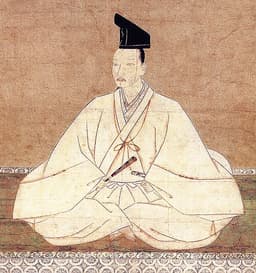
Ashikaga Yoshinori
Emperor · Medieval
45.3Total

King Chungseon of Goryeo
Emperor · Medieval
43.4Total
Basic Information
Born
1394
1275
Died
1441
1325
Era
Medieval
Medieval
Nationality
Japan
Korea
Occupation
Emperor
Emperor
Civilization
Eastern
Eastern
Score Comparison
Military (10%)
50.0
54.5
Political (20%)
35.1
26.4
Influence (20%)
51.0
49.4
Legacy (20%)
43.3
38.3
Leadership (15%)
48.4
33.6
Strategy (15%)
41.7
70.3
TOTAL
45.3
43.4
Ashikaga Yoshinori — Complete Timeline
1429 AD
Appointment as Sixth ShogunPolitical Action◆ Major
Ashikaga Yoshinori became the sixth shogun of the Ashikaga shogunate after the death of his brother Ashikaga Yoshikazu. He inherited a shogunate weakened by factional strife and sought to restore its authority.
AppointmentShogunAshikaga Shogunate
Impact: national
1438 AD
Suppression of the Eikyō RebellionWar◆ Major
Yoshinori suppressed the Eiky
RebellionSuppressionKantō Region
Impact: regionaldestructive
1441 AD
Assassination by Akamatsu MitsusukePolitical Action
Ashikaga Yoshinori was assassinated by Akamatsu Mitsusuke during a banquet in Kyoto. His death triggered the Kakitsu Rebellion and led to a period of instability in the Ashikaga shogunate, contributing to the eventual decline of central authority.
AssassinationKakitsu RebellionShogunate Decline
Impact: nationaltragic
King Chungseon of Goryeo — Complete Timeline
1298 AD
Resided in Yuan Capital for Extended PeriodsPolitical Action◆ Major
King Chungseon spent most of his reign living in Dadu (Beijing), the Yuan capital, rather than in Goryeo. He participated in Yuan court politics and maintained close ties with the Mongol imperial family, but his absence weakened Goryeo's central administration.
Absentee RuleYuan CourtGovernance
Impact: national
1300 AD
Promoted Cultural Exchange with YuanCultural
King Chungseon facilitated the exchange of scholars and books between Goryeo and Yuan China. He patronized Neo-Confucian studies and brought Yuan cultural influences to Goryeo, contributing to the spread of Neo-Confucianism in Korea.
Cultural ExchangeNeo-ConfucianismScholarship
Impact: nationalconstructive
1313 AD
Abdicated in Favor of His SonPolitical Action◆ Major
King Chungseon abdicated the throne to his son, King Chungsuk, while remaining in Yuan. This was part of a pattern of Yuan interference in Goryeo succession, as the Mongol court often dictated who would rule Goryeo.
AbdicationSuccessionYuan Influence
Impact: national
This comparison has not been analyzed yet.
One-time AI generation (~1 minute). Scores and timeline are already available below.
Rankings
🥇
Ashikaga YoshinoriLeader
Mil: 50.0Pol: 35.1Inf: 51.0
45.3
🥈
King Chungseon of Goryeo
Mil: 54.5Pol: 26.4Inf: 49.4
43.4
+1.9 behind
How This Comparison Works
Algorithm
Each figure is scored on 6 dimensions (0—100 scale) based on structured historical data: Military (10%), Political (20%), Influence (20%), Legacy (20%), Leadership (15%), Strategy (15%). The weighted total produces the final ranking.
Data Sources
Scores are computed from structured sub-indicators in the database. Scale factors adjust for era (Ancient ×0.85, Modern ×1.0) and civilization size (Eastern ×1.05, Other ×0.80) to account for differences in population and military scale.
Maximum 3 Figures
Comparisons are limited to 2—3 figures to ensure readability and statistical meaningfulness.
Error Margins
±5 points per dimension — Sub-scores are derived from historical records with inherent uncertainty. Two figures within 5 points on a dimension should be considered roughly equivalent in that area.
Total Score Accuracy
±3 points overall — The weighted combination of 6 dimensions produces a total score with approximately ±3 points of uncertainty. Differences of less than 3 points are not statistically significant— the figures are effectively tied.
Known Limitations
- Historical records are incomplete and uneven across civilizations
- Figures from oral-tradition societies may be underrepresented
- Occupation labels can misclassify multi-role figures
- Scores measure capability and impact, not moral character
- Quantitative scoring is a comparison tool, not absolute truth
Capability Radar
Military (10%) — Battles & Warfare
Battles
15
47
Win Rate
10
49
Expansion
20
49
Political (20%) — Governance & Reform
Reform
35
10
Diplomacy
30
30
Economy
25
10
Influence (20%) — Cultural & Global Reach
Cultural
30
15
Global
15
10
Legacy (20%) — Historical Impact
Historical
35
20
Longevity
25
10
Leadership (15%) — Power & Stability
Tenure
40
20
Stability
20
10
Strategy (15%) — Tactics & Innovation
Strategy
25
56
Tactics
20
55
Reform
30
62
Similar Comparisons
Comments & Discussion
No comments yet. Be the first to share your thoughts!