Loading...
This comparison has not been analyzed yet.
One-time AI generation (~1 minute). Scores and timeline are already available below.
Ashikaga Yoshinori vs Gung Ye
Ashikaga Yoshinori leads by 7.5 pts · 2 figures compared
…
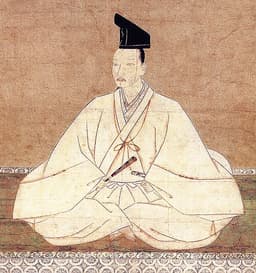
Ashikaga Yoshinori
Emperor · Medieval
45.3Total

Gung Ye
Emperor · Medieval
37.8Total
Basic Information
Born
1394
869
Died
1441
918
Era
Medieval
Medieval
Nationality
Japan
Korea
Occupation
Emperor
Emperor
Civilization
Eastern
Eastern
Score Comparison
Military (10%)
50.0
20.0
Political (20%)
35.1
26.4
Influence (20%)
51.0
47.1
Legacy (20%)
43.3
39.2
Leadership (15%)
48.4
38.1
Strategy (15%)
41.7
45.0
TOTAL
45.3
37.8
Ashikaga Yoshinori — Complete Timeline
1429 AD
Appointment as Sixth ShogunPolitical Action◆ Major
Ashikaga Yoshinori became the sixth shogun of the Ashikaga shogunate after the death of his brother Ashikaga Yoshikazu. He inherited a shogunate weakened by factional strife and sought to restore its authority.
AppointmentShogunAshikaga Shogunate
Impact: national
1438 AD
Suppression of the Eikyō RebellionWar◆ Major
Yoshinori suppressed the Eiky
RebellionSuppressionKantō Region
Impact: regionaldestructive
1441 AD
Assassination by Akamatsu MitsusukePolitical Action
Ashikaga Yoshinori was assassinated by Akamatsu Mitsusuke during a banquet in Kyoto. His death triggered the Kakitsu Rebellion and led to a period of instability in the Ashikaga shogunate, contributing to the eventual decline of central authority.
AssassinationKakitsu RebellionShogunate Decline
Impact: nationaltragic
Gung Ye — Complete Timeline
901 AD
Foundation of Later GoguryeoPolitical Action
Gung Ye, a former Buddhist monk and Silla prince, founded the kingdom of Later Goguryeo (Taebong) in central Korea. He claimed descent from Goguryeo royalty and sought to revive the ancient kingdom, initiating the Later Three Kingdoms period.
FoundationLater Three KingdomsRebellion
Impact: regional
Claim of Divine DescentCultural
Gung Ye claimed to be a reincarnation of the Buddha and declared himself a living deity. He demanded worship from his subjects and used religious claims to legitimize his rule, but this alienated many Buddhists and contributed to his downfall.
Religious ClaimLegitimacyCult of Personality
Impact: nationaldestructive
904 AD
Adoption of the Name 'Later Goguryeo'Political Action◆ Major
Gung Ye officially renamed his kingdom to Later Goguryeo (Taebong) and declared himself king. He adopted the title 'King of Goguryeo' and implemented policies to revive the legacy of the ancient Goguryeo kingdom.
RenamingLegacyPolitical Symbolism
Impact: national
910 AD
Persecution of Buddhism and ParanoiaCultural◆ Major
Gung Ye turned against Buddhism, persecuting monks and destroying temples. He became increasingly paranoid, executing many officials and family members, including his wife, on suspicion of treason. His tyranny alienated his supporters.
PersecutionTyrannyParanoia
Impact: nationaldestructive
918 AD
Deposition and DeathPolitical Action
Gung Ye was deposed by his generals, led by Wang Geon (later King Taejo of Goryeo), who rebelled against his tyranny. He was killed by the rebels, and Wang Geon established the Goryeo dynasty, ending Later Goguryeo.
DepositionDeathEnd of Dynasty
Impact: regionaltragic
This comparison has not been analyzed yet.
One-time AI generation (~1 minute). Scores and timeline are already available below.
Rankings
🥇
Ashikaga YoshinoriLeader
Mil: 50.0Pol: 35.1Inf: 51.0
45.3
🥈
Gung Ye
Mil: 20.0Pol: 26.4Inf: 47.1
37.8
+7.5 behind
How This Comparison Works
Algorithm
Each figure is scored on 6 dimensions (0—100 scale) based on structured historical data: Military (10%), Political (20%), Influence (20%), Legacy (20%), Leadership (15%), Strategy (15%). The weighted total produces the final ranking.
Data Sources
Scores are computed from structured sub-indicators in the database. Scale factors adjust for era (Ancient ×0.85, Modern ×1.0) and civilization size (Eastern ×1.05, Other ×0.80) to account for differences in population and military scale.
Maximum 3 Figures
Comparisons are limited to 2—3 figures to ensure readability and statistical meaningfulness.
Error Margins
±5 points per dimension — Sub-scores are derived from historical records with inherent uncertainty. Two figures within 5 points on a dimension should be considered roughly equivalent in that area.
Total Score Accuracy
±3 points overall — The weighted combination of 6 dimensions produces a total score with approximately ±3 points of uncertainty. Differences of less than 3 points are not statistically significant— the figures are effectively tied.
Known Limitations
- Historical records are incomplete and uneven across civilizations
- Figures from oral-tradition societies may be underrepresented
- Occupation labels can misclassify multi-role figures
- Scores measure capability and impact, not moral character
- Quantitative scoring is a comparison tool, not absolute truth
Capability Radar
Military (10%) — Battles & Warfare
Battles
15
45
Win Rate
10
40
Expansion
20
40
Political (20%) — Governance & Reform
Reform
35
25
Diplomacy
30
20
Economy
25
15
Influence (20%) — Cultural & Global Reach
Cultural
30
15
Global
15
5
Legacy (20%) — Historical Impact
Historical
35
25
Longevity
25
10
Leadership (15%) — Power & Stability
Tenure
40
35
Stability
20
10
Strategy (15%) — Tactics & Innovation
Strategy
25
30
Tactics
20
35
Reform
30
20
Similar Comparisons
Comments & Discussion
No comments yet. Be the first to share your thoughts!