Loading...
Asfandyar Wali Khan vs Chen Yun
Chen Yun leads by 6.0 pts · 2 figures compared
…

Asfandyar Wali Khan
Politician · Modern
49.2Total
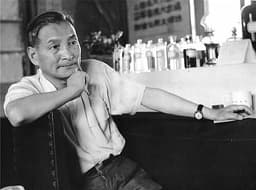
Chen Yun
Politician · Modern
55.2Total
Basic Information
Born
1949
1905
Died
—
1995
Era
Modern
Modern
Nationality
Pakistan
China
Occupation
Politician
Politician
Civilization
Indian
Eastern
Score Comparison
Military (10%)
47.2
11.7
Political (20%)
37.9
70.3
Influence (20%)
51.0
62.0
Legacy (20%)
40.8
55.0
Leadership (15%)
65.7
78.0
Strategy (15%)
60.0
25.6
TOTAL
49.2
55.2
Asfandyar Wali Khan — Complete Timeline
1973 AD
Leadership of Awami National Party (ANP)Political Action◆ Major
Asfandyar Wali Khan became the president of the Awami National Party (ANP) in 1973 after the death of his father, Khan Abdul Wali Khan. He led the party through decades of political struggle, advocating for Pashtun rights and secularism.
ANPLeadershipPashtun
Impact: regional
2008 AD
Alliance with PPP-led CoalitionPolitical Action◆ Major
Asfandyar Wali Khan led the ANP into a coalition government with the Pakistan Peoples Party (PPP) after the 2008 general elections. The ANP won 13 seats and joined the federal government, with Asfandyar Wali Khan serving as a key ally.
CoalitionPPP2008 Elections
Impact: nationalconstructive
2009 AD
Support for Anti-Taliban OperationsPolitical Action◆ Major
Asfandyar Wali Khan supported the Pakistan Army's military operations against the Taliban in Swat and other parts of Khyber Pakhtunkhwa in 2009. His stance was controversial among some Pashtun nationalists but was seen as necessary for peace.
Anti-TalibanMilitary OperationSwat
Impact: regional
Chen Yun — Complete Timeline
1925 AD
Joined the Chinese Communist PartyPolitical Action◆ Major
Chen Yun joined the Chinese Communist Party during the May Thirtieth Movement. He began his career as a labor organizer in Shanghai, rising through the ranks of the party's underground apparatus.
CCP MembershipLabor MovementShanghai
Impact: nationalconstructive
1961 AD
Led economic reconstruction after the Great Leap ForwardReform◆ Major
Chen Yun was appointed to lead economic recovery efforts after the disastrous Great Leap Forward. He implemented policies that reduced central planning, allowed private plots, and stabilized the economy, saving millions from famine.
Economic ReformGreat Leap ForwardFamine Relief
Impact: nationalconstructive
1966 AD
Purged during the Cultural RevolutionPolitical Action◆ Major
Chen Yun was purged from his leadership positions during the Cultural Revolution, accused of being a capitalist roader. He was sent to work in a factory in Jiangxi, but survived the period without being killed.
Cultural RevolutionPurgeEconomic Planning
Impact: nationaldestructive
1978 AD
Advocated for market reforms under Deng XiaopingReform◆ Major
Chen Yun supported Deng Xiaoping's economic reforms, advocating for a 'birdcage economy' that combined state planning with market mechanisms. He helped design the Special Economic Zones and agricultural decollectivization.
Deng XiaopingEconomic ReformMarket Economy
Impact: nationalconstructive
1987 AD
Served as Chairman of the Central Advisory CommissionPolitical Action
Chen Yun became Chairman of the Central Advisory Commission, a body of retired senior leaders. He used this position to influence economic policy, often cautioning against excessive market liberalization.
Advisory CommissionEconomic PolicyElder Statesman
Impact: national
Expert Analysis
Origins
Asfandyar Wali Khan was born in 1949 in Charsadda, Pakistan, into a prominent Pashtun political family. He is the grandson of Khan Abdul Ghaffar Khan, the 'Frontier Gandhi', and son of Khan Abdul Wali Khan, a founding leader of the Awami National Party (ANP). His early life was steeped in the politics of Pashtun nationalism and non-violent resistance. He was educated at Aitchison College in Lahore and later at the University of Peshawar, but his political education came from his family's struggle for Pashtun rights and against central government dominance.
Chen Yun was born in 1905 in Qingpu, Jiangsu, China, into a poor peasant family. Orphaned at a young age, he worked as a shop assistant and apprentice. He joined the Chinese Communist Party (CCP) in 1925 during the May Thirtieth Movement, beginning his career as a labor organizer in Shanghai. His early experience in grassroots organizing and economic management shaped his pragmatic approach. Unlike Asfandyar's aristocratic lineage, Chen Yun rose from poverty through party work.
Rise to Power
Asfandyar Wali Khan inherited the ANP leadership in 1973 after his father's death, but his political rise was slow. The ANP faced periods of suppression under military regimes, particularly during Zia-ul-Haq's rule. His major breakthrough came in the 2008 general elections, when the ANP won 13 seats and joined a coalition government with the Pakistan Peoples Party (PPP). He became a key figure in Khyber Pakhtunkhwa, advocating for provincial autonomy and Pashtun rights.
Chen Yun's rise was more systematic. He entered the CCP's central leadership in the 1930s, becoming a member of the Politburo by 1934. After the founding of the People's Republic in 1949, he was appointed Minister of Finance and later Vice Premier, responsible for economic planning. His influence peaked during the early 1950s when he helped stabilize the economy and implement the First Five-Year Plan. However, his pragmatic stance during the Great Leap Forward led to temporary setbacks, but he remained a key figure.
Leadership & Governance
Asfandyar Wali Khan's leadership style is rooted in Pashtun nationalism and democratic federalism. He advocates for non-violence, following his grandfather's legacy. As ANP president, he focused on provincial rights, renaming the North-West Frontier Province to Khyber Pakhtunkhwa in 2010. He supported the Pakistan Army's anti-Taliban operations in Swat (2009), a controversial move that alienated some Pashtun supporters. His governance approach is coalition-based and reformist within the limits of Pakistan's political system.
Chen Yun's leadership is characterized by economic pragmatism. He is known for the 'birdcage economy' metaphor: the market (bird) should operate within the cage of state planning. After the Great Leap Forward's failure, he led economic reconstruction from 1961-1965, reducing central planning and introducing agricultural incentives. He was purged during the Cultural Revolution but returned in the late 1970s to support Deng Xiaoping's market reforms, albeit cautiously. His approach balanced state control with market mechanisms, earning him a score of 78.0 in leadership.
Triumph & Tragedy
Asfandyar Wali Khan's greatest success was the renaming of Khyber Pakhtunkhwa, a symbolic victory for Pashtun identity. He also successfully led the ANP through coalition politics, maintaining relevance despite a declining vote share. His tragedy lies in the ANP's diminishing electoral base: from 13 seats in 2008 to 6 in 2013 and 1 in 2018. The party's support for military operations also cost it popular support among Pashtuns. His political score of 37.9 reflects these struggles.
Chen Yun's triumph was stabilizing China's economy after the Great Leap Forward and later guiding the transition to market reforms. His policies helped lift millions out of poverty. His tragedy was being purged during the Cultural Revolution and later having his cautious approach overshadowed by Deng's bolder reforms. Despite his influence, he never achieved the top leadership position. His legacy score of 55.0 reflects his enduring impact on economic policy.
Character & Destiny
Asfandyar Wali Khan is seen as a principled but cautious leader, often criticized for lacking the charisma of his father and grandfather. His decision to support anti-Taliban operations was pragmatic but damaged his nationalist credentials. His character shaped his destiny: a regional leader unable to expand beyond his ethnic base. His total score of 49.2 reflects a political career constrained by structural factors.
Chen Yun was known for his caution and pragmatism. He often warned against excessive centralization and advocated for gradual reforms. His character—risk-averse and methodical—allowed him to survive political purges and remain influential. However, his caution also limited his impact compared to Deng. His destiny was to be the 'architect' of China's economic transformation, but not its face. His total score of 55.2 is higher due to his broader influence.
Legacy
Asfandyar Wali Khan's legacy is tied to the ANP's decline. He preserved the party through difficult times but failed to reverse its electoral fortunes. His main achievement—the renaming of Khyber Pakhtunkhwa—is a lasting symbol of Pashtun identity. However, his influence score of 51.0 is modest, reflecting limited national impact.
Chen Yun's legacy is profound. His economic policies shaped China's post-Mao development, balancing market reforms with state control. The 'birdcage economy' concept influenced generations of policymakers. He is remembered as a key figure in China's economic rise, with a legacy score of 55.0. His ideas remain relevant in debates about state intervention.
Conclusion
Chen Yun had greater impact. His total score of 55.2 surpasses Asfandyar Wali Khan's 49.2, reflecting his role in transforming the world's most populous nation. While Asfandyar's influence is limited to a region and a declining party, Chen Yun's economic policies affected billions. Asfandyar's political score of 37.9 and influence of 51.0 cannot match Chen Yun's political score of 70.3 and influence of 62.0. Chen Yun's leadership score of 78.0 also dwarfs Asfandyar's 65.7. Therefore, Chen Yun is the more consequential figure.
Rankings
🥇
Chen YunLeader
Mil: 11.7Pol: 70.3Inf: 62.0
55.2
🥈
Asfandyar Wali Khan
Mil: 47.2Pol: 37.9Inf: 51.0
49.2
+6.0 behind
How This Comparison Works
Algorithm
Each figure is scored on 6 dimensions (0—100 scale) based on structured historical data: Military (10%), Political (20%), Influence (20%), Legacy (20%), Leadership (15%), Strategy (15%). The weighted total produces the final ranking.
Data Sources
Scores are computed from structured sub-indicators in the database. Scale factors adjust for era (Ancient ×0.85, Modern ×1.0) and civilization size (Eastern ×1.05, Other ×0.80) to account for differences in population and military scale.
Maximum 3 Figures
Comparisons are limited to 2—3 figures to ensure readability and statistical meaningfulness.
Error Margins
±5 points per dimension — Sub-scores are derived from historical records with inherent uncertainty. Two figures within 5 points on a dimension should be considered roughly equivalent in that area.
Total Score Accuracy
±3 points overall — The weighted combination of 6 dimensions produces a total score with approximately ±3 points of uncertainty. Differences of less than 3 points are not statistically significant— the figures are effectively tied.
Known Limitations
- Historical records are incomplete and uneven across civilizations
- Figures from oral-tradition societies may be underrepresented
- Occupation labels can misclassify multi-role figures
- Scores measure capability and impact, not moral character
- Quantitative scoring is a comparison tool, not absolute truth
Capability Radar
Military (10%) — Battles & Warfare
Battles
41
16
Win Rate
49
17
Expansion
48
20
Political (20%) — Governance & Reform
Reform
30
80
Diplomacy
35
70
Economy
20
90
Influence (20%) — Cultural & Global Reach
Cultural
30
40
Global
15
60
Legacy (20%) — Historical Impact
Historical
25
75
Longevity
20
65
Leadership (15%) — Power & Stability
Tenure
40
75
Stability
25
85
Strategy (15%) — Tactics & Innovation
Strategy
51
26
Tactics
57
27
Reform
57
28
Similar Comparisons
Comments & Discussion
No comments yet. Be the first to share your thoughts!