Loading...
Asakura Yoshikage vs Shaka Zulu
Shaka Zulu leads by 22.0 pts · 2 figures compared
…

Asakura Yoshikage
General · Modern
48.2Total
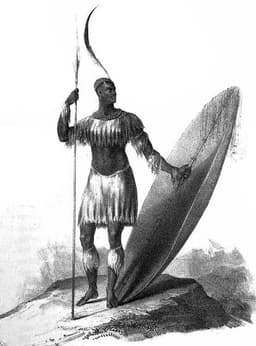
Shaka Zulu
General · Modern
70.2Total
Basic Information
Born
1533
1787
Died
1573
1828
Era
Modern
Modern
Nationality
Japan
Zulu Kingdom
Occupation
General
General
Civilization
Eastern
Other
Score Comparison
Military (10%)
10.0
80.0
Political (20%)
48.0
72.0
Influence (20%)
51.8
68.0
Legacy (20%)
43.3
68.0
Leadership (15%)
68.0
62.0
Strategy (15%)
60.0
80.8
TOTAL
48.2
70.2
Asakura Yoshikage — Complete Timeline
1570 AD
Battle of AnegawaWar◆ Major
Asakura Yoshikage allied with the Azai clan to fight Oda Nobunaga and Tokugawa Ieyasu at Anegawa. The allied forces were defeated, weakening Asakura's position and leading to the decline of his power in Echizen.
Sengoku PeriodBattleOda Nobunaga
Impact: regionaldestructive
1573 AD
Siege of Ichijodani CastleWar
Oda Nobunaga's forces besieged and captured Asakura Yoshikage's capital, Ichijodani Castle in Echizen Province. The castle was burned, and the Asakura clan was destroyed, ending Yoshikage's rule.
Sengoku PeriodSiegeClan Destruction
Impact: regionaltragic
Death of Asakura YoshikageOther◆ Major
After the fall of Ichijodani Castle, Asakura Yoshikage fled but was captured and forced to commit seppuku by Oda Nobunaga's forces. His death marked the end of the Asakura clan's rule in Echizen.
Sengoku PeriodDeathSeppuku
Impact: regionaltragic
Shaka Zulu — Complete Timeline
1816 AD
Introduction of the iklwa and horns of the buffalo formationReform
Shaka introduced the iklwa, a short stabbing spear, and the 'horns of the buffalo' tactical formation to the Zulu army. These innovations replaced the traditional throwing assegai and allowed for close-quarters combat, significantly increasing the Zulu's military effectiveness and enabling rapid conquest.
Military InnovationTacticsZulu Warfare
Impact: regional
1819 AD
Conquest of the Ndwandwe KingdomWar◆ Major
Shaka's Zulu army defeated the Ndwandwe kingdom at the Battle of Gqokli Hill, a decisive victory that eliminated a major rival. This conquest allowed Shaka to consolidate control over a large territory in present-day KwaZulu-Natal, marking the rise of the Zulu as a dominant regional power.
ConquestZulu ExpansionNdwandwe
Impact: regional
1828 AD
Assassination of ShakaPolitical Action◆ Major
Shaka was assassinated by his half-brothers Dingane and Mhlangana, with the support of his aunt Mkabayi. The coup ended his reign of terror and expansionist wars, leading to a period of instability and the eventual rise of Dingane as king.
AssassinationSuccession CrisisZulu Kingdom
Impact: regionaltragic
Expert Analysis
Origins
Asakura Yoshikage (1533–1573) was a Japanese daimyo of Echizen Province during the Sengoku period. He inherited the Asakura clan leadership from his father, Asakura Takakage, who had consolidated power in the region. Yoshikage was born into a well-established samurai family and received a traditional education in martial arts and governance. His early life was marked by the stability of the Asakura domain, but he lacked the military experience of his contemporaries.
Shaka Zulu (1787–1828) was born illegitimately to Senzangakhona, chief of the minor Zulu clan, and Nandi, a woman of the Langeni tribe. His childhood was difficult due to his illegitimate status, leading to bullying and exile. He found refuge with the Mthethwa chiefdom, where he gained military experience under Chief Dingiswayo. This formative period shaped his later innovations in warfare.
Rise to Power
Asakura Yoshikage became daimyo in 1553 after his father's death. He maintained the clan's power through alliances, notably with the Azai clan of Ōmi Province. His domain was wealthy from trade and agriculture, but he faced growing threats from Oda Nobunaga, who was expanding from Owari. Yoshikage's failure to act decisively against Nobunaga allowed the Oda clan to gain momentum.
Shaka rose to power after Senzangakhona's death in 1816. With Dingiswayo's support, he became chief of the Zulu clan. He immediately began military reforms, introducing the iklwa (short stabbing spear) and the "horns of the buffalo" formation. He conquered neighboring clans, expanding Zulu territory. By 1820, he had defeated the Ndwandwe kingdom at the Battle of Gqokli Hill, establishing Zulu dominance in Southeast Africa.
Leadership & Governance
Asakura Yoshikage governed as a traditional daimyo, relying on feudal structures and samurai retainers. He was known for his patronage of culture, including the tea ceremony, but lacked strategic vision. His leadership was reactive; he failed to modernize his army or form effective coalitions. At the Battle of Anegawa (1570), his alliance with the Azai was crushed by Nobunaga and Tokugawa Ieyasu, scoring a military score of 10.0.
Shaka centralized power and implemented a revolutionary military system. He organized the Zulu army into age-based regiments (amabutho), enforced celibacy until service, and trained warriors in close-quarters combat. His political score of 72.0 reflects his ability to incorporate conquered tribes into the Zulu nation, creating a cohesive state. He also controlled trade routes and imposed tribute.
Triumph & Tragedy
Asakura Yoshikage's greatest success was maintaining Asakura power for two decades against larger threats. His tragedy was the Siege of Ichijodani Castle (1573), where Nobunaga's forces burned his capital and forced him to flee. Captured soon after, he was ordered to commit seppuku, ending the Asakura clan. His leadership score of 68.0 is tempered by his inability to adapt.
Shaka's triumphs include conquering a vast empire and creating a formidable military machine. His strategy score of 80.8 reflects innovations that influenced African warfare. However, his reign ended in tragedy: his brutal methods (including mass executions) led to his assassination by his half-brothers Dingane and Mhlangana in 1828. His death caused chaos and the eventual collapse of the Zulu kingdom under colonial pressure.
Character & Destiny
Yoshikage was cautious and cultured, but indecisive. He hesitated to confront Nobunaga, allowing him to consolidate power. His character score influences his total score of 48.2; he is remembered as a tragic figure caught in the tide of history. Shaka was ruthless, innovative, and paranoid. His personality drove his expansion but also alienated allies. His influence score of 68.0 shows his lasting impact, though his legacy is mixed.
Legacy
Asakura Yoshikage's legacy is minor; the Asakura clan vanished, and his name is known mainly in the context of Nobunaga's rise. His influence score of 51.8 reflects limited enduring impact. In contrast, Shaka's legacy is profound: his military innovations shaped Zulu identity and resistance against colonialism. The Zulu nation remains a symbol of African power. His legacy score of 68.0 is justified by his role in creating a centralized state.
Conclusion
Shaka Zulu had greater impact. His military innovations (score 80.0 vs 10.0) and political consolidation created a lasting empire, while Yoshikage's defeat marked the end of his clan. Shaka's total score of 70.2 far exceeds Yoshikage's 48.2. Although both were defeated, Shaka's influence endures in African history, whereas Yoshikage is a footnote in Japan's unification. Thus, Shaka Zulu is the more significant figure.
Rankings
🥇
Shaka ZuluLeader
Mil: 80.0Pol: 72.0Inf: 68.0
70.2
🥈
Asakura Yoshikage
Mil: 10.0Pol: 48.0Inf: 51.8
48.2
+22.0 behind
How This Comparison Works
Algorithm
Each figure is scored on 6 dimensions (0—100 scale) based on structured historical data: Military (10%), Political (20%), Influence (20%), Legacy (20%), Leadership (15%), Strategy (15%). The weighted total produces the final ranking.
Data Sources
Scores are computed from structured sub-indicators in the database. Scale factors adjust for era (Ancient ×0.85, Modern ×1.0) and civilization size (Eastern ×1.05, Other ×0.80) to account for differences in population and military scale.
Maximum 3 Figures
Comparisons are limited to 2—3 figures to ensure readability and statistical meaningfulness.
Error Margins
±5 points per dimension — Sub-scores are derived from historical records with inherent uncertainty. Two figures within 5 points on a dimension should be considered roughly equivalent in that area.
Total Score Accuracy
±3 points overall — The weighted combination of 6 dimensions produces a total score with approximately ±3 points of uncertainty. Differences of less than 3 points are not statistically significant— the figures are effectively tied.
Known Limitations
- Historical records are incomplete and uneven across civilizations
- Figures from oral-tradition societies may be underrepresented
- Occupation labels can misclassify multi-role figures
- Scores measure capability and impact, not moral character
- Quantitative scoring is a comparison tool, not absolute truth
Capability Radar
Military (10%) — Battles & Warfare
Battles
40
85
Win Rate
35
90
Expansion
35
88
Political (20%) — Governance & Reform
Reform
30
85
Diplomacy
40
60
Economy
35
65
Influence (20%) — Cultural & Global Reach
Cultural
25
80
Global
15
70
Legacy (20%) — Historical Impact
Historical
30
85
Longevity
20
75
Leadership (15%) — Power & Stability
Tenure
45
70
Stability
30
55
Strategy (15%) — Tactics & Innovation
Strategy
40
90
Tactics
45
95
Reform
30
98
Similar Comparisons
Comments & Discussion
No comments yet. Be the first to share your thoughts!