Loading...
Aruna Asaf Ali vs Qin Shi Huang
Qin Shi Huang leads by 41.9 pts · 2 figures compared
…

Aruna Asaf Ali
Revolutionary · Modern
43.3Total
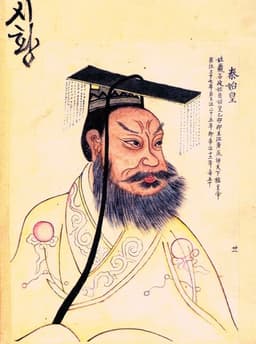
Qin Shi Huang
Emperor · Ancient
85.2Total
Basic Information
Born
1909
-259
Died
1996
-210
Era
Modern
Ancient
Nationality
India
China
Occupation
Revolutionary
Emperor
Civilization
Indian
Eastern
Score Comparison
Military (10%)
50.0
80.0
Political (20%)
30.8
90.0
Influence (20%)
53.3
85.0
Legacy (20%)
45.8
90.0
Leadership (15%)
30.0
78.0
Strategy (15%)
43.6
82.0
TOTAL
43.3
85.2
Aruna Asaf Ali — Complete Timeline
1942 AD
Hoisted the Indian National Congress Flag at Gowalia Tank MaidanPolitical Action
Aruna Asaf Ali famously hoisted the Indian National Congress flag at Gowalia Tank Maidan in Bombay on August 9, 1942, marking the start of the Quit India Movement. This act defied British authority and inspired mass protests.
Quit IndiaFlag HoistingDefiance
Impact: nationalconstructive
Went Underground During Quit India MovementPolitical Action◆ Major
After the flag hoisting, Aruna Asaf Ali went underground to evade arrest. She continued to organize resistance, publish illegal pamphlets, and coordinate with other leaders, becoming a symbol of defiance.
UndergroundResistanceQuit India
Impact: national
1958 AD
Served as First Mayor of DelhiPolitical Action
Aruna Asaf Ali was elected as the first Mayor of Delhi. She focused on urban development and social welfare, though her tenure was brief and largely ceremonial.
MayorDelhiMunicipal
constructive
1997 AD
Awarded Bharat RatnaCultural◆ Major
Aruna Asaf Ali was awarded the Bharat Ratna, India's highest civilian award, for her role in the independence movement and social work. The award recognized her lifelong commitment to the nation.
AwardHonorCivilian
Impact: nationalconstructive
Qin Shi Huang — Complete Timeline
246 BC
Construction of the Mausoleum and Terracotta ArmyOther◆ Major
Qin Shi Huang commissioned a vast mausoleum complex near Xi'an, guarded by thousands of life-sized terracotta soldiers, horses, and chariots. The project employed hundreds of thousands of workers and reflected his obsession with immortality and imperial power.
Impact: global
230 BC
Conquest of the Six Warring StatesWar
From 230 to 221 BCE, Ying Zheng led the Qin state in a series of campaigns that conquered the Han, Zhao, Wei, Chu, Yan, and Qi states. This unified China under a single ruler for the first time, ending the Warring States period.
Impact: global
221 BC
Standardization of Writing, Currency, and MeasurementsReform◆ Major
Qin Shi Huang ordered the standardization of Chinese script, currency, and weights and measures across the unified empire. This facilitated administration, trade, and cultural integration, laying a foundation for future dynasties.
Impact: globalconstructive
Proclamation of the Qin DynastyPolitical Action
After conquering the last independent state, Ying Zheng declared himself Shi Huangdi (First Emperor), founding the Qin Dynasty. He adopted a new title to signify his supreme authority and initiated centralized imperial rule.
Impact: global
214 BC
Initiation of the Great Wall ConstructionOther◆ Major
Qin Shi Huang ordered the connection and extension of existing northern fortifications to create a unified defensive wall against nomadic Xiongnu raids. This project involved massive conscripted labor and became the precursor to the later Great Wall.
Impact: regional
213 BC
Burning of Books and Burying of ScholarsPolitical Action◆ Major
On the advice of Li Si, Qin Shi Huang ordered the burning of historical records and philosophical texts not aligned with Legalist doctrine. He also had 460 Confucian scholars buried alive to suppress dissent and consolidate ideological control.
Impact: nationaldestructive
Expert Analysis
aruna-asaf-ali-vs-qin-shi-huang
# The Emperor and the Revolutionary
On a sweltering August morning in 1942, a 33-year-old woman named Aruna Asaf Ali climbed onto the platform at Gowalia Tank Maidan in Bombay and unfurled the Indian National Congress flag. It was an act of defiance that would trigger a nationwide uprising. Two thousand years earlier and half a world away, a young king named Ying Zheng had stood in his war chariot, watching his armies crush the last independent state of ancient China, preparing to declare himself the First Emperor. Both figures stepped onto history’s stage at moments of profound transformation. Yet their paths could not have been more different—one built an empire with iron and blood, the other helped dismantle one with courage and hope.
Origins
Qin Shi Huang was born into a world of war. The Warring States period had torn China apart for centuries, and his early life was shaped by the brutal calculus of survival. His father, King Zhuangxiang of Qin, died when Ying Zheng was young, leaving the throne to a boy who had seen betrayal and ambition poison every court. The Qin state was already the strongest of the seven kingdoms, forged by Legalist philosophy that prized order above all else. Young Ying Zheng learned that power was not given—it was taken.
Aruna Asaf Ali began her life in a very different kind of empire. Born into a wealthy Bengali Brahmin family in 1909, she was raised in the orderly world of British India, where the Raj’s authority seemed as permanent as the Himalayas. Her father, Upendranath Ganguly, was a magistrate. She was educated in convents, married a prominent Muslim lawyer and Congress leader, and seemed destined for a comfortable life within the system. But the Jallianwala Bagh massacre of 1919 had already planted a seed of rebellion in her generation, and she would soon find the cage of colonial rule unbearable.
Rise to Power
Ying Zheng’s rise was methodical and ruthless. At just 22, he began a decade-long campaign of conquest. His generals used iron discipline, innovative siege tactics, and a terrifying new weapon—the crossbow—to crush one kingdom after another. Han fell in 230 BC, Zhao in 228, Wei in 225. Each victory was a lesson in the logic of power: show no mercy, take no chances. By 221 BC, every rival had been eliminated. Ying Zheng renamed himself Shi Huangdi—First Emperor—and declared a new era.
Aruna Asaf Ali’s rise was quieter but no less determined. She had joined the Indian National Congress and was drawn to its socialist wing, but her moment came when the British arrested Congress leaders on August 9, 1942. While the movement’s top brass sat in prison, Aruna found herself at the center of history. She hoisted the flag, gave a rousing speech, and then vanished into the underground. For three years, she eluded capture, publishing pamphlets, organizing strikes, and keeping the flame of resistance alive. She became the face of the Quit India Movement.
Leadership & Governance
Qin Shi Huang governed as he conquered. He imposed a single writing system across China, standardized currency and axle widths so carts could travel any road, and ordered the construction of a Great Wall to protect his realm from northern nomads. His efficiency was breathtaking—and terrifying. He burned books that contradicted his ideology and buried scholars alive who dared to criticize him. His Legalist ministers, led by Li Si, turned China into a machine of state, but the human cost was staggering.
Aruna Asaf Ali governed very differently. When she became Delhi’s first mayor in 1958, her focus was on housing, sanitation, and the welfare of the poor. She had no standing army, no secret police, no power to execute dissenters. Her authority came from moral persuasion, from the trust of ordinary people who remembered her years in hiding. She could not command; she could only inspire.
Triumph & Tragedy
Qin Shi Huang’s greatest triumph was unification itself—the creation of a single China that would endure, in some form, for over two millennia. His greatest tragedy was the fragility of his achievement. He died in 210 BC while searching for an elixir of immortality, and within three years, his dynasty had collapsed in rebellion. The Terracotta Army he built to guard his tomb stands as his monument: silent, magnificent, and utterly incapable of protecting what he built.
Aruna Asaf Ali’s triumph was the flag she hoisted in 1942, a symbol that India would not bow. Her tragedy was more subtle. After independence, she grew disillusioned with the Congress party’s direction, its compromises with caste and capital. She became a critic of the very government she had helped create. Unlike Qin Shi Huang, she lived to see her revolution incomplete.
Character & Destiny
Qin Shi Huang was driven by a pathological fear of death and a messianic belief in his own destiny. He built his mausoleum with rivers of mercury and mechanical crossbows, convinced he could command the afterlife as he had commanded the living. His paranoia was his undoing—he trusted no one, and so no one could save his dynasty.
Aruna Asaf Ali was driven by a different fire: the conviction that injustice must be resisted. She was stubborn, courageous, and often difficult. She never sought power for its own sake, and that may be why she wielded it so lightly. Her destiny was not to build an empire but to help bring one down.
Legacy
Qin Shi Huang’s legacy is the blueprint of China itself. Every emperor who followed, every dynasty that rose and fell, governed within the framework he created. He is remembered as both a unifier and a tyrant, a figure who haunts the Chinese imagination like a ghost of iron.
Aruna Asaf Ali’s legacy is quieter. A postage stamp, a university named after her, the Bharat Ratna awarded in 1997. But her true monument is the idea that ordinary people can resist overwhelming power. She proved that courage, not armies, can change history.
Conclusion
One man built a wall across a continent; one woman hoisted a flag in a park. One ruled by fear, the other by example. Qin Shi Huang’s empire crumbled within years of his death; Aruna Asaf Ali’s India endures. The First Emperor believed he could conquer death itself; the revolutionary knew that some causes are worth dying for. Both understood something profound about power—but they understood it in opposite ways. And perhaps that is the deepest lesson history offers: that the same force that builds empires can also tear them down, and that the smallest act of courage can outlast the greatest monument of stone.
Rankings
🥇
Qin Shi HuangLeader
Mil: 80.0Pol: 90.0Inf: 85.0
85.2
🥈
Aruna Asaf Ali
Mil: 50.0Pol: 30.8Inf: 53.3
43.3
+41.9 behind
How This Comparison Works
Algorithm
Each figure is scored on 6 dimensions (0—100 scale) based on structured historical data: Military (10%), Political (20%), Influence (20%), Legacy (20%), Leadership (15%), Strategy (15%). The weighted total produces the final ranking.
Data Sources
Scores are computed from structured sub-indicators in the database. Scale factors adjust for era (Ancient ×0.85, Modern ×1.0) and civilization size (Eastern ×1.05, Other ×0.80) to account for differences in population and military scale.
Maximum 3 Figures
Comparisons are limited to 2—3 figures to ensure readability and statistical meaningfulness.
Error Margins
±5 points per dimension — Sub-scores are derived from historical records with inherent uncertainty. Two figures within 5 points on a dimension should be considered roughly equivalent in that area.
Total Score Accuracy
±3 points overall — The weighted combination of 6 dimensions produces a total score with approximately ±3 points of uncertainty. Differences of less than 3 points are not statistically significant— the figures are effectively tied.
Known Limitations
- Historical records are incomplete and uneven across civilizations
- Figures from oral-tradition societies may be underrepresented
- Occupation labels can misclassify multi-role figures
- Scores measure capability and impact, not moral character
- Quantitative scoring is a comparison tool, not absolute truth
Capability Radar
Military (10%) — Battles & Warfare
Battles
25
85
Win Rate
29
90
Expansion
30
90
Political (20%) — Governance & Reform
Reform
40
95
Diplomacy
35
75
Economy
15
90
Influence (20%) — Cultural & Global Reach
Cultural
45
95
Global
35
85
Legacy (20%) — Historical Impact
Historical
55
95
Longevity
40
95
Leadership (15%) — Power & Stability
Tenure
20
70
Stability
20
65
Strategy (15%) — Tactics & Innovation
Strategy
36
85
Tactics
35
80
Reform
39
95
Similar Comparisons
Comments & Discussion
IronChariot6/17/2026
Comparing a revolutionary who raised a flag to a tyrant who buried scholars alive? That’s like contrasting a candle with a wildfire. Qin Shi Huang unified weights, measures, and scripts sure, but he also burned books and executed critics to enforce ideological purity. Aruna Asaf Ali sparked the Quit India Movement with sheer nerve against an empire. One built walls to imprison minds; the other tore down cages. Don’t romanticize the First Emperor’s “order” at the expense of freedom.
铁笔判官6/17/2026
把秦始皇和阿尔娜放在一起比,纯粹是时空错乱的历史拼贴。秦始皇横扫六合靠的是商鞅变法积累的军功爵制,而阿尔娜只是英国殖民体系下受过西式教育的精英,一个在街头喊口号,一个在战场杀敌。别美化民族主义者的浪漫——没有秦军的铁血,中国的郡县制根本建立不起来。阿尔娜的小旗子插不进咸阳宫的城墙。