Loading...
Arturo Alessandri vs Tsutomu Hata
Arturo Alessandri leads by 21.9 pts · 2 figures compared
…
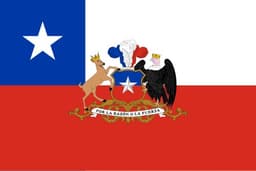
Arturo Alessandri
Politician · Modern
57.3Total

Tsutomu Hata
Politician · Modern
35.4Total
Basic Information
Born
1868
1935
Died
1950
—
Era
Modern
Modern
Nationality
Chile
Japan
Occupation
Politician
Politician
Civilization
Western
Eastern
Score Comparison
Military (10%)
50.0
12.0
Political (20%)
72.0
33.6
Influence (20%)
57.2
48.6
Legacy (20%)
48.3
35.8
Leadership (15%)
72.0
34.6
Strategy (15%)
43.6
28.7
TOTAL
57.3
35.4
Arturo Alessandri — Complete Timeline
1920 AD
Alessandri becomes President of ChilePolitical Action◆ Major
Arturo Alessandri was elected President of Chile as a liberal reformer, winning a narrow victory. His presidency marked the beginning of a period of social and political change, challenging the conservative oligarchy.
PresidencyLiberal Reform1920
Impact: national
1924 AD
Alessandri's social legislation and labor reformsReform◆ Major
Alessandri pushed through a series of social laws including the eight-hour workday, regulation of child labor, and the right to unionize. These reforms were opposed by conservative forces but improved conditions for the working class.
Labor ReformSocial Legislation1924
Impact: nationalprogressive
Alessandri's first resignation and exilePolitical Action◆ Major
Facing a military coup led by conservative officers, Alessandri resigned and went into exile in the United States. His resignation marked a setback for reform and led to a period of military rule in Chile.
ResignationMilitary CoupExile
Impact: nationaltragic
1925 AD
Alessandri's second presidency and the 1925 ConstitutionReform
Alessandri returned from exile and was reinstated as president, overseeing the drafting and approval of a new constitution. The 1925 Constitution established a strong presidential system, separation of church and state, and social rights.
ConstitutionPolitical Reform1925
Impact: nationalconstructive
1932 AD
Alessandri's third presidency and conservative turnPolitical Action◆ Major
Alessandri was elected to a third term as president, this time as a conservative candidate. His government focused on restoring order and economic stability after the chaos of the Socialist Republic, suppressing leftist movements.
Third TermConservatism1932
Impact: national
Tsutomu Hata — Complete Timeline
1993 AD
Formation of the Japan Renewal PartyPolitical Action◆ Major
Hata co-founded the Japan Renewal Party (Shinseito) with Ichiro Ozawa after leaving the LDP. This party was a key component of the anti-LDP coalition that briefly ended LDP rule, marking a major realignment in Japanese politics.
Party FormationPolitical RealignmentAnti-LDP Coalition
Impact: national
Resignation as Foreign MinisterPolitical Action
Hata resigned as Foreign Minister in the Morihiro Hosokawa cabinet, citing differences over political reform. His resignation weakened the coalition government and contributed to its eventual collapse.
Cabinet ResignationPolitical ReformCoalition
Impact: national
1994 AD
Shortest Postwar Prime MinistershipPolitical Action◆ Major
Hata served as Prime Minister for 64 days from April to June 1994, the shortest tenure of any Japanese prime minister in the postwar period. His minority government collapsed after the Socialist Party withdrew from the coalition, leading to a snap election.
Prime MinistershipCoalition GovernmentPolitical Instability
Impact: national
Expert Analysis
Origins
**Arturo Alessandri** was born in 1868 in Longaví, Chile, into a family of Italian origin. His father was a landowner and his mother from a political family. He studied law at the University of Chile, graduating in 1893. Alessandri's early career as a lawyer and journalist sharpened his oratory skills, earning him the nickname "Lion of Tarapacá." He entered politics as a Liberal Party deputy in 1897, advocating for social reforms.
**Tsutomu Hata** was born in 1935 in Tokyo, Japan, into a political family. His father, Hata Shunroku, was a field marshal and war criminal. Hata graduated from Keio University and worked as a journalist before entering politics. He was first elected to the House of Representatives in 1969 as a member of the Liberal Democratic Party (LDP), inheriting his father's political base in Nagano.
Rise to Power
Alessandri rose to prominence as a champion of the working class. He became a senator in 1915 and ran for president in 1920 as the candidate of the Liberal Alliance. He won a narrow victory, taking office in December 1920. His presidency was marked by conflict with the conservative Congress, leading to a military intervention in 1924 that forced him to resign and go into exile. He returned in 1925, overseeing the drafting of a new constitution that strengthened presidential power and enacted social reforms.
Hata rose within the LDP, serving as deputy chief cabinet secretary under Yasuhiro Nakasone and later as agriculture minister. In 1993, he co-founded the Japan Renewal Party (Shinseito) with Ichiro Ozawa, breaking away from the LDP. This move helped the opposition coalition win the 1993 election. Hata served as foreign minister under Prime Minister Morihiro Hosokawa from 1993 to 1994. When Hosokawa resigned, Hata became prime minister in April 1994, leading a minority government.
Leadership & Governance
Alessandri's leadership style was confrontational and charismatic. He pushed through social legislation including the eight-hour workday, regulation of child labor, and legalization of unions. His 1925 Constitution established a strong executive, separation of church and state, and social welfare guarantees. However, his later presidency (1932-1938) saw a conservative turn, focusing on economic stability and repressing leftist movements. His political score of 72.0 reflects his ability to navigate crises, but his governance was inconsistent.
Hata's leadership was short-lived. As prime minister for only 64 days, he had little opportunity to govern. His cabinet faced a no-confidence motion due to his minority status and inability to pass a budget. He resigned in June 1994, replaced by Tomiichi Murayama. Hata's leadership score of 34.6 reflects his inability to consolidate power or implement policy. His political strategy scored 28.7, indicating poor coalition management.
Triumph & Tragedy
Alessandri's greatest triumph was the 1925 Constitution, which shaped Chilean politics for decades. His social reforms improved conditions for workers. However, his exile in 1924 and his later conservative turn alienated his base. His third presidency was marked by the 1938 Seguro Obrero massacre, where police killed dozens of Nazi sympathizers, tarnishing his legacy.
Hata's triumph was becoming prime minister, a symbol of the end of LDP dominance. Yet his tragedy was his inability to govern: his 64-day tenure is the shortest in postwar Japan. He failed to pass any major legislation and his party dissolved soon after. His legacy score of 35.8 indicates minimal lasting impact.
Character & Destiny
Alessandri was a fiery orator and skilled negotiator, but his ambition led to ideological shifts. His character—determined yet pragmatic—allowed him to return from exile but also to compromise his principles. Historians note his role as a transitional figure between oligarchic and democratic Chile.
Hata was seen as a competent bureaucrat but lacked the decisiveness to lead. His dependence on Ozawa made him appear weak. His short tenure was partly due to his inability to build consensus, reflecting a passive leadership style.
Legacy
Alessandri's legacy endures through the 1925 Constitution, which lasted until 1973. His social reforms set precedents for labor rights. He scored 48.3 in legacy, reflecting his lasting constitutional impact but also the controversies of his later years.
Hata's legacy is minimal. His main contribution was as part of the anti-LDP coalition that briefly broke the LDP's stranglehold. However, his tenure was too short to enact change. The Japan Renewal Party merged into other parties, and Hata retired from politics in 2009.
Conclusion
Arturo Alessandri had a greater impact on his country than Tsutomu Hata. Alessandri's total score of 57.3 versus Hata's 35.4 reflects his longer tenure, constitutional legacy, and social reforms. While Hata's rise symbolized a shift in Japanese politics, his inability to govern left no enduring mark. Alessandri, despite his flaws, shaped Chile's political framework and labor rights, making him the more significant historical figure.
Rankings
🥇
Arturo AlessandriLeader
Mil: 50.0Pol: 72.0Inf: 57.2
57.3
🥈
Tsutomu Hata
Mil: 12.0Pol: 33.6Inf: 48.6
35.4
+21.9 behind
How This Comparison Works
Algorithm
Each figure is scored on 6 dimensions (0—100 scale) based on structured historical data: Military (10%), Political (20%), Influence (20%), Legacy (20%), Leadership (15%), Strategy (15%). The weighted total produces the final ranking.
Data Sources
Scores are computed from structured sub-indicators in the database. Scale factors adjust for era (Ancient ×0.85, Modern ×1.0) and civilization size (Eastern ×1.05, Other ×0.80) to account for differences in population and military scale.
Maximum 3 Figures
Comparisons are limited to 2—3 figures to ensure readability and statistical meaningfulness.
Error Margins
±5 points per dimension — Sub-scores are derived from historical records with inherent uncertainty. Two figures within 5 points on a dimension should be considered roughly equivalent in that area.
Total Score Accuracy
±3 points overall — The weighted combination of 6 dimensions produces a total score with approximately ±3 points of uncertainty. Differences of less than 3 points are not statistically significant— the figures are effectively tied.
Known Limitations
- Historical records are incomplete and uneven across civilizations
- Figures from oral-tradition societies may be underrepresented
- Occupation labels can misclassify multi-role figures
- Scores measure capability and impact, not moral character
- Quantitative scoring is a comparison tool, not absolute truth
Capability Radar
Military (10%) — Battles & Warfare
Battles
27
16
Win Rate
34
15
Expansion
33
22
Political (20%) — Governance & Reform
Reform
70
20
Diplomacy
60
30
Economy
55
20
Influence (20%) — Cultural & Global Reach
Cultural
40
10
Global
35
10
Legacy (20%) — Historical Impact
Historical
50
10
Longevity
40
5
Leadership (15%) — Power & Stability
Tenure
65
10
Stability
45
10
Strategy (15%) — Tactics & Innovation
Strategy
39
25
Tactics
41
24
Reform
46
31
Similar Comparisons
Comments & Discussion
No comments yet. Be the first to share your thoughts!