Loading...
Arturo Alessandri vs Nouri al-Maliki
Arturo Alessandri leads by 9.5 pts · 2 figures compared
…
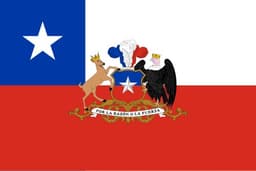
Arturo Alessandri
Politician · Modern
57.3Total
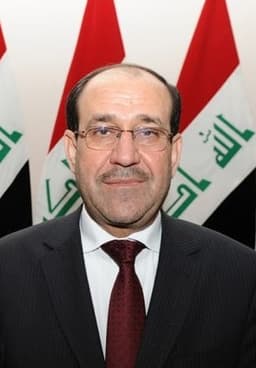
Nouri al-Maliki
Politician · Modern
47.8Total
Basic Information
Born
1868
1950
Died
1950
—
Era
Modern
Modern
Nationality
Chile
Iraq
Occupation
Politician
Politician
Civilization
Western
Middle Eastern
Score Comparison
Military (10%)
50.0
36.6
Political (20%)
72.0
35.1
Influence (20%)
57.2
51.8
Legacy (20%)
48.3
42.5
Leadership (15%)
72.0
67.0
Strategy (15%)
43.6
52.8
TOTAL
57.3
47.8
Arturo Alessandri — Complete Timeline
1920 AD
Alessandri becomes President of ChilePolitical Action◆ Major
Arturo Alessandri was elected President of Chile as a liberal reformer, winning a narrow victory. His presidency marked the beginning of a period of social and political change, challenging the conservative oligarchy.
PresidencyLiberal Reform1920
Impact: national
1924 AD
Alessandri's social legislation and labor reformsReform◆ Major
Alessandri pushed through a series of social laws including the eight-hour workday, regulation of child labor, and the right to unionize. These reforms were opposed by conservative forces but improved conditions for the working class.
Labor ReformSocial Legislation1924
Impact: nationalprogressive
Alessandri's first resignation and exilePolitical Action◆ Major
Facing a military coup led by conservative officers, Alessandri resigned and went into exile in the United States. His resignation marked a setback for reform and led to a period of military rule in Chile.
ResignationMilitary CoupExile
Impact: nationaltragic
1925 AD
Alessandri's second presidency and the 1925 ConstitutionReform
Alessandri returned from exile and was reinstated as president, overseeing the drafting and approval of a new constitution. The 1925 Constitution established a strong presidential system, separation of church and state, and social rights.
ConstitutionPolitical Reform1925
Impact: nationalconstructive
1932 AD
Alessandri's third presidency and conservative turnPolitical Action◆ Major
Alessandri was elected to a third term as president, this time as a conservative candidate. His government focused on restoring order and economic stability after the chaos of the Socialist Republic, suppressing leftist movements.
Third TermConservatism1932
Impact: national
Nouri al-Maliki — Complete Timeline
2006 AD
Election as Prime MinisterPolitical Action◆ Major
Maliki was elected Prime Minister of Iraq by the Council of Representatives, forming a unity government. His election followed months of political deadlock after the 2005 parliamentary elections, and he inherited a country mired in sectarian violence.
Prime MinisterGovernment FormationPost-2003 Iraq
Impact: national
2007 AD
Surge and the Battle of BaghdadWar◆ Major
Maliki supported the US troop surge and launched the Baghdad Security Plan, a joint US-Iraqi operation to reduce sectarian violence. The plan succeeded in lowering casualty rates, but Maliki's government was criticized for sectarian bias in its security forces.
SurgeSecuritySectarian Violence
Impact: national
2011 AD
US withdrawal from IraqPolitical Action
Maliki's government oversaw the complete withdrawal of US combat forces from Iraq by December 2011, as per the Status of Forces Agreement. The withdrawal ended the US military presence, but left Iraq facing security challenges and political instability.
US WithdrawalSovereigntyPost-War
Impact: global
2014 AD
Rise of ISIS and loss of territoryWar
Under Maliki's leadership, the Iraqi army collapsed in the face of the Islamic State (ISIS) offensive, losing control of Mosul and large parts of northern Iraq. Maliki's sectarian policies were blamed for alienating Sunnis and enabling ISIS's rise.
ISISMilitary CollapseSectarianism
Impact: regionaldestructive
Resignation as Prime MinisterPolitical Action◆ Major
Facing intense domestic and international pressure after the ISIS advance, Maliki resigned as Prime Minister in August 2014. He was succeeded by Haider al-Abadi, ending his eight-year tenure and marking a shift in Iraqi politics.
ResignationPolitical ChangeSuccession
Impact: national
Expert Analysis
Origins
Arturo Alessandri was born in 1868 in Linares, Chile, into a wealthy landowning family of Italian descent. He studied law at the University of Chile and entered politics as a member of the Liberal Party, advocating for social reforms. His early career included serving as a deputy and senator, building a reputation as a fiery orator.
Nouri al-Maliki was born in 1950 in Hindiya, Iraq, into a Shia Muslim family. He studied Arabic literature at the University of Baghdad but fled Saddam Hussein's regime in 1979, joining the Shia opposition in exile. He spent years in Iran and Syria, becoming a senior figure in the Dawa Party, which advocated for Islamic governance.
Rise to Power
Alessandri rose to prominence as a champion of the working class, earning the nickname "Lion of Tarapacá." He was elected president in 1920 with a narrow victory, representing a coalition of liberals and radicals. His presidency focused on social legislation, but conservatives resisted, leading to a military coup in 1924. Alessandri resigned and went into exile in the US. He returned in 1925 to draft a new constitution, which established a strong executive branch and separated church and state. He was re-elected in 1932 as a conservative candidate, shifting his stance to restore order.
Maliki rose through the ranks of the Dawa Party during Saddam's era. After the 2003 US invasion, he returned to Iraq and became a key figure in the transitional government. In 2006, he was elected Prime Minister as a compromise candidate, tasked with uniting Iraq's sectarian factions. His early tenure saw the US troop surge and the Battle of Baghdad, which reduced violence but entrenched his reliance on Shiite militias.
Leadership & Governance
Alessandri's leadership style was charismatic and confrontational. He pushed through labor reforms—eight-hour workday, child labor restrictions, and union rights—but faced fierce opposition. His second presidency (1925) was brief but foundational: the 1925 Constitution centralized power, secularized the state, and ended the parliamentary system. However, his third term (1932-1938) was conservative, focusing on economic stability and suppressing leftist movements. His political score is 72.0, reflecting his ability to adapt but also inconsistency.
Maliki's governance was marked by sectarianism and centralization. He consolidated power by sidelining Sunni and Kurdish rivals, appointing loyalists to key military and government posts. He supported the US surge but also pursued policies that alienated Sunnis, such as de-Baathification and arrests of Sunni leaders. His leadership score is 67.0, but his political strategy backfired when the Iraqi army collapsed in 2014. His military score is 36.6, reflecting his poor handling of security forces.
Triumph & Tragedy
Alessandri's greatest triumph was the 1925 Constitution, which modernized Chile's political system and remained in effect until 1973. His labor laws improved conditions for workers. However, his tragedy was his failure to maintain liberal reforms; his conservative turn disillusioned supporters, and his presidency ended amid economic crises. His legacy score is 48.3, indicating mixed long-term impact.
Maliki's triumph was overseeing the US withdrawal in 2011, which fulfilled a nationalist goal. He also reduced sectarian violence during the surge. His tragedy was the rise of ISIS in 2014, when the Iraqi army fled Mosul, leading to the loss of a third of Iraq's territory. His influence score (51.8) reflects his role in shaping post-Saddam Iraq, but his legacy is tarnished by failure to build a stable state.
Character & Destiny
Alessandri was a pragmatic opportunist, shifting from liberal reformer to conservative to retain power. His charisma and oratory skills earned him popular support, but his willingness to compromise alienated allies. His destiny was shaped by the volatile Chilean political landscape, where he navigated between factions but ultimately failed to create lasting institutions beyond the constitution.
Maliki was distrustful and authoritarian, preferring loyalty over competence. His suspicion of Sunni rivals and reliance on Shiite militias undermined national unity. His destiny was sealed by the US withdrawal; without American support, his security forces crumbled. His stubbornness prevented him from making concessions to Sunnis, fueling the insurgency that led to ISIS.
Legacy
Alessandri's legacy is the 1925 Constitution, which lasted 48 years and shaped Chile's political structure. His labor reforms set precedents for workers' rights. However, he is remembered as a transitional figure rather than a transformative one. His total score is 57.3, higher than Maliki's 47.8.
Maliki's legacy is mixed: he oversaw the end of the US occupation but also the fragmentation of Iraq. His policies exacerbated sectarian divisions, and his failure to build inclusive governance allowed ISIS to rise. He is widely criticized for corruption and incompetence. His legacy score is 42.5, reflecting his negative impact.
Conclusion
Arturo Alessandri had a greater impact than Nouri al-Maliki. His constitutional and labor reforms shaped Chile for decades, while Maliki's tenure ended in disaster. Alessandri's total score of 57.3 surpasses Maliki's 47.8 by 9.5 points. Although both faced political turmoil, Alessandri's achievements endured, whereas Maliki's failures led to state collapse. The Chilean reformer's legacy, while imperfect, was more constructive.
Rankings
🥇
Arturo AlessandriLeader
Mil: 50.0Pol: 72.0Inf: 57.2
57.3
🥈
Nouri al-Maliki
Mil: 36.6Pol: 35.1Inf: 51.8
47.8
+9.5 behind
How This Comparison Works
Algorithm
Each figure is scored on 6 dimensions (0—100 scale) based on structured historical data: Military (10%), Political (20%), Influence (20%), Legacy (20%), Leadership (15%), Strategy (15%). The weighted total produces the final ranking.
Data Sources
Scores are computed from structured sub-indicators in the database. Scale factors adjust for era (Ancient ×0.85, Modern ×1.0) and civilization size (Eastern ×1.05, Other ×0.80) to account for differences in population and military scale.
Maximum 3 Figures
Comparisons are limited to 2—3 figures to ensure readability and statistical meaningfulness.
Error Margins
±5 points per dimension — Sub-scores are derived from historical records with inherent uncertainty. Two figures within 5 points on a dimension should be considered roughly equivalent in that area.
Total Score Accuracy
±3 points overall — The weighted combination of 6 dimensions produces a total score with approximately ±3 points of uncertainty. Differences of less than 3 points are not statistically significant— the figures are effectively tied.
Known Limitations
- Historical records are incomplete and uneven across civilizations
- Figures from oral-tradition societies may be underrepresented
- Occupation labels can misclassify multi-role figures
- Scores measure capability and impact, not moral character
- Quantitative scoring is a comparison tool, not absolute truth
Capability Radar
Military (10%) — Battles & Warfare
Battles
27
5
Win Rate
34
5
Expansion
33
5
Political (20%) — Governance & Reform
Reform
70
30
Diplomacy
60
25
Economy
55
20
Influence (20%) — Cultural & Global Reach
Cultural
40
15
Global
35
25
Legacy (20%) — Historical Impact
Historical
50
30
Longevity
40
15
Leadership (15%) — Power & Stability
Tenure
65
60
Stability
45
10
Strategy (15%) — Tactics & Innovation
Strategy
39
5
Tactics
41
5
Reform
46
5
Similar Comparisons
Comments & Discussion
No comments yet. Be the first to share your thoughts!