Loading...
Arturo Alessandri vs Napoleon Bonaparte
Napoleon Bonaparte leads by 13.6 pts · 2 figures compared
…
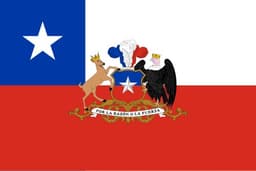
Arturo Alessandri
Politician · Modern
57.3Total

Napoleon Bonaparte
General · Modern
70.9Total
Basic Information
Born
1868
1769
Died
1950
1821
Era
Modern
Modern
Nationality
Chile
France
Occupation
Politician
General
Civilization
Western
Western
Score Comparison
Military (10%)
50.0
94.0
Political (20%)
72.0
72.0
Influence (20%)
57.2
40.0
Legacy (20%)
48.3
80.0
Leadership (15%)
72.0
78.0
Strategy (15%)
43.6
90.0
TOTAL
57.3
70.9
Arturo Alessandri — Complete Timeline
1920 AD
Alessandri becomes President of ChilePolitical Action◆ Major
Arturo Alessandri was elected President of Chile as a liberal reformer, winning a narrow victory. His presidency marked the beginning of a period of social and political change, challenging the conservative oligarchy.
PresidencyLiberal Reform1920
Impact: national
1924 AD
Alessandri's social legislation and labor reformsReform◆ Major
Alessandri pushed through a series of social laws including the eight-hour workday, regulation of child labor, and the right to unionize. These reforms were opposed by conservative forces but improved conditions for the working class.
Labor ReformSocial Legislation1924
Impact: nationalprogressive
Alessandri's first resignation and exilePolitical Action◆ Major
Facing a military coup led by conservative officers, Alessandri resigned and went into exile in the United States. His resignation marked a setback for reform and led to a period of military rule in Chile.
ResignationMilitary CoupExile
Impact: nationaltragic
1925 AD
Alessandri's second presidency and the 1925 ConstitutionReform
Alessandri returned from exile and was reinstated as president, overseeing the drafting and approval of a new constitution. The 1925 Constitution established a strong presidential system, separation of church and state, and social rights.
ConstitutionPolitical Reform1925
Impact: nationalconstructive
1932 AD
Alessandri's third presidency and conservative turnPolitical Action◆ Major
Alessandri was elected to a third term as president, this time as a conservative candidate. His government focused on restoring order and economic stability after the chaos of the Socialist Republic, suppressing leftist movements.
Third TermConservatism1932
Impact: national
Napoleon Bonaparte — Complete Timeline
1799 AD
Coup of 18 BrumaireOther◆ Major
Napoleon Bonaparte, with support from his brother Lucien and key political figures, overthrew the Directory in a bloodless coup. He established the Consulate with himself as First Consul, effectively becoming the ruler of France. This event ended the French Revolution's most unstable period.
French RevolutionCoupRise to Power
Impact: regional
1804 AD
Promulgation of the Napoleonic CodeOther◆ Major
Napoleon enacted the Civil Code of the French, known as the Napoleonic Code, a comprehensive set of laws that replaced the fragmented feudal legal systems. The code established legal equality, protected property rights, and secularized law. It became the basis for legal systems in many European and world countries.
Legal ReformNapoleonic CodeCivil Law
Impact: globalconstructive
1805 AD
Battle of AusterlitzWar◆ Major
Napoleon's Grande Arm
Napoleonic WarsBattleDecisive Victory
Impact: global
1812 AD
Invasion of RussiaWar◆ Major
Napoleon led the Grande Arm
Napoleonic WarsInvasionDisaster
Impact: globaldestructive
1815 AD
Battle of WaterlooWar◆ Major
Napoleon's French army was defeated by the combined forces of the Duke of Wellington's Anglo-Allied army and Gebhard Leberecht von Bl
Napoleonic WarsBattleFinal Defeat
Impact: globaldestructive
Expert Analysis
arturo-alessandri-vs-napoleon-bonaparte
**The Lion and the Eagle: Two Paths of Power in an Age of Upheaval**
In the winter of 1815, a short man in a grey overcoat stood on a muddy field in Belgium, watching his empire crumble. In the spring of 1925, a silver-haired orator in Santiago raised a new constitution above his head, knowing he had remade a nation. Napoleon Bonaparte and Arturo Alessandri never met, never fought, and never governed the same world. Yet both were men of immense ambition and relentless will, both rose from modest origins to command the highest office, and both saw their nations transformed by their hands. Why did one end in exile on a lonely Atlantic island, while the other died in his own bed, a revered elder statesman? The answer lies not in the size of their armies, but in the nature of their dreams.
**Origins**
Napoleon was born in 1769 on Corsica, an island that had only recently become French. His family was minor nobility, poor enough that he depended on scholarships to attend military school. The French Revolution, which erupted when he was twenty, shattered the old order and opened doors that would have been locked in peacetime. He was a child of chaos, trained for war, and shaped by the conviction that a man of talent could seize the world.
Arturo Alessandri was born in 1868 in Linares, Chile, to a family of Italian immigrants who had built a fortune in banking and agriculture. He studied law at the University of Chile, entered politics as a young liberal, and learned the art of compromise in the halls of congress. Chile in the late nineteenth century was a stable republic, scarred by class divisions but governed by constitutional rules. Alessandri was a product of order, trained for debate, and shaped by the belief that change came through legislation, not cannon fire.
**Rise to Power**
Napoleon’s ascent was a series of breathtaking gambles. At twenty-four, he captured the port of Toulon from the British and was promoted to brigadier general. At twenty-six, he suppressed a royalist uprising in Paris with a “whiff of grapeshot.” At thirty, he led a ragged army across the Alps, defeated the Austrians at Marengo, and made himself First Consul of France. By 1804, he crowned himself Emperor in Notre Dame. Each step was a leap of faith, each victory a foundation for the next.
Alessandri’s rise was slower, more methodical. He served as a deputy, minister, and senator, building a reputation as a fiery orator who championed the working class. In 1920, he won the presidency by a razor-thin margin, his victory a testament to his ability to rally miners, factory workers, and the urban poor. He was not a conqueror; he was a tribune, and his power came from ballots, not bayonets.
**Leadership & Governance**
Napoleon governed as a military genius and a political autocrat. His military scores—94 for warfare, 93 for strategy—reflect a man who could read a battlefield like a chessboard. He reformed French law with the Napoleonic Code, standardized education, and built infrastructure that lasted generations. But his rule was a dictatorship disguised as a meritocracy. He centralized power, suppressed dissent, and treated Europe as a map to be redrawn by conquest. His political score of 75 shows a leader who could organize but could not share authority.
Alessandri governed as a reformer and a pragmatist. His political score of 67.3 understates his skill: he pushed through the eight-hour workday, regulated child labor, and legalized unions. In 1925, he oversaw the creation of a new constitution that separated church and state, strengthened presidential power, and enshrined social rights. But his leadership was volatile. In 1924, conservative officers staged a coup, forcing him to resign and flee to the United States. He returned months later, chastened but determined. By 1932, when he won a third term, he had shifted to the right, governing as a conservative who prioritized economic recovery over reform. He was not a visionary; he was a survivor.
**Triumph & Tragedy**
Napoleon’s greatest moment was Austerlitz in 1805, where he crushed the Russian and Austrian armies in a single day. His greatest failure was the invasion of Russia in 1812, a catastrophe that cost half a million lives and destroyed his Grand Army. He was exiled to Elba, escaped, and rallied France one last time, only to be defeated at Waterloo in 1815. His tragedy was that he could not stop: victory demanded more victory, until the world united against him.
Alessandri’s greatest triumph was the 1925 Constitution, which gave Chile a stable political framework for nearly half a century. His greatest failure was his first resignation, a humiliating flight that revealed the fragility of his reforms. Yet he returned, adapted, and served again. His tragedy was that he began as a lion of the left and ended as a guardian of the right, a man who outlived his own revolution.
**Character & Destiny**
Napoleon was driven by an insatiable hunger for glory. “I am not a man,” he once said, “but a thing.” He saw himself as an instrument of fate, and he burned through allies, enemies, and his own soldiers with equal indifference. His personality shaped his decisions: he could not compromise, could not delegate, could not stop. His destiny was to build an empire that shattered under the weight of his own ambition.
Alessandri was driven by a fierce love of Chile and a deep need for respect. He was called the Lion of Tarapacá for his roaring speeches, but he was also a pragmatist who knew when to retreat. His personality allowed him to bend: he resigned when he had to, returned when he could, and changed his policies when the times demanded it. His destiny was to be a founder, not a destroyer.
**Legacy**
Napoleon left behind a legend. His military tactics are still studied, his legal code still influences Europe, and his name still evokes awe and dread. But his legacy is tangled with blood and ruin. He is remembered as a genius who failed, a conqueror who fell.
Alessandri left behind a nation. The 1925 Constitution lasted until 1973, and his labor reforms laid the groundwork for Chile’s modern welfare state. He is remembered as the father of Chilean democracy, a flawed but essential figure who proved that reform could come from within the system.
**Conclusion**
Napoleon Bonaparte and Arturo Alessandri both sought to reshape their worlds. One used an army, the other a legislature. One conquered, the other persuaded. One died alone on a rock in the South Atlantic, the other in his own home in Santiago, mourned by a nation. Their stories remind us that greatness is not measured by the size of one’s ambition, but by the wisdom of one’s restraint. The eagle soared too high and burned in the sun. The lion found his place in the shade, and endured.
Rankings
🥇
Napoleon BonaparteLeader
Mil: 94.0Pol: 72.0Inf: 40.0
70.9
🥈
Arturo Alessandri
Mil: 50.0Pol: 72.0Inf: 57.2
57.3
+13.6 behind
How This Comparison Works
Algorithm
Each figure is scored on 6 dimensions (0—100 scale) based on structured historical data: Military (10%), Political (20%), Influence (20%), Legacy (20%), Leadership (15%), Strategy (15%). The weighted total produces the final ranking.
Data Sources
Scores are computed from structured sub-indicators in the database. Scale factors adjust for era (Ancient ×0.85, Modern ×1.0) and civilization size (Eastern ×1.05, Other ×0.80) to account for differences in population and military scale.
Maximum 3 Figures
Comparisons are limited to 2—3 figures to ensure readability and statistical meaningfulness.
Error Margins
±5 points per dimension — Sub-scores are derived from historical records with inherent uncertainty. Two figures within 5 points on a dimension should be considered roughly equivalent in that area.
Total Score Accuracy
±3 points overall — The weighted combination of 6 dimensions produces a total score with approximately ±3 points of uncertainty. Differences of less than 3 points are not statistically significant— the figures are effectively tied.
Known Limitations
- Historical records are incomplete and uneven across civilizations
- Figures from oral-tradition societies may be underrepresented
- Occupation labels can misclassify multi-role figures
- Scores measure capability and impact, not moral character
- Quantitative scoring is a comparison tool, not absolute truth
Capability Radar
Military (10%) — Battles & Warfare
Battles
27
95
Win Rate
34
90
Expansion
33
95
Political (20%) — Governance & Reform
Reform
70
95
Diplomacy
60
80
Economy
55
85
Influence (20%) — Cultural & Global Reach
Cultural
40
85
Global
35
90
Legacy (20%) — Historical Impact
Historical
50
95
Longevity
40
90
Leadership (15%) — Power & Stability
Tenure
65
85
Stability
45
70
Strategy (15%) — Tactics & Innovation
Strategy
39
95
Tactics
41
98
Reform
46
92
Similar Comparisons
Comments & Discussion
**The Pragmatist’s Edge**6/17/2026
Alessandri didn’t need an army of 500,000 because he understood that in a republic, the pen is mightier than the saber. Napoleon’s glory burned fast and died young—Waterloo was a gamble that failed. Alessandri’s 1925 Constitution reformed Chile’s political system for decades, surviving coups and crises. One man built a personal empire that collapsed with him; the other built institutions that outlived him. That’s the difference between a conqueror and a statesman.
**数据侦探**6/17/2026
拿破仑打了一辈子仗,领土巅峰时控制约7,200万人口,但滑铁卢一败就全没了。阿莱山德里呢?他的1925年宪法让智利稳定了半个世纪,人均GDP在1920年代长期领先南美。别比谁更耀眼——比谁留下的遗产更持久。拿破仑烧得太旺,阿莱山德里烧得很稳。数据不撒谎。
**Classics Scholar Leo**6/17/2026
Napoleon is like Caesar crossing the Rubicon—he gambled everything on personal charisma and military genius. Alessandri is more like Cincinnatus: he seized power to reform, then stepped back to let institutions govern. The Lion of Tarapacá didn’t crown himself emperor, nor did he die in exile. He died in his bed, outlived by his constitutional legacy. That makes Alessandri the wiser leader, not just the luckier one.
**历史盲盒**6/17/2026
别被军服和勋章骗了。拿破仑是战争的天才,但政治上是独裁者——他修改宪法让自己当终身执政,甚至复辟帝制。阿莱山德里才是真正的民主派:他两次当选总统,用宪法限制行政权,还推行劳工法。一个是想当皇帝,一个是想当改革者。方向不同,结局自然天差地别。
**Revisionist Curmudgeon**6/17/2026
Everyone romanticizes Napoleon as the underdog who conquered Europe, but let’s be real: he invaded Russia with 600,000 men and lost 98% of them in six months. That’s not genius, that’s arrogance. Alessandri never launched a suicidal campaign. He focused on breaking the oligarchy’s grip on Chile, passing labor laws and taxing copper. While Napoleon burned Moscow, Alessandri built a middle class. Which one actually improved lives?