Loading...
Aristotle vs Tran Hung Dao
Tran Hung Dao leads by 4.9 pts · 2 figures compared
…
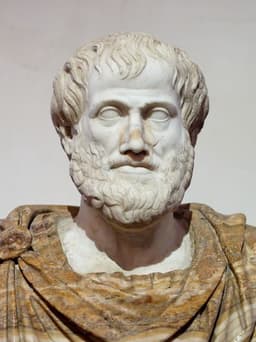
Aristotle
Philosopher · Ancient
59.3Total

Tran Hung Dao
General · Medieval
64.2Total
Basic Information
Born
-384
1228
Died
-322
1300
Era
Ancient
Medieval
Nationality
Greece
Vietnam
Occupation
Philosopher
General
Civilization
Western
Eastern
Score Comparison
Military (10%)
8.8
74.0
Political (20%)
35.0
68.0
Influence (20%)
92.0
72.0
Legacy (20%)
87.0
40.0
Leadership (15%)
27.2
70.0
Strategy (15%)
43.6
80.9
TOTAL
59.3
64.2
Aristotle — Complete Timeline
350 BC
Development of Formal LogicInvention
Aristotle developed the first formal system of logic, including syllogistic logic, in his work 'Organon'. He identified the rules of valid reasoning, such as the syllogism, which became the foundation of Western logic for over two millennia.
LogicPhilosophyScience
Impact: globalprogressive
343 BC
Tutoring Alexander the GreatCultural◆ Major
Philip II of Macedon invited Aristotle to tutor his son Alexander. Aristotle taught Alexander for several years, instilling in him an interest in Greek culture, science, and philosophy. This relationship influenced Alexander's later policies of Hellenization in his conquered territories.
EducationMentorshipHellenization
Impact: globalconstructive
340 BC
Publication of 'Nicomachean Ethics'Cultural◆ Major
Aristotle wrote the 'Nicomachean Ethics', a treatise on virtue ethics. He argued that the highest good is eudaimonia (flourishing) achieved through virtuous activity and practical wisdom. This work became a cornerstone of Western moral philosophy.
EthicsPhilosophyVirtue
Impact: globalconstructive
335 BC
Founding of the LyceumCultural◆ Major
Aristotle founded the Lyceum, a school in Athens dedicated to philosophical and scientific research. He established a library and organized systematic studies across disciplines. The Lyceum became a major center of learning, rivaling Plato's Academy.
SchoolPhilosophyResearch
Impact: globalconstructive
323 BC
Departure from AthensPolitical Action
After Alexander's death, anti-Macedonian sentiment rose in Athens. Aristotle, associated with Macedon, left the city to avoid persecution, saying he would not allow Athens to 'sin twice against philosophy' (referring to Socrates' execution). He died in exile in Chalcis.
ExilePoliticsPhilosophy
Tran Hung Dao — Complete Timeline
1258 AD
First Mongol Invasion of VietnamWar◆ Major
Tran Hung Dao commanded Vietnamese forces to repel the first Mongol invasion under Uriyangkhadai. The Mongols captured Thang Long but were forced to retreat due to supply issues and guerrilla tactics. The victory established Tran Hung Dao's reputation as a military leader.
Mongol InvasionDefenseTran Dynasty
Impact: regionalconstructive
1284 AD
Writing of the Hich Tuong Si (Call to Arms)Cultural◆ Major
Tran Hung Dao wrote the Hich Tuong Si, a famous military treatise and call to arms, to motivate his troops before the second Mongol invasion. The text emphasized patriotism and the importance of defending the homeland. It became a classic of Vietnamese literature.
Military TreatiseLiteraturePatriotism
Impact: nationalconstructive
1285 AD
Second Mongol Invasion of VietnamWar
Tran Hung Dao led Vietnamese forces against a larger Mongol invasion led by Kublai Khan's son, Toghon. After initial setbacks, he regrouped and launched a counteroffensive that drove the Mongols out of Vietnam. The victory was achieved through strategic retreats and ambushes.
Mongol InvasionCounteroffensiveMilitary Strategy
Impact: regionalconstructive
1288 AD
Battle of Bach Dang RiverWar
Tran Hung Dao achieved his greatest victory at the Battle of Bach Dang River, where he destroyed the Mongol invasion fleet. He used iron-tipped stakes hidden in the riverbed to impale enemy ships at high tide. The defeat ended Mongol attempts to conquer Vietnam.
Naval BattleMongol DefeatVietnamese Independence
Impact: regionalconstructive
Expert Analysis
# The Philosopher and the General: Two Paths to Immortality
On a spring morning in 335 BCE, a middle-aged Greek walked through the gates of Athens and began teaching beneath the covered walkways of a grove sacred to Apollo Lyceus. He called his school the Lyceum, and within its walls, he would attempt nothing less than to categorize all human knowledge. Just over fifteen centuries later, on the banks of a river in northern Vietnam, a Vietnamese commander watched Mongol ships impale themselves on hidden stakes beneath the water, their invasion fleet shattered by a strategy so audacious it still echoes through military academies today. Aristotle and Tran Hung Dao never met, never could have met—one was a philosopher who shaped how the West thinks, the other a general who saved a nation from the world's most fearsome empire. Yet both faced the same fundamental question: How does one person change the course of history?
Origins
Aristotle was born in 384 BCE in Stagira, a small Greek town on the northern Aegean coast. His father was physician to the king of Macedon, placing young Aristotle at the intersection of two worlds: the rigorous empirical tradition of medicine and the rising power of a kingdom that would soon conquer Greece. This dual inheritance—scientific curiosity and political proximity to power—shaped everything that followed. When his parents died, Aristotle was sent to Athens at seventeen, where he entered Plato's Academy and stayed for twenty years.
Tran Hung Dao was born in 1228 into the Tran dynasty, Vietnam's ruling family. Unlike Aristotle, who arrived at philosophy through medicine, Tran Hung Dao arrived at strategy through necessity. Vietnam in the thirteenth century existed in the shadow of the Mongol Empire, which had already swallowed China and was casting its gaze southward. The Tran dynasty had seized power only decades earlier, and its legitimacy was fragile. Tran Hung Dao grew up in a court where survival meant preparation—where every nobleman understood that the Mongols would come, and the only question was whether Vietnam would still exist when they left.
The differences in their origins are not merely geographical. Aristotle's world was one of city-states debating the nature of justice; Tran Hung Dao's was one of empires demanding submission. One man could afford to ask "What is the good life?" The other had to ask "How do we live through next year?"
Rise to Power
Aristotle's path to influence was intellectual. After Plato's death, he left Athens, traveled, and eventually received an invitation that would define his career: Philip II of Macedon asked him to tutor his son Alexander. In 343 BCE, Aristotle moved to the Macedonian court and spent several years teaching the future conqueror of the known world. It was a strange partnership—the systematic philosopher and the impulsive warrior-king—but it gave Aristotle access to resources and reach that no Greek philosopher had ever possessed.
Tran Hung Dao's rise was military and political. He commanded Vietnamese forces during the first Mongol invasion in 1258, repelling Uriyangkhadai's army through a combination of guerrilla tactics and strategic retreats. But his true test came in the 1280s, when Kublai Khan, having conquered China, turned his full attention to Southeast Asia. Tran Hung Dao was not merely a general; he was the architect of national resistance, the man who had to convince his own court not to surrender.
The contrast is instructive. Aristotle's power came from ideas—he shaped the mind of the man who would shape the world. Tran Hung Dao's power came from action—he shaped the battlefield that would save his world.
Leadership & Governance
Aristotle governed through teaching. At the Lyceum, he established a research program that covered biology, physics, ethics, politics, and logic. His students collected data on 158 different Greek constitutions. He developed the first formal system of logic, the syllogism, in his work "Organon." He wrote "Nicomachean Ethics," arguing that virtue lies in the golden mean between extremes. His political theory in "Politics" examined how different forms of government rise and fall.
Tran Hung Dao governed through strategy and inspiration. In 1284, as the second Mongol invasion loomed, he wrote "Hich Tuong Si" (Call to Arms), a military treatise that blended practical tactics with patriotic exhortation. "The enemy is strong," he wrote, "but their strength depends on logistics; cut their supply lines, and their strength becomes weakness." He implemented a scorched-earth policy, evacuating the capital Thang Long (modern Hanoi) and leaving nothing for the Mongols to seize.
Where Aristotle built systems of thought, Tran Hung Dao built systems of resistance. One created categories for understanding the world; the other created conditions for surviving its destruction.
Triumph & Tragedy
Aristotle's greatest triumph was intellectual. The Lyceum became the model for systematic research, and his works would dominate Western philosophy and science for nearly two thousand years. But his tragedy came with Alexander's death in 323 BCE. Anti-Macedonian sentiment exploded in Athens, and Aristotle, associated with the conqueror, fled the city "to prevent the Athenians from sinning twice against philosophy"—a reference to Socrates' execution. He died the following year in exile on the island of Euboea.
Tran Hung Dao's greatest triumph was the Battle of Bach Dang River in 1288. He planted iron-tipped stakes in the riverbed at low tide, then lured the Mongol fleet into the trap. When the tide rose, the Mongol ships were impaled; when it fell, they were destroyed. Kublai Khan never invaded Vietnam again. Tran Hung Dao died in 1300, honored and victorious, having seen his nation survive its greatest threat.
The difference in their endings is stark. Aristotle died in exile, his political world shattered. Tran Hung Dao died at home, a national hero. But this contrast reflects their different relationships to power: Aristotle was always dependent on patrons, while Tran Hung Dao was himself the patron of national survival.
Character & Destiny
Aristotle was systematic, cautious, and comprehensive. He sought to understand everything through classification and analysis. His personality was that of a collector—not of objects, but of categories. He believed that virtue was a mean between extremes, and his life reflected this moderation, even in exile.
Tran Hung Dao was calculating, patient, and ruthless when necessary. He understood that victory required sacrifice—of land, of cities, of comfort. His personality was that of a chess master playing against a stronger opponent, knowing that one mistake would end the game forever.
Their characters shaped their destinies. Aristotle's systematic mind created a framework that outlasted any empire. Tran Hung Dao's strategic patience created a victory that preserved a nation. One built for eternity; the other built for survival.
Legacy
Aristotle's legacy is immeasurable. His logic dominated Western thought until the nineteenth century. His ethics remain central to moral philosophy. His biology, though outdated, established empirical observation as the foundation of science. When medieval scholars called him "the Philosopher," they meant there was no other.
Tran Hung Dao's legacy is more focused but no less profound. He is Vietnam's greatest military hero, venerated as a national saint. His tactics are studied in military academies worldwide. The Battle of Bach Dang River remains a textbook example of asymmetric warfare. In Vietnam, temples honor him, and his name appears on streets in every city.
One legacy is universal, the other national. But both are eternal in their own domains.
Conclusion
Standing at the Lyceum, Aristotle asked his students: "What is the purpose of human life?" Standing on the banks of the Bach Dang, Tran Hung Dao asked his soldiers: "What is the price of freedom?" Both questions are still asked today, because both men understood something fundamental: that history is not made by empires or armies, but by individuals who see clearly and act decisively. Aristotle saw the structure of reason; Tran Hung Dao saw the structure of war. Both changed the world—one by teaching the West how to think, the other by teaching the East how to resist. In the end, perhaps the difference between the philosopher and the general is not so great. Both were architects of human possibility, building with the materials their times gave them.
Rankings
🥇
Tran Hung DaoLeader
Mil: 74.0Pol: 68.0Inf: 72.0
64.2
🥈
Aristotle
Mil: 8.8Pol: 35.0Inf: 92.0
59.3
+4.9 behind
How This Comparison Works
Algorithm
Each figure is scored on 6 dimensions (0—100 scale) based on structured historical data: Military (10%), Political (20%), Influence (20%), Legacy (20%), Leadership (15%), Strategy (15%). The weighted total produces the final ranking.
Data Sources
Scores are computed from structured sub-indicators in the database. Scale factors adjust for era (Ancient ×0.85, Modern ×1.0) and civilization size (Eastern ×1.05, Other ×0.80) to account for differences in population and military scale.
Maximum 3 Figures
Comparisons are limited to 2—3 figures to ensure readability and statistical meaningfulness.
Error Margins
±5 points per dimension — Sub-scores are derived from historical records with inherent uncertainty. Two figures within 5 points on a dimension should be considered roughly equivalent in that area.
Total Score Accuracy
±3 points overall — The weighted combination of 6 dimensions produces a total score with approximately ±3 points of uncertainty. Differences of less than 3 points are not statistically significant— the figures are effectively tied.
Known Limitations
- Historical records are incomplete and uneven across civilizations
- Figures from oral-tradition societies may be underrepresented
- Occupation labels can misclassify multi-role figures
- Scores measure capability and impact, not moral character
- Quantitative scoring is a comparison tool, not absolute truth
Capability Radar
Military (10%) — Battles & Warfare
Battles
17
85
Win Rate
16
90
Expansion
18
40
Political (20%) — Governance & Reform
Reform
30
60
Diplomacy
20
80
Economy
20
55
Influence (20%) — Cultural & Global Reach
Cultural
95
85
Global
95
70
Legacy (20%) — Historical Impact
Historical
95
90
Longevity
95
85
Leadership (15%) — Power & Stability
Tenure
10
65
Stability
10
70
Strategy (15%) — Tactics & Innovation
Strategy
21
88
Tactics
28
92
Reform
30
75
Similar Comparisons
Comments & Discussion
墨染山河6/19/2026
亚里士多德是套在逻辑壳子里的书虫,陈兴道才是真正改变历史的巨人。他三次击退元朝入侵,靠的不是纸上谈兵,而是对地理、民心和战术的极致运用。拿亚里士多德的形而上学来比,简直是拿羽毛称重铁砧。
LogicGrappler6/19/2026
Aristotle built an intellectual empire while Tran Hung Dao defended one. But let’s be real—philosophical abstraction doesn’t win wars. Tran Hung Dao’s guerrilla tactics against the Mongols saved a civilization, while Aristotle’s syllogisms got lost in translation for centuries. Give me the strategist who outsmarted Kublai Khan’s horde.
EmpireDissector6/19/2026
The comparison is apples to oranges—Aristotle shaped Western thought for millennia, while Tran Hung Dao’s influence is largely regional. But here’s the kicker: Tran Hung Dao’s military innovations, like the stake traps on the Bach Dang River, are still studied in naval warfare schools. Aristotle’s closest military contribution? Writing about the soul.
铁血史笔6/19/2026
我支持陈兴道。亚里士多德的逻辑学再牛,能挡住蒙古铁骑吗?1288年白藤江之战,陈兴道利用潮汐和木桩陷阱,歼灭元军数万,这是实战智慧。亚里士多德不过是雅典学院里的理论家,他的哲学教条在战场上毫无用处。
NarrativeLiberator6/19/2026
Both are overhyped in their own silos. Aristotle’s “Nicomachean Ethics” is a snoozefest, and Tran Hung Dao’s victory chants are propaganda. The real comparison? Neither holds a candle to someone like Sun Tzu, whose “Art of War” blends philosophy and strategy. Stop idolizing and start analyzing the gaps in their legacies.