Loading...
Aristotle vs Mozi
Aristotle leads by 14.2 pts · 2 figures compared
…
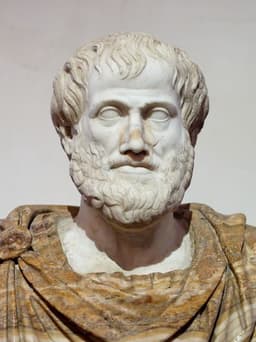
Aristotle
Philosopher · Ancient
59.3Total

Mozi
Philosopher · Ancient
45.1Total
Basic Information
Born
-384
-470
Died
-322
-391
Era
Ancient
Ancient
Nationality
Greece
China
Occupation
Philosopher
Philosopher
Civilization
Western
Eastern
Score Comparison
Military (10%)
8.8
34.9
Political (20%)
35.0
33.9
Influence (20%)
92.0
55.0
Legacy (20%)
87.0
54.0
Leadership (15%)
27.2
40.9
Strategy (15%)
43.6
31.7
TOTAL
59.3
45.1
Aristotle — Complete Timeline
350 BC
Development of Formal LogicInvention
Aristotle developed the first formal system of logic, including syllogistic logic, in his work 'Organon'. He identified the rules of valid reasoning, such as the syllogism, which became the foundation of Western logic for over two millennia.
LogicPhilosophyScience
Impact: globalprogressive
343 BC
Tutoring Alexander the GreatCultural◆ Major
Philip II of Macedon invited Aristotle to tutor his son Alexander. Aristotle taught Alexander for several years, instilling in him an interest in Greek culture, science, and philosophy. This relationship influenced Alexander's later policies of Hellenization in his conquered territories.
EducationMentorshipHellenization
Impact: globalconstructive
340 BC
Publication of 'Nicomachean Ethics'Cultural◆ Major
Aristotle wrote the 'Nicomachean Ethics', a treatise on virtue ethics. He argued that the highest good is eudaimonia (flourishing) achieved through virtuous activity and practical wisdom. This work became a cornerstone of Western moral philosophy.
EthicsPhilosophyVirtue
Impact: globalconstructive
335 BC
Founding of the LyceumCultural◆ Major
Aristotle founded the Lyceum, a school in Athens dedicated to philosophical and scientific research. He established a library and organized systematic studies across disciplines. The Lyceum became a major center of learning, rivaling Plato's Academy.
SchoolPhilosophyResearch
Impact: globalconstructive
323 BC
Departure from AthensPolitical Action
After Alexander's death, anti-Macedonian sentiment rose in Athens. Aristotle, associated with Macedon, left the city to avoid persecution, saying he would not allow Athens to 'sin twice against philosophy' (referring to Socrates' execution). He died in exile in Chalcis.
ExilePoliticsPhilosophy
Mozi — Complete Timeline
450 BC
Founded the Mohist SchoolCultural◆ Major
Mozi established the Mohist school of philosophy, which directly challenged Confucianism. The school promoted universal love, meritocracy, and pacifism, and developed rigorous logical argumentation, attracting a large following during the Warring States period.
PhilosophyFoundingMohist School
Impact: regionalconstructive
440 BC
Developed Defensive Military StrategyOther
Mozi and his followers developed sophisticated defensive siegecraft and military strategy to protect small states from aggression. They wrote treatises on fortification and counter-siege techniques, which were later compiled in the Mozi text.
Military StrategyDefenseSiegecraft
Impact: regionalconstructive
400 BC
Compiled the Mozi TextCultural◆ Major
The core philosophical and technical writings of Mozi and his disciples were compiled into the Mozi text. This work contains the earliest known Chinese logical treatises, including discussions on geometry, optics, and mechanics, as well as ethical and political doctrines.
TextPhilosophyScience
Impact: regionalconstructive
Expert Analysis
Origins
Aristotle was born in 384 BCE in Stagira, a Greek city in Chalcidice. His father, Nicomachus, was court physician to King Amyntas III of Macedon, exposing Aristotle to biology and medicine early. Orphaned young, he moved to Athens at 17 to study at Plato's Academy, where he stayed for 20 years until Plato's death. This immersion in Platonic thought formed his foundation, but he later diverged significantly.
Mozi was born around 470 BCE in the state of Lu (modern Shandong), likely into a humble artisan family. Little is known of his early life, but he trained as a carpenter and later became a scholar. He was initially educated in Confucianism but rejected its emphasis on elaborate rites and filial piety, founding his own school around the age of 30. His background as a craftsman influenced his practical, utilitarian approach.
Rise to Power
Aristotle's rise began when he left Athens after Plato's death in 347 BCE, traveling to Assos and Lesbos to conduct biological research. In 343 BCE, Philip II of Macedon invited him to tutor his son Alexander, a position that lasted about three years. This connection elevated Aristotle's status enormously. After Alexander's accession, Aristotle returned to Athens in 335 BCE and founded the Lyceum, a school that rivaled Plato's Academy. He taught there for 12 years, producing most of his surviving works.
Mozi's rise came through founding the Mohist school in the 5th century BCE. He attracted a large following of disciples who organized into a disciplined, quasi-military group. Mozi traveled between warring states, offering his defensive strategies to small states threatened by larger ones. His reputation grew through his success in preventing invasions and his logical arguments against Confucianism. His school became one of the major philosophical movements of the Warring States period.
Leadership & Governance
Aristotle's leadership style was that of a systematic researcher and teacher. He organized the Lyceum with a library, collections, and collaborative research projects, pioneering the empirical method. In governance, he advocated for a mixed constitution combining monarchy, aristocracy, and democracy, as outlined in his 'Politics'. He believed the middle class should be the ruling class for stability. His political score is 35.0, reflecting his theoretical influence but limited practical power.
Mozi's leadership was more activist and egalitarian. He promoted meritocracy, selecting officials based on ability rather than birth. His school had strict rules: members were to live simply, reject luxury, and promote universal love. Mozi personally led defensive campaigns, using his military strategy (score 34.9) to protect states like Song. He opposed aggressive war but supported defensive measures. His political score is 33.9, comparable to Aristotle's, but his influence was more direct in his time.
Triumph & Tragedy
Aristotle's greatest triumph was his comprehensive system: he founded formal logic (syllogistic logic), developed metaphysics, ethics, and biology. His works like 'Nicomachean Ethics' and 'Politics' shaped Western philosophy for 2,000 years. His tutoring of Alexander helped spread Greek culture across the known world. However, his greatest failure was his exile from Athens in 323 BCE after Alexander's death, fleeing to Chalcis where he died a year later. His association with Macedonia made him suspect, and he left Athens to prevent the city from "sinning against philosophy twice" (referring to Socrates' execution).
Mozi's triumph was establishing Mohism as a major school that rivaled Confucianism for centuries. His logical and ethical writings, including the earliest Chinese logical fragments, were influential. He successfully defended small states through siegecraft. Yet his tragedy was the decline of Mohism after the Qin unification. Its organizational structure and pacifist ideals were suppressed by the Legalist Qin dynasty, and later Confucianism became dominant. By the Han dynasty, Mohism was nearly extinct, surviving only as a minor influence.
Character & Destiny
Aristotle was methodical, analytical, and perhaps arrogant. He famously criticized his teacher Plato: "Amicus Plato, sed magis amica veritas" (Friend Plato, but friendlier truth). His character drove him to systematize all knowledge, but his political naivety (scoring 27.2 in leadership) left him vulnerable to Athens' anti-Macedonian sentiment. His destiny was to be a giant of thought but a pawn in power struggles.
Mozi was pragmatic, passionate, and self-sacrificing. He preached universal love and condemned offensive war, but he was willing to use force defensively. His character was that of a moral crusader, which earned him devoted followers but also enemies among Confucian elites. His destiny was to be a powerful but temporary force, eclipsed by the very systems he opposed.
Legacy
Aristotle's legacy is immense. His logic (score 92.0 influence) dominated Western thought until the 19th century. His biology was used for centuries. His ethics remain central to virtue ethics. His political theory influenced medieval and modern thinkers. He scored 87.0 in legacy, reflecting his enduring impact on philosophy, science, and education.
Mozi's legacy is more modest but significant. His influence (55.0) and legacy (54.0) are lower due to Mohism's decline. However, his ideas on universal love influenced later Chinese thought, including some interpretations of Confucianism. His logical contributions are recognized as early Chinese logic. In modern times, his meritocracy and pacifism have seen renewed interest. His military writings are studied for their historical value.
Conclusion
Aristotle had greater impact overall. His total score of 59.3 vs Mozi's 45.1 reflects his broader and deeper influence across multiple fields. Aristotle's logic, ethics, and science shaped Western civilization for millennia, while Mozi's school faded after a few centuries. However, Mozi's contributions are notable for their originality and moral force. In terms of philosophical innovation, Aristotle's systematic approach created foundational tools for all Western thought, whereas Mozi's ideas, though powerful, were not as enduring. Thus, Aristotle stands as the more significant figure in world history.
Rankings
🥇
AristotleLeader
Mil: 8.8Pol: 35.0Inf: 92.0
59.3
🥈
Mozi
Mil: 34.9Pol: 33.9Inf: 55.0
45.1
+14.2 behind
How This Comparison Works
Algorithm
Each figure is scored on 6 dimensions (0—100 scale) based on structured historical data: Military (10%), Political (20%), Influence (20%), Legacy (20%), Leadership (15%), Strategy (15%). The weighted total produces the final ranking.
Data Sources
Scores are computed from structured sub-indicators in the database. Scale factors adjust for era (Ancient ×0.85, Modern ×1.0) and civilization size (Eastern ×1.05, Other ×0.80) to account for differences in population and military scale.
Maximum 3 Figures
Comparisons are limited to 2—3 figures to ensure readability and statistical meaningfulness.
Error Margins
±5 points per dimension — Sub-scores are derived from historical records with inherent uncertainty. Two figures within 5 points on a dimension should be considered roughly equivalent in that area.
Total Score Accuracy
±3 points overall — The weighted combination of 6 dimensions produces a total score with approximately ±3 points of uncertainty. Differences of less than 3 points are not statistically significant— the figures are effectively tied.
Known Limitations
- Historical records are incomplete and uneven across civilizations
- Figures from oral-tradition societies may be underrepresented
- Occupation labels can misclassify multi-role figures
- Scores measure capability and impact, not moral character
- Quantitative scoring is a comparison tool, not absolute truth
Capability Radar
Military (10%) — Battles & Warfare
Battles
17
0
Win Rate
16
0
Expansion
18
0
Political (20%) — Governance & Reform
Reform
30
30
Diplomacy
20
20
Economy
20
10
Influence (20%) — Cultural & Global Reach
Cultural
95
60
Global
95
45
Legacy (20%) — Historical Impact
Historical
95
55
Longevity
95
50
Leadership (15%) — Power & Stability
Tenure
10
0
Stability
10
10
Strategy (15%) — Tactics & Innovation
Strategy
21
20
Tactics
28
15
Reform
30
10
Similar Comparisons
Comments & Discussion
No comments yet. Be the first to share your thoughts!