Loading...
Aristotle vs Han Feizi
Aristotle leads by 4.5 pts · 2 figures compared
…
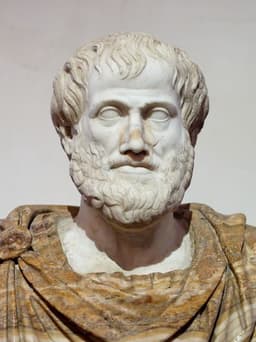
Aristotle
Philosopher · Ancient
59.3Total

Han Feizi
Philosopher · Ancient
54.8Total
Basic Information
Born
-384
-280
Died
-322
-233
Era
Ancient
Ancient
Nationality
Greece
China
Occupation
Philosopher
Philosopher
Civilization
Western
Eastern
Score Comparison
Military (10%)
8.8
8.9
Political (20%)
35.0
35.0
Influence (20%)
92.0
65.0
Legacy (20%)
87.0
75.0
Leadership (15%)
27.2
62.6
Strategy (15%)
43.6
42.3
TOTAL
59.3
54.8
Aristotle — Complete Timeline
350 BC
Development of Formal LogicInvention
Aristotle developed the first formal system of logic, including syllogistic logic, in his work 'Organon'. He identified the rules of valid reasoning, such as the syllogism, which became the foundation of Western logic for over two millennia.
LogicPhilosophyScience
Impact: globalprogressive
343 BC
Tutoring Alexander the GreatCultural◆ Major
Philip II of Macedon invited Aristotle to tutor his son Alexander. Aristotle taught Alexander for several years, instilling in him an interest in Greek culture, science, and philosophy. This relationship influenced Alexander's later policies of Hellenization in his conquered territories.
EducationMentorshipHellenization
Impact: globalconstructive
340 BC
Publication of 'Nicomachean Ethics'Cultural◆ Major
Aristotle wrote the 'Nicomachean Ethics', a treatise on virtue ethics. He argued that the highest good is eudaimonia (flourishing) achieved through virtuous activity and practical wisdom. This work became a cornerstone of Western moral philosophy.
EthicsPhilosophyVirtue
Impact: globalconstructive
335 BC
Founding of the LyceumCultural◆ Major
Aristotle founded the Lyceum, a school in Athens dedicated to philosophical and scientific research. He established a library and organized systematic studies across disciplines. The Lyceum became a major center of learning, rivaling Plato's Academy.
SchoolPhilosophyResearch
Impact: globalconstructive
323 BC
Departure from AthensPolitical Action
After Alexander's death, anti-Macedonian sentiment rose in Athens. Aristotle, associated with Macedon, left the city to avoid persecution, saying he would not allow Athens to 'sin twice against philosophy' (referring to Socrates' execution). He died in exile in Chalcis.
ExilePoliticsPhilosophy
Han Feizi — Complete Timeline
240 BC
Wrote the Han FeiziCultural◆ Major
Han Feizi authored the Han Feizi, a foundational text of Legalist philosophy. The work synthesized earlier Legalist ideas, advocating for strict laws, centralized authority, and a system of rewards and punishments to govern the state effectively.
PhilosophyLegalist TextStatecraft
Impact: regional
233 BC
Imprisoned and Poisoned by Li SiPolitical Action◆ Major
Han Feizi was sent as an envoy to the Qin state, where his former classmate Li Si, now a Qin minister, became jealous of his abilities. Li Si had Han Feizi imprisoned on false charges and forced him to commit suicide by poison, ending his life before his ideas were fully implemented.
DeathPolitical RivalryQin
Impact: nationaltragic
Expert Analysis
Origins
Aristotle was born in 384 BCE in Stagira, a Greek colony in Thrace. His father, Nicomachus, was court physician to King Amyntas III of Macedon, providing Aristotle with early exposure to biology and medicine. After his parents' death, he was raised by a guardian and sent to Athens at age 17 to study at Plato's Academy, where he remained for 20 years. This education steeped him in Platonic idealism, but Aristotle's own empirical tendencies would later diverge sharply from his teacher's views.
Han Feizi was born around 280 BCE into the royal family of the state of Han during the Warring States period in China. As a prince, he witnessed the political fragmentation and constant warfare among seven major states. He studied under the Confucian scholar Xunzi alongside Li Si, who would later become a key minister of Qin. Unlike Aristotle's privileged academic setting, Han Feizi's formative years were marked by the brutal realities of interstate competition and the failure of Confucian moralism to achieve order.
Rise to Power
After Plato's death, Aristotle left Athens and traveled to Assos and Lesbos, conducting biological research. In 343 BCE, King Philip II of Macedon invited him to tutor his son Alexander, then 13. Aristotle accepted, spending three years at the Macedonian court. This connection elevated his status immensely. After Alexander's accession, Aristotle returned to Athens in 335 BCE and founded the Lyceum, a school that rivaled Plato's Academy. He established a library and organized systematic research across disciplines, attracting students and scholars. His rise was intellectual rather than political, but his influence grew through his writings and teaching.
Han Feizi sought to influence rulers through his writings. He authored essays on statecraft, which were collected posthumously as the Han Feizi. Despite his noble birth, his home state of Han was weak and ignored his advice. Around 234 BCE, the king of Qin, Ying Zheng (later Qin Shi Huang), read Han Feizi's works and was so impressed that he invaded Han to secure the author's services. Han Feizi was sent as an envoy to Qin, where he met his former classmate Li Si. Jealous of Han Feizi's abilities, Li Si framed him for disloyalty. Han Feizi was imprisoned and forced to drink poison in 233 BCE, dying before he could implement his ideas directly. His rise was cut short by political intrigue.
Leadership & Governance
Aristotle's leadership was that of a scholar and teacher. At the Lyceum, he promoted collaborative research and debate, emphasizing empirical observation and logical analysis. His governance ideas, outlined in 'Politics', advocated for a mixed constitution balancing monarchy, aristocracy, and democracy. He believed the state should cultivate virtue in citizens, with laws supporting ethical living. His approach was moderate and pragmatic, favoring the middle class to stabilize society. Aristotle's political score of 35.0 reflects his theoretical influence rather than direct governance.
Han Feizi's governance philosophy was radical: rule by law without moral considerations. He argued that human nature is selfish and that only strict laws, harsh punishments, and centralized authority can maintain order. The ruler should remain mysterious and wield power through 'shu' (statecraft) and 'shi' (strategic position). Han Feizi rejected Confucian virtue ethics as ineffective. His ideas were implemented by Qin Shi Huang, who unified China in 221 BCE using Legalist policies: standardized laws, writing, and measures; suppression of dissent; and rewards for military merit. Han Feizi's leadership score of 62.6 is higher than Aristotle's 27.2, reflecting his direct impact on governance systems.
Triumph & Tragedy
Aristotle's greatest triumph was the creation of formal logic, a system of reasoning that dominated Western thought for two millennia. His 'Organon' laid the groundwork for scientific method. He also made foundational contributions to biology, classifying over 500 species. His 'Nicomachean Ethics' remains a cornerstone of virtue ethics. However, his tragedy was that many of his works were lost to the West for centuries; only about one-third of his writings survive. His association with Alexander also made him a target after Alexander's death, forcing him to flee Athens in 322 BCE, saying he would not let the Athenians 'sin twice against philosophy' (a reference to Socrates). He died in exile the same year.
Han Feizi's triumph was his lasting influence on Chinese governance. His synthesized Legalist doctrines directly enabled Qin Shi Huang to conquer the other states and create the first unified Chinese empire. The Han Feizi became a foundational text for imperial administration. His tragedy was his personal failure: he was unable to implement his ideas in his own state and was killed by a rival. Moreover, his philosophy's harshness led to the Qin dynasty's rapid collapse after the First Emperor's death in 210 BCE. The Qin's draconian laws and suppression of intellectual dissent provoked rebellion, discrediting Legalism for later dynasties.
Character & Destiny
Aristotle was methodical, curious, and systematic. He approached knowledge by categorizing and analyzing, always seeking the 'golden mean' in ethics. His character shaped his destiny: his empirical mindset led to groundbreaking science, but his departure from Athens showed a cautious side. He avoided the fate of Socrates by leaving, ensuring his ideas would survive through his students. He scored 27.2 in leadership but 92.0 in influence, reflecting his intellectual rather than political power.
Han Feizi was brilliant but politically naive. He believed that rational argument could persuade rulers, yet he underestimated the jealousy of Li Si. His character was shaped by the desperation of a weak state; he advocated for ruthless measures because he saw no other path to order. His destiny was tragic: his ideas triumphed, but he died a victim of the very power struggles he analyzed. He scored 62.6 in leadership, higher than Aristotle, because his theories directly shaped statecraft.
Legacy
Aristotle's legacy is immense in the West. His logic remained the standard until the 19th century; his metaphysics and ethics continue to be studied. The Lyceum set a model for academic institutions. His influence score of 92.0 is among the highest in history. He shaped fields from biology to political theory. However, his direct impact on governance was limited; his ideas were revived in the Middle Ages but never implemented wholesale.
Han Feizi's legacy is more concrete in governance. The Qin dynasty's unification based on his principles created the template for Chinese imperial rule. Despite the Qin's fall, subsequent dynasties retained Legalist administrative practices alongside Confucian ideology. His ideas on law, bureaucracy, and state control influenced Chinese governance for over two millennia. His influence score of 65.0 is lower than Aristotle's, but his political impact scored 35.0, equal to Aristotle's, showing that both shaped political thought.
Conclusion
Aristotle had greater overall impact with a total score of 59.3 versus Han Feizi's 54.8. Aristotle's contributions to logic, science, and philosophy are foundational to multiple civilizations, while Han Feizi's ideas, though transformative for China, were more narrowly applied and often tempered by Confucianism. Aristotle's influence is broader and more enduring across cultures. However, in terms of direct governance impact, Han Feizi's Legalism directly shaped the unification of China, a decisive historical event. Taking a clear position: Aristotle's intellectual legacy is superior in scope and longevity, making him the more significant figure in world history.
Rankings
🥇
AristotleLeader
Mil: 8.8Pol: 35.0Inf: 92.0
59.3
🥈
Han Feizi
Mil: 8.9Pol: 35.0Inf: 65.0
54.8
+4.5 behind
How This Comparison Works
Algorithm
Each figure is scored on 6 dimensions (0—100 scale) based on structured historical data: Military (10%), Political (20%), Influence (20%), Legacy (20%), Leadership (15%), Strategy (15%). The weighted total produces the final ranking.
Data Sources
Scores are computed from structured sub-indicators in the database. Scale factors adjust for era (Ancient ×0.85, Modern ×1.0) and civilization size (Eastern ×1.05, Other ×0.80) to account for differences in population and military scale.
Maximum 3 Figures
Comparisons are limited to 2—3 figures to ensure readability and statistical meaningfulness.
Error Margins
±5 points per dimension — Sub-scores are derived from historical records with inherent uncertainty. Two figures within 5 points on a dimension should be considered roughly equivalent in that area.
Total Score Accuracy
±3 points overall — The weighted combination of 6 dimensions produces a total score with approximately ±3 points of uncertainty. Differences of less than 3 points are not statistically significant— the figures are effectively tied.
Known Limitations
- Historical records are incomplete and uneven across civilizations
- Figures from oral-tradition societies may be underrepresented
- Occupation labels can misclassify multi-role figures
- Scores measure capability and impact, not moral character
- Quantitative scoring is a comparison tool, not absolute truth
Capability Radar
Military (10%) — Battles & Warfare
Battles
17
14
Win Rate
16
16
Expansion
18
24
Political (20%) — Governance & Reform
Reform
30
85
Diplomacy
20
20
Economy
20
30
Influence (20%) — Cultural & Global Reach
Cultural
95
70
Global
95
75
Legacy (20%) — Historical Impact
Historical
95
85
Longevity
95
90
Leadership (15%) — Power & Stability
Tenure
10
0
Stability
10
40
Strategy (15%) — Tactics & Innovation
Strategy
21
24
Tactics
28
24
Reform
30
27
Similar Comparisons
Comments & Discussion
No comments yet. Be the first to share your thoughts!