Loading...
This comparison has not been analyzed yet.
One-time AI generation (~1 minute). Scores and timeline are already available below.
Ariarathes IX of Cappadocia vs Demetrius I Soter
Demetrius I Soter leads by 5.8 pts · 2 figures compared
…
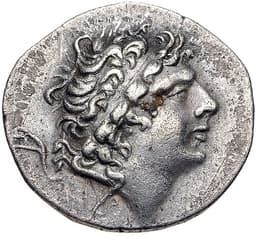
Ariarathes IX of Cappadocia
Emperor · Ancient
40.3Total
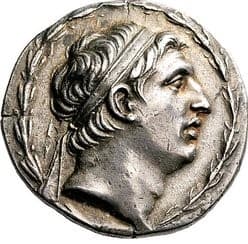
Demetrius I Soter
Emperor · Ancient
46.1Total
Basic Information
Born
-109
-187
Died
-85
-150
Era
Ancient
Ancient
Nationality
Cappadocia
Seleucid Empire
Occupation
Emperor
Emperor
Civilization
Western
Middle Eastern
Score Comparison
Military (10%)
10.2
40.0
Political (20%)
39.4
37.9
Influence (20%)
56.4
49.4
Legacy (20%)
31.7
43.3
Leadership (15%)
49.9
48.4
Strategy (15%)
38.6
60.0
TOTAL
40.3
46.1
Ariarathes IX of Cappadocia — Complete Timeline
100 BC
Installation as Puppet King by Mithridates VIPolitical Action◆ Major
Ariarathes IX was installed as king of Cappadocia by his father, Mithridates VI of Pontus, after the murder of the previous king. He served as a puppet ruler, with real power exercised by Pontic officials.
Pontic DominationPuppet KingMithridates VI
Impact: regionaldestructive
95 BC
Expulsion by Cappadocian NobilityPolitical Action
Ariarathes IX was expelled from Cappadocia by a rebellion of the local nobility, who opposed Pontic control. The rebels appealed to Rome for a new king, leading to the appointment of Ariobarzanes I.
RebellionExpulsionRoman Intervention
Impact: national
93 BC
Restoration by Mithridates VIWar
Mithridates VI restored Ariarathes IX to the Cappadocian throne after expelling the Roman-appointed king Ariobarzanes I. This act was part of Mithridates' broader campaign to challenge Roman influence in Anatolia.
Pontic RestorationMithridatic WarsCappadocia
Impact: regional
85 BC
Final Expulsion and DeathWar◆ Major
Ariarathes IX was finally expelled from Cappadocia after the First Mithridatic War ended in Roman victory. He was killed shortly after, ending the Pontic puppet regime in Cappadocia.
Mithridatic WarsDeathEnd of Puppet Rule
Impact: regionaltragic
Demetrius I Soter — Complete Timeline
162 BC
Return from Roman HostagePolitical Action◆ Major
Demetrius I Soter escaped from Rome, where he had been held as a hostage, and returned to Syria. He overthrew the regent Lysias and the young king Antiochus V, claiming the Seleucid throne. His return was supported by the Roman Senate.
ReturnCoupSeleucid Dynasty
Impact: regional
161 BC
Campaign Against the MaccabeesWar◆ Major
Demetrius I sent an army under General Nicanor to suppress the Maccabean Revolt in Judea. Nicanor was defeated and killed at the Battle of Adasa by Judas Maccabeus. This victory solidified Maccabean control over Judea.
CampaignMaccabean RevoltBattle of Adasa
Impact: regionaldestructive
150 BC
Death in BattleWar◆ Major
Demetrius I was killed in battle against the forces of Alexander Balas, a rival claimant to the Seleucid throne supported by Rome and Pergamon. His death ended his reign and plunged the Seleucid Empire into further civil war.
BattleDeathCivil War
Impact: regionaltragic
This comparison has not been analyzed yet.
One-time AI generation (~1 minute). Scores and timeline are already available below.
Rankings
🥇
Demetrius I SoterLeader
Mil: 40.0Pol: 37.9Inf: 49.4
46.1
🥈
Ariarathes IX of Cappadocia
Mil: 10.2Pol: 39.4Inf: 56.4
40.3
+5.8 behind
How This Comparison Works
Algorithm
Each figure is scored on 6 dimensions (0—100 scale) based on structured historical data: Military (10%), Political (20%), Influence (20%), Legacy (20%), Leadership (15%), Strategy (15%). The weighted total produces the final ranking.
Data Sources
Scores are computed from structured sub-indicators in the database. Scale factors adjust for era (Ancient ×0.85, Modern ×1.0) and civilization size (Eastern ×1.05, Other ×0.80) to account for differences in population and military scale.
Maximum 3 Figures
Comparisons are limited to 2—3 figures to ensure readability and statistical meaningfulness.
Error Margins
±5 points per dimension — Sub-scores are derived from historical records with inherent uncertainty. Two figures within 5 points on a dimension should be considered roughly equivalent in that area.
Total Score Accuracy
±3 points overall — The weighted combination of 6 dimensions produces a total score with approximately ±3 points of uncertainty. Differences of less than 3 points are not statistically significant— the figures are effectively tied.
Known Limitations
- Historical records are incomplete and uneven across civilizations
- Figures from oral-tradition societies may be underrepresented
- Occupation labels can misclassify multi-role figures
- Scores measure capability and impact, not moral character
- Quantitative scoring is a comparison tool, not absolute truth
Capability Radar
Military (10%) — Battles & Warfare
Battles
5
45
Win Rate
5
40
Expansion
5
40
Political (20%) — Governance & Reform
Reform
0
30
Diplomacy
5
40
Economy
0
30
Influence (20%) — Cultural & Global Reach
Cultural
0
30
Global
0
25
Legacy (20%) — Historical Impact
Historical
5
40
Longevity
5
30
Leadership (15%) — Power & Stability
Tenure
10
35
Stability
5
25
Strategy (15%) — Tactics & Innovation
Strategy
5
55
Tactics
5
50
Reform
0
30
Similar Comparisons
Comments & Discussion
No comments yet. Be the first to share your thoughts!