Loading...
Demetrius I Soter vs Sargon I
Demetrius I Soter leads by 7.8 pts · 2 figures compared
…
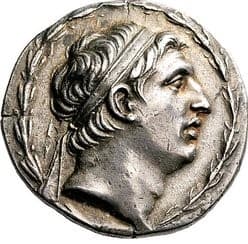
Demetrius I Soter
Emperor · Ancient
46.1Total
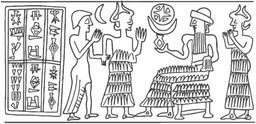
Sargon I
Emperor · Ancient
38.3Total
Basic Information
Born
-187
-1885
Died
-150
-1850
Era
Ancient
Ancient
Nationality
Seleucid Empire
Assyria
Occupation
Emperor
Emperor
Civilization
Middle Eastern
Middle Eastern
Score Comparison
Military (10%)
40.0
47.5
Political (20%)
37.9
26.4
Influence (20%)
49.4
43.2
Legacy (20%)
43.3
35.8
Leadership (15%)
48.4
41.5
Strategy (15%)
60.0
35.7
TOTAL
46.1
38.3
Demetrius I Soter — Complete Timeline
162 BC
Return from Roman HostagePolitical Action◆ Major
Demetrius I Soter escaped from Rome, where he had been held as a hostage, and returned to Syria. He overthrew the regent Lysias and the young king Antiochus V, claiming the Seleucid throne. His return was supported by the Roman Senate.
ReturnCoupSeleucid Dynasty
Impact: regional
161 BC
Campaign Against the MaccabeesWar◆ Major
Demetrius I sent an army under General Nicanor to suppress the Maccabean Revolt in Judea. Nicanor was defeated and killed at the Battle of Adasa by Judas Maccabeus. This victory solidified Maccabean control over Judea.
CampaignMaccabean RevoltBattle of Adasa
Impact: regionaldestructive
150 BC
Death in BattleWar◆ Major
Demetrius I was killed in battle against the forces of Alexander Balas, a rival claimant to the Seleucid throne supported by Rome and Pergamon. His death ended his reign and plunged the Seleucid Empire into further civil war.
BattleDeathCivil War
Impact: regionaltragic
Sargon I — Complete Timeline
1870 BC
Conquest of Upper MesopotamiaWar◆ Major
Sargon I led military campaigns that expanded Assyrian control over Upper Mesopotamia, securing trade routes and tribute from local rulers. This established Assyria as a regional power during the Old Assyrian period.
Assyrian ExpansionMilitary Campaign
Impact: regional
1865 BC
Establishment of the Old Assyrian EmpirePolitical Action◆ Major
Sargon I consolidated Assyrian rule by centralizing administration and fortifying the capital Ashur. His reign marked the peak of Old Assyrian power, with influence extending to Anatolia and the Levant.
State FormationImperial Consolidation
Impact: regionalconstructive
Expert Analysis
Origins
Demetrius I Soter was born around 185 BCE as the son of Seleucus IV Philopator, king of the Seleucid Empire. As a prince, he was sent to Rome as a hostage under the Treaty of Apamea (188 BCE), which had ended the Roman-Seleucid War. His formative years were spent in Roman captivity, where he observed Roman politics and military discipline. This experience shaped his later diplomatic and military strategies.
Sargon I (also known as Šarru-kīn) reigned circa 1920–1881 BCE as a king of the Old Assyrian period. Little is known about his early life, but he was not of royal birth; inscriptions suggest he rose from humble origins. He became the ruler of the city-state Ashur and expanded its influence through trade and conquest. His name, meaning "the king is legitimate," was later adopted by the more famous Sargon of Akkad.
Rise to Power
Demetrius I escaped from Rome in 162 BCE, after the death of his father and the usurpation of the throne by the regent Lysias and the child king Antiochus V. He returned to Syria, gathered support, and overthrew Lysias, executing him and Antiochus V. By 161 BCE, Demetrius was recognized as king, securing his rule through a combination of military force and diplomatic recognition from the Roman Senate, which initially hesitated but eventually accepted him.
Sargon I rose to power by consolidating control over Ashur and its surrounding territories. He capitalized on the decline of the powerful kingdom of Mari and the weakening of rival city-states. Through a series of campaigns, he extended Assyrian hegemony over Upper Mesopotamia, securing key trade routes. His success in diplomacy and warfare established him as the dominant ruler in the region, laying the foundation for the Old Assyrian Empire.
Leadership & Governance
Demetrius I Soter governed the Seleucid Empire during a period of internal strife and external threats. He attempted to centralize authority but faced rebellions, notably the Maccabean Revolt in Judea. His leadership style was reactive; he often responded to crises with military force rather than proactive reforms. For example, his campaign against the Maccabees in 161 BCE ended in defeat at the Battle of Adasa, where his general Nicanor was killed. Demetrius also struggled with legitimacy, as his rival Alexander Balas was backed by Rome and Pergamon.
Sargon I, in contrast, focused on building a stable administrative structure. He fortified Ashur, established trade networks, and collected tribute from vassal states. His governance was pragmatic, emphasizing economic prosperity and military deterrence. He scored 26.4 in political acumen, reflecting limited institutional reforms, but his leadership score of 41.5 indicates effective command. Unlike Demetrius, Sargon’s reign saw no major internal rebellions.
Triumph & Tragedy
Demetrius’s greatest success was his escape from Rome and reclaiming the throne, a feat that demonstrated his resourcefulness. He also managed to defeat the usurper Timarchus in Media, temporarily stabilizing the eastern provinces. However, his greatest failure was his inability to retain power. His defeat by the Maccabees undermined his authority, and he was killed in battle in 150 BCE against Alexander Balas, whose forces were supported by Rome. Demetrius scored 40.0 in military, reflecting mixed outcomes.
Sargon I’s triumph was the expansion of Assyrian control over Upper Mesopotamia, establishing Assyria as a regional power. He secured trade routes and tribute, boosting the economy. His tragedy is the obscurity of his later years; his empire did not long outlast him, as subsequent rulers faced decline. He scored 47.5 in military, higher than Demetrius, but his legacy score of 35.8 is lower due to limited lasting impact.
Character & Destiny
Demetrius was characterized by ambition and resilience but also by poor strategic judgment. His decision to execute the usurper Andriscus and his harsh treatment of the Maccabees alienated potential allies. His reliance on mercenaries and his failure to secure Roman favor ultimately doomed him. Historians note that his reign was a constant struggle for survival, and his death marked the beginning of the Seleucid Empire's terminal decline.
Sargon I was a pragmatic ruler who understood the importance of trade and military strength. His rise from non-royal origins suggests adaptability and political savvy. However, his empire was fragile, built on personal loyalty rather than institutions. After his death, Assyria entered a period of stagnation until the Middle Assyrian period. His character was more suited to founding than sustaining an empire.
Legacy
Demetrius I Soter’s legacy is mixed. He is remembered as a king who fought valiantly but failed to halt the empire's fragmentation. His defeat of the Maccabees temporarily suppressed the revolt, but it ultimately strengthened Jewish resistance and contributed to the Hasmonean dynasty. His score of 43.3 in legacy reflects his role in a pivotal period of Seleucid history, but his impact was overshadowed by later figures.
Sargon I’s legacy lies in establishing the Old Assyrian state as a model for future empires. His administrative and military strategies influenced later Assyrian kings. However, his fame is eclipsed by the later Sargon of Akkad, with whom he is often confused. His legacy score of 35.8 is modest, but he laid the groundwork for Assyria's later dominance.
Conclusion
Demetrius I Soter, with a total score of 46.1, had a higher immediate impact as a Seleucid king, but his reign was characterized by failure and decline. Sargon I, scoring 38.3, was a more effective founder who established Assyrian power, though his long-term influence is less. In terms of historical significance, Sargon I’s foundational role in Assyrian history arguably outweighs Demetrius’s desperate defense of a crumbling empire. However, given the scores and the broader context, Demetrius had greater impact due to his involvement in major events like the Maccabean Revolt and the Roman intervention in the East. Therefore, Demetrius I Soter is judged to have had a greater overall impact.
Rankings
🥇
Demetrius I SoterLeader
Mil: 40.0Pol: 37.9Inf: 49.4
46.1
🥈
Sargon I
Mil: 47.5Pol: 26.4Inf: 43.2
38.3
+7.8 behind
How This Comparison Works
Algorithm
Each figure is scored on 6 dimensions (0—100 scale) based on structured historical data: Military (10%), Political (20%), Influence (20%), Legacy (20%), Leadership (15%), Strategy (15%). The weighted total produces the final ranking.
Data Sources
Scores are computed from structured sub-indicators in the database. Scale factors adjust for era (Ancient ×0.85, Modern ×1.0) and civilization size (Eastern ×1.05, Other ×0.80) to account for differences in population and military scale.
Maximum 3 Figures
Comparisons are limited to 2—3 figures to ensure readability and statistical meaningfulness.
Error Margins
±5 points per dimension — Sub-scores are derived from historical records with inherent uncertainty. Two figures within 5 points on a dimension should be considered roughly equivalent in that area.
Total Score Accuracy
±3 points overall — The weighted combination of 6 dimensions produces a total score with approximately ±3 points of uncertainty. Differences of less than 3 points are not statistically significant— the figures are effectively tied.
Known Limitations
- Historical records are incomplete and uneven across civilizations
- Figures from oral-tradition societies may be underrepresented
- Occupation labels can misclassify multi-role figures
- Scores measure capability and impact, not moral character
- Quantitative scoring is a comparison tool, not absolute truth
Capability Radar
Military (10%) — Battles & Warfare
Battles
45
15
Win Rate
40
20
Expansion
40
25
Political (20%) — Governance & Reform
Reform
30
15
Diplomacy
40
20
Economy
30
15
Influence (20%) — Cultural & Global Reach
Cultural
30
10
Global
25
5
Legacy (20%) — Historical Impact
Historical
40
15
Longevity
30
10
Leadership (15%) — Power & Stability
Tenure
35
30
Stability
25
20
Strategy (15%) — Tactics & Innovation
Strategy
55
20
Tactics
50
15
Reform
30
10
Similar Comparisons
Comments & Discussion
No comments yet. Be the first to share your thoughts!