Loading...
Demetrius I Soter vs Fan Hsun
Demetrius I Soter leads by 7.4 pts · 2 figures compared
…
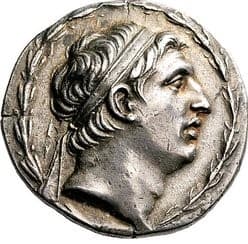
Demetrius I Soter
Emperor · Ancient
46.1Total

Fan Hsun
Emperor · Ancient
38.7Total
Basic Information
Born
-187
245
Died
-150
287
Era
Ancient
Ancient
Nationality
Seleucid Empire
Funan
Occupation
Emperor
Emperor
Civilization
Middle Eastern
Eastern
Score Comparison
Military (10%)
40.0
25.9
Political (20%)
37.9
39.4
Influence (20%)
49.4
44.0
Legacy (20%)
43.3
34.2
Leadership (15%)
48.4
54.2
Strategy (15%)
60.0
25.0
TOTAL
46.1
38.7
Demetrius I Soter — Complete Timeline
162 BC
Return from Roman HostagePolitical Action◆ Major
Demetrius I Soter escaped from Rome, where he had been held as a hostage, and returned to Syria. He overthrew the regent Lysias and the young king Antiochus V, claiming the Seleucid throne. His return was supported by the Roman Senate.
ReturnCoupSeleucid Dynasty
Impact: regional
161 BC
Campaign Against the MaccabeesWar◆ Major
Demetrius I sent an army under General Nicanor to suppress the Maccabean Revolt in Judea. Nicanor was defeated and killed at the Battle of Adasa by Judas Maccabeus. This victory solidified Maccabean control over Judea.
CampaignMaccabean RevoltBattle of Adasa
Impact: regionaldestructive
150 BC
Death in BattleWar◆ Major
Demetrius I was killed in battle against the forces of Alexander Balas, a rival claimant to the Seleucid throne supported by Rome and Pergamon. His death ended his reign and plunged the Seleucid Empire into further civil war.
BattleDeathCivil War
Impact: regionaltragic
Fan Hsun — Complete Timeline
250 AD
Administrative ReformsReform◆ Major
Fan Hsun implemented administrative reforms that centralized Funan's governance. He established a hierarchical bureaucracy with appointed officials, standardized tax collection, and created a system of provincial administration, improving efficiency and control.
ReformBureaucracyCentralization
Impact: nationalconstructive
260 AD
Codification of LawsReform◆ Major
Fan Hsun ordered the codification of Funan's laws based on Indian legal traditions, particularly the Dharma
LawIndianizationReform
Impact: nationalconstructive
270 AD
Promotion of Indian ReligionCultural
Fan Hsun actively promoted Hinduism and Buddhism as state-supported religions, building temples and patronizing priests. This deepened Funan's Indian cultural identity and aligned the kingdom with the broader Indic world.
ReligionCultural PolicyIndianization
Impact: nationalconstructive
Expert Analysis
Origins
Demetrius I Soter was born around 187 BCE, the son of Seleucid king Seleucus IV Philopator. As a young prince, he was sent to Rome as a hostage under the terms of the Treaty of Apamea (188 BCE), which had ended the war between the Seleucid Empire and the Roman Republic. His upbringing in Roman captivity gave him firsthand exposure to Roman political and military culture. Upon his father's assassination in 175 BCE, the throne was usurped by his uncle Antiochus IV Epiphanes, and later by the regent Lysias acting for the infant Antiochus V Eupator.
Fan Hsun ruled Funan, an early Southeast Asian kingdom located in the Mekong Delta, during the 3rd century CE. The exact dates of his birth and reign are uncertain, but he is known from Chinese historical records, particularly the Book of Liang. Funan was a maritime trading state heavily influenced by Indian culture. Fan Hsun likely came from a noble family and rose to power through a combination of hereditary succession and political acumen, though details of his early life are sparse.
Rise to Power
Demetrius I escaped from Rome in 162 BCE with the help of the historian Polybius, who arranged his secret departure. He landed in Syria, gathered support, and marched against Lysias and Antiochus V. He defeated and killed them, seizing the throne. His claim was recognized by the Seleucid army and some Hellenistic cities. However, his rise was contested by rival claimants and external powers, including Rome, which viewed him with suspicion.
Fan Hsun's rise is less documented. He succeeded his predecessor, likely Fan Man, as king of Funan. He consolidated power by centralizing administration and reducing the authority of local chieftains. His reforms were supported by the Indian-influenced elite, who benefited from the promotion of Hinduism and Buddhism. He may have faced opposition from traditionalist factions, but he successfully established a more unified state.
Leadership & Governance
Demetrius I focused on military campaigns to preserve the Seleucid Empire. He fought the Maccabean revolt in Judea, sending General Nicanor with a large army. Nicanor was defeated and killed at the Battle of Adasa (161 BCE) by Judas Maccabeus. Demetrius also faced rebellions in other regions, such as Media. His governance was typical of Hellenistic kings: he relied on a network of Greek cities, mercenary armies, and royal officials. He attempted to stabilize the empire through dynastic marriages and alliances, but his reign was marked by constant warfare.
Fan Hsun implemented administrative reforms that centralized Funan's governance. He established a hierarchical bureaucracy with appointed officials, standardizing tax collection and regional administration. He codified laws based on Indian Dharmaśāstra, creating a uniform legal code that reduced local custom variations. He promoted Hinduism and Buddhism as state religions, building temples and patronizing priests. These reforms deepened Funan's Indianization and strengthened royal authority. His leadership score is 54.2, reflecting effective governance, while Demetrius scores 48.4 in leadership.
Triumph & Tragedy
Demetrius I's greatest success was returning from Roman captivity and reclaiming the Seleucid throne, a feat that demonstrated his determination and political skill. He also managed to maintain the empire's integrity for a decade against internal and external threats. However, his failure to suppress the Maccabean revolt allowed the establishment of an independent Jewish state, weakening Seleucid control in the region. His greatest tragedy was his death in battle in 150 BCE against the forces of Alexander Balas, a rival claimant supported by Rome and Pergamon. His reign ended in defeat, and the empire descended into civil war.
Fan Hsun's triumphs include the successful centralization of Funan's administration and the codification of laws, which provided stability and continuity. His promotion of Indian religion and culture enhanced Funan's prestige and integration into the Indian Ocean trade network. However, his reforms may have alienated local elites, and the lack of detailed records prevents a full assessment of his failures. His death likely led to a period of uncertainty, but his legacy endured. His military score is low (25.9), reflecting the absence of major conquests.
Character & Destiny
Demetrius I was ambitious and resilient, as shown by his escape from Rome. He was also pragmatic, willing to negotiate with rivals when necessary. However, his reliance on military force and inability to secure lasting peace led to his downfall. Historical assessments note his intelligence but also his misfortune in facing powerful enemies. His character scored 48.4 in leadership and 60.0 in strategy, indicating a competent but not exceptional ruler.
Fan Hsun is depicted as a reformer and administrative innovator. His character suggests a focus on internal consolidation rather than external expansion. He was likely patient and methodical, implementing changes gradually. His political score of 39.4 and leadership of 54.2 indicate a ruler more adept at governance than warfare. His destiny was to be remembered as a founder of Funan's classical period.
Legacy
Demetrius I's legacy is mixed. He is remembered as a capable but ultimately unsuccessful king who could not prevent the decline of the Seleucid Empire. His defeat by the Maccabees contributed to the rise of Jewish independence, a significant historical development. His scores: military 40.0, political 37.9, influence 49.4, legacy 43.3, total 46.1.
Fan Hsun's legacy is more enduring in Southeast Asia. His administrative and legal reforms shaped Funan's governance for generations. The Indianization he promoted influenced later kingdoms like Chenla and Angkor. His scores: military 25.9, political 39.4, influence 44.0, legacy 34.2, total 38.7. Though his total is lower, his impact on regional state-building was significant.
Conclusion
Demetrius I Soter scores higher overall (46.1 vs 38.7), but his impact was largely negative or ephemeral: he failed to preserve his empire. Fan Hsun, despite lower scores, left a more lasting legacy through administrative and legal reforms that shaped Southeast Asian statecraft. In terms of constructive, enduring impact, Fan Hsun had greater influence on the development of governance and culture in his region. Therefore, Fan Hsun is the more significant figure for long-term historical development, while Demetrius I is a cautionary tale of military-focused leadership in a declining empire.
Rankings
🥇
Demetrius I SoterLeader
Mil: 40.0Pol: 37.9Inf: 49.4
46.1
🥈
Fan Hsun
Mil: 25.9Pol: 39.4Inf: 44.0
38.7
+7.4 behind
How This Comparison Works
Algorithm
Each figure is scored on 6 dimensions (0—100 scale) based on structured historical data: Military (10%), Political (20%), Influence (20%), Legacy (20%), Leadership (15%), Strategy (15%). The weighted total produces the final ranking.
Data Sources
Scores are computed from structured sub-indicators in the database. Scale factors adjust for era (Ancient ×0.85, Modern ×1.0) and civilization size (Eastern ×1.05, Other ×0.80) to account for differences in population and military scale.
Maximum 3 Figures
Comparisons are limited to 2—3 figures to ensure readability and statistical meaningfulness.
Error Margins
±5 points per dimension — Sub-scores are derived from historical records with inherent uncertainty. Two figures within 5 points on a dimension should be considered roughly equivalent in that area.
Total Score Accuracy
±3 points overall — The weighted combination of 6 dimensions produces a total score with approximately ±3 points of uncertainty. Differences of less than 3 points are not statistically significant— the figures are effectively tied.
Known Limitations
- Historical records are incomplete and uneven across civilizations
- Figures from oral-tradition societies may be underrepresented
- Occupation labels can misclassify multi-role figures
- Scores measure capability and impact, not moral character
- Quantitative scoring is a comparison tool, not absolute truth
Capability Radar
Military (10%) — Battles & Warfare
Battles
45
10
Win Rate
40
10
Expansion
40
10
Political (20%) — Governance & Reform
Reform
30
40
Diplomacy
40
20
Economy
30
30
Influence (20%) — Cultural & Global Reach
Cultural
30
15
Global
25
5
Legacy (20%) — Historical Impact
Historical
40
15
Longevity
30
10
Leadership (15%) — Power & Stability
Tenure
35
30
Stability
25
25
Strategy (15%) — Tactics & Innovation
Strategy
55
10
Tactics
50
10
Reform
30
15
Similar Comparisons
Comments & Discussion
No comments yet. Be the first to share your thoughts!