Loading...
Argishti I vs Duke Mu of Qin
Duke Mu of Qin leads by 7.2 pts · 2 figures compared
…

Argishti I
Emperor · Ancient
45.7Total
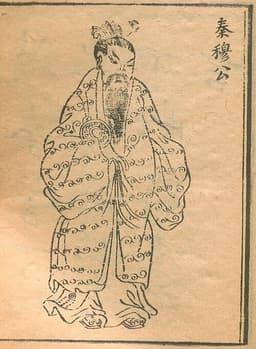
Duke Mu of Qin
Emperor · Ancient
52.9Total
Basic Information
Born
-785
-683
Died
-753
-621
Era
Ancient
Ancient
Nationality
Urartu
China
Occupation
Emperor
Emperor
Civilization
Middle Eastern
Eastern
Score Comparison
Military (10%)
10.0
52.5
Political (20%)
36.5
48.0
Influence (20%)
51.8
49.4
Legacy (20%)
45.8
44.2
Leadership (15%)
58.8
74.0
Strategy (15%)
60.0
60.0
TOTAL
45.7
52.9
Argishti I — Complete Timeline
785 BC
Conquest of the Ararat plainWar◆ Major
Argishti I led military campaigns that conquered the fertile Ararat plain, defeating local tribes and extending Urartian territory northward. The conquest provided agricultural land and strategic depth against Assyrian attacks.
ConquestAraratExpansion
Impact: regionalconstructive
782 BC
Foundation of the city of ErebuniCultural
Argishti I founded the fortress city of Erebuni on a hill near modern Yerevan, Armenia. The city served as a military and administrative center for Urartian control over the Ararat plain, with inscriptions recording its construction.
City FoundationErebuniYerevan
Impact: regionalconstructive
780 BC
Military campaigns against AssyriaWar◆ Major
Argishti I conducted several campaigns against the Assyrian Empire, raiding into the region of Lake Urmia and the upper Tigris. He claimed victories and captured booty, though Assyrian records also report counter-attacks.
CampaignAssyriaRaiding
Impact: regional
775 BC
Construction of the Argishtihinili fortressCultural
Argishti I built the fortress of Argishtihinili (modern Armavir) on the Ararat plain. The fortress housed a royal palace, granaries, and temples, serving as a key administrative center for the region.
FortressAdministrationPalace
constructive
Duke Mu of Qin — Complete Timeline
650 BC
Expanded Qin into Western TerritoriesWar◆ Major
Duke Mu of Qin led campaigns against the Rong and Di barbarian tribes to the west, conquering twelve minor states and opening up 1,000 li of territory. This expansion strengthened Qin and secured its western flank.
ExpansionBarbariansQin
Impact: regionalconstructive
645 BC
Allied with Jin StatePolitical Action◆ Major
Duke Mu formed an alliance with the state of Jin, marrying his daughter to Duke Hui of Jin. However, when Jin reneged on promises, Duke Mu attacked and defeated Jin at the Battle of Han, capturing Duke Hui.
AllianceJinBattle of Han
Impact: regional
636 BC
Aided Chong'er to Become Duke Wen of JinPolitical Action◆ Major
Duke Mu supported the exiled prince Chong'er, sending troops to help him return to Jin and become Duke Wen. This act created a powerful ally but also a future rival who would challenge Qin's dominance.
SupportJinDuke Wen
Impact: regionalconstructive
627 BC
Failed to Expand EastwardWar◆ Major
Duke Mu's attempt to expand eastward was thwarted by Jin at the Battle of Yao. Qin forces were ambushed and destroyed in a narrow pass, forcing Duke Mu to abandon eastern ambitions and focus on the west.
DefeatJinBattle of Yao
Impact: regionaldestructive
Expert Analysis
Origins
Argishti I (c. 785–753 BCE) was the son of King Menua of Urartu, a kingdom centered around Lake Van in the Armenian Highlands. He inherited a realm that had already been consolidated by his father and grandfather, but faced constant threats from the Assyrian Empire to the south. His early life was shaped by military training and the need to defend Urartian borders. In contrast, Duke Mu of Qin (r. 659–621 BCE) was a ruler of the state of Qin during the Spring and Autumn period of ancient China. Qin was a semi-barbarian state on the western frontier, often looked down upon by central Chinese states. Duke Mu was the son of Duke Cheng of Qin and ascended the throne after his father's death. His upbringing involved navigating the complex politics of the Zhou dynasty and managing relations with neighboring Rong and Di tribes.
Rise to Power
Argishti I ascended the throne around 785 BCE and immediately began a series of military campaigns to expand Urartu northward. His most notable achievement was the foundation of Erebuni (modern Yerevan) in 782 BCE, a fortress city that served as a military and administrative center. He conquered the fertile Ararat plain, defeating local tribes such as the Diauehi and Etiuni. His campaigns against Assyria, though not decisive, demonstrated Urartu's growing power. Duke Mu of Qin came to power in 659 BCE after the death of his father. He quickly sought to strengthen Qin's position by forming alliances. He married his daughter to Duke Hui of Jin and later supported the exiled prince Chong'er, who became Duke Wen of Jin. This alliance with Jin allowed Qin to focus on westward expansion against the Rong and Di tribes, conquering twelve minor states and opening up 1,000 li of territory.
Leadership & Governance
Argishti I ruled as an absolute monarch, centralizing power in the fortress cities he built. He implemented a system of grain storage and irrigation to support his army and administration. His governance was focused on military expansion and consolidation, with little evidence of legal or administrative reforms. He scored 58.8 in leadership and 60.0 in strategy. Duke Mu of Qin, by contrast, was known for his diplomatic acumen and willingness to delegate. He appointed talented advisors such as Baili Xi and Jian Shu, who helped him reform Qin's administration and military. He also promoted agriculture and trade, strengthening the state's economy. His leadership score of 74.0 reflects his ability to build alliances and manage internal affairs, though his strategic score of 60.0 matches Argishti's.
Triumph & Tragedy
Argishti I's greatest triumph was the foundation of Erebuni, which became a lasting symbol of Urartian civilization. His conquest of the Ararat plain provided Urartu with fertile land and resources. However, his campaigns against Assyria were ultimately inconclusive, and Urartu remained vulnerable to Assyrian attacks. His failure to secure lasting peace with Assyria led to the eventual decline of Urartu after his death. Duke Mu of Qin's greatest success was his westward expansion, which doubled Qin's territory and provided a secure base for future conquests. His alliance with Jin, though initially beneficial, turned sour after the Battle of Yao in 627 BCE, where Qin forces were ambushed and destroyed by Jin. This defeat prevented Qin from expanding eastward and forced Duke Mu to focus on the west. He scored 52.5 in military compared to Argishti's 10.0, reflecting his more effective military campaigns.
Character & Destiny
Argishti I was a determined and ambitious ruler, driven by the need to secure Urartu's borders and expand its influence. His foundation of Erebuni shows a long-term vision, but his aggressive posture towards Assyria may have overextended Urartu's resources. Historical assessments suggest he was a capable military leader but lacked the diplomatic finesse to neutralize the Assyrian threat. Duke Mu of Qin was pragmatic and patient, willing to bide his time and build alliances. His support for Chong'er created a powerful ally in Jin, but his trust in Jin's promises led to the disaster at Yao. His character combined ambition with caution, and he learned from his mistakes, focusing on western expansion rather than eastern adventures. He scored 48.0 in political skill, reflecting his alliance-building abilities.
Legacy
Argishti I's legacy is most visible in the city of Yerevan, which traces its foundation to his Erebuni fortress. He is remembered as a founder and builder, but his military achievements were overshadowed by the eventual collapse of Urartu under Assyrian pressure. He scores 45.8 in legacy and 51.8 in influence. Duke Mu of Qin's legacy is more profound: his conquest of western territories provided the foundation for Qin's later unification of China under Qin Shi Huang. He is regarded as one of the greatest rulers of the Spring and Autumn period, and his reforms influenced subsequent Qin rulers. He scores 44.2 in legacy and 49.4 in influence. While both left lasting marks, Duke Mu's impact on Chinese history is more direct.
Conclusion
Duke Mu of Qin had a greater overall impact than Argishti I, as reflected in his higher total score (52.9 vs 45.7). While Argishti's foundation of Erebuni is significant, his military campaigns were less effective (military score 10.0 vs 52.5) and his political skills weaker (36.5 vs 48.0). Duke Mu's expansion westward created the territorial base for Qin's eventual unification of China, a historical development of global importance. Argishti's Urartu eventually faded, whereas Qin's legacy endured. Therefore, Duke Mu of Qin is the more consequential figure.
Rankings
🥇
Duke Mu of QinLeader
Mil: 52.5Pol: 48.0Inf: 49.4
52.9
🥈
Argishti I
Mil: 10.0Pol: 36.5Inf: 51.8
45.7
+7.2 behind
How This Comparison Works
Algorithm
Each figure is scored on 6 dimensions (0—100 scale) based on structured historical data: Military (10%), Political (20%), Influence (20%), Legacy (20%), Leadership (15%), Strategy (15%). The weighted total produces the final ranking.
Data Sources
Scores are computed from structured sub-indicators in the database. Scale factors adjust for era (Ancient ×0.85, Modern ×1.0) and civilization size (Eastern ×1.05, Other ×0.80) to account for differences in population and military scale.
Maximum 3 Figures
Comparisons are limited to 2—3 figures to ensure readability and statistical meaningfulness.
Error Margins
±5 points per dimension — Sub-scores are derived from historical records with inherent uncertainty. Two figures within 5 points on a dimension should be considered roughly equivalent in that area.
Total Score Accuracy
±3 points overall — The weighted combination of 6 dimensions produces a total score with approximately ±3 points of uncertainty. Differences of less than 3 points are not statistically significant— the figures are effectively tied.
Known Limitations
- Historical records are incomplete and uneven across civilizations
- Figures from oral-tradition societies may be underrepresented
- Occupation labels can misclassify multi-role figures
- Scores measure capability and impact, not moral character
- Quantitative scoring is a comparison tool, not absolute truth
Capability Radar
Military (10%) — Battles & Warfare
Battles
30
45
Win Rate
35
50
Expansion
45
60
Political (20%) — Governance & Reform
Reform
30
40
Diplomacy
35
50
Economy
30
45
Influence (20%) — Cultural & Global Reach
Cultural
40
30
Global
30
25
Legacy (20%) — Historical Impact
Historical
45
45
Longevity
50
40
Leadership (15%) — Power & Stability
Tenure
40
55
Stability
35
50
Strategy (15%) — Tactics & Innovation
Strategy
40
55
Tactics
30
40
Reform
25
35
Similar Comparisons
Comments & Discussion
No comments yet. Be the first to share your thoughts!