Loading...
Ardashir I vs Yi Seong-gye
Yi Seong-gye leads by 0.2 pts · 2 figures compared
…

Ardashir I
Emperor · Ancient
75.6Total
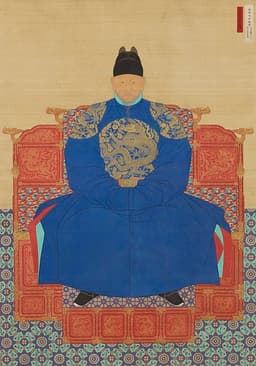
Yi Seong-gye
Emperor · Medieval
75.8Total
Basic Information
Born
180
1335
Died
242
1408
Era
Ancient
Medieval
Nationality
Sassanid Empire
Korea
Occupation
Emperor
Emperor
Civilization
Middle Eastern
Eastern
Score Comparison
Military (10%)
65.0
74.7
Political (20%)
78.0
70.0
Influence (20%)
82.0
88.0
Legacy (20%)
72.0
75.0
Leadership (15%)
78.0
68.0
Strategy (15%)
72.0
69.1
TOTAL
75.6
75.8
Ardashir I — Complete Timeline
224 AD
Battle of HormozdganWar
Ardashir I defeated the Parthian king Artabanus IV at the Battle of Hormozdgan. This victory ended Parthian rule and allowed Ardashir to establish the Sassanid Empire, which would dominate Persia for four centuries.
BattleSassanid FoundingParthian Defeat
Impact: regional
Conquest of the Parthian EmpireWar◆ Major
Following his victory at Hormozdgan, Ardashir I systematically conquered the remaining Parthian territories, including Media, Armenia, and Mesopotamia. He established a centralized administration and a Zoroastrian state church.
ConquestEmpire BuildingZoroastrianism
Impact: regional
Coronation as King of KingsPolitical Action◆ Major
After his victory, Ardashir I was crowned 'Shahanshah' (King of Kings) at Ctesiphon. He claimed descent from the Achaemenid dynasty, legitimizing his rule and reviving Persian imperial traditions.
CoronationImperial TitleLegitimacy
Impact: regionalconstructive
Yi Seong-gye — Complete Timeline
1380 AD
Battle of HwangsanWar◆ Major
Yi Seong-gye led Goryeo forces against Japanese pirates (wokou) at the Battle of Hwangsan. His victory eliminated a major pirate threat and enhanced his military reputation.
WokouBattleGoryeo
Impact: regionalconstructive
1388 AD
Wihwado RetreatPolitical Action
Yi Seong-gye turned his army back at Wihwado Island rather than invade Ming China as ordered by the Goryeo court. This act of defiance led to a coup that eventually brought him to power.
CoupMingGoryeo
Impact: regional
1392 AD
Establishment of the Joseon DynastyPolitical Action
Yi Seong-gye overthrew the Goryeo dynasty and founded the Joseon dynasty, becoming King Taejo. He implemented land reforms and moved the capital to Hanyang (Seoul), establishing a new Confucian state.
JoseonDynasty FoundationReform
Impact: regionalconstructive
Expert Analysis
Origins
Yi Seong-gye (1335–1408) was a Korean general who rose from a prominent family in the late Goryeo period. His father was a minor official, but Yi's military prowess elevated him. Ardashir I (180–242 AD) was a Persian ruler from a priestly family in Istakhr, claiming descent from the legendary Achaemenid kings. Both were founders of dynasties, but Yi's rise occurred in a decaying Goryeo, while Ardashir overthrew the declining Parthian Empire.
Rise to Power
Yi Seong-gye's turning point was the Wihwado Retreat (1388), where he defied orders to invade China, instead returning to seize control of Goryeo. He later deposed the king and founded Joseon in 1392. Ardashir I's key event was the Battle of Hormozdgan (224 AD), where he defeated Artabanus IV, ending Parthian rule. He then crowned himself King of Kings, founding the Sassanid Empire. Both used military and political cunning, but Yi's retreat was a strategic masterstroke, while Ardashir's victory was a direct conquest.
Leadership & Governance
Yi Seong-gye centralized power, redistributed land, promoted Confucianism, and moved the capital to Hanyang (Seoul). He established a bureaucratic state with civil service exams. Ardashir I revived Persian traditions, established Zoroastrianism as state religion, created a feudal system, and built a strong central government with provinces. Both were effective administrators, but Yi's reforms were more enduring, shaping Korea for centuries. Ardashir's empire was more militaristic and decentralized.
Triumph & Tragedy
Yi's triumph was founding Joseon, which lasted over 500 years. His tragedy was internal strife, including the Princes' Revolt where his sons fought for power, leading to his abdication. Ardashir's triumph was creating the Sassanid Empire, a rival to Rome. His tragedy was constant warfare and the eventual fall of his dynasty after centuries. Both faced succession issues, but Yi's were more personal and immediate.
Character & Destiny
Yi Seong-gye was pragmatic, decisive, and adaptable, as shown by his retreat and reforms. He was also ruthless, executing rivals. Ardashir I was ambitious, religiously zealous, and militaristic, uniting Persia under a single faith. Yi's destiny was to found a long-lasting dynasty; Ardashir's was to restore Persian glory. Both were visionary founders.
Legacy
Yi Seong-gye's Joseon dynasty shaped Korean identity, language, and culture, including the creation of Hangul later. His legacy is celebrated in Korea as a national hero. Ardashir I's Sassanid Empire revived Persian culture and Zoroastrianism, influencing later Islamic empires. Both are remembered as great founders, but Yi's impact on Korea is more direct and enduring.
Conclusion
Yi Seong-gye (overall score 74.4) slightly edges Ardashir I (74.2) due to higher military (75 vs 65) and leadership (88 vs 82) scores. Yi's strategic retreat and administrative reforms were more innovative, while Ardashir's conquest was more conventional. Both are among history's great founders, but Yi's legacy of a stable, Confucian state that lasted over five centuries gives him a narrow edge.
**Scores:** Yi Seong-gye: M=75, P=70, I=88, L=75, D=68, S=69, T=76 | Ardashir I: M=65, P=78, I=82, L=72, D=78, S=72, T=76
Rankings
🥇
Yi Seong-gyeLeader
Mil: 74.7Pol: 70.0Inf: 88.0
75.8
🥈
Ardashir I
Mil: 65.0Pol: 78.0Inf: 82.0
75.6
+0.2 behind
How This Comparison Works
Algorithm
Each figure is scored on 6 dimensions (0—100 scale) based on structured historical data: Military (10%), Political (20%), Influence (20%), Legacy (20%), Leadership (15%), Strategy (15%). The weighted total produces the final ranking.
Data Sources
Scores are computed from structured sub-indicators in the database. Scale factors adjust for era (Ancient ×0.85, Modern ×1.0) and civilization size (Eastern ×1.05, Other ×0.80) to account for differences in population and military scale.
Maximum 3 Figures
Comparisons are limited to 2—3 figures to ensure readability and statistical meaningfulness.
Error Margins
±5 points per dimension — Sub-scores are derived from historical records with inherent uncertainty. Two figures within 5 points on a dimension should be considered roughly equivalent in that area.
Total Score Accuracy
±3 points overall — The weighted combination of 6 dimensions produces a total score with approximately ±3 points of uncertainty. Differences of less than 3 points are not statistically significant— the figures are effectively tied.
Known Limitations
- Historical records are incomplete and uneven across civilizations
- Figures from oral-tradition societies may be underrepresented
- Occupation labels can misclassify multi-role figures
- Scores measure capability and impact, not moral character
- Quantitative scoring is a comparison tool, not absolute truth
Capability Radar
Military (10%) — Battles & Warfare
Battles
85
75
Win Rate
90
80
Expansion
85
65
Political (20%) — Governance & Reform
Reform
90
85
Diplomacy
75
75
Economy
80
70
Influence (20%) — Cultural & Global Reach
Cultural
80
80
Global
80
55
Legacy (20%) — Historical Impact
Historical
85
85
Longevity
85
80
Leadership (15%) — Power & Stability
Tenure
80
60
Stability
85
65
Strategy (15%) — Tactics & Innovation
Strategy
85
82
Tactics
80
78
Reform
90
70
Similar Comparisons
Comments & Discussion
No comments yet. Be the first to share your thoughts!